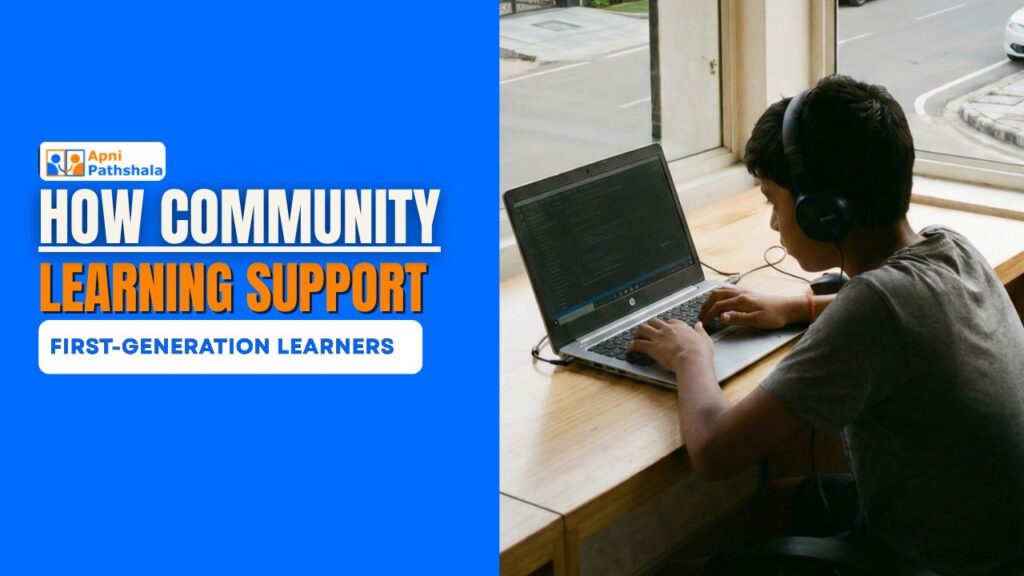
There is a silent moment where many first-generation students fall behind and nobody notices. It happens at home. A child sits with a textbook or a laptop, stuck on a question. They look up to ask for help… and then stop.
Not because their parents don’t care. But because they can’t help. This is the “Homework Gap.”
For a middle-class child, the home is an “Academic Safety Net.” If they get stuck, Mom helps. If they need a resource, Dad finds it. For a First-Gen learner, the home is filled with love, but it lacks academic infrastructure.
This is why Community Learning Centres (CLCs) are not just “tuition classes.” They are functioning as the Surrogate Living Room for millions of Indian students.
Here is how these 100 sq. ft. rooms are bridging the gap between ambition and opportunity.
1. Why First-Generation Learners Need Access to Real Computers (Not Just Smartphones)
In 2026, you cannot become a software engineer on a smartphone. Smartphones are for consuming content (watching videos, scrolling Reels). Computers are for creating content (coding, designing, writing).
Most First-Gen families own a smartphone, but they do not own a PC. A ₹40,000 laptop is an impossible luxury. This creates a “Digital Ceiling.” The child can watch a coding tutorial, but they cannot write the code.
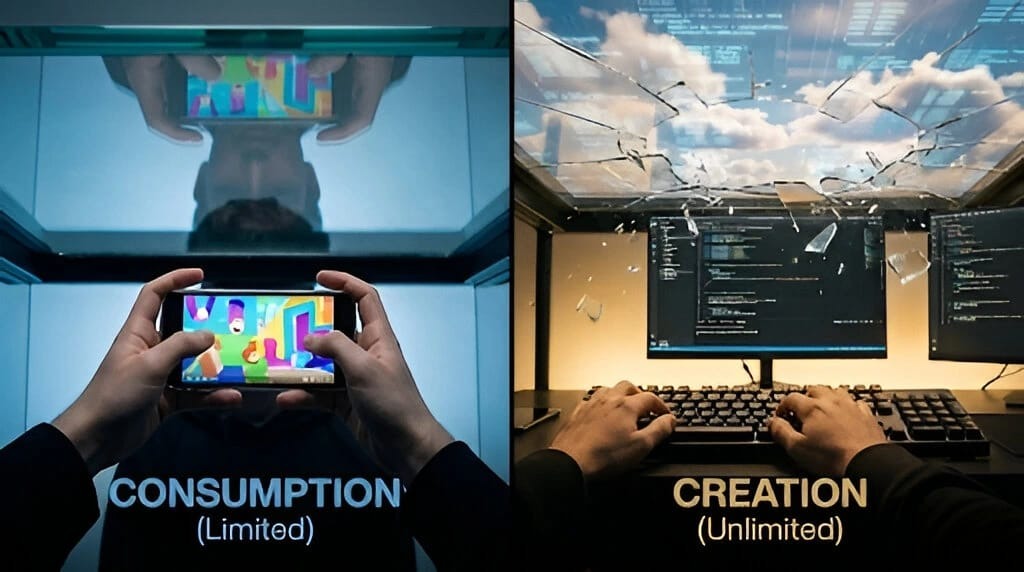
ApniPathshala destroys this ceiling by providing Apna PCs.
When a First-Gen learner sits at a proper workstation with a keyboard and mouse, something shifts psychologically.
- They aren’t borrowing a broken device.
- They are using a professional tool.
This access gives them Dignity. It tells them, “You deserve the same tools as the kid in the international school.”
2. The “Role Model” Effect (You Can’t Be What You Can’t See)
If everyone in your neighborhood drives an auto-rickshaw or works in a field, it is very hard to imagine yourself as a Graphic Designer or an AI Engineer.
You cannot aspire to be something you have never seen.
This is where the Community Learning Centre performs its magic. It relies on “Learning by Osmosis.”
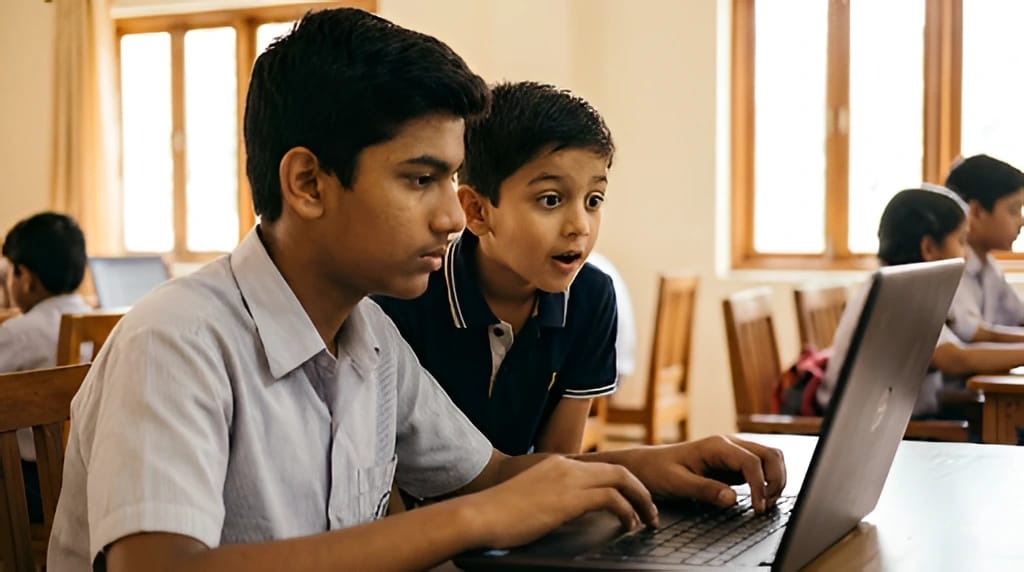
In a POD, a 10-year-old First-Gen learner sits next to a 14-year-old “Senior Student” from the same lane.
- They see the senior writing Python code.
- They see the senior building a website.
A lightbulb goes on. “He is just like me. He lives next door. If he can do it, I can do it.”
The Senior Student becomes the role model that the family cannot provide. This peer-to-peer inspiration is far more powerful than any lecture from a distant teacher.
3. A Safe Place to Fail, Learn, and Try Again
First-Gen learners are often terrified of school.
In a traditional classroom, if they ask a “silly question,” they fear being scolded or labelled as “slow.” Because they lack support at home, their confidence is fragile. They learn to stay quiet and hide.
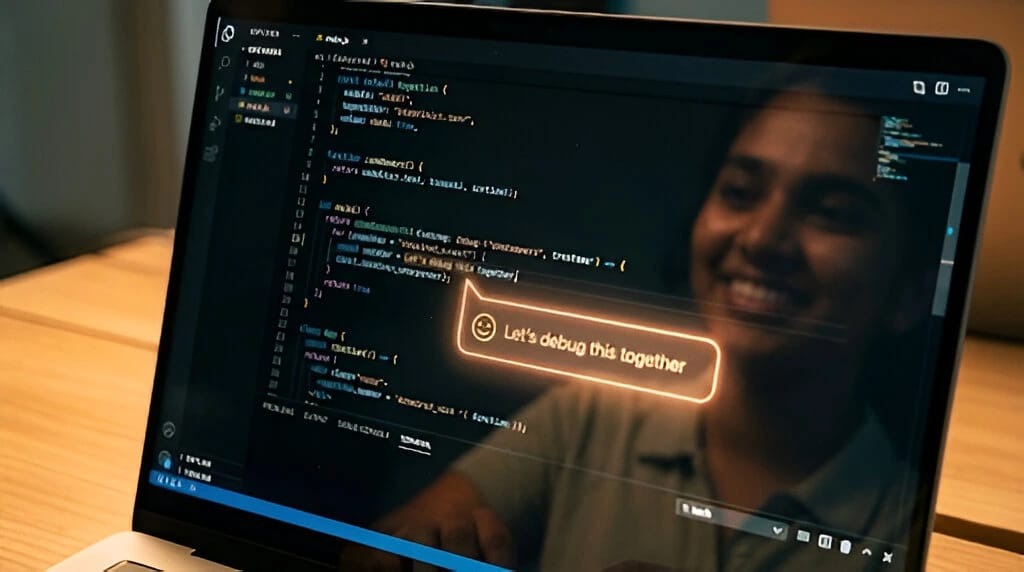
The CLC is designed to be a Judgment-Free Zone. We use ApniPrerna and self-learning tools.
- If a student writes the wrong code, the computer doesn’t yell at them. It doesn’t humiliate them. It simply waits.
- The student tries again. And again.
This safety allows them to fail without fear. They learn that making mistakes is not a sign of stupidity; it is just part of the debugging process.
4. Teaching First-Gen Students How to Navigate the System (Not Just Pass Exams)
Some families pass down a “Hidden Curriculum.” They know which exams to take. They know that “AI is the future.” They know how to search Google for answers.
First-Gen parents don’t know this hidden map. They often push their children towards safe, traditional paths that may no longer work.
The CLC provides this Navigation. We don’t just teach the syllabus. We teach Resourcefulness.
- We teach them how to “Google it.”
- We teach them how to use AI to solve problems.
By giving them the master key to the internet (in a safe, healthy environment), we empower them to find their own answers. We stop them from being dependent on a teacher and turn them into independent seekers.
Conclusion: A Small Room That Changes an Entire Family’s Future
When a First-Gen learner succeeds, they don’t just change their own life. They become the “ROLE MODEL” for their younger siblings. They become the engineer uncle or the doctor aunt for their cousins.
If you want to understand how a Community Learning Centre actually works on a daily basis, what children do, howmentors guide them, and why this model feels different from tuition…
Sometimes, seeing the process is more reassuring than any promise
Trust comes from transparency, not claims.
👉 Explore how Community Learning Centres ensure safety and learning
👉Are Community Learning Centres Safe for Children?
How does community learning support online safety?
Community learning provides supervised spaces where children learn together under guidance. Programs like Apni Pathshala’s learning centers combine digital education with responsible online practices.
Who are first-generation learners, and why do they need extra support?
First-generation learners are students whose parents did not get the chance to complete higher education. They often have the motivation to learn but lack guidance at home. Community learning gives them the support system they miss.
How does community learning help first-generation students prepare for JEE?
Community learning helps first-generation students prepare for JEE by providing peer support, clear guidance, and a regular study routine. Studying JEE concepts together reduces confusion, builds confidence, and makes preparation less stressful.
Why are community microschools effective for first-generation students?
Community microschools keep class sizes small and learning flexible. This allows first-generation learners to ask questions freely, learn at their own pace, and get personal attention, something they often miss in large classrooms.