

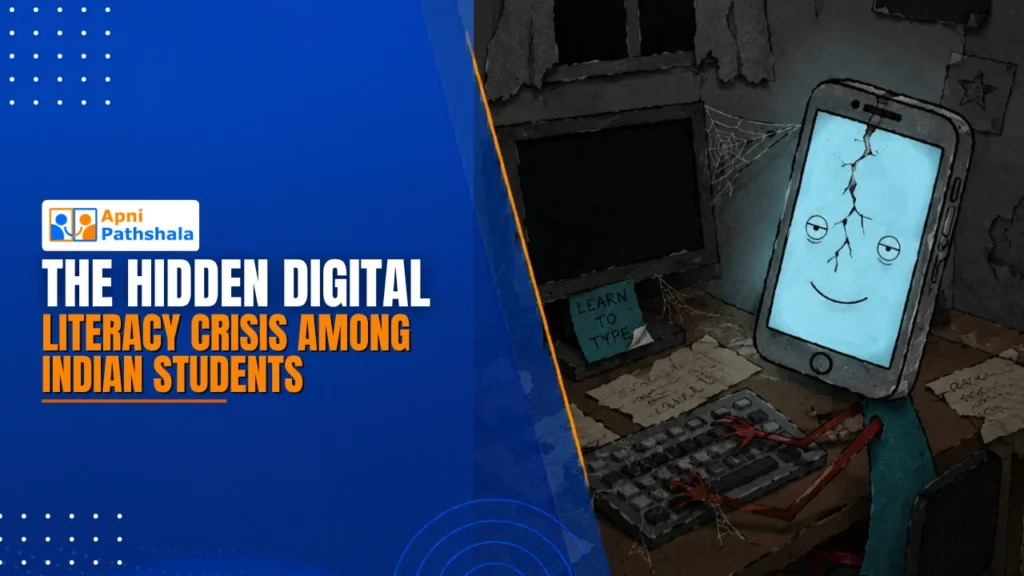
Watch a 14-year-old use a smartphone today. They look like tech geniuses. They download apps, edit videos, and switch between games in seconds.
Now, ask that same student to attach a PDF to an email. Or ask them to format a simple document for a school project.
Suddenly, they freeze.
Knowing how to tap a glass screen for fun is not the same as using technology to grow. This is the hidden digital literacy crisis in our country. We think our students are tech-savvy. They are actually just tech-addicted.
The Hidden Digital Literacy Crisis: Why Scrolling Is Not Learning
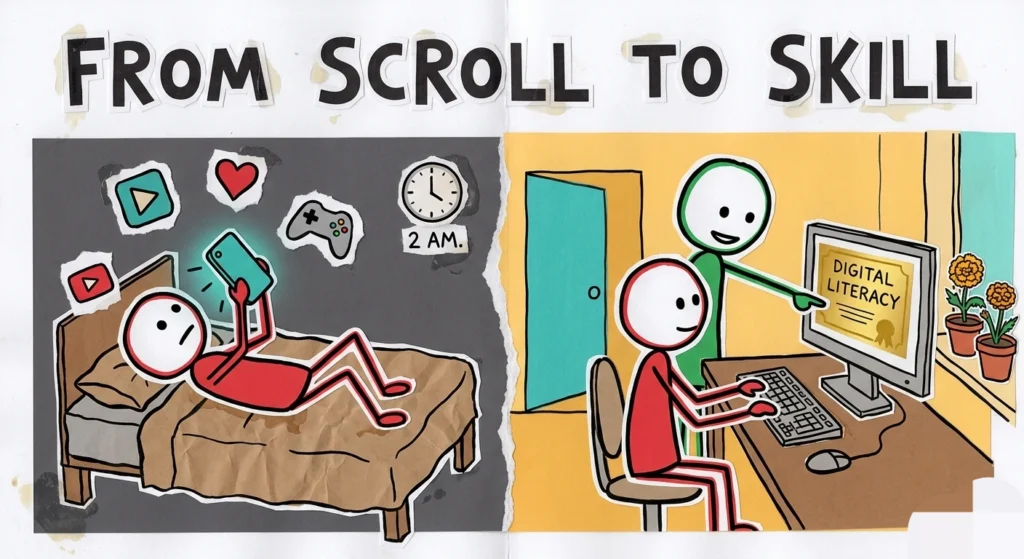
There is a big difference between an app and a tool.
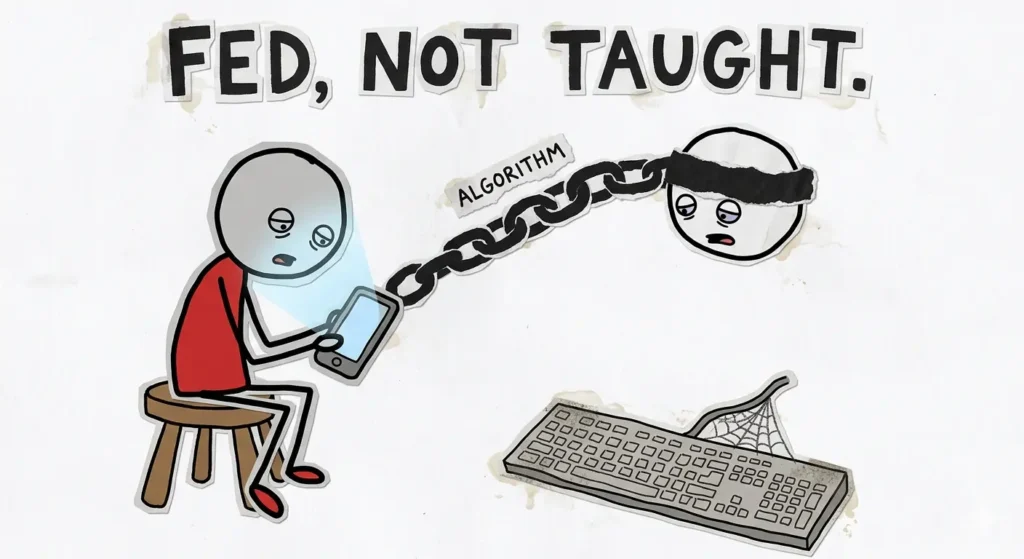
Apps like Instagram or YouTube are built to be perfectly easy. You do not have to think. The algorithm does the work for you. You just consume.
Tools like Excel, Google Docs, or a basic keyboard require you to build a skill. You have to create something.
Many parents see their child on a phone and think they are learning. As we discussed in “Why Using Technology Only for Entertainment Is Holding Children Back,” a child who scrolls quickly is not necessarily digitally literate. It just makes you a good customer for social media companies.
Three Signs Your Child Is Digitally Illiterate
Why do so many smart students struggle with basic computer work? The problem comes down to three things.
They Grew Up on Phones, Not Computers.
According to the ASER 2024 report, almost 90% of rural Indian teenagers have access to smartphones.
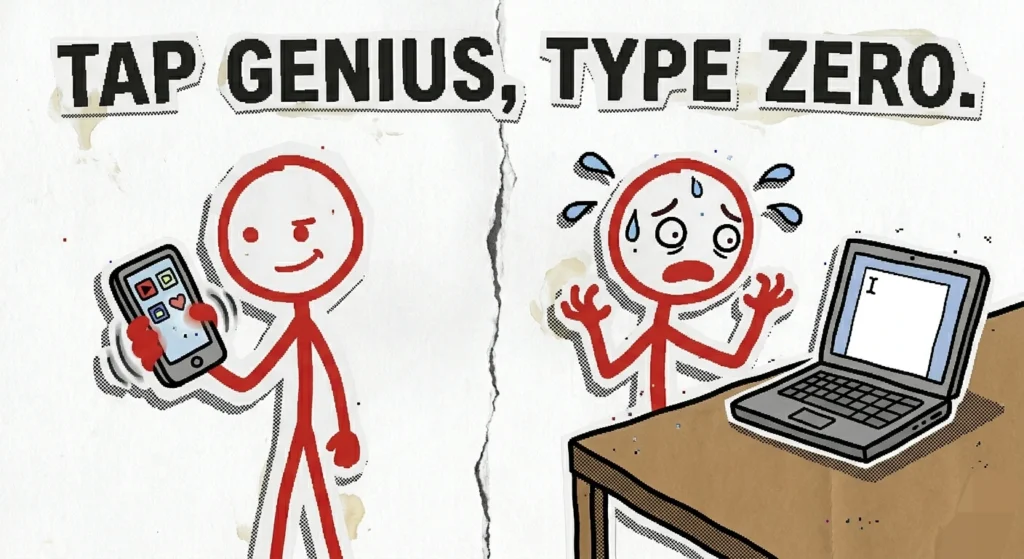
But most have never used a real computer. They only experience the internet through a 6-inch phone screen.
They do not know how to type with all ten fingers on a physical keyboard. They do not know how to manage files in folders.
Blind Trust in Algorithms
If you ask a student a question, they will type it into Google. They usually accept the very first result as the absolute truth. Or they believe a viral message on WhatsApp. Real digital literacy means knowing how to cross-check facts. It means knowing how to spot fake news
The Fear of Computers
Put a laptop in front of a student who only uses a phone. Watch their hands. They often feel scared to click things. They worry they might break the expensive machine. We see this often in smaller towns, a topic we explored in The Digital Divide in Rural India. A phone feels safe. A computer feels like a test.
What Real Digital Skills Actually Look Like
Real digital literacy is about solving problems.
It means finding safe information quickly. It means understanding basic software that the real world uses. It means using technology to build something, not just watch something.
If you want to survive in college or a future job, you need these real skills. A high score in board exams will not help if you cannot build a simple slide presentation.
A Space Built for True Digital Skills
Very few learning environments in India actually build on this idea. One of the more interesting examples is Apni Pathshala.
They do not run giant, expensive coaching centers. Instead, they help people open a POD (Point of Digital Learning). A POD is just a small, safe room in a community, run by a local leader.
Inside these rooms, students do not just stare at phones. They use actual Apna PCs with real keyboards.
They are guided by Eklavya AI, a tool that forces them to think and solve problems chapter by chapter. The computers also have Apni Prerna installed, a system that blocks distracting content so students stay focused on learning.
The impact is real. They have opened 136 PODs across 22 states, with 107 currently active. Over 22,000 students have come through their doors. Exactly 16,462 students have achieved actual digital literacy. They learn how to use a real machine to do real work.
(apnipathshala.org—if you want to find or open a POD near you.)
How to Start Building Your Skills Today
You do not have to wait to start learning. You can take control of your digital skills right now.
- Touch a real keyboard: Spend 20 minutes a week on a real computer or laptop. If you do not have one, borrow one from a school or a friend.
- Search like a pro: Stop typing long questions into Google. Learn to use specific keywords to find exactly what you need.
- Create one thing a week: Instead of watching a video, open a blank document. Type a summary of what you learned in class today.
A smartphone makes you a consumer. True digital literacy makes you a builder. The sooner you switch from just tapping screens to actually using technology as a tool, the faster you will grow.
Frequently Asked Questions
1. Why do children become distracted so easily while studying online?
Ans: Most educational apps and websites exist on the same internet that steals attention. A child can move from a math lecture to gaming videos in one click. The problem is not weak discipline. The entire system is designed to keep them scrolling for as long as possible.
2. Should parents completely ban screen time for children?
Ans: No. Children still need digital skills to survive in modern education and future jobs. The real goal is not removing screens completely. The goal is turning screens from entertainment machines into learning tools through safe environments, filtered devices, and guided use.
3. What makes children focus better inside a POD than at home?
Ans: A POD changes both the digital environment and the physical environment. The computer is protected using Apni Prerna, which blocks distractions and unsafe content. The room itself creates accountability.
4. What is Apni Prerna, and how does it help students learn better?
Ans: Apni Prerna is a safe digital learning system designed to help students focus on education instead of distractions. It blocks harmful and time-wasting content while giving students access to useful learning resources, tools, and guided digital education.


21 Responses
Hey, is there any specific set of criteria when I say someone is digitally literate?
Not exactly. There’s no single universal checklist for digital literacy because it keeps evolving with technology. But generally, it means being able to use digital tools safely, responsibly, and effectively for learning, communication, and problem-solving.
Digital learning is not just about using a phone. students need real skills like typing, email, documents, online safety, and smart learning.
Thank you for sharing this. We completely agree. Digital learning is much more than just using a phone. Students need practical skills like typing, emails, documents, online safety, and smart learning habits to truly grow in today’s world.
Great article! Digital literacy is not just about using smartphones, but about building real skills that prepare students for the future. Important topic and well explained.
Thank you so much for your thoughtful words!
Absolutely true, digital literacy is much more than just using devices. It’s about helping students build the skills, confidence, and awareness they need for the future. Glad you found the article meaningful.
Really insightful and important blog. Using a smartphone does not automatically mean a child is digitally literate. Real digital skills come from creating, problem-solving, and learning how to use technology as a tool, not just for entertainment. Well explained! 👏
Thank you so much for your thoughtful words. You said it perfectly. Digital literacy is not just about using devices but about helping children think, create, solve problems, and use technology in the right way. Glad the blog resonated with you.
This really made me think. Today’s students are very comfortable using phones and social media, but many still struggle with basic digital skills that actually matter in studies and future jobs. Knowing how to scroll fast is different from knowing how to create, research, present ideas, or solve problems using technology. Digital literacy is becoming one of the most important life skills, and more people need to talk about it like this.
Thank you so much for sharing this thoughtful perspective. You explained the real difference between just using technology and truly understanding how to learn, create, and grow with it. Glad the blog connected with you. Conversations like this are exactly why digital literacy matters today.
बहुत बढ़िया अउर सोच बदले वाला ब्लॉग बा। खाली स्मार्टफोन चलावे से केहू डिजिटल रूप से समझदार नइखे बन जात। असली डिजिटल स्किल तब आवेला जब बच्चा टेक्नोलॉजी के इस्तेमाल सीखेला कुछ नया बनावे आ समस्या सुलझावे खातिर। बहुत नीक तरीका से समझावल गइल बा।
बहुत धन्यवाद। आपने बिल्कुल सही बात कही। सिर्फ मोबाइल चलाना ही डिजिटल समझदारी नहीं है, बल्कि टेक्नोलॉजी का सही इस्तेमाल करके सीखना, बनाना और समस्याएं सुलझाना ही असली डिजिटल स्किल है। आपका यह विचार बहुत प्रेरणादायक है।
Very relevant blog. It clearly shows how using a phone is not the same as having real digital skills.
Thank you! That’s exactly the point we wanted to highlight: using a phone doesn’t always mean a student has real digital skills.
This is a really important read. We often confuse screen time with real digital skills, but the blog makes a strong point that true literacy is about creating, solving problems, and using technology with purpose, not just scrolling.
Thank you! That’s exactly the point we wanted to highlight. Digital literacy is much more than just screen time, it’s about learning, creating, and using technology with purpose.
The skill gap in today’s youth is real.
Thank you for pointing this out! Digital literacy gaps are real, and focusing on these skills is crucial now more than ever.
As a grad student, I see this all the time. Knowing how to use phone apps doesn’t help you write a research paper or manage files on a laptop. Great article highlighting a real problem!
Thanks for sharing your perspective! Absolutely, that gap between mobile usage and actual digital literacy is something many students are struggling with today.
Great insights! Digital literacy is a crucial life skill, and this article highlights an important issue that deserves more attention. Well written!