The education system is not “failing” by accident. In many ways, it is doing exactly what it was built to do: standardise learning, sort students by marks, and push everyone through the same narrow pipeline.
The challenge is simple. The world has changed, but the system hasn’t.
Parents want children who can think, communicate, learn independently, and adapt. Students need skills that actually translate into real life: digital confidence, problem-solving, collaboration, and the ability to learn continuously. Instead, many classrooms still run like exam factories, rewarding obedience over curiosity, and memorisation over understanding.
This is where community microschools come in. Models like ApniPathshala start from a different assumption: children are naturally curious and capable, and education should protect and grow them, not crush them.

Why Children Deserve Better Than Exam Factories
In many classrooms, mistakes are treated as failure instead of feedback, and marks become the main measure of intelligence. Over time, this creates anxious students, burnt-out teenagers, and adults who hesitate to think independently or take initiative.
The bigger loss isn’t grades, it’s curiosity, confidence, and personal agency. ApniPathshala brings education back to the child by focusing on real understanding, self-learning habits, and practical capability, not boards, rankings, or rote results.
What Is a Community Microschool?
A community microschool is a small learning setup often run in a neighbourhood or local community space where learning is designed to be personal, practical, and future-ready. Instead of large classrooms and one-size-fits-all teaching, microschools rely on:

- small-group learning where every student is seen
- mixed-age groups that enable natural peer learning
- mentorship and facilitation, not strict command-based teaching
- self-directed learning with clear structure and accountability
- technology-enabled learning that matches the modern world
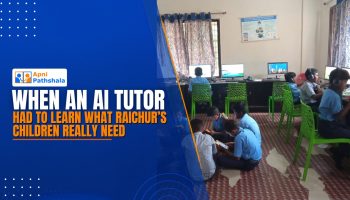
ApniPathshala operates through safe neighbourhood learning pods that support self-learning, collaboration, and digital skills, so students build capability, not just syllabus completion.
Why Community Microschools Exist
Most families don’t worry only about marks. They worry about what marks are doing to their child.
Traditional schooling often produces:
- Anxiety and fear of failure, because mistakes are punished instead of used for growth
- Burnout, because learning becomes pressure, not exploration
- Low confidence, because students are rarely trusted with meaningful responsibility
- Dependence, because children learn to wait for instructions rather than take initiative
The bigger loss is not a report card score. It’s the slow erosion of curiosity, agency, and self-belief.
Community microschools exist to reverse this outcome. They place the student back at the centre of education, before boards, rankings, and competition.
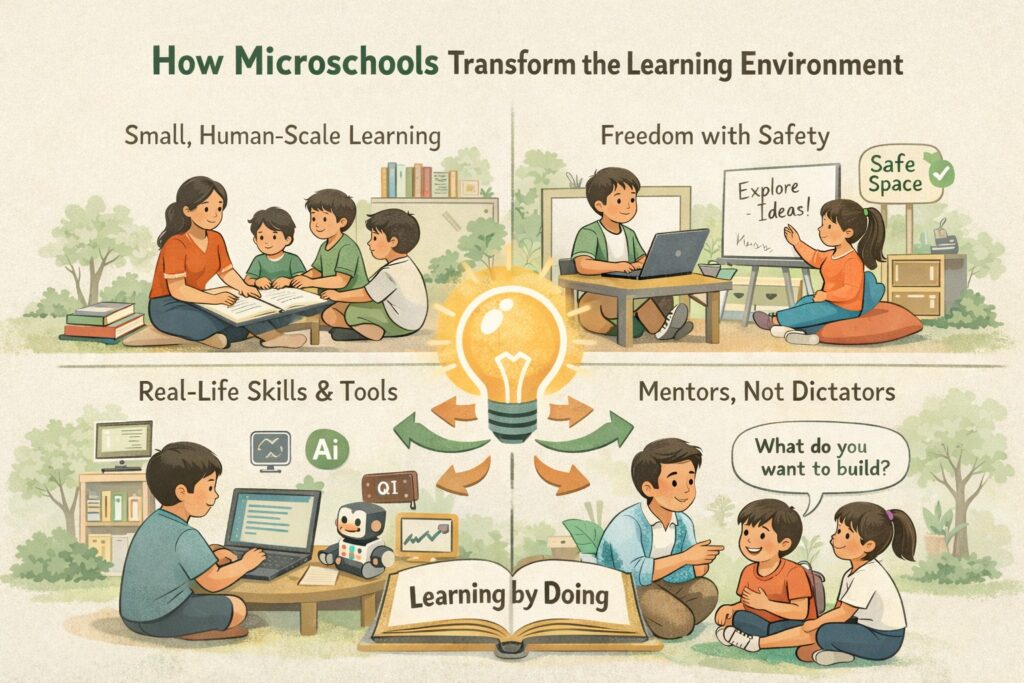
How Microschools Transform the Learning Environment
Community microschools do not try to “fix” traditional schooling from the inside. They redesign learning from the ground up.
1) Small, Human-Scale Learning
Microschools are intentionally small. That single decision changes everything:
- Fewer students means more attention per child
- Mixed-age groups enable peer learning
- Students are not invisible, and no one gets left behind quietly
Instead of one teacher trying to manage a crowd, learning becomes personal, social, and consistent.
2) Freedom With Safety (Not Chaos)
Microschools are not “anything goes.” They are structured environments where students are trusted, without being abandoned.
A strong microschool builds:
- Safe physical spaces for learning
- Safe digital environments with responsible internet use
- Clear boundaries that guide behaviour without fear-based discipline
Freedom is most powerful when paired with strong structure. This is what builds real independence.
3) Tools That Actually Matter in Real Life
In many classrooms, students are trained to reproduce answers. In a microschool, students are trained to learn, build, and apply.
Students use:
- Computers for real digital skills
- The internet is responsible for research and exploration
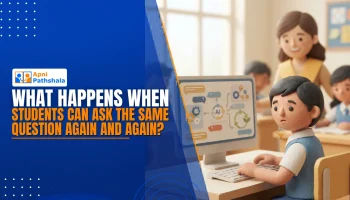
- AI tools as tutors and assistants (with guidance)
- Portfolios and projects to show progress
They learn how to learn an asset that outlasts any syllabus.
4) Mentors Instead of Dictators
A microschool mentor asks better questions:
- “What are you curious about?”
- “What do you want to build?”
- “What problem do you want to solve?”
This flips the relationship between adult and student. Adults become facilitators. Students become active participants. And learning becomes something students do, not something done to them.
What ApniPathshala Looks Like in Practice
At a practical level, ApniPathshala is a community-based microschool network safe learning pods running in neighbourhoods, built for self-directed and future-ready learning.
Students don’t just “study.” They:
- learn independently
- collaborate naturally
- teach each other
- build confidence through action
Parents don’t just pay fees. They gain visibility into learning and become partners supporting progress instead of only reacting to marks.
The Big Takeaway: From Control to Trust
Most education systems ask: How do we control learning?
Community microschools ask: How do we unlock it?
That shift-from control to trust-changes everything
- mistakes become feedback, not shame
- learning becomes meaningful, not mechanical
- Students become active learners, not passive followers
- capability becomes the goal, not just marks
Community microschools are not a compromise. They are a quiet revolution: smarter, kinder, and more human.
Conclusion
Community microschools exist because families and students can no longer afford an education model that trains children to obey, memorise, and fear mistakes.
That is exactly what community microschools rebuild: a learning environment where every child is seen, where mistakes become feedback, where curiosity is protected, and where real skills are practised daily, not promised “someday.” This is not an alternative for a few.
ApniPathshala is proof that when you reduce the crowd, increase trust, and replace exam pressure with meaningful learning, children don’t fall behind. They finally begin to move forward.
For Parents
explore how ApniPathshala learning pods work and what a neighbourhood microschool can look like for your family.