

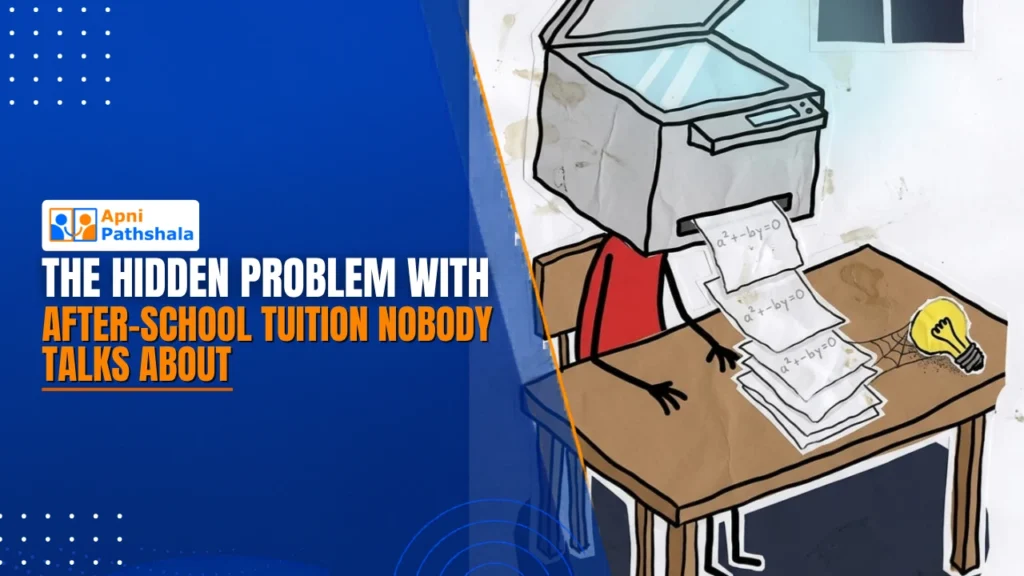
You pay the tuition fees by the fifth of every month.
You buy the extra reference books.
You assume that sending your child to an after-school program for two hours a day guarantees they are learning.
That is the problem.
Then you watch them do their homework.
- They look at a math equation.
- They don’t know the answer immediately.
- So they just close the book.
“I will ask tuition, sir, tomorrow.”
They don’t try a different method. They don’t open the textbook index to search.
They just wait.
You realize you aren’t paying for them to learn.
You are paying for someone else to do their thinking. They are losing the ability to solve problems on their own.
Most after-school programs fix the homework, but they accidentally break the student.
Here is how this dependency trap works, and the ONE skill they actually need to escape it…
Why is my child not improving despite going to tuition?
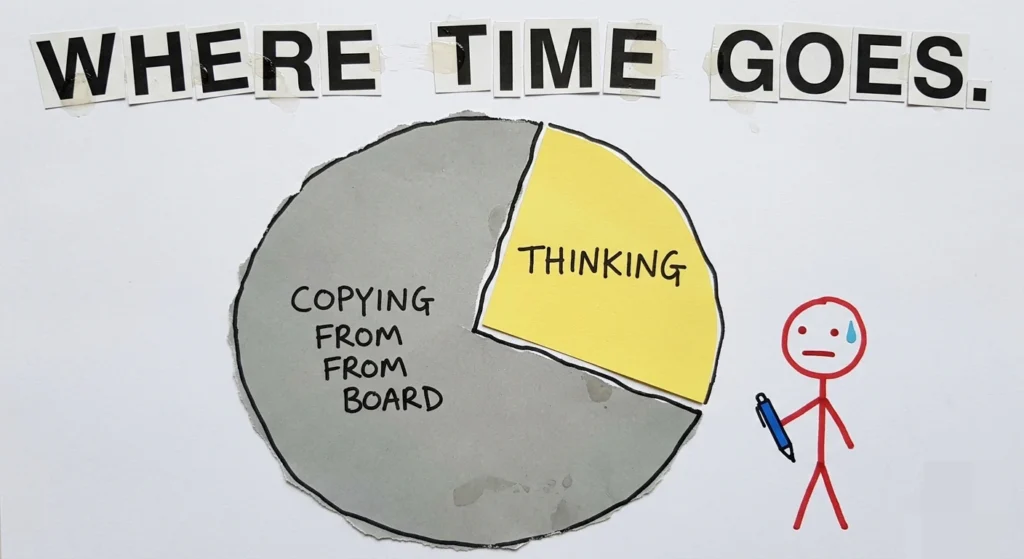
A child often fails to improve despite tuition because after-school programs focus on finishing homework rather than building independent problem-solving skills.
Tutors usually provide direct answers to save time, which stops the student from struggling through the problem and learning the underlying concept.
A student sits in a crowded room.
The tutor solves a difficult algebra problem on the whiteboard.
The student copies the steps into their notebook with a blue gel pen.
It looks like work. The notebook is neat.
But copying numbers from a whiteboard is just data transfer.
It is mechanical.
The brain is mostly switched off.
The moment that student faces a slightly altered question in an exam hall where the phrasing is reversed… they freeze. They haven’t learned the math. They have just learned how to mimic the tutor.
The grades might look fine on paper, but the reality is often very different. Read more about this in Your Child’s Report Card Is Lying to You.
What happens if a child relies too much on tuition?
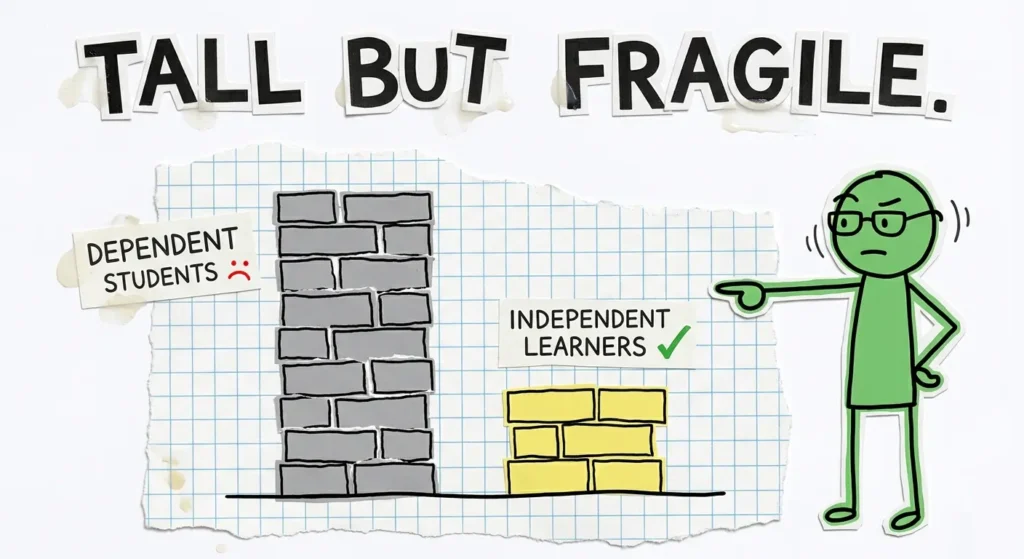
When a child relies too much on tuition, they lose the ability to learn independently. They become “spoon-fed” learners who panic when faced with an unseen exam question.
This dependency follows them into college and their careers, where no tutor is available to guide them.
This creates the HELPLESSNESS REFLEX.
You see it at home.
A student reads a question.
If the answer isn’t obvious within ten seconds, the pen goes down.
They stare at the clock.
The mind gets lazy when it knows a rescue team is always coming.
This habit doesn’t stay in school. Fresh college students freeze when a professor asks them to write a report without giving them a template. They can’t navigate a library or a basic search index.
They never had to find anything themselves.
Breaking this loop requires tools that force independence. Discover how to change their habits in Self-Learning Tools That Build Independence Not Dependency.
A Space Built to Break the Dependency Trap
Very few learning environments in India are actually designed around this idea. One of the more interesting examples is Apni Pathshala.
They do not build typical classrooms with a teacher lecturing from a stage. Instead, they help people set up small community spaces called PODs (Points of Digital Learning).
- There are currently 136 PODs total opened across India, with 107 active right now.
- They span 22 states and union territories.
- Over 22,000 students have spent time inside these rooms, and students have cleared their digital literacy and independent learning goals.
The structure inside is different.
There is no tutor standing over their shoulder giving out hints.
Students sit at Apna PCs and use a system called Eklavya AI.
When a student hits a difficult CBSE concept, the AI doesn’t give them a quick answer to clear the screen.
It stops.
It explains the concept in simple terms and forces the student to think until they figure it out.
Another system, Apni Prerna, keeps the computer clean from gaming apps and distracting content.
No shortcuts.
It’s just the student who is figuring out the problem.
(Visit apnipathshala.org if you want to find or open a POD near you.. )
How can I help my child study without a tutor?
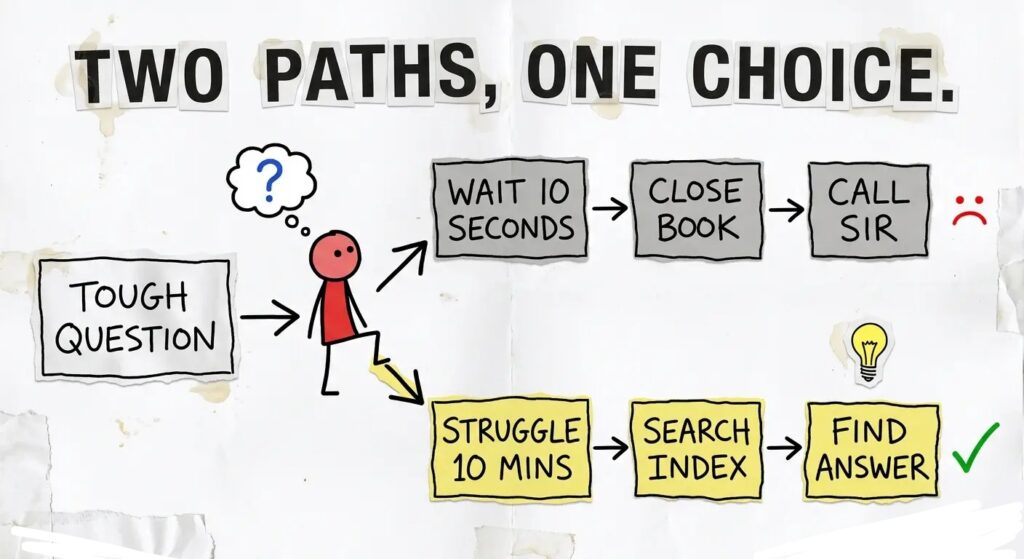
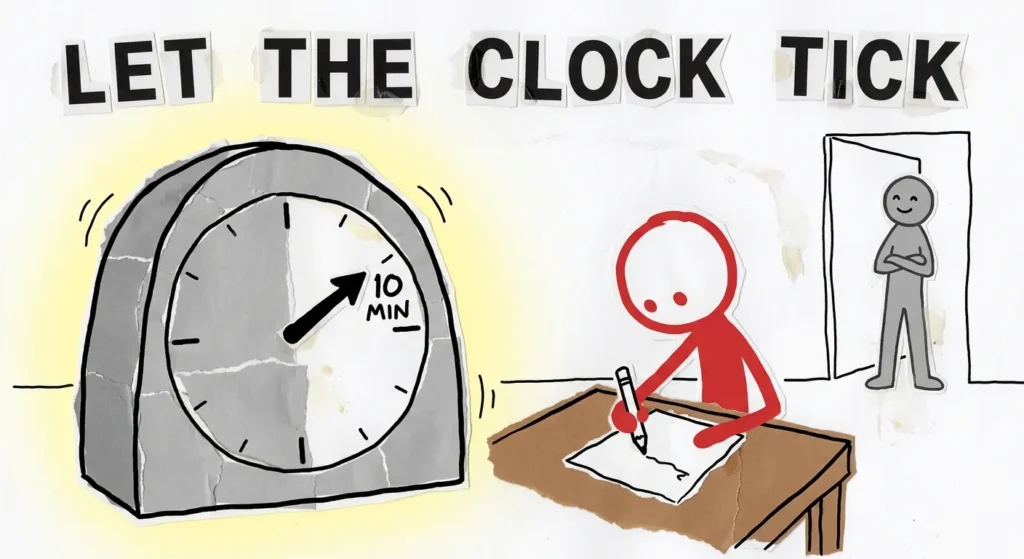
You can help your child study without a tutor by enforcing the “struggle rule.”
Make them sit with a difficult problem for ten minutes before asking for help. Teach them to search for explanations online and verify facts themselves rather than immediately relying on an adult.
It feels uncomfortable as a parent.
We see our child frustrated with a science chapter, and our immediate instinct is to fix it.
Don’t.
Let the tension sit.
- Tell them to open a browser, type the specific keyword, and read two different explanations.
- Show them how to look at an index.
When they finally find the answer after twenty minutes of searching, that knowledge sticks.
They didn’t just learn a fact.
They learned that they are capable of finding answers without a guide.
Helping your child doesn’t require a large budget. Learn how to guide them for free in: How Parents Can Support Learning Without Money.
Wrapping Up
A tuition class solves the immediate homework problem.
It keeps the notebook clean for the next morning.
But independent learning solves the student .
The next time they get stuck on a difficult question, leave the room.
Let them stay stuck for a little while.
The biggest barrier to digital education isn’t what most people think. See how this overlooked issue affects students every day.
Frequently Asked Questions (FAQs)
Q1: Can students actually learn without teachers?
Ans: Yes, students can learn many things on their own, but the right guidance, mentorship, and support help them learn faster, avoid mistakes, and stay motivated.
Q2: Why do so many students study for years but still struggle with real-world skills?
Ans: Because the biggest gap in education isn’t access to information, it’s the ability to apply knowledge in real life.
Q3: Can self-learning tools really help students become independent learners?
Ans: Yes. The right self-learning tools help students explore, practice, solve problems, and learn at their own pace, building confidence and independence over time.
Q3: How can Eklavya help students prepare for JEE?
Ans: Eklavya provides AI-powered learning support, practice questions, doubt-solving, and structured study guidance to help students prepare effectively for JEE.



16 Responses
Hey, 30 minutes rules works for me.
Thank you for sharing this with us! Glad the 30-minute rule is working for you. Small steps like this can really make learning more focused and consistent.
This is a powerful perspective on modern education. Many students become dependent on answers instead of learning how to think independently. Building problem-solving skills and self-learning habits is far more valuable in the long run than simply completing homework. Well explained!
Thank you for sharing your thoughts. We truly agree that real learning begins when students start thinking, questioning, and solving problems on their own. That is exactly the kind of self-learning habit we aim to build through Apni Pathshala.
Such a productive and peaceful vlog.
Thank you so much! Glad you found it productive and peaceful. We’re happy to share meaningful stories and learning moments from Apni Pathshala.
Great perspective. Real learning is not just about tuition but about thinking and learning independently. Well written.
Thank you so much for your kind words. Yes, real learning begins when children start thinking, questioning, and learning independently. Glad this perspective connected with you.
Insightful article. Appreciating this honest conversation around tuition and real learning.
Thank you for your kind words. We truly believe that learning should go beyond tuition and focus on real understanding, curiosity, and confidence in every child.
Powerful insight. Digital learning should help students think independently, not just complete homework, and this kind of approach can truly build confidence and future-ready skills.
Thank you for your kind words. We believe real learning begins when students start asking questions, exploring ideas, and using technology with purpose.
Amazing blog, I think every parent should read this
Thank you so much. Yes, this is something every parent should think about when choosing the right learning support for their child.
Good One https://subchathakur.wixsite.com/igurucool
Thank you for reading and sharing your thoughts. Glad you liked the blog.
You may also find this helpful: https://www.apnipathshala.org/blog/