You know that moment when your kid is genuinely obsessed with something, like actually obsessed, stays up late, asks weird questions, and forgets to eat?
That is what self-learning looks like when it is working. Now think about the last time you saw that happen because you scheduled it.
Exactly! ( never?)
Most parents who genuinely want their children to become independent learners end up doing things that quietly kill that independence, out of care.
The schedules, the topic suggestions, the progress checks. All of it comes from the right place. Almost all of it backfires.
This blog breaks down the four most common mistakes parents make while trying to encourage self-learning.
And why each one undermines the very thing you are trying to build, and what to do instead, without having to become a completely hands-off parent.
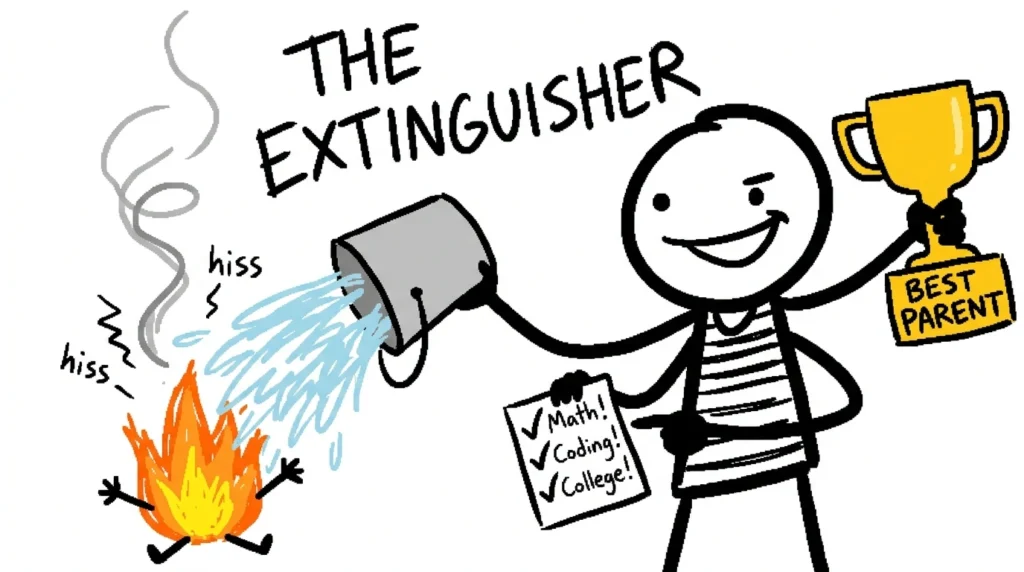
The Paradox of Guided Self-Learning
Swami Vivekananda wrote that education is not the filling of a vessel but the lighting of a fire. Knowledge is not something poured into a child from outside, but something drawn out from within.
In this view, the child already carries the capacity.
The adult’s role is to create the conditions under which that capacity can surface.
Osho extended this idea in a more confrontational direction.
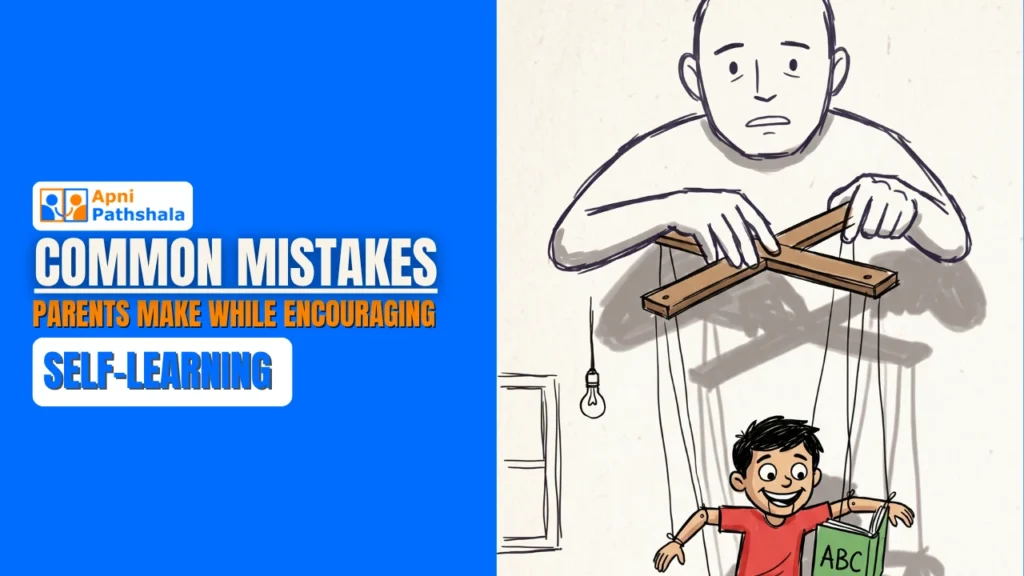
He observed that the adult who manages a child’s curiosity by deciding what should interest them, when they should pursue it, and how long they should spend is not supporting self-learning at all.
They are simply relocating the control from a school to a home.
Taken together, these two perspectives point toward a single original idea.
The act of encouraging self-learning, when done without care, can become a form of interference in itself.
Mistake One: Scheduling Curiosity

One of the most common patterns is the introduction of a structured self-learning timetable: an hour for reading, thirty minutes for a chosen topic, and a weekly review of what was retained.
The intention is sensible. In practice, though, it often works against itself.
Curiosity does not operate on schedule.
A child who becomes absorbed in understanding how bridges are built at 9 pm on a Tuesday, and is told to stop at 9:30 pm because the schedule ends, is learning something, but it is not the lesson the parent intended.
The lesson is that interest is subject to external management.
And if we’re being honest, the schedule also makes the parent feel productive, like something measurable is happening.
Self-directed learning, as research in educational psychology defines it, requires that the learner retain control over timing and direction.
Structured schedules, however well designed, tend to quietly remove both.
Mistake Two: Choosing the Direction
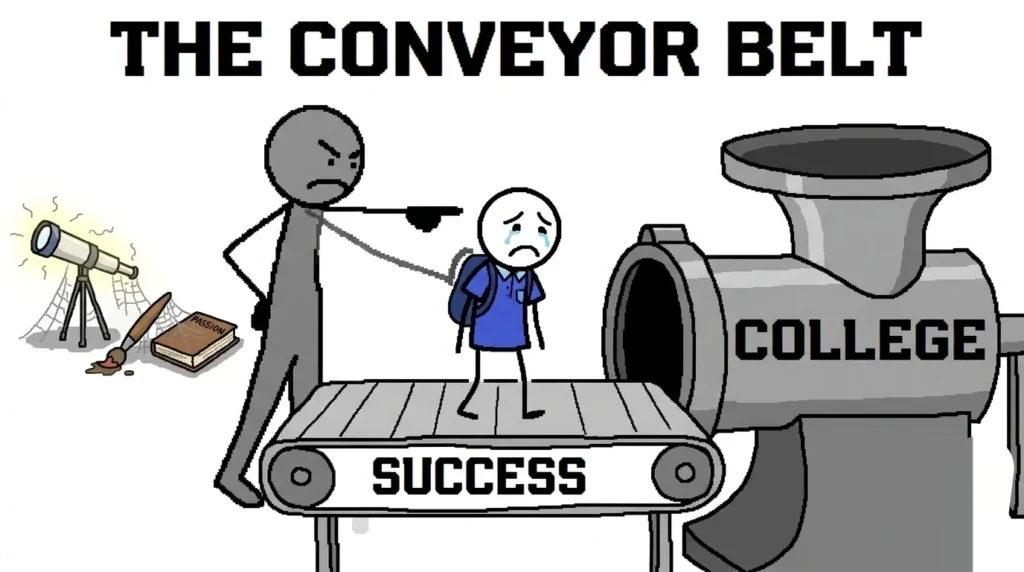
A related pattern involves parents selecting topics they believe their child should self-learn.
Digital skills, coding, and financial literacy. The list of important subjects is long, and the parents’ concern is reasonable.
These things do matter.
The difficulty is that self-learning derives much of its effectiveness from what the child actually feels like pursuing, from genuinely wanting to understand it, not from recognising it is useful.
As explored in our earlier piece on why self-learning is the future of education, the shift from student to learner is primarily motivational.
A child who is self-learning a topic chosen by someone else is, in most meaningful ways, still being taught.
What this usually looks like is a child nodding along to a topic suggestion, spending some time with it, and then drifting quietly away when no one is watching.
The more productive approach involves creating access to a wide range of interesting material, books, documentaries, tools, and communities and allowing the child’s own attention to determine direction.
The parents’ role is to open doors, not to select which room the child should enter
Mistake Three: Rewarding Results Instead of Curiosity
When a child completes a self-directed project or demonstrates knowledge of a new topic, the instinctive parental response is to praise the outcome.
This feels encouraging.
Over time, though, it tends to shift something.
Outcome-based praise gradually teaches children that the goal of exploration is to produce something praiseworthy.
This subtly repositions curiosity as an instrumentally useful means of achieving rewards rather than something worth doing on its own.
It looks like self-learning from the outside, but doesn’t quite feel that way to the child.
Praising the process rather than the questions asked, the confusion navigated, and the persistence shown when something was difficult reinforces the disposition that actually produces long-term self-learners.
The distinction is small in any individual interaction and significant across hundreds of them.
Mistake Four: Monitoring Progress Constantly
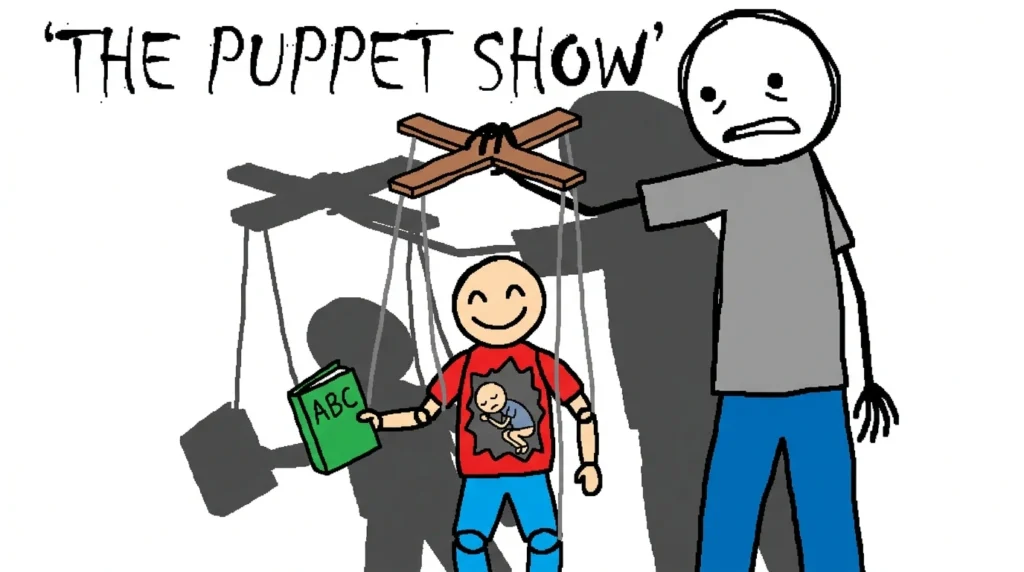
The parent who checks in frequently on what a child is learning, how much time they are spending, and what they have retained is attempting to stay connected to the learning process.
The child, however, often experiences this differently.
In practice, frequent monitoring communicates that the parent does not trust the child’s judgment about their own learning.
Over time, this can erode the very self-direction the parent is hoping to cultivate.
You can see this in small ways: children who feel watched tend to optimize for looking engaged rather than being engaged.
This is, as noted in our analysis of why students memorise rather than understand, a well-documented failure mode in traditional education, and not one that disappears simply because the setting is a home.
The child says, “I was reading about volcanoes,” and the parent feels reassured.
What was actually happening might have been twenty minutes on volcanoes and forty scrolling elsewhere, but the conversation satisfied both parties.
Periodic, light touch check-ins asking a child what interested them recently, rather than what they accomplished, tend to produce more honest and more productive conversations.
The Underlying Principle
The thread connecting each of these mistakes is the same.
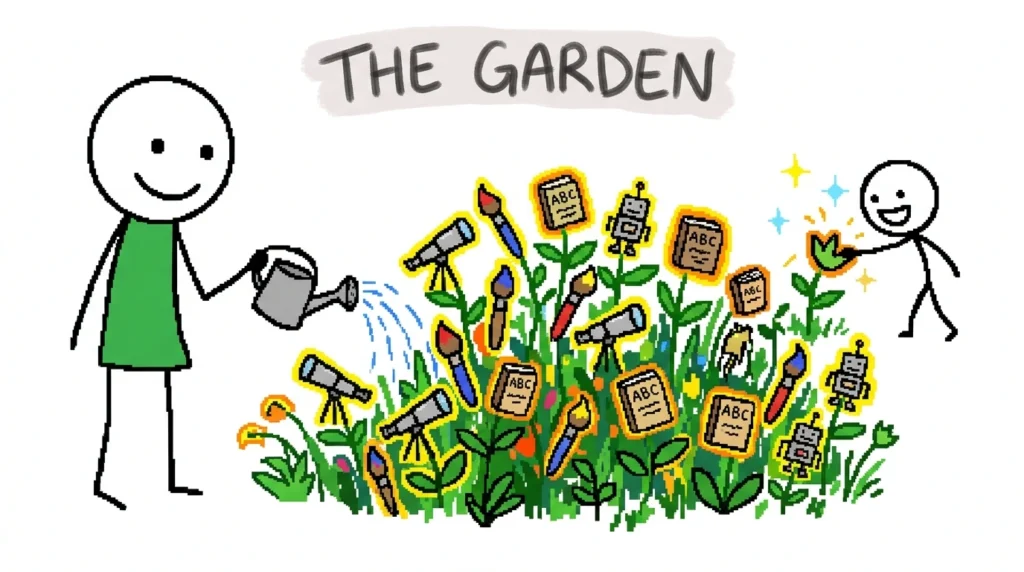
They all involve the parents’ need for visible evidence that learning is occurring, evidence which, when demanded too persistently, changes the conditions under which genuine learning can take place.
Self-learning, at its most effective, requires a low-pressure, high-trust environment.
The parent who provides that environment and resists the urge to manage what emerges from it is doing something more difficult than scheduling and monitoring.
They are exercising restraint. That restraint is, in most cases, the more important contribution.
How Apni Pathshala PODs Create a Real Self-Learning Environment
This philosophy of high trust and structured freedom is exactly why Apni Pathshala built its network of community PODs.
Our PODs have 10- Apna PC designed as pressure-free zones where students can explore digital skills and diverse topics entirely on their own terms, safely!
Here, learning happens beyond traditional classroom methods:
- Mentors Guide, They Don’t Control: Our mentors are trained to be facilitators, not authoritarian managers. They do not interrupt a student’s flow unless help is explicitly requested or absolutely needed. Their role is to unblock obstacles and offer guidance, never to dictate the path.
- Powered by Ekalavya AI: We integrate Ekalavya AI to support personalized learning journeys. The AI helps students find resources and answers tailored to their curiosity, empowering them to drive their own progress without constant adult intervention.
- Freedom to Explore: There are no rigid timetables forcing curiosity into slots. Students choose what to learn, how deep to go, and when to pivot. This autonomy ensures that the motivation remains intrinsic.
Across 22 states, these centres serve as safe harbours where the “spark” of education is protected, allowing students to transition from passive learners to active souls.
If you are interested in learning more about pods. know more
Want to understand how children learn deeply without a teacher directing every step? Read more
Frequently Asked Questions
1. What makes learning without teachers possible?
Ans: Access to digital tools, structured content, and self-learning platforms makes it possible. The key is having direction, not necessarily constant instruction.
2. What is self-learning, and why is it important for students?
Ans: Self-learning is the ability of a student to learn independently without constant guidance. It helps students build confidence, problem-solving skills, and long-term understanding, which are essential for future success.
3. Why are students struggling even after learning AI tools?
Ans: Many students focus on using tools instead of understanding concepts. This creates dependency, where they can generate answers but cannot explain or apply them.
4. Does digital literacy affect a student’s ability to self-learn?
Ans: Digital literacy functions as a prerequisite for effective self-direction in most contemporary learning contexts