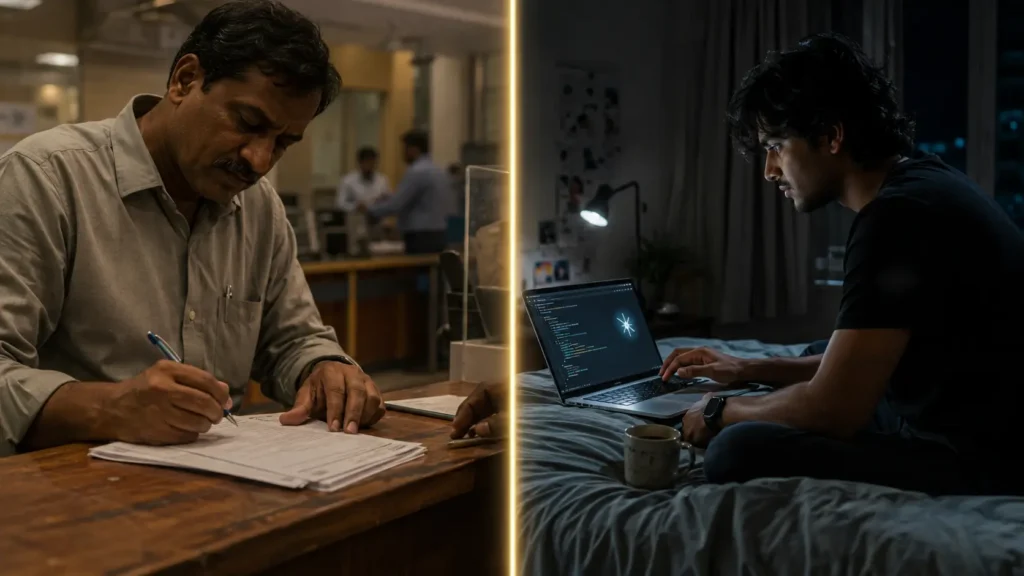
Right now, a father in Lucknow is standing in a bank, signing papers for an education loan.
He is about to spend ₹5 Lakhs to send his son to a tier-3 private engineering college. He believes he is doing the right thing. He thinks he just bought his child a guaranteed, safe future.
He is completely wrong.
While that father signs the loan, someone else is sitting in a bedroom, building a Japanese learning web app designed specifically for Indian users. That creator did not hire a team of junior developers. They didn’t wait four years for a degree.
They just bought a twenty-dollar monthly subscription to Claude AI.
The AI writes the code. The creator ships the application in less than a month and markets it directly on Twitter and Instagram.
Read that again. A twenty-dollar AI tool just permanently destroyed the exact entry-level job that the father in Lucknow is paying ₹5 Lakhs to secure.
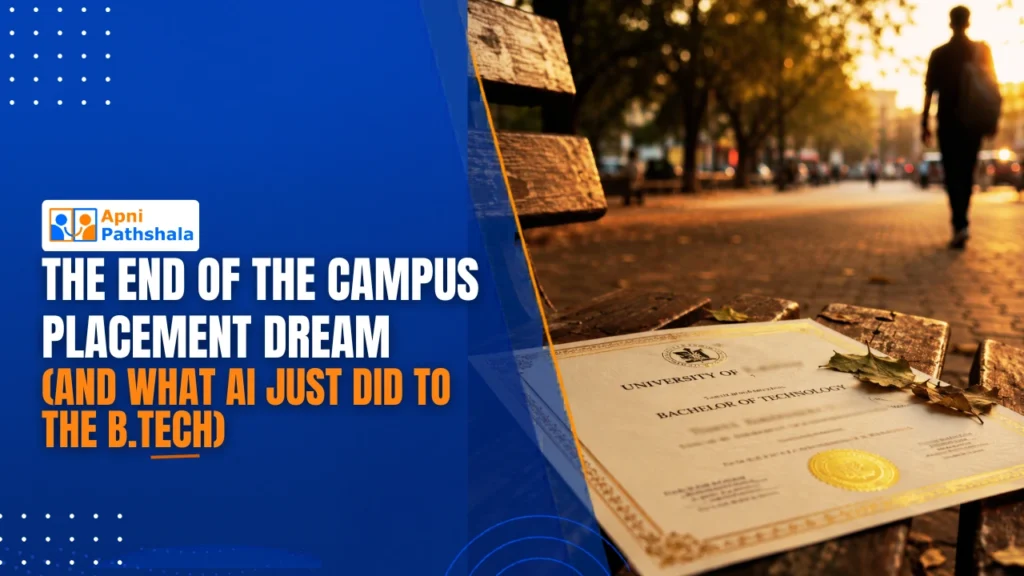
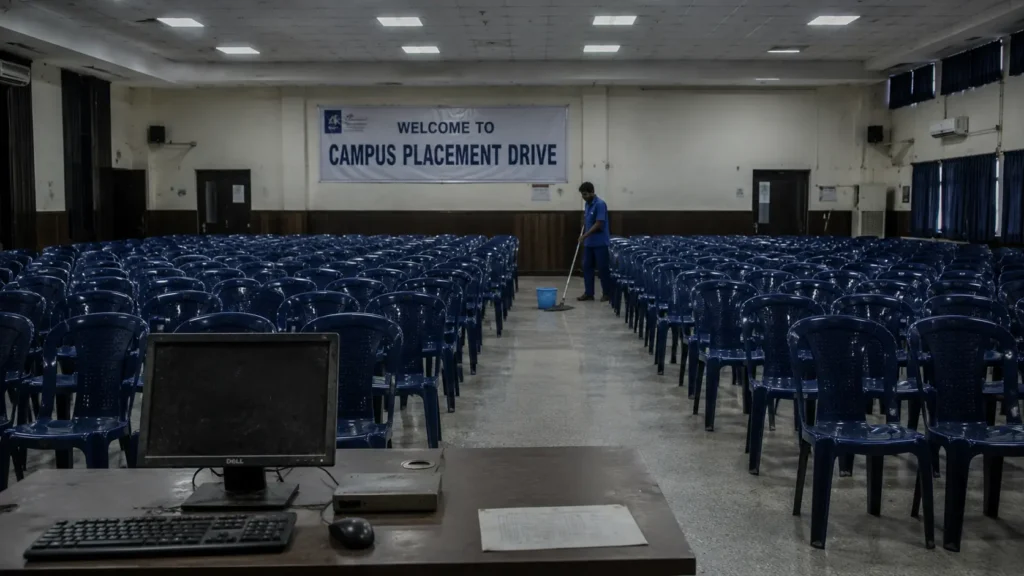
The Indian education system is running a massive, outdated scam. We are handing out millions of degrees, but we are producing a generation of utterly unemployable youth.
The Day the Mass Recruitment Stopped
For twenty years, the Indian middle-class dream was built on one simple model: The mass campus placement.
Giant IT companies would visit small engineering colleges. They would hire 50,000 freshers in a single month. These students didn’t need to be brilliant. They just needed a basic B.Tech to sit in a cubicle and do junior-level coding, testing, and data grunt work.
That era is dead.
Why would a company pay a fresher ₹30,000 a month to write basic code in three days, when an AI agent can write it flawlessly in three seconds for free?
The “entry-level” job has been completely wiped out. But colleges are still charging full price for the ticket.
Real Gap is Thinking
When parents hear this, they panic. They ask, “So what language should my kid learn?”
That is the wrong question.
The true student skill gap is not about knowing Python or Java. It is about dealing with friction. Our school system teaches kids how to memorise a textbook and solve problems that have one correct answer printed at the back of the book.
In the real world, there is no back of the book.
If an AI can instantly write the code, what is the human’s job? The human’s job is to figure out what to build. The human’s job is to handle a problem in multiple different ways.
Can they ask the right questions? Can they communicate clearly? Can they fail at a task, look completely foolish, and try again without blaming it as “toxic work culture”?
These are the survival muscles of 2026. And our students don’t have them.
“Proof of Work” is the New Degree
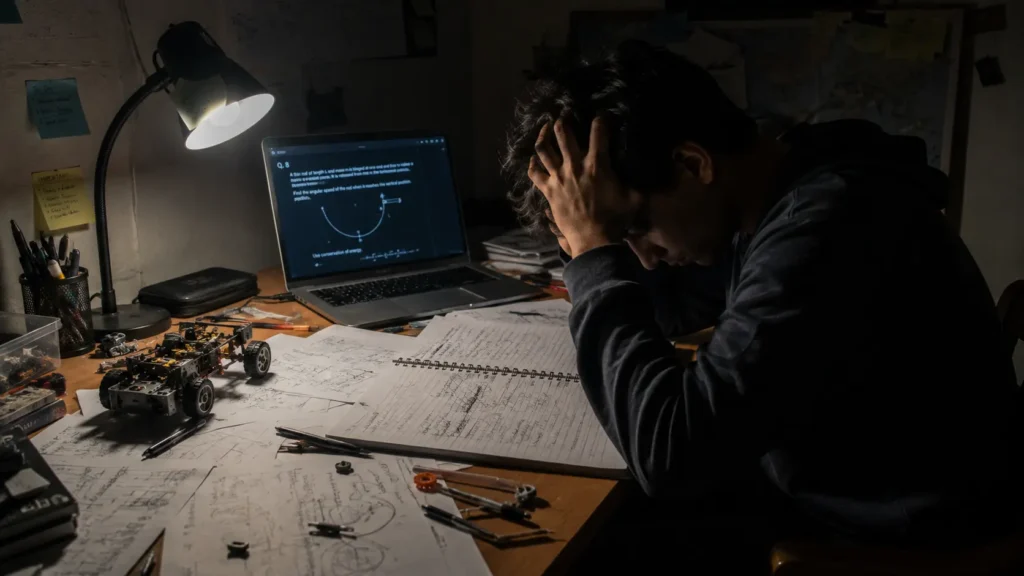
The modern job market doesn’t care about 9.5 CGPA.
HR managers are exhausted by perfect report cards that hide average, helpless students. Today, companies hire based on one thing: Proof of Work.
You are only as good as what you can build.
The person who built that Japanese learning app using AI will get hired a hundred times faster than a traditional B.Tech graduate with an empty GitHub profile. The builder proved they can take an idea, struggle through the execution, use modern tools, and actually ship a result.
Is the point whether you can provide value? If you observe your friends, 3 out of 7 always complain as soon as a new problem arises. 2 of them release “stress” by swiping WhatsApp status. And if you are lucky enough, at least 1 of them tries to think. Try to understand what can even be done.
That is real skill development for students. You do not learn it by listening to a teacher talk at a whiteboard for four hours. You learn it by doing it.
Bypassing the College Factory
We cannot wait for traditional schools and colleges to fix this. They won’t. They are too busy protecting their fees.
This is exactly why Apni Pathshala is building a decentralised model for practical learning for students.
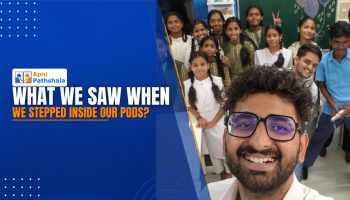
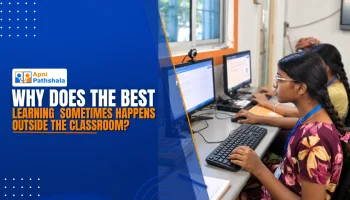
Inside our micro-learning PODs, we don’t prepare students for exams. We prepare them for reality. A POD physically removes the distractions of the open internet. It strips away the safety net.
When a student sits inside a POD, local mentors do not spoon-feed them instructions. If a student gets stuck, they use Eklavya AI. But Eklavya AI does not just give them the final answer. It acts as a brutal, strict digital mentor. It forces the student to explain their reasoning, argue their point, and struggle until they figure it out on their own.
We are delivering future skills directly to students and the communities that need them most. We are forcing them to build.
Stop obsessing over their board marks. Stop saving up for useless degrees. Let them struggle in a safe room today, so they actually know how to survive tomorrow.
Partner With Apni Pathshala: Building Capable Students Together
The old education system is dead. Apni Pathshala is building community PODs where students learn both academics and real-world independence.
If you direct a CSR fund, lead an NGO, or hold local public office, we invite you to collaborate. Let’s work together to create safe, guided learning spaces that actually make our youth employable. Contact us today to visit our ground operations and explore a partnership.
Frequently Asked Questions
Q1: What is the biggest student skill gap today?
Ans: It is not technical knowledge. It is independent problem-solving, digital leverage, and the ability to handle ambiguity. Students know how to pass exams, but they freeze when faced with real-world problems without a textbook answer.
Q2: Are traditional engineering degrees becoming useless?
Ans: For the vast majority of tier-3/4 colleges, yes. AI has automated the junior-level tasks that mass recruiters used to hire freshers for. Employers now look for “Proof of Work” (portfolios and real projects) over a basic paper degree.
Q3: How do Apni Pathshala PODs teach practical learning for students?
Ans: PODs completely remove passive learning. Mentors act as guides, not teachers. Students use rigorous AI tools like Eklavya to wrestle with complex problems, forcing them to develop critical thinking and resilience rather than just memorising facts.