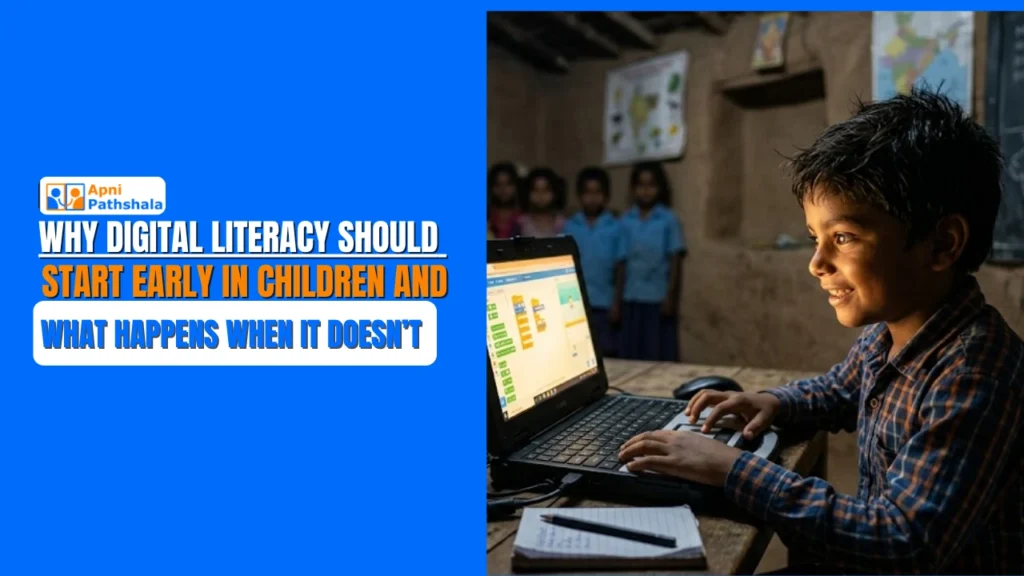
Here’s a scene you’ve probably witnessed.
A seven-year-old picks up a tablet for the first time.
Within ninety seconds, they’ve found YouTube, navigated to their favourite cartoon, adjusted the volume, and are completely absorbed.
The parent watches this and thinks, maybe with a small measure of relief, that they’ll figure out technology when they need to.
And they will. Sort of.
The same way a child raised without books will eventually learn to read.
But there’s a cost to waiting, and with digital literacy, that cost accumulates quietly for years before it becomes visible.
The Language Window Nobody Told You About
Linguists have known for decades that children who learn a second language before age seven acquire it differently from children who learn it later.
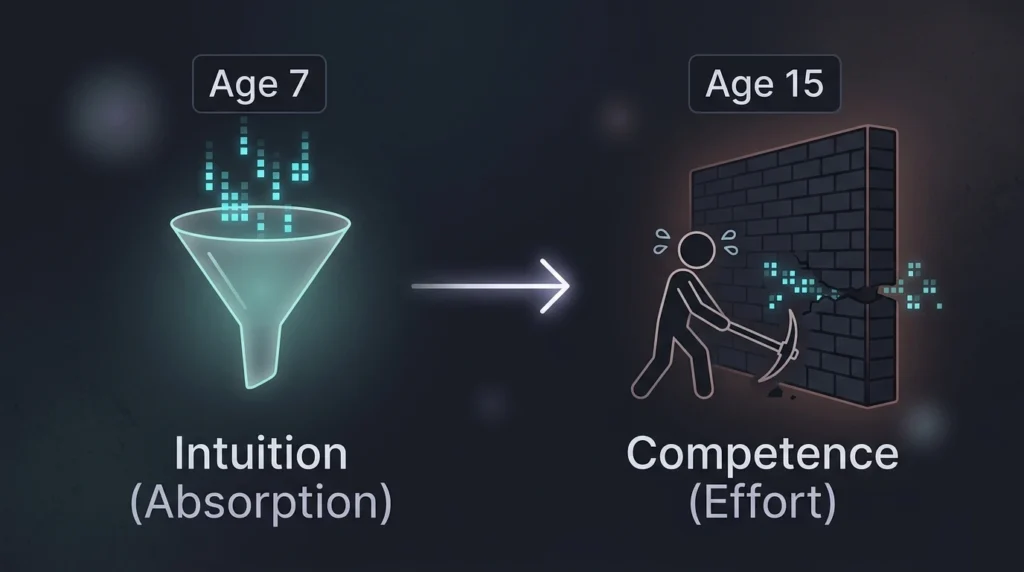
Earlier learners develop native-level intuition. The language feels natural. It arrives without effort.
Later learners develop real, functional competence; nothing wrong with it, but it arrives through effort rather than absorption.
The same result costs significantly more. The brain has a window. It doesn’t slam shut after it passes.
But the same destination takes a different route, and that route is longer. Digital literacy isn’t a language in the technical sense. But the principle holds.
Early exposure doesn’t just teach skills, it shapes how the brain approaches a domain. A child who grows up interacting with technology thoughtfully develops intuition about it.
A child who first encounters it seriously at fourteen develops skills. Not the same thing.
We teach children to read at age five not because books are easy, they aren’t but because the brain at five is better at learning to read than the brain at twelve.
The same logic applies to digital literacy. We’re just not applying it.
What Early Digital Literacy Actually Means
This is where the misconception usually lives.
Early digital literacy doesn’t mean handing a five year old a smartphone and calling it education. That’s screen time. Different thing entirely.
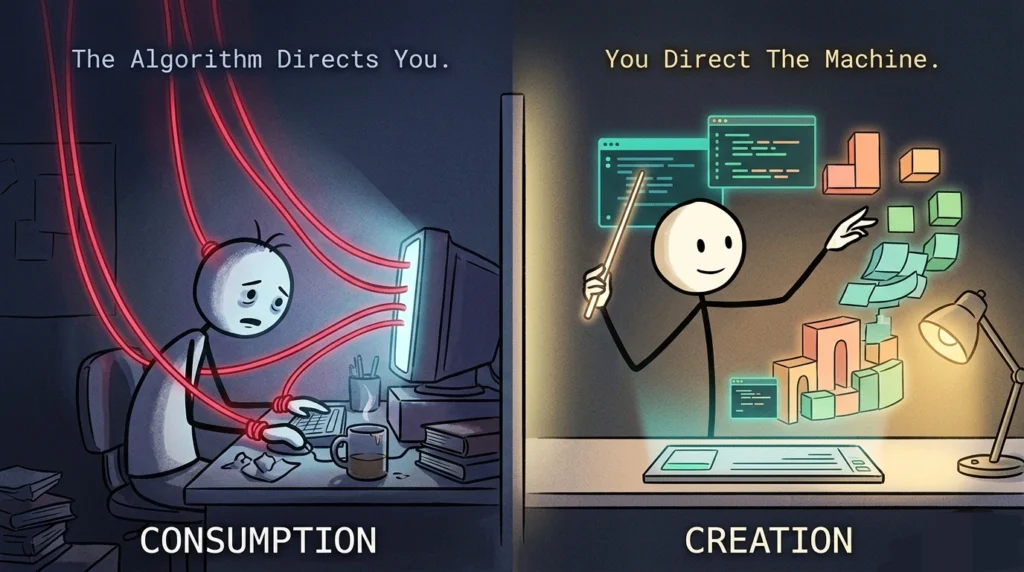
It means three specific things and the distinction between them and passive consumption is the whole point.
Creating, not just consuming. A child who only watches YouTube is a passive user.
A child who makes a simple animation, writes a story on a computer, or builds something in Scratch is developing a completely different relationship with technology.
One receives. The other directs. That difference compounds over years. Evaluating what they see.
A child who learns early that not everything online is true and who builds the habit of asking “how do I know this is right” is developing a skill that protects them for the rest of their life.
This is arguably more important than any technical ability.
The internet doesn’t get less complicated as they get older. Understanding that technology responds to them.
Children who grow up using technology passively tend to treat it as an authority.
Children who learn early that technology is a tool that responds to clear instructions, that it can be directed, questioned, and shaped to develop agency.
What Happens When It Doesn’t Start Early
By Class 9 or 10, Indian students are expected to navigate digital tools for assignments, research, and increasingly, AI-assisted learning.
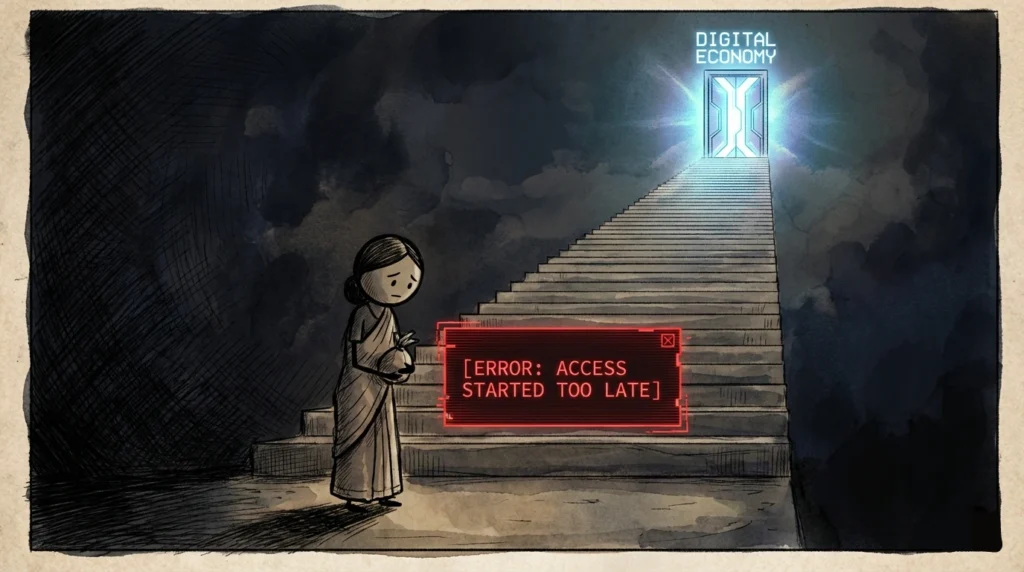
Students who arrive at that stage without foundational digital literacy aren’t just behind on skills; they’re uncomfortable with the environment itself.
Discomfort leads to avoidance. Avoidance leads to falling further behind.
The gap between digitally confident and digitally anxious students widens every year not because of intelligence, but because of when exposure started.
India’s ASER 2024 data makes this visible.
Significant gaps in basic digital task completion exist among 14 to 16 year olds in rural areas the age at which most students are first being formally introduced to digital tools.
By then, peers with earlier access are already years ahead, through no merit of their own.
The gender dimension makes it sharper.
Early, structured digital education in schools and community centres is one of the few interventions that can close this before it becomes permanent.
What It Actually Looks Like in Practice
Not a curriculum overhaul. Not a new device.
Just structured exposure that’s earlier and more intentional than most families currently provide. For younger children ages five to eight simple creative tools.
Drawing programmes.
Basic coding games like Scratch Jr. Learning to type. Understanding that computers respond to instructions, and that those instructions need to be clear.
That last one teaches logic as much as technology. For slightly older children nine to twelve learning to search effectively, which is a skill and not an instinct.
Understanding that different sources say different things.
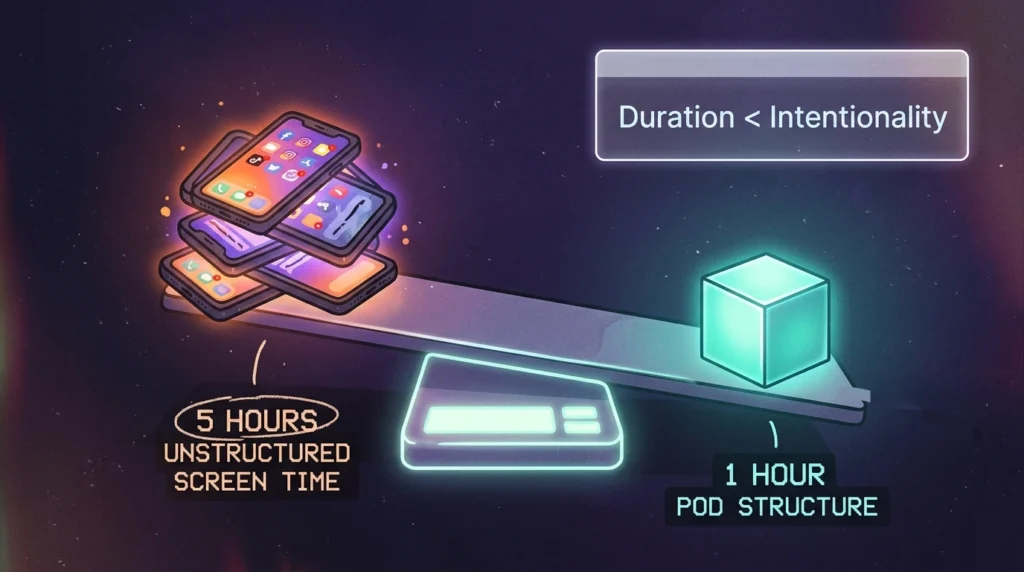
Creating simple documents and presentations. Basic awareness of online safety. The variable that matters most isn’t the device or the duration. It’s structure.
A child with one hour a week in a guided, purposeful digital environment learns more than a child with five hours a day of unstructured screen time.
This is documented and unsurprising it’s the same reason a child learns more in one focused hour of reading with a parent than three hours alone with a book they can’t quite follow.
This is the gap Apni Pathshala’s PODs are built to fill structured digital learning environments in communities where guided early access doesn’t otherwise exist.
22,000 students across 22 states, many of them in the eight to fourteen age range where early exposure still makes a meaningful difference.
Worth knowing the infrastructure exists at apnipathshala.org. Something that requires early structure, not just early access.
Those two children look similar on paper. But they are not the same.
If you want to see where this leads:
It’s not about teaching AI. It’s about teaching how to think. Read more.
More study doesn’t mean more learning. Here’s why.
Frequently Asked Questions
1. What is the real problem with AI-based learning today?
Ans: The Problem is not AI, it’s the lack of guidance. Without a structured learning path, children depend too much on AI for answers instead of learning how to think, analyze, and apply knowledge on their own.
2. Why are Community Centre PODs important in India?
Ans: Many students in India don’t have access to devices, internet, or proper learning guidance at home. PODs solve this by providing a shared, structured environment where students can learn consistently and effectively.
3.What is the biggest mistake parents and educators make with AI?
Ans: They focus only on tool usage instead of learning process. Teaching children how to use AI without teaching how to think leads to shallow learning.
4. How does unstructured digital learning affect students?
Ans: Without a clear path, students jump from one topic to another, Consuming Random content. This lack of structure leads to confusion, low retention, and wasted study time.