You have been lied to. Not by a person. By an idea.
The idea that discipline is enough. That the right YouTube playlist, the right course, the right book and enough willpower are all a motivated person needs to learn anything.
It sounds true. It feels true.
It is costing you more than you realize.
Here Is What Actually Happens
You start learning something new. You feel momentum. Day one, day three, day seven, you are genuinely making progress.
Then life gets busy. You miss a session. You come back three days later, slightly unsure where you left off.
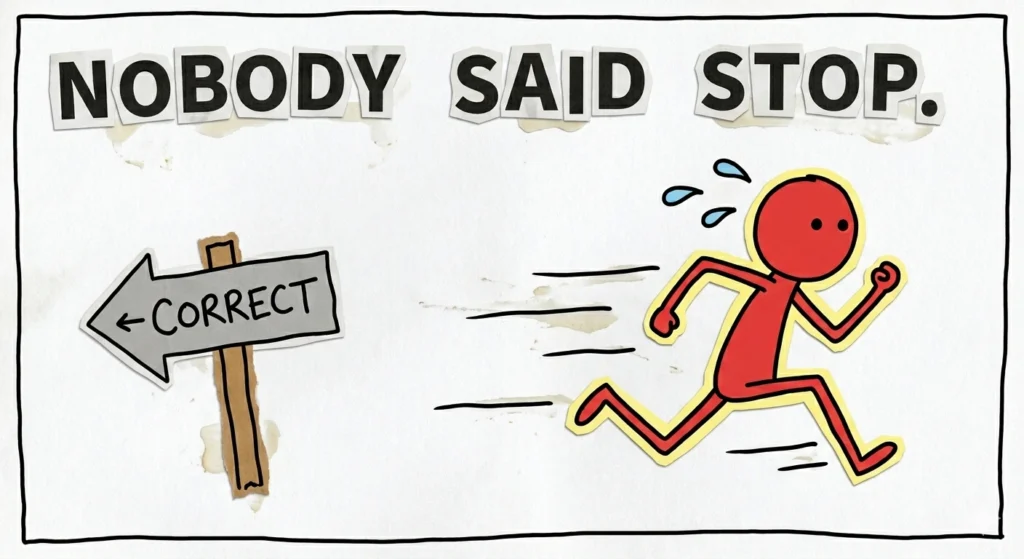
Nobody noticed you stopped. Nobody course-corrected the mistake you made in week two that quietly became a habit. Nobody told you that the direction you were heading was slightly wrong and that slight wrongness was compounding every single day.
If you look at the raw industry data from hiring platforms right now, the truth is brutal: self-paced learning completion rates hover below 30 per cent.
Seven out of ten people who start motivated, resourceful, and genuinely wanting to grow quietly abandon it.
Not lazy people. Motivated people. People exactly like you.
And here is the part that should make you angry. The reason they quit has nothing to do with effort.
It has everything to do with the absence of one thing.
The One Thing That Changes Everything
Think about every person you know who actually got good at something.
Not someone who watched videos about it. Someone who genuinely built a skill, kept it, and used it.
Now ask yourself: did they figure it out on their own?
Almost certainly not.
They had a coach who watched them and said, “Your foot positioning is wrong.” A mentor who said, “That approach works for now, but will break at scale.” A peer who said, “I made that same mistake here is what I missed.”
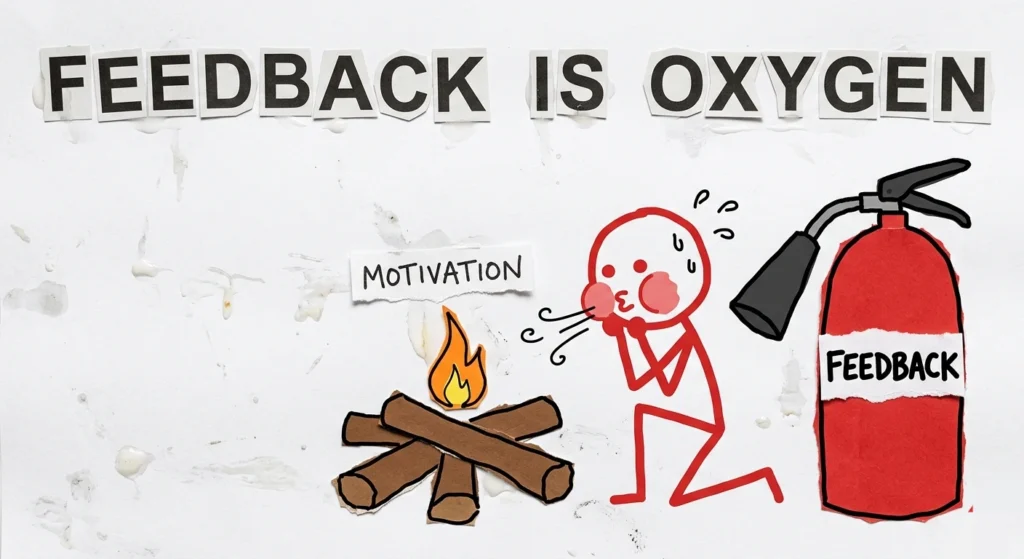
They had feedback. Specific, honest, timely feedback.
Research on cognitive development is completely direct on this: self-directed learning requires three components working together: self-management, self-monitoring, and motivation.
Remove any one, and the other two collapse. Self-monitoring is the one thing nobody can do alone.
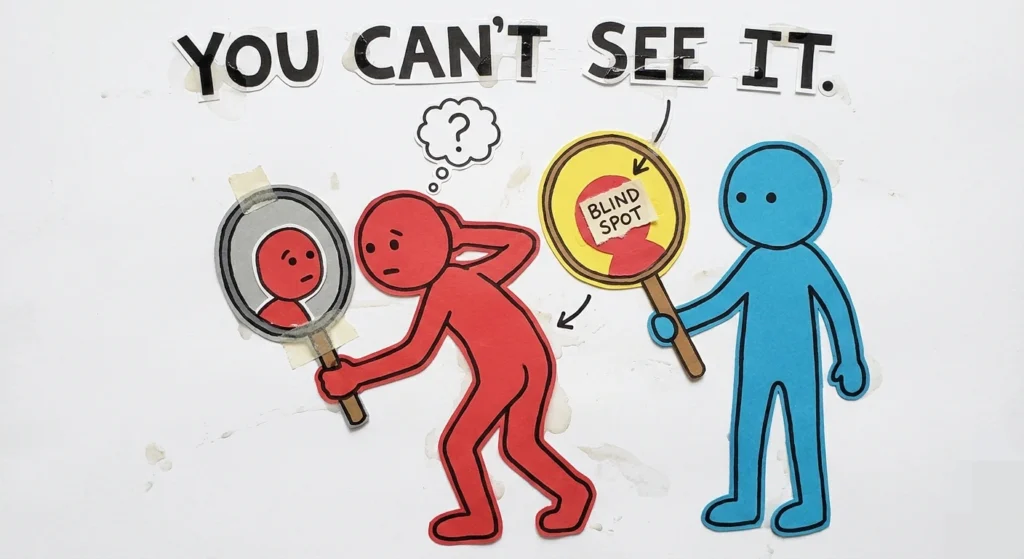
You cannot see your own blind spots. That is exactly what makes them blind spots. Without something catching your mistakes at the moment they happen, not at the exam, not at the interview, not when it is already too late, you spend months feeling productive while building absolutely nothing solid.
This is not a discipline problem. This is a design problem.
And it has a solution.
What Guided Self-Learning Actually Looks Like
Here is what changes when guidance enters the picture.
You still drive. You choose the pace, the direction, the depth. Nobody is forcing information into you from the front of a room.
But there is something of a tool, a mentor, a structured environment that catches the moment your understanding breaks down. That does not let you move forward, carrying a gap you do not know you have. That finds the exact crack before it becomes a wall.
Data shows that AI tools providing diagnostic feedback, not just telling you “wrong,” but specifically why and where, dramatically outperform standard content delivery.
The learner who has this does not just learn faster. They build something that holds. Something that survives the test, the interview, the real-world application, not just the temporary feeling of having studied.
The students who actually retain what they learn are not the ones who studied the hardest.
They are the ones whose mistakes were caught early, corrected specifically, and never allowed to compound.
Where This Already Exists And What It Has Produced
You cannot get this level of feedback from a ₹500 recorded Udemy course. And you definitely are not getting it in a college lecture hall of 60 people.
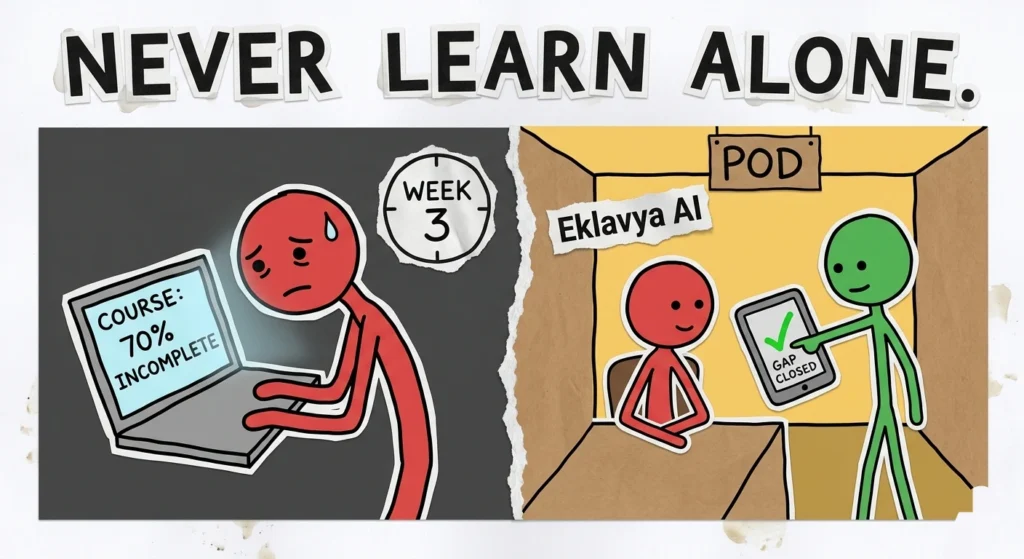
This is exactly why the environment has to change. And it is exactly what Apni Pathshala’s PODs are built on.
Students in 109 centres across 22 states are not being lectured at. They are driving their own learning through Eklavya AI, which identifies their specific conceptual gaps, refuses to let them move forward until those gaps are fully closed, and delivers feedback in the language the student actually thinks in.
The physical POD Leader provides what no software can fully replace: a human presence that notices when a student stops, checks in, and makes the learning feel real and accountable.
22,000 students have come through this model.
The results are not due to the technology being just impressive. They are because guided self-learning is simply more ruthless and effective than pure instruction or pure isolation.
If you are a student who has been trying to learn on your own and hitting walls, this is why.
If you are a parent watching your child study hard and retain almost nothing, this is why.
If you are an educator who knows the current system is failing students but has not seen a working alternative, this is it.
If you are ready to see how education is changing in those rooms.
Visit apnipathshala.org. See what 22,000 students already know.
And you know, tech without thinking about the environment is just a distraction. Check out the tough situation in rural areas and some real solutions. Read here
Frequently Asked Questions
1. Why is digital literacy important for rural students?
Ans: Digital literacy helps rural students access quality education, online resources, and skill-based learning opportunities that are often unavailable locally.
2. What is Apni Pathshala, and how does it help students learn better?
Ans: Apni Pathshala provides a simple and practical way to start digital learning through computers, structured content, and local learning centres designed for real understanding.
3. Can students study without coaching using AI?
Ans: Yes, AI platforms like Eklavya provide structured learning, doubt-solving, and guidance, helping students prepare effectively on their own.
4. Why do most students fail at self-learning even with online tools?
Ans: Because they don’t have a clear direction or structured plan, they end up learning randomly and lose consistency over time.