The night before my board exam, I had seventeen tabs open.
YouTube lectures. Summary PDFs. A Reddit thread I’d been refreshing for an hour. I felt busy. I felt productive. I closed the laptop at midnight, having retained almost nothing.
The problem wasn’t the tools alone. The problem was that every single one of them was doing my thinking for me.
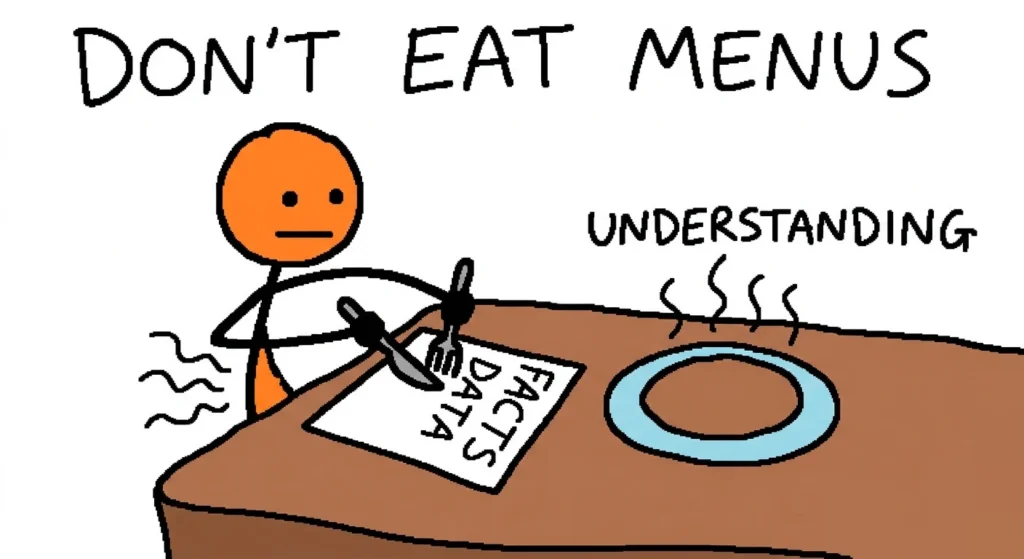
A great thinker from India once said something about this. He noticed that people mistake information for understanding, just as they mistake a menu for a meal. You can read every description on the menu. You will still be hungry.
The tools I’m about to share are different. They don’t feed you. They make you cook.
Why Most Tool Lists Are Wrong
Every “best tools for students” article recommends ChatGPT, Notion, and Quizlet. These are fine tools. They are also designed to produce outputs for you. Ask ChatGPT a question, and you get an answer. The thinking happened on their end, not yours.
The tools that actually build independence are the ones that require something from you before they give anything back.
They are harder to start. They feel less satisfied in the short term. And they are almost never on the popular lists because they don’t have big marketing budgets.
Roger Federer’s coach used to make him narrate his own game back to himself after practice. Not review footage. Narrate. Out loud. Because the act of reconstructing what happened forces a different kind of attention than simply watching it replay. The tools below work on the exact same principle.
RemNote: Your Notes Should Fight Back
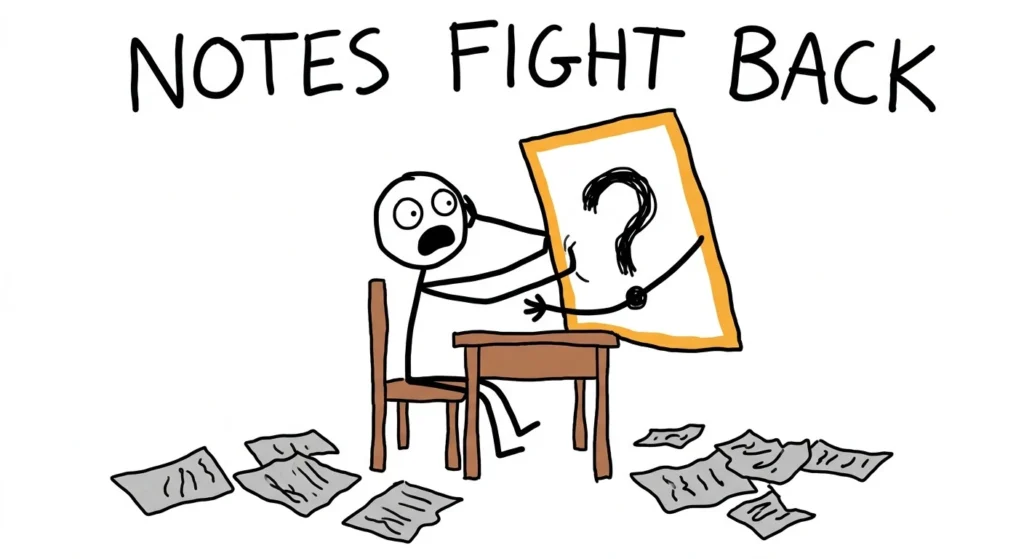
Most students take notes the same way they collect receipts. They go in a folder and are never seen again.
RemNote turns every note into a question. As you write, you mark certain lines as things you need to remember. The system then asks you those things back at the exact moment you’re about to forget them. This is called spaced repetition, and the science behind it is decades old. RemNote just makes it automatic.
The difference in retention over three months is not small. It is not like improving from a B to a B+. It is like studying for a test you took three weeks ago and still knowing the answers.
Logseq: How Thinking Actually Works
Knowledge is not linear. You learn something in chemistry, then something in biology, and suddenly you realize they’re the same idea wearing different clothes. Traditional notes cannot show this. They are lists. Lists hide connections.
Logseq is a free thinking tool where every note links to every other related note. Over time, your notes stop being a record of what you encountered and start being a map of how ideas relate to each other.
Vivekananda’s lectures were not prepared in isolation. Each one drew from years of connected thinking across philosophy, science, and human experience. He didn’t memorize facts. He built a web. Logseq builds that habit structurally, one linked note at a time. (Bonus: Your data stays on your device. No one owns it but you.)
Zotero: The Research Tool Nobody Talks About
If you read papers, articles, or anything with citations, Zotero is the most quietly useful tool available. One browser click saves any source with full citation information attached. When you write, it generates your bibliography automatically in whatever format your institution requires.
More importantly, it changes how you read. Students who use Zotero build a personal research library over the years. Students who don’t start from scratch for every assignment. The compounding difference by the third year of college is enormous.
Eklavya AI: The One Built Because Students Were Dying
In 2023, 26 students in Kota died by suicide.
Because the coaching industry had convinced them and their families that spending ₹5 to 7 lakh over two years on loans, with assets mortgaged, was the only path to JEE or NEET.
And when they didn’t make it, they had no framework for what that meant about them. What they mean is: this works, and we know you need it, so pay up.
Apni Pathshala looked at that model and decided it was wrong.
So, we developed the same features in EKLAVYA. JEE, NEET, NCERT-aligned, Maharashtra board, and UP Board, all for free! It is built on the same principle as the other tools above: it does not think for you.
It finds where your understanding breaks down and makes you work through it, rather than giving you the answer and moving on.
45,000+ students are currently using it for JEE preparation alone! The reason it belongs on this list is not charity.
You can literally use it in the next thirty seconds.
Explain Everything: The Federer Test
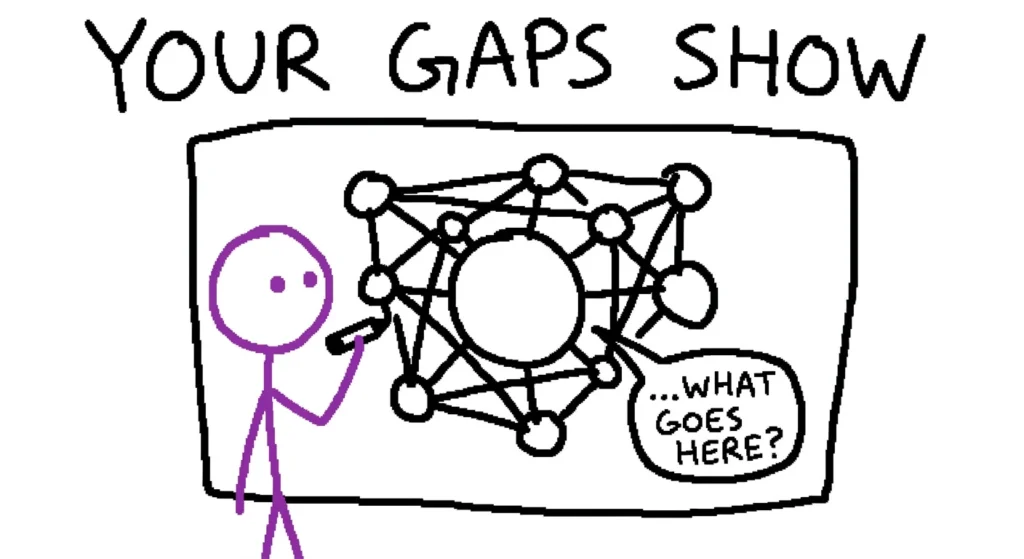
This one came from Reddit threads, not listicles. The idea is simple. Take a topic you just studied. Open this whiteboard app. Explain it out loud, drawing as you go, as if teaching a ten-year-old.
Where your explanation breaks down is exactly where your understanding breaks down. Not approximately. Exactly.
We explored this in our piece on why students memorise rather than understand. The act of explaining is the most honest test of whether you actually know something.
Explain Everything makes that test available any time.
The Thing These Tools Have in Common
None of them thinks for you. All of them require you to generate something before they give anything back. A question. A connection. An explanation. A decision about what matters.
As we wrote in our piece on common mistakes parents make when encouraging self-learning, the tools that foster dependence are almost always the ones that feel easiest. These tools feel slightly harder. That difficulty is not a bug.
That difficulty is the learning.
How Apni Pathshala Closes the Gap
Everything above assumes you have a device. A stable internet connection. A quiet place to sit and think.
Millions of Indian students have none of these things. And no tool list fixes that.
Apni Pathshala PODs bridge this exact friction. By providing rural students with structured environments, free devices, and guided support, we turn passive consumers into independent, tool-literate self-learners who drive their own education.
If you know a community that needs this, or want to bring one to your area, the conversation starts at apnipathshala.org.
If you are interested in learning more about pods. know more
Why Self-Learning Is the Future of Education (And How Students Can Start Today). Read more
Frequently Asked Questions
1. What is the biggest mistake parents make in self-learning?
Ans: Expecting results without giving children the right guidance, structure, and learning environment.
2. Why are PODs important for students today?
Ans: PODs provide access to technology and learning support that many students lack, helping bridge the gap between traditional education and real-world skills.
3. What is the biggest reason students forget what they study?
Ans: Passive learning methods like reading and watching without testing or applying the knowledge.
4. Why do students become dependent on AI tools like ChatGPT?
Ans: ChatGPT gives you outputs. These tools develop your process. These tools build the capacity to find answers yourself when no tool is available.