Mulla Nasruddin was ferrying a pompous scholar across a rough deep river.
”Have you ever studied grammar?” the scholar asked.
“No” Nasruddin replied.
“Then half your life has been wasted” the scholar scoffed.
Minutes later a violent storm hit. The boat began taking on water fast. Nasruddin turned to the terrified scholar and asked “Have you ever learned to swim”. ”
No” the scholar gasped. “Then your whole life is wasted” Nasruddin said.
“The boat is sinking.”

We are teaching our children grammar on a sinking boat.
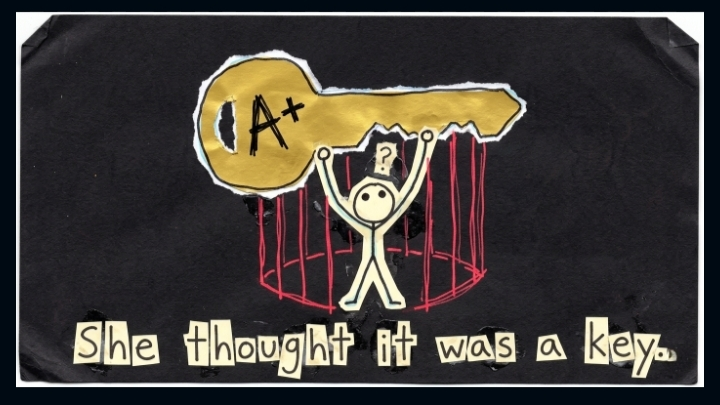
We hand them certificates for memorizing definitions while the water rises around their ankles.
How to Measure Digital Literacy Without Exams Properly
You have seen it happen.
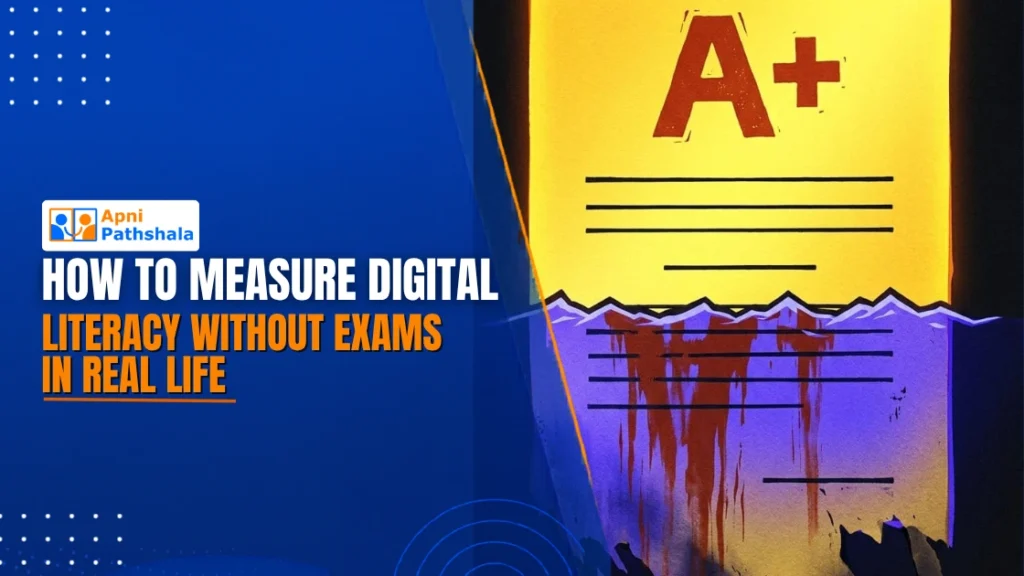
A teenager brings home a glowing report card with a perfect score in their school’s computer class.
We hand them certificates for memorizing definitions while the water rises around their ankles.
If you want to know how to measure digital literacy without exams, you have to stop looking at the certificate and start looking at the water.
They can write down the full form of HTTP. They can accurately label the internal wiring of a motherboard on a printed worksheet.
Then the family printer stops working. Or an uncle forwards a suspicious banking link on WhatsApp. Or someone needs to book a tatkal train ticket quickly. The teenager freezes completely.
They know the theory of the machine. They have absolutely no idea how to operate in the digital world.
Exams measure what you remember. The internet tests how you survive.
Why Traditional Digital Literacy Assessment Methods Fail
The gap between theory and survival is widening every single day.
According to the Annual Status of Education Report, while over 90 percent of Indian youth have access to a smartphone, the majority still struggle to perform applied financial tasks like calculating a basic discount online. ASER Centre
They are highly efficient consumers. They are completely lost operators.
We keep looking for neat measurable ways to test these skills on paper. A student who scores perfect marks on a formal computer test is often the easiest target for a basic phishing scam.
They have been conditioned for years to follow written instructions blindly. That exact compliance is what every digital scammer relies on.
The Human Cost of Fake Competence
Look at Aryan, a fourteen year old boy living in Nagpur.
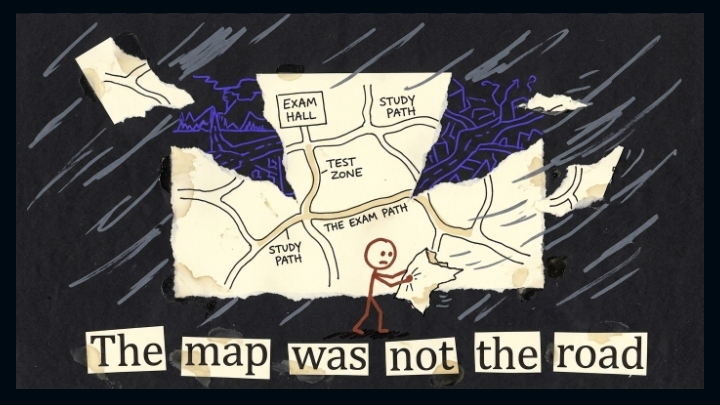
Last Tuesday his father Vikram watched him proudly as he recited complex HTML tags for his mid term oral exam. Aryan got an A plus. Three hours later a food delivery order went wrong. Aryan panicked.
He Googled a customer care number, clicked the very first sponsored link without checking the URL and nearly gave a fraudster his father’s UPI PIN over the phone.
Vikram watched his brilliant student crumble in a basic real world scenario. Aryan does not know how to use the internet. The internet knows how to use him.
How to Evaluate Digital Skills in Students
Trying to measure capability through written tests is like judging a driver by their RTO exam. You can memorize every road sign in the government booklet. You can score full marks on the multiple choice paper.
But that piece of paper means absolutely nothing when you are stuck at a chaotic traffic signal in Chandni Chowk during a monsoon downpour.
In that moment nobody cares if you know the textbook definition of a clutch. They only care if you can find the biting point before the auto rickshaw behind you hits your bumper while a stray cow blocks the lane. Real digital spaces are Chandni Chowk.
They are loud, unregulated and constantly shifting.
You cannot measure digital literacy without exams if you refuse to take the kids out of the classroom and put them into the actual traffic.
Alternative Ways to Measure Student Learning
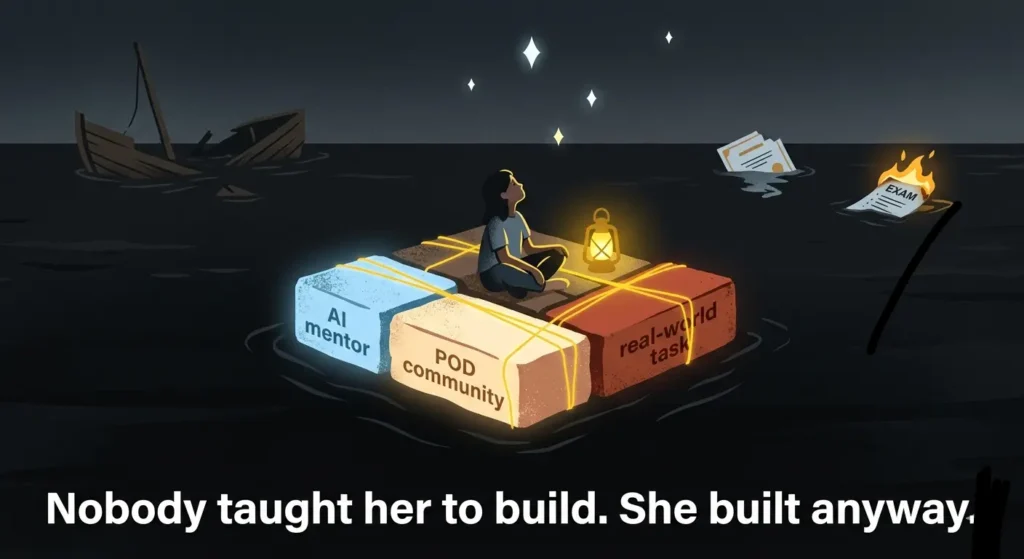
The only real metric is task based friction. Give them a problem with no clear instructions. Ask them to find a reliable source explaining a recent event, verify the author and summarize it. Watch where their mouse goes. Watch how they verify trust.
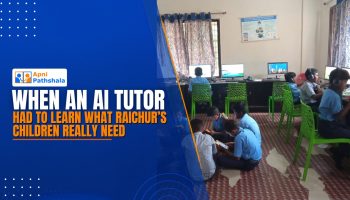
Very few learning environments in India are actually designed around this idea. One of the more interesting examples is Apni Pathshala.
They operate 107 active PODs across 22 states serving over 22,000 students. When a student in a rural Maharashtra POD uses Eklavya AI to prepare for the Maharashtra Board exams they are not tested on computer theory.
Their true literacy is proven by their ability to navigate the platform, fix their own login issues and manage their daily learning pace independently.
The tool itself is the test. The environment is the assessment.
Look at the child sitting across from you right now staring at a screen. If the digital floor vanished beneath them tomorrow would they know how to swim or would they just recite the rules of water.
Frequently Asked Questions
1. What is the difference between digital literacy and computer science
Computer science teaches how machines are built and programmed. Digital literacy teaches how to survive, learn and communicate safely using those machines in the real world. This is exactly why paper exams fail to capture true capability. Read our full breakdown on why your child’s report card is lying to you.
2. Why is early digital safety crucial for children
Because the internet does not filter itself for minors. Without safety boundaries a child is one click away from predatory content or financial fraud. Unrestricted access turns the device into a digital babysitter instead of a tool. Learn how to build digital boundaries in the brutal truth about screen time and studying.
3. How can rural students access quality digital education
Community led models bridge the physical gap. By providing a structured room with mentors and offline capable software rural children get hands on access without needing personal laptops. Discover how this works in the biggest myths about community learning centres.
4. What makes task based learning more effective than traditional exams
Traditional exams test memory retention in a sterile predictable environment. Task based learning throws a student into messy unpredictable scenarios where they must think critically and solve problems using available digital tools. See the evidence for this in what actually works between self learning and online classes.
5. What is the true role of AI in personalized learning
AI does not replace the human teacher it replaces the rigid syllabus. It adapts to the exact speed and language of the student ensuring no child is left behind in a crowded classroom. It catches mistakes the moment they happen. See exactly how AI guidance outperforms pure self study in our guide on why self learning fails.