

Before reading this story, you can first read our earlier update on Project Narayan: Learning in Government Schools in Raichur.
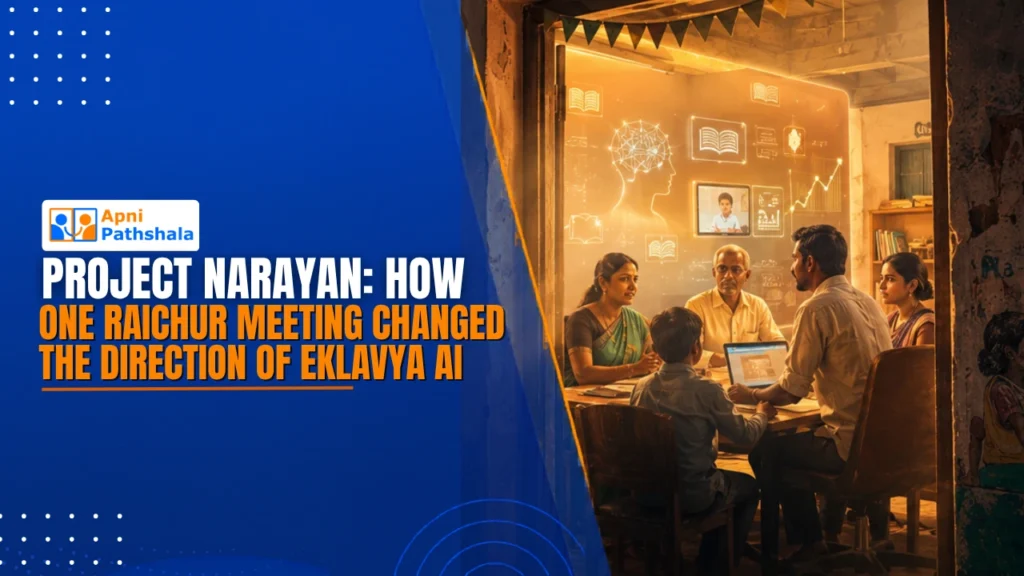
When the Apni Pathshala team reached Raichur, we thought the conversation would be about bringing Eklavya, our AI learning platform, into schools.
We already had experience with competitive exam learning, CBSE-based learning, and curriculum-focused versions of Eklavya.
But our meeting with Iswar Kumar Kandoo, IAS, Chief Executive Officer of Raichur Zilla Panchayat, changed the direction completely.
The Real Challenge Was Foundational Learning
The discussion was not about making the existing curriculum more advanced.
Kandoo ji raised a more fundamental problem.
What happens when children reach Class 5 or Class 6 without mastering basic reading and mathematics?
That brought the conversation to Foundational Literacy and Numeracy, or FLN.
A child may move from one grade to another, but if they still struggle with basic reading, pronunciation, numbers, or simple arithmetic, the learning gap continues to grow.
This was the challenge Kandoo ji wanted us to work on.
Raichur is also part of NITI Aayog’s Aspirational Districts Programme, making measurable improvement in areas such as education especially significant for the district.
Instead of asking, “How can we introduce AI in schools?”, the question became:
Can AI help children strengthen the foundations of learning?
That question changed Project Narayan.
Building Eklavya for a Different Learner
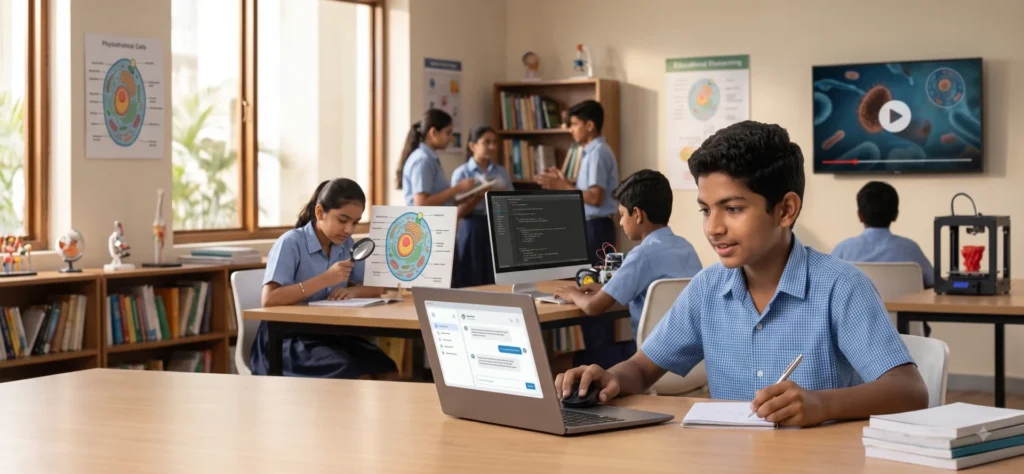
For Apni Pathshala, this was a new challenge.
We had not designed Eklavya specifically for children working on foundational skills.
A younger learner needs something very different.
The experience has to be simpler, interactive, playful, and easy to understand.
It also needs to measure whether the child is actually learning instead of simply completing activities.
That led us to start developing a Raichur-focused FLN version of Eklavya, built around foundational learning benchmarks.
NCERT’s Learning Outcomes at the Foundational Stage provide an important reference for understanding the skills children are expected to develop during their early years of learning.
The focus is on skills such as reading, understanding, recognising words and numbers, counting, and basic mathematical operations.
The aim is simple:
Help children build the foundation they need before asking them to move further.
Language Matters Too
Another important concern in Raichur is language.
Children may interact with different languages at home, in school, and in their communities.
For a child who is still learning to read confidently, this can make things harder.
That means language cannot be treated as a small feature added later.
The learning experience itself needs to be designed around how children actually understand and communicate.
Project Narayan gives us an opportunity to learn how a digital platform can respond better to that reality.
Why We Called It Project Narayan
The initiative was named Project Narayan, in honour of Narayan Malpani.
The idea behind it reflects a belief that has always been central to Apni Pathshala:
Education should reach everyone.
For us, simply providing a computer or a digital platform is not enough.
Technology is only useful when a child learns from it.
That is why our work does not end when a resource reaches a school. The same thinking is behind Apna PC, where access to technology is connected with a larger learning ecosystem rather than treated as an end in itself.
We want to understand whether students are actually using the resources, whether teachers find them useful, and whether learning improves.
Project Narayan follows the same approach.
Start Small. Measure Honestly.
The first phase will run across three schools in Raichur.
The purpose of the pilot is not to claim that the model already works.
It is to find out whether it works.
We want to understand how children engage with the FLN version of Eklavya, where they struggle, what needs improvement, and whether there is measurable progress in foundational learning.
That honesty matters.
A pilot should not simply prove what we already want to believe.
It should show us what needs to change.
If the model demonstrates meaningful results, the next target is to expand Project Narayan to 100 schools across Raichur district.
Ishwar Kandoo Ji Helped Define the Right Problem
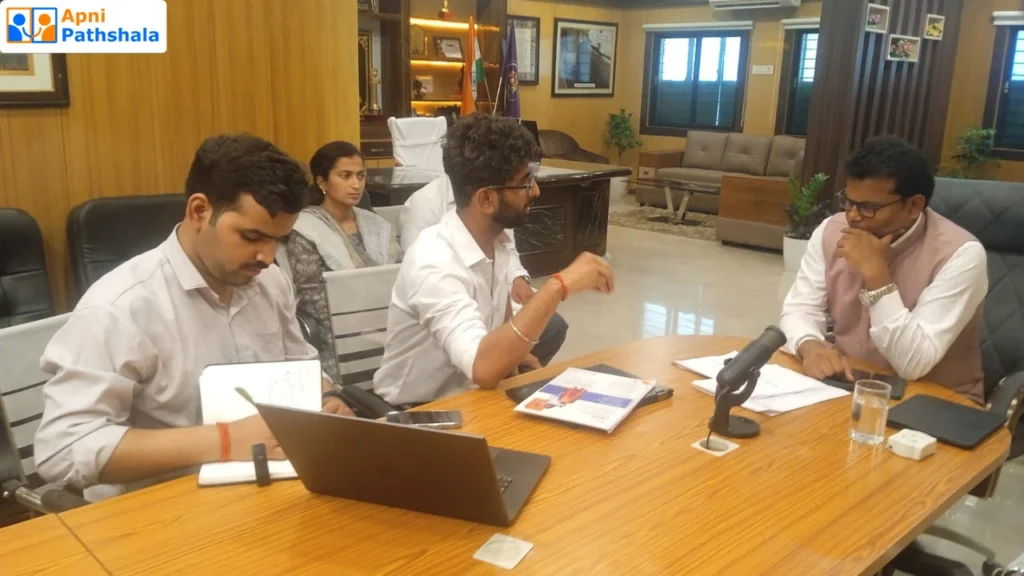
Kandoo ji‘s contribution was not simply administrative support.
He helped make the problem more specific.
Instead of asking us what technology we wanted to bring, he asked us to think about what children actually needed.
That shifted the entire direction of the project.
His support also helped the initiative move from discussion toward an actual school-level pilot.
For us, that is what meaningful collaboration looks like.
Not introducing technology for the sake of technology.
Using it to respond to a clearly identified learning problem.
Ranjita Made the Execution Smoother
Good ideas also need people who can make them move.
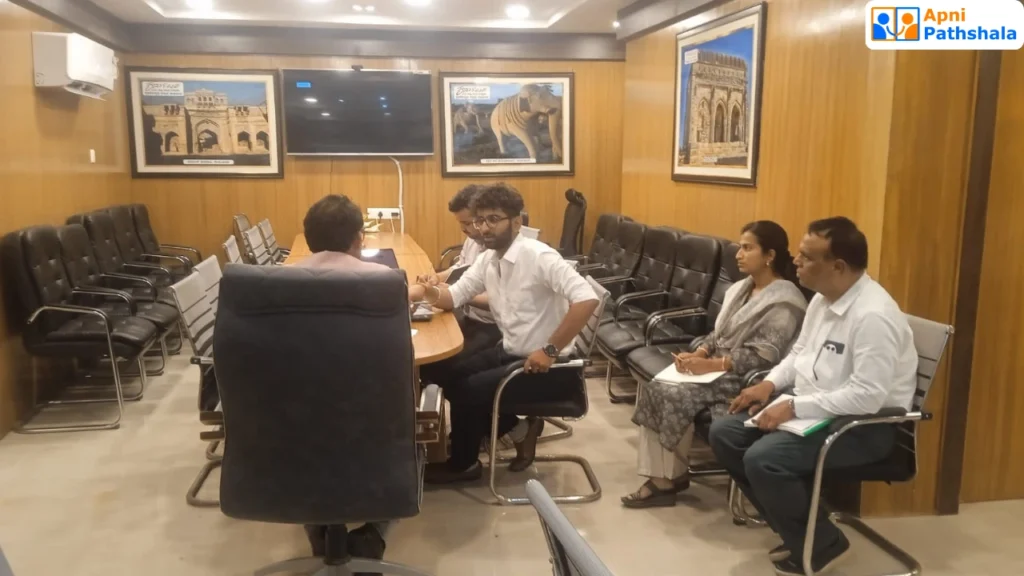
For Project Narayan, Ranjita ji played an important role in coordination.
She helped connect the team with principals and schools, supported communication, and made the process much smoother.
Instead of repeated meetings, delays, and unnecessary paperwork, the work moved quickly.
What stood out most was her understanding of why the project mattered.
She understood the responsibility behind the work and the children it was meant to support.
That made a real difference.
Sometimes innovation needs a new platform.
Sometimes it needs someone who makes sure the right people actually connect.
Project Narayan needed both.
From Three Schools to a Larger Mission
If the pilot works well, the next goal is to reach 100 schools in Raichur.
If that model proves effective at scale, the longer-term ambition is to explore similar work in other districts and states.
But the real goal is not to make Raichur a district with more technology.
The goal is to make it an example of how technology can be used thoughtfully to solve a real education problem.
Project Narayan began with one important question:
What do these children actually need?
Now comes the work of testing, learning, improving, and building around that answer.
Bring Project Narayan to Your School
If you are part of a school in Raichur and want your students to explore AI-supported learning through Project Narayan, we would love to hear from you.
Apni Pathshala works with schools that want to strengthen foundational learning, experiment responsibly with AI, and give students access to tools designed for their real classroom needs.
Your school could be part of the next phase of Project Narayan.
Connect with Apni Pathshala and let us explore how AI-supported learning can work for your students.
The journey has started in Raichur. The next classroom could be yours.
Frequently Asked Questions
1: What is Project Narayan doing in government schools in Raichur?
Ans. Project Narayan is bringing Eklavya AI-powered learning to government schools in Raichur, helping students get personalised academic support aligned with their curriculum.
2: What is Apna PC, and how does it help students with daily learning and revision?
Ans. Apna PC is a student-focused computer designed to support everyday learning, practice, and revision. It gives students a dedicated digital learning space where they can study concepts, revise lessons, practise regularly, and build essential computer skills at their own pace.
3: How can Artificial Intelligence improve education?
Ans. They help teachers plan activities, teaching methods, and assessments so children gradually develop key competencies, foundational literacy, and numeracy.
4: What is the Aspirational Districts Programme (ADP)?
Ans. The Aspirational Districts Programme is a NITI Aayog initiative launched in January 2018 to accelerate development in 112 under-developed districts of India, focusing on areas such as education, health, agriculture, financial inclusion, skill development, and infrastructure.

2 Responses
coincidentally, I had received a similar query from the GUPS, Jaipur Headmistress and their Block Education office.
and I had experienced it first hand with some students in various grades from 3-8. They couldn’t work on khan academy (Hindi) because they weren’t able to read.
on the topic, are you aware of Pratham Education Foundation’s work on this. Their current new CEO is discussing it in detail with the founder here: https://youtu.be/iym0JRU7PrU
Yes sir, thank you for sharing this. We will go through Pratham’s work and connect to explore this further.