AI is no longer something schools can leave for the future.
Students already encounter AI through search, learning platforms, writing tools, translation, and other digital services. Teachers are also beginning to use AI for lesson planning, practice material and feedback.
For principals and teachers, the real question is not simply whether schools should use AI.
It is: How can schools use AI without letting it replace thinking, teaching, or human judgement?
India is already moving in this direction. The Ministry of Education has announced the integration of Computational Thinking and Artificial Intelligence into school education, with the CBSE CT & AI curriculum for Classes 3 to 8 being implemented from the 2026–27 academic session. The curriculum focuses on logical thinking, problem-solving, pattern recognition, digital literacy and responsible use of technology. Ministry of Education
So, AI in schools is not simply about putting a chatbot in front of students. It is about helping students learn, practise, question and solve problems differently.
AI in Schools: What It Really Means
When people hear AI in schools, they often imagine students asking a chatbot to complete homework.
That is only one use, and not necessarily a good one.
In a school, AI can work as a learning assistant, practice partner, language-support tool, teacher-support system or feedback assistant.
For example, a student struggling with fractions could receive another explanation. A teacher could prepare different practice questions for students at different levels. A language teacher could create vocabulary exercises or conversation prompts.
The important principle is simple:
AI should support learning, not bypass it.
Students still need to understand their answers. Teachers still need to check information. Schools still need to decide what technology is appropriate for their students.
Why Indian Schools Need to Act Now
Students are already using AI outside school. If schools completely avoid the subject, students may continue using it without knowing how to check answers, recognise mistakes or protect their information.
That creates a new responsibility for schools: teaching AI judgement, not just AI usage.
A student should learn to ask:
- Is this answer correct?
- Where did this information come from?
- Can I explain it myself?
- What information should I never share?
- When should I use AI and when should I solve the problem independently?
India’s education direction is also changing. The Ministry of Education has highlighted AI and Computational Thinking as part of school education, while the new CBSE curriculum emphasises responsible use alongside problem-solving and digital literacy.
For principals, this means AI readiness is becoming part of digital school readiness.
For teachers, it means learning how to use AI without losing control of the classroom.
For students, it means understanding that AI can help them think, but should not think for them.
7 Ways Indian Classrooms Are Using AI
1. Doubt solving and practice
A guided AI system can give students another explanation when they are stuck, provide additional questions or help them identify where they made a mistake.
The key is hint-first learning.
Instead of immediately giving the final answer, AI can help a student take the next step. This keeps the student involved in the thinking process.
2. Personalised learning
Students do not all learn at the same speed.
AI can help create different levels of practice based on what a student already understands. One student may need basic questions while another may be ready for a more challenging problem.
The learning goal stays the same, but the support can differ.
3. Lesson planning for teachers
Teachers can use AI to brainstorm examples, create discussion questions, prepare worksheets or organise lesson ideas.
But the teacher remains the editor.
AI-generated material can contain errors or may not suit the age, language or context of a particular classroom.
A useful model is:
Teacher decides → AI assists → Teacher reviews → Students learn.
4. Language support
AI can help teachers create simpler explanations, vocabulary exercises, bilingual material and additional examples.
This can be useful in classrooms where students are learning through a language different from the one they commonly use at home.
However, teachers should review translations and explanations before using them with students.
5. Assessment and feedback
AI can also support assessment.
In Solapur, Maharashtra, 12 Zilla Parishad schools participated in an AI-assisted evaluation experiment involving 225 students. Answer sheets were scanned and assessed using AI, while teachers also assessed the papers physically to verify the results. Indian Express
The lesson is important: AI can assist assessment, but human verification still matters.
6. AI literacy and projects
Students can learn about AI rather than simply use it.
They can explore how machines recognise patterns, why AI makes mistakes, how data affects results and where AI is useful.
This helps students become informed technology users rather than passive users of AI tools.
7. Supporting teachers and school decisions
AI can also help schools identify patterns in student learning.
For example, if many students repeatedly struggle with the same concept, teachers can use that information to plan additional practice.
That is where classroom AI becomes useful: not because it replaces the teacher, but because it gives the teacher another way to understand learning.
Real Examples From Indian Schools
The most useful way to understand AI in education is to look at what is already happening.
Project Narayan in Raichur
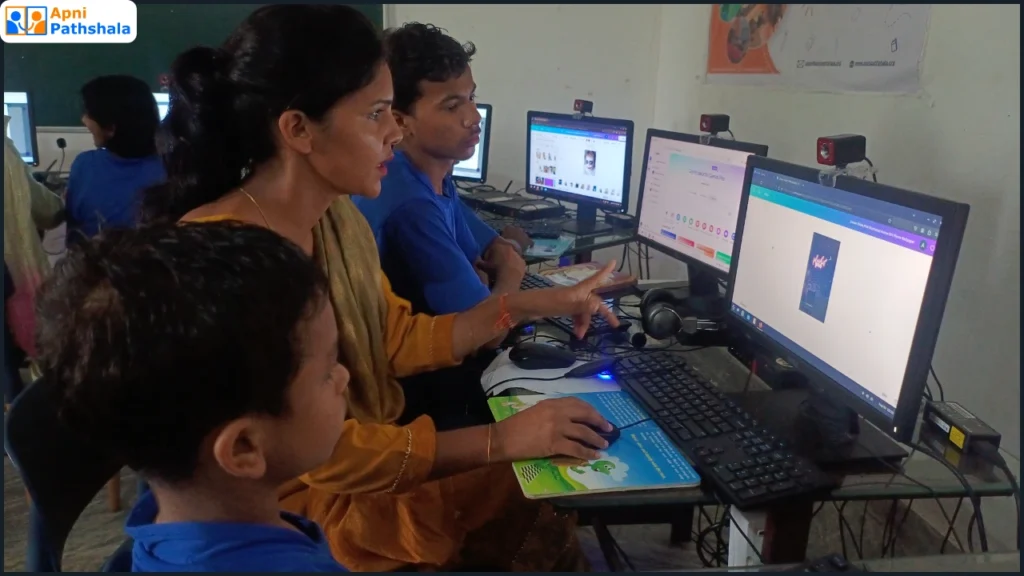
Apni Pathshala’s Project Narayan uses Eklavya AI as a curriculum-aligned learning tool in government schools in Raichur.
The important part of the model is that it starts with the learning problem rather than the technology.
Instead of asking, “Where can we use AI?”, the better question is:
“What does this student need help with?”
That approach is particularly important for schools considering their first AI initiative.
Students Using AI to Clear Doubts in Telangana
At a government school in Adavi Srirampur, Peddapalli district, Telangana, students in Classes 8, 9 and 10 have been using AI tools to clarify subject doubts with teacher guidance.
The school uses an Interactive Flat Panel with internet connectivity, allowing students to interact with AI during learning. Deccan Chronicle
This is a practical example of AI classroom use where the teacher remains part of the process.
These examples show that AI in education does not have to look the same everywhere. One school may use AI for doubt solving, another for assessment and another for teacher support.
Risks: Copying, Privacy and Over-Dependence
AI can help students, but schools need clear boundaries.
| Risk | What can go wrong | Safeguard |
| Copying | Students submit AI-generated work | Ask students to explain their work |
| Incorrect answers | AI may confidently give wrong information | Teacher verification |
| Privacy | Student information may be exposed | Avoid unnecessary personal data |
| Over-dependence | Students stop solving problems themselves | Use hint-first learning |
| Unequal access | Some students get more AI access than others | Provide supervised school access |
The biggest concern is not simply that students use AI.
It is that they use it without learning how to question it.
How Schools Can Start Using AI Safely
Schools do not need to introduce five AI tools at once.
Start with one real problem.
Start This Month
Week 1: Understand
Identify where teachers and students are already encountering AI.
Week 2: Choose one use case
Start with one area such as doubt solving, lesson planning, practice questions or AI literacy.
Week 3: Create rules
Decide which tools students can use, what information they can share, and when students must work independently.
Week 4: Review
Ask teachers whether the tool actually improved learning, saved time or created new problems.
Then decide whether to continue or expand.
If your school is preparing for the wider shift towards AI, explore AI curriculum for schools for a practical look at how schools can prepare students and teachers.
The Real Future of AI in Indian Schools
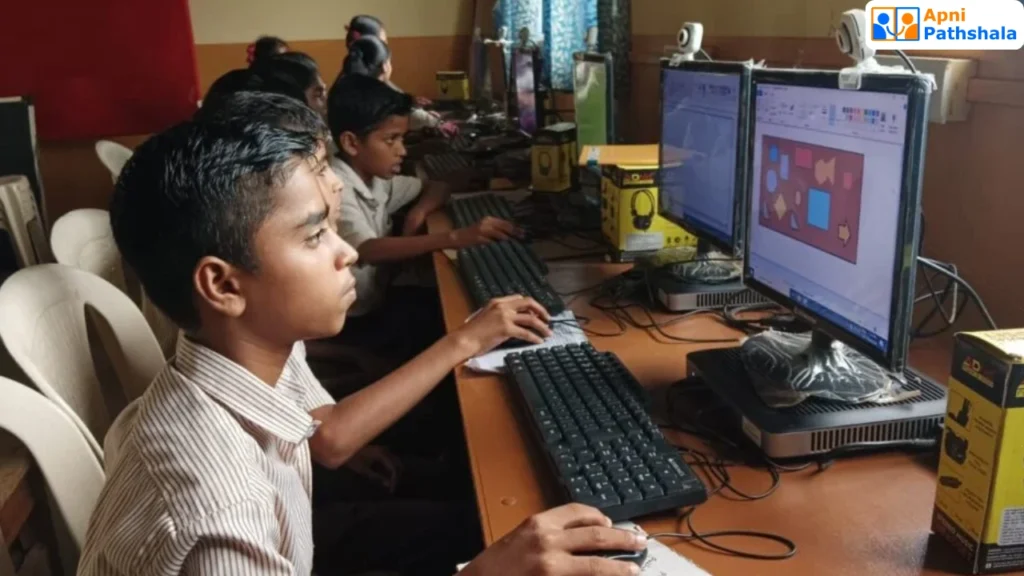
The future of AI in education is unlikely to be about replacing teachers.
It is more likely to be about giving teachers better tools and giving students more opportunities to practise, question and learn independently.
Project Narayan offers one way of thinking about that future.
Its starting point was not, “We have AI, where can we use it?”
It was:
“There is a learning problem. Can technology help?”
That is the question more schools should ask.
AI can explain.
AI can generate.
AI can analyse.
AI can personalise.
But a teacher still understands the child sitting in front of them.
That is why the best use of AI in schools should strengthen the learning relationship between students and teachers; not remove it.
How Apni Pathshala Is Bringing Guided AI Learning to Government Schools
At Apni Pathshala, we don’t focus on adding AI simply because it is new.
Project Narayan and Eklavya AI are built around a more practical idea: use technology where it helps students learn better.
The hint-first approach is especially important. Instead of simply giving students an answer, the aim is to help them take the next step on their own.
For a student learning independently, that can be the difference between getting an answer and actually learning something.
See how Apni Pathshala is bringing guided AI learning to government school students.
Frequently Asked Questions
1. How is AI used in schools?
Ans. AI can be used for doubt-solving, personalised practice, lesson planning, language support, assessment assistance, and AI literacy.
2. Is AI good for students?
AI can be useful when it supports learning rather than replacing independent thinking. Students should still verify information and understand the work they submit.
3. Can AI replace teachers?
Ans. No. AI can assist teachers with certain tasks, but teachers provide judgement, context, classroom support and human understanding.
4. Which AI tools are safe for school students?
Ans. Schools should assess age suitability, privacy, accuracy, data handling and teacher oversight before approving any AI tool.