Give students a question, and many will look for the right answer.
Give them a problem to solve together, and something more interesting can happen.
They disagree. They test ideas. Someone notices a mistake. Someone suggests a different approach. They try again.
And somewhere in that process, critical thinking begins.
This is why learning cannot always be about getting students to remember the right answer. Sometimes, the better learning experience is one where students have to figure out what the answer could be.
Critical Thinking Is Easier to Understand When Students Have Something to Solve
A worksheet can ask a student to identify the correct answer.
A real project asks a different question:
“What are you going to do about this?”
That small difference changes the student’s role.
Instead of waiting for instructions, they have to decide what information matters, what approach to try, and whether their solution actually works.
This is one reason project-based learning continues to attract attention in education research. A 2026 umbrella review of 15 meta-analyses found a positive direction for project-based learning across academic achievement, higher-order thinking and 21st-century skills, although the authors also noted limitations in the quality of the underlying evidence. The lesson is not that every lesson needs to become a project.
Students need opportunities to think through problems, not just answer questions.
Building Something Changes the Way Students Think
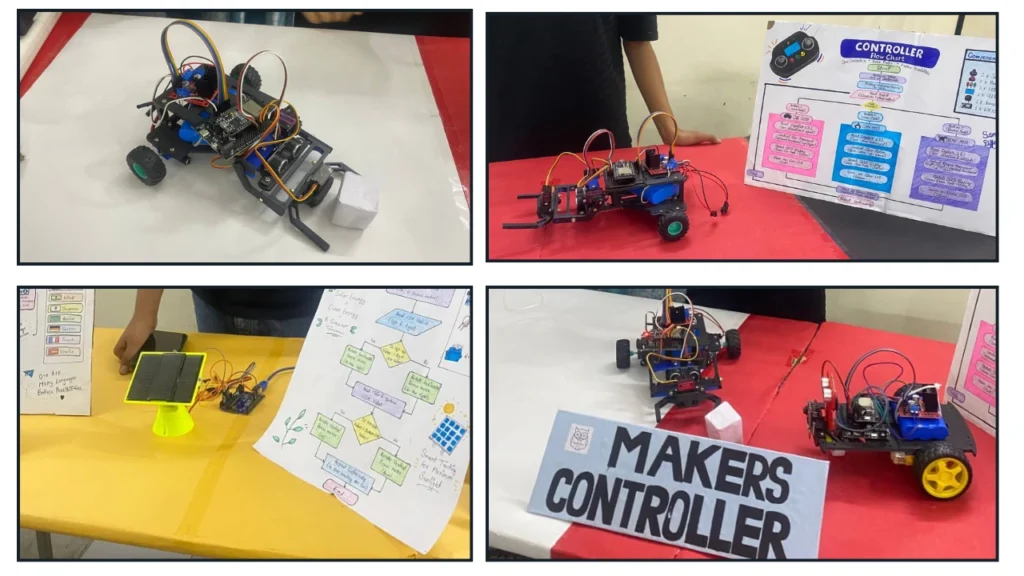
Imagine three students working on a simple project.
They have an idea.
They start building.
It does not work.
One student thinks the problem is with the design.
Another thinks the instructions are wrong.
The third suggests starting over.
They test each possibility.
Nobody has given them the answer.
They are learning how to find it.
A recent study of project-based robotics and coding in primary classrooms observed critical and creative thinking across different stages of a project, with implementation creating particularly strong opportunities for students to test, revise and combine ideas. That is what makes creating so valuable.
The mistake becomes part of the lesson.
Collaboration Is Not Just About Working in Groups
Putting four students around one table does not automatically create collaborative learning.
Good collaboration requires students to actually contribute.
One explains.
Another questions.
Someone tests.
Someone listens and changes their mind.
A 2026 second-order meta-analysis covering 15 first-order meta-analyses found that cooperative learning had a moderate positive effect across learning outcomes, while also noting that results vary depending on how the collaboration is structured. That last part matters.
Students need a reason to work together.
A shared problem.
A project.
A question with more than one possible approach.
That is when group work becomes learning rather than simply sitting together.
A Student Does Not Learn Critical Thinking by Memorising Its Definition
You can explain what analysis means.
You can explain what evaluation means.
You can define problem-solving.
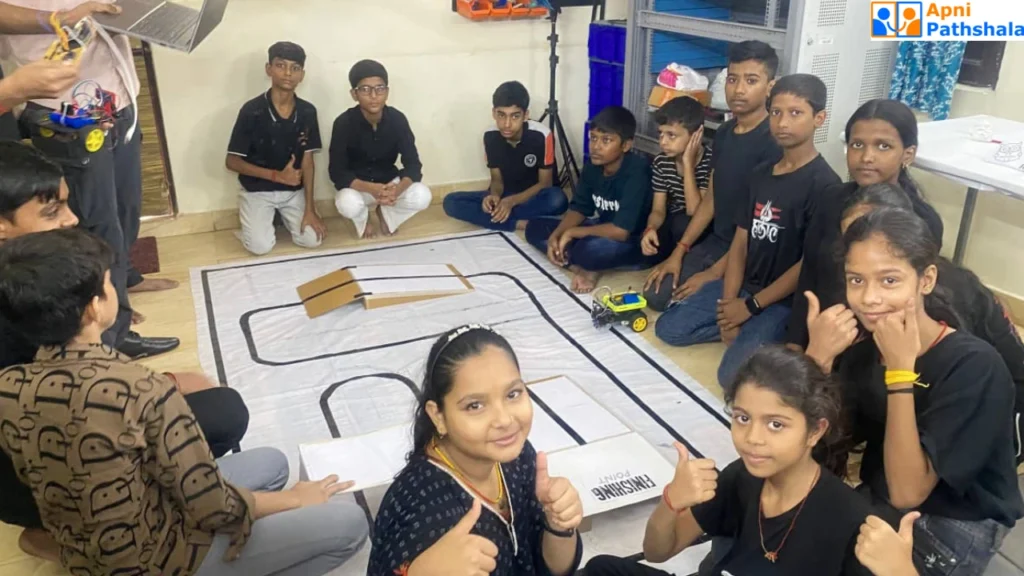
But students become better thinkers by actually doing those things.
They need to compare two ideas.
Find a mistake.
Defend a decision.
Change their approach.
Explain why their solution works.
The Education Endowment Foundation’s work on metacognition and self-regulated learning similarly emphasises helping students plan, monitor and evaluate their own learning.
That is a much more useful habit than simply asking:
“Did I get the answer right?”
The better question is:
“How did I get there?”
This Is Where a Learning Space Can Make a Difference
Not every student has the same opportunity to build, experiment and work with others outside school.
Some have clubs.
Some have private classes.
Some have computers and resources at home.
Others may have very little space to explore.
That is where a community learning space can become valuable.
Apni Pathshala’s Learning PODs create local environments where students can learn together, practise skills, work on projects and explore ideas with support around them.
The POD is not the lesson.
It is the space around the lesson where students can try things.
From Learning Together to Building Something of Their Own
Apni Pathshala has already experimented with this idea through initiatives where students move quickly from learning a digital skill to creating something tangible.
In the 100 Websites, 100 Students in a Week Challenge, students could create and publish websites rather than stop at learning the tools.
The important outcome was not simply that websites were produced.
Students had to make decisions.
What should the website say?
How should it look?
What needs fixing?
What should change?
That is critical thinking hiding inside a practical project.
Sometimes the Best Learning Is What You Cannot Predict
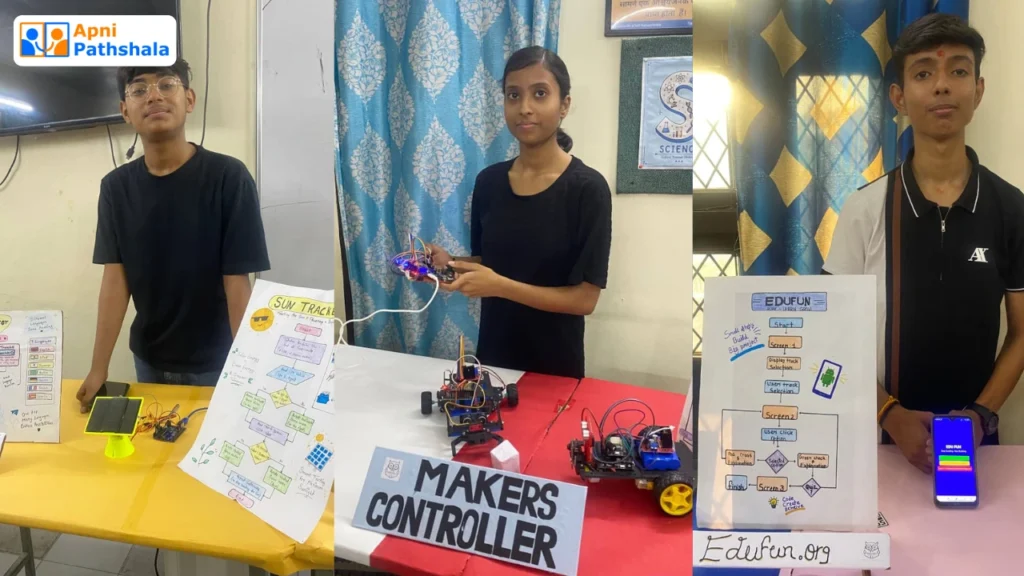
One strength of giving students a real problem is that you cannot completely predict their solution.
Two groups can receive the same task and create completely different results.
One may find a simple solution.
Another may take a creative route.
A third may make several mistakes before finding something that works.
That unpredictability is not a weakness.
It is part of learning.
When students have space to explore, the teacher does not have to know every step in advance.
The teacher can observe, ask questions, provide direction and step in when necessary.
The students still do the thinking.
The Goal Is Not Better Group Work. It Is Better Thinkers.
This is the bigger point.
Projects are useful.
Peer learning is useful.
Community spaces are useful.
But they are not the final goal.
The goal is to help students become comfortable with problems that do not come with instructions printed underneath them.
Students who can ask:
What do I know?
What am I missing?
What could I try?
Why did that fail?
What should I change?
Those questions stay useful long after a particular lesson is forgotten.
Give Students Something Worth Figuring Out
If we want students to develop critical thinking, we cannot only tell them to think critically.
We have to give them something worth thinking about.
A problem worth solving.
A project worth building.
A question worth discussing.
And enough room to get it wrong before getting it right.
That is one reason community learning matters to Apni Pathshala. Through Learning PODs and practical learning opportunities, students can move beyond simply completing lessons and get more chances to build, question, collaborate and figure things out.
If you are a student, start small: choose one problem around you and try to build a solution with someone else.
If you are a teacher or parent, give students a little more room to decide how they will solve a problem.
And if you are a community leader looking to create such opportunities, explore Apni Pathshala’s learning model and see how a local learning space can become a place where students do more than study.
You can also read Inside Apni Pathshala PODs to see how independence, responsibility and creation can look when students are given room to take their own steps.
Sometimes the best way to teach a student to think is to give them something they cannot simply be told how to solve.
Frequently Asked Questions
1. How does project-based learning develop critical thinking?
Ans. Projects require students to analyse problems, make decisions, test ideas and revise their solutions. Research on project-based learning finds positive effects across higher-order thinking and related learning outcomes.
2. Does collaborative learning improve student learning?
Ans. It can. A 2026 meta-analysis found a moderate positive effect of cooperative learning across learning outcomes, although the structure and quality of collaboration matter. Read the research on cooperative learning.
3. Why do students need opportunities to build and experiment?
Ans. Building gives students a reason to apply knowledge, test ideas, learn from mistakes and develop problem-solving habits. Apni Pathshala’s 100 Websites, 100 Students in a Week Challenge is one practical example.
4. How can a Learning POD support critical thinking?
Ans. A Learning POD gives students space to practise, collaborate, work on projects and solve problems with support from peers and mentors. Explore Apni Pathshala’s Learning PODs to learn more about the model.