A student graduates at 21 with great marks. They did everything right. Attended the lectures, submitted the assignments, and passed the exams.
They sit in their first job interview. The recruiter asks about a tool or trend that emerged just two years ago.
The student freezes. They haven’t heard of it.
Not because they aren’t smart. Because nobody taught it to them.
By the time a college adds something new to its syllabus, passing through academic committees and textbook revisions, four years have already passed. The world moved. The syllabus didn’t.
The student who waited to be taught arrives at the interview with yesterday’s knowledge.
The Difference Between a Student and a Learner
We use these words interchangeably, but in 2026, they are two completely different identities.
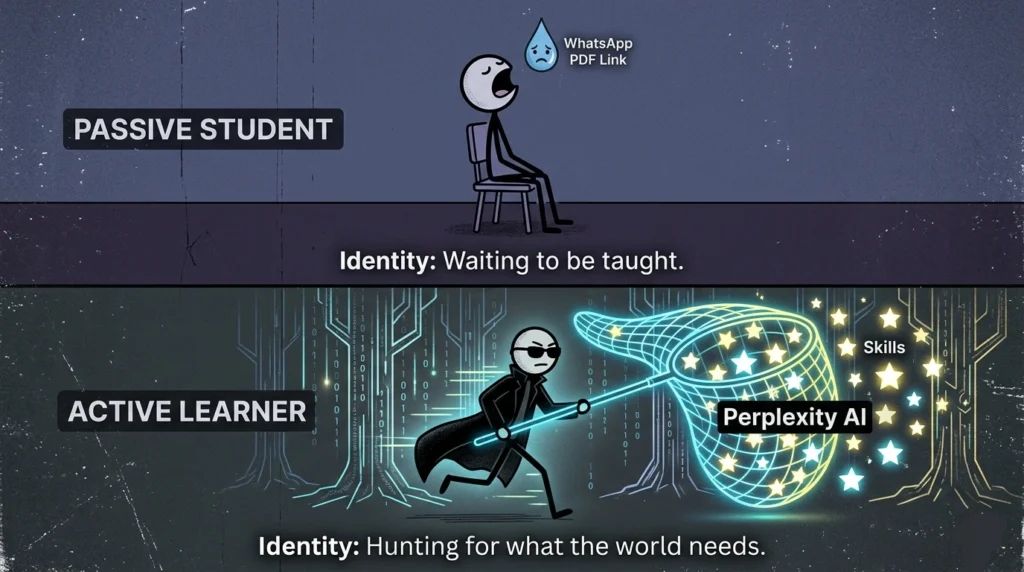
A student waits for information to arrive. They sit in class, take notes, study for the exam, and wait for the next set of instructions.
A learner identifies something they don’t understand or something the world desperately needs and goes to get it. Regardless of whether anyone assigned it to them.
These two people can sit in the exact same classroom, get the exact same grades, and arrive at completely different places in life by age 25.
India’s ed-tech market is massive. You have free access to IIT lectures and AI tutors in your pocket. The gap isn’t accessible anymore.
The gap is the willingness to stop waiting to be taught.
School teaches you what someone decided you should know in 1990. Self-learning teaches you what the world actually needs right now.
Why This Matters More in 2026?
Look at the math. In a class of 40 students, one teacher, and 45 minutes, individual attention is structurally impossible.
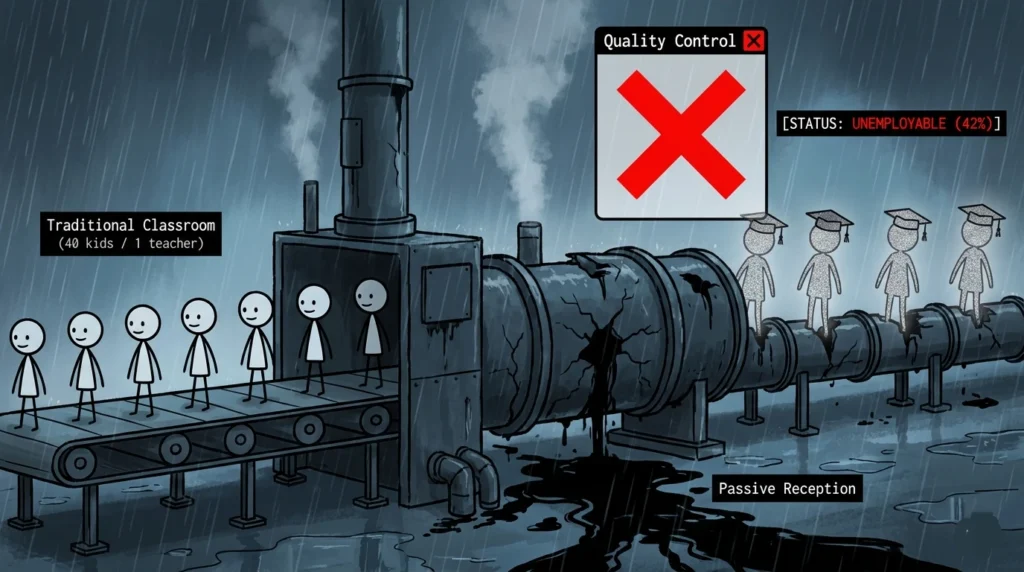
The student who only learns what the teacher has time to deliver is disadvantaged before the lesson even begins.
Even the NEP 2020 emphasizes self-paced learning precisely because the old model of passive reception is broken.
The economy has already moved on. Today, over 42% of Indian graduates are considered entirely “unemployable” at the time of hiring.
The degree happened. The learning didn’t.
What Self-Learning Actually Is (And Isn’t)?
It isn’t just sitting alone watching random YouTube videos. It comes down to three specific behaviors:
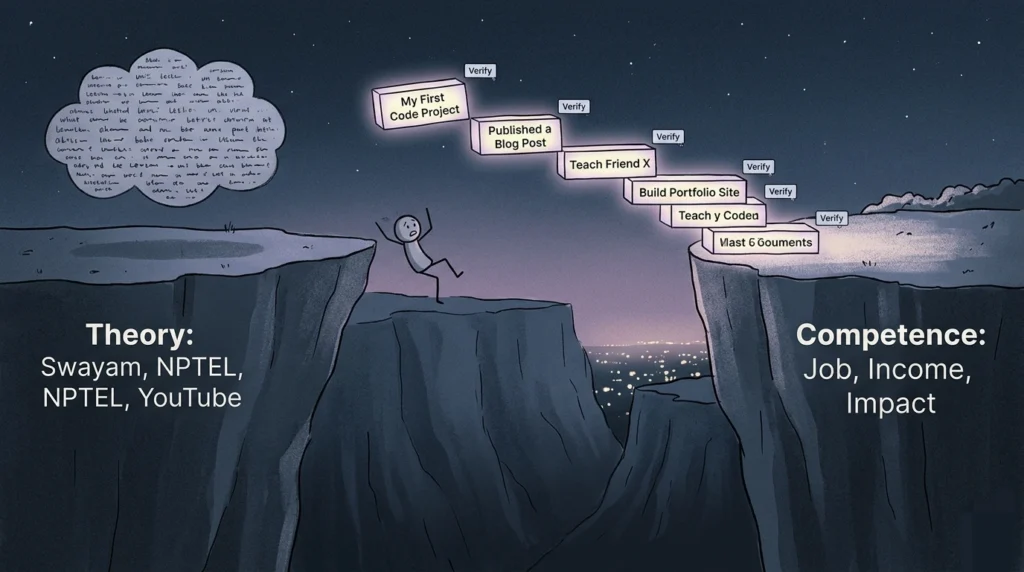
1. Identifying the gap yourself. A learner doesn’t wait for a unit test to reveal what they don’t know. They ask: “What does the career I want actually require, and what am I missing?”
2. Finding resources without being directed. The platforms exist SWAYAM, NPTEL, YouTube, and Perplexity AI. The self-learner hunts them down. The passive student waits for a PDF link in the WhatsApp group.
3. Applying before it’s tested. A self-learner doesn’t wait for a final assignment to use a skill. They use it on something real immediately. Application moves knowledge from short-term memory to actual competence.
How to actually start today?
You don’t need to drop out to become a self-learner. You just need to change your daily routine:
- Start with one honest question: What is one skill I need for the career I want?” Focus on the career, not the syllabus.
- Spend 20 minutes a day outside the syllabus: Pick one concept or software tool you find genuinely interesting and pursue it. This compounds over a year.
- Teach it to someone: If you can explain what you just learned to a friend, you actually learned it.
- Build something: Make a presentation. Code a simple project. Publish a blog post. Force yourself to apply it.
The Environment You Need
But self-learning still requires structure. Not external instruction, but an environment perfectly designed to support independent momentum.
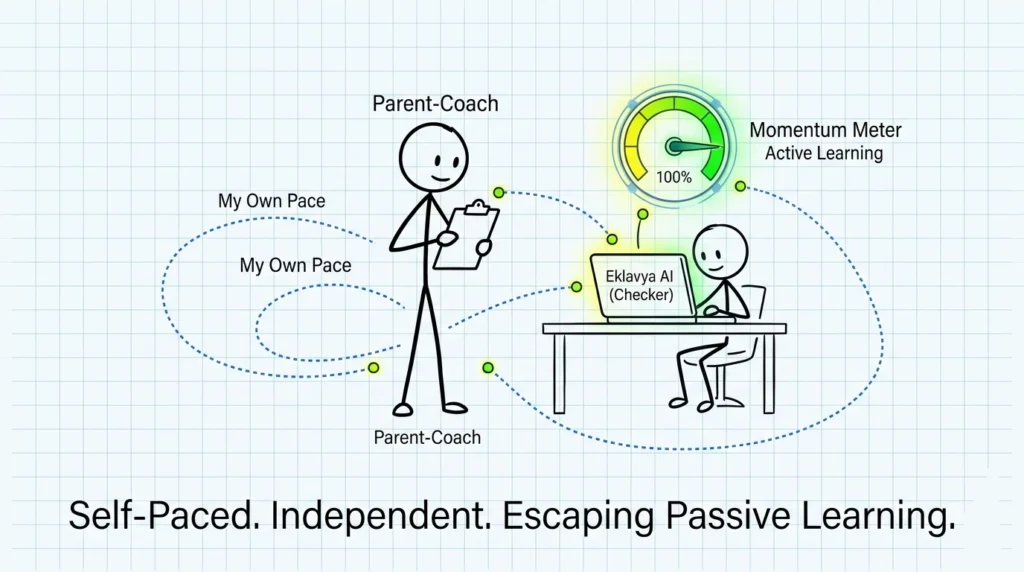
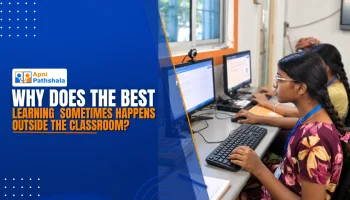
This is precisely what Apni Pathshala PODs are built around. It is active, structured, digital learning where students.
use tools like Eklavya AI to guide their own progress through CBSE content and computer skills, at their own pace. Over 22,000 students across 22 states use this exact model right now to escape passive learning.
The Identity Shift
The school will teach you the syllabus. The syllabus gets you the degree.
And then you will be 22 years old, sitting in an interview, and someone will ask you about something no syllabus ever covered.
The students who arrive ready for that moment aren’t the ones who studied the hardest. They are the ones who stopped waiting to be taught.
It simply starts with one question: “What do I not know yet, and where do I go to find out?”
Give your child the right digital start before it’s too late, Read more
Explore how real learning is changing for students across India: Apni Pathshala
Frequently Asked Questions
1. Why is digital literacy important for children from an early age?
Ans: Digital literacy helps children understand technology, think critically, and use the internet safely. Starting early builds confidence and prepares them for future learning and careers.
2. How do PODs help students in digital learning?
Ans: PODs provide access to computers, structured learning, and guidance, helping students learn digital skills even in areas where resources are limited.
3. What is Eklavya and how does it help students learn?
Ans: Eklavya is an AI-powered learning platform that helps students understand concepts at their own pace, providing guidance, explanations, and structured learning support.
4. Is self-learning better than classroom education?
Ans: Yes, students can use Perplexity to quickly understand topics, find reliable sources, and get simplified explanations for better learning.