There is a romantic illusion in the education sector.
People think that if you set up a beautiful room with high-speed computers and free learning tools, the community will instantly embrace it, the students will magically become disciplined, and the funding will flow in. This is a lie.
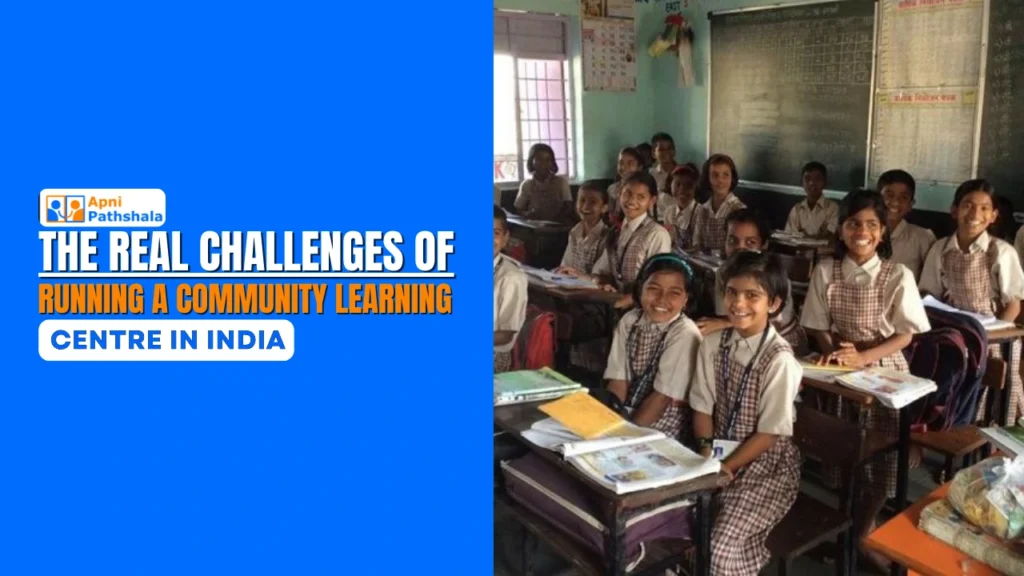
Building a community learning centre is not a fairy tale; it is like an operational war.
At Apni Pathshala, we do not hide the reality of what it takes to run our local PODs. If we are going to build the future of decentralized education in India, we have to be honest about the friction we face every single day.
So here are the six raw, unfiltered challenges of running a community learning centre (and the exact reasons why most people quit and why we refuse to.)
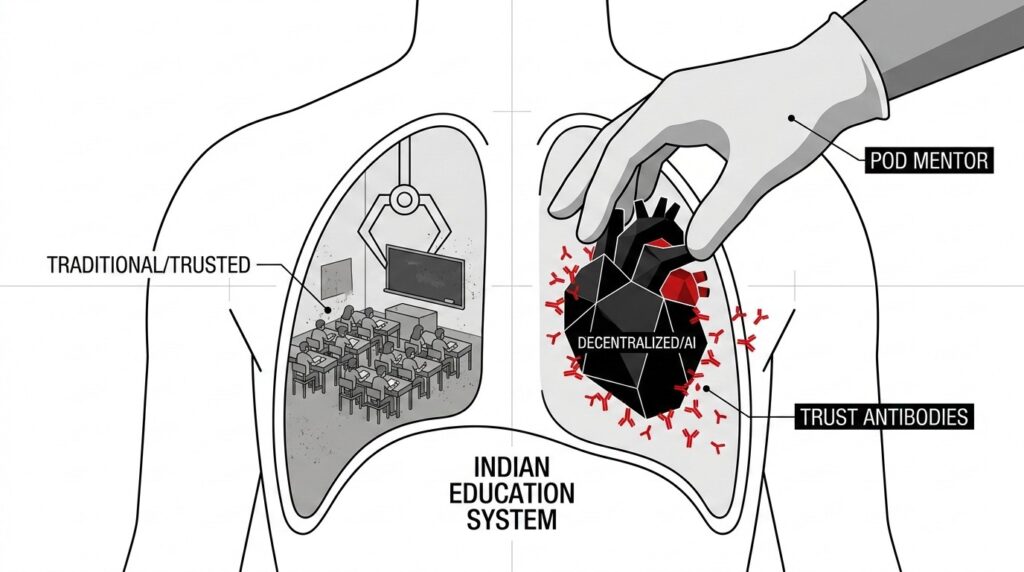
Building Parent Trust in a New Education Model
Our hardest battle is not teaching the students. It is un-brainwashing the parents.
For generations, Indian parents have been conditioned to believe that education means sending their child to a crowded, expensive coaching class where a teacher shouts with a chalk in hand.
When we open an Apni Pathshala POD and introduce a tech-first, decentralized model, parents panic. Their doubt is heavy. “Is this a gaming parlour? Why is there no teacher lecturing? Is this the right decision, or am I ruining my child’s future?”
People prefer a broken system that they understand over a brilliant system that is new. Convincing a sceptical father that a 100 sq. ft. room with AI tutors is infinitely better than a ₹50,000 coaching centre requires immense emotional labour from our local mentors.
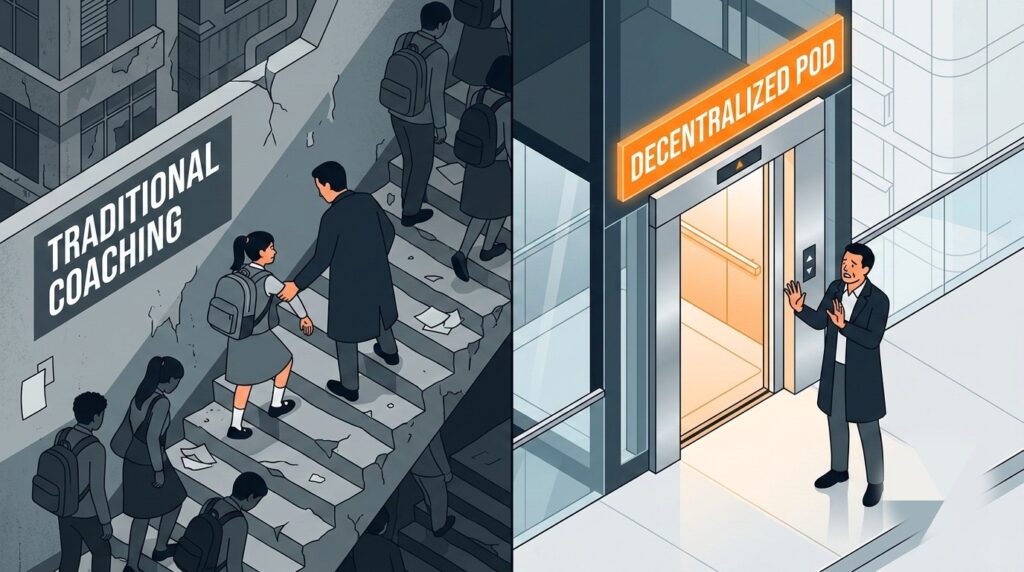
Trust cannot be downloaded; it has to be earned, one conversation at a time.
Why Students Struggle with Self-Paced Learning
Our system is built on a decentralized syllabus. Students learn at their own pace using digital roadmaps.
In theory, this is perfect. In reality, it causes “Autonomy Shock.”
When a new student enters the community centre, they are used to being spoon-fed. They are used to a teacher telling them exactly what page to turn to and what to memorize. When you hand them a computer and say, “Here is your roadmap, figure out the solution,” they freeze.
The friction of moving from “passive listening” to “active problem-solving” is brutal. It takes weeks of painful unlearning for a student to stop waiting for instructions and start taking extreme ownership of their own syllabus.
3. The Operational Burnout Risk for Local Mentors
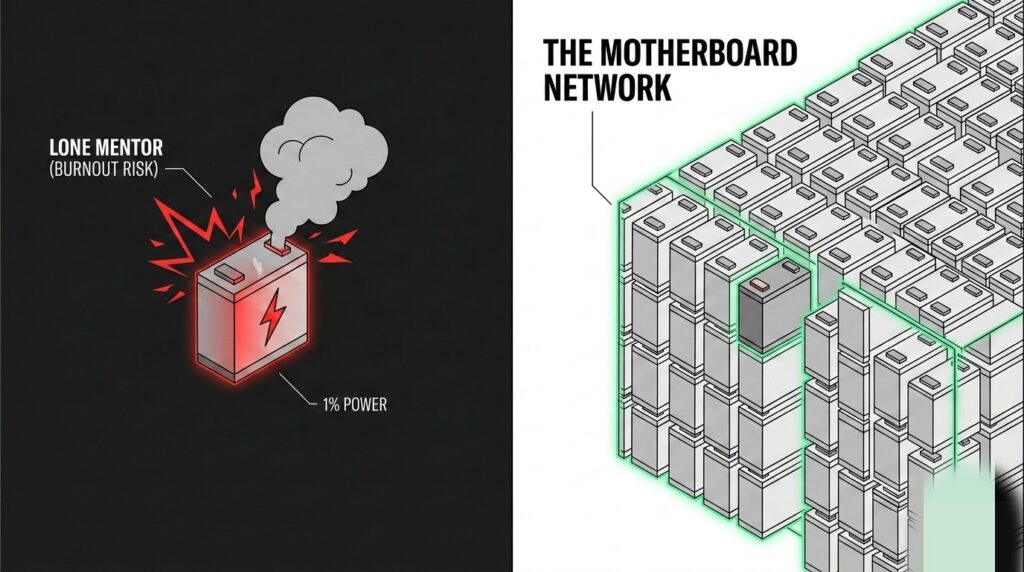
Running a centre alone is like fighting a war with no supply lines.
Many well-meaning individuals try to start local NGOs or learning centres, but they burn out within six months. Why? Because they lack guidance.
When a router breaks, when a student throws a tantrum, or when the neighbourhood politics get intense, the local mentor feels completely isolated. This is the exact reason Apni Pathshala exists as a network.
A local POD cannot survive on an island. It needs the “Motherboard”, a central community that provides the operational playbooks, emotional support, and strategic guidance to keep the local mentor from giving up.
4. Why Community Education Projects Fail to Build Public Visibility
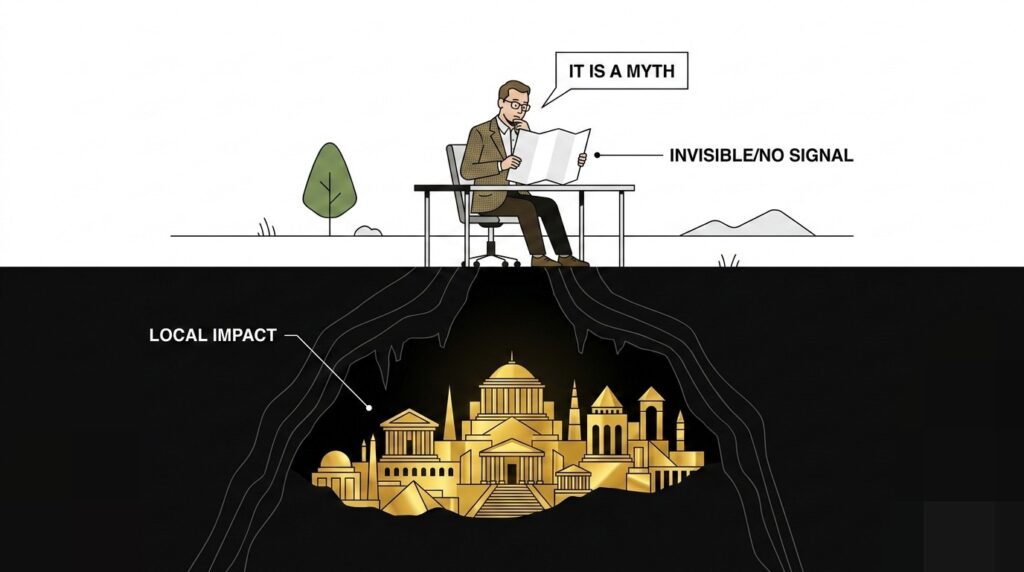
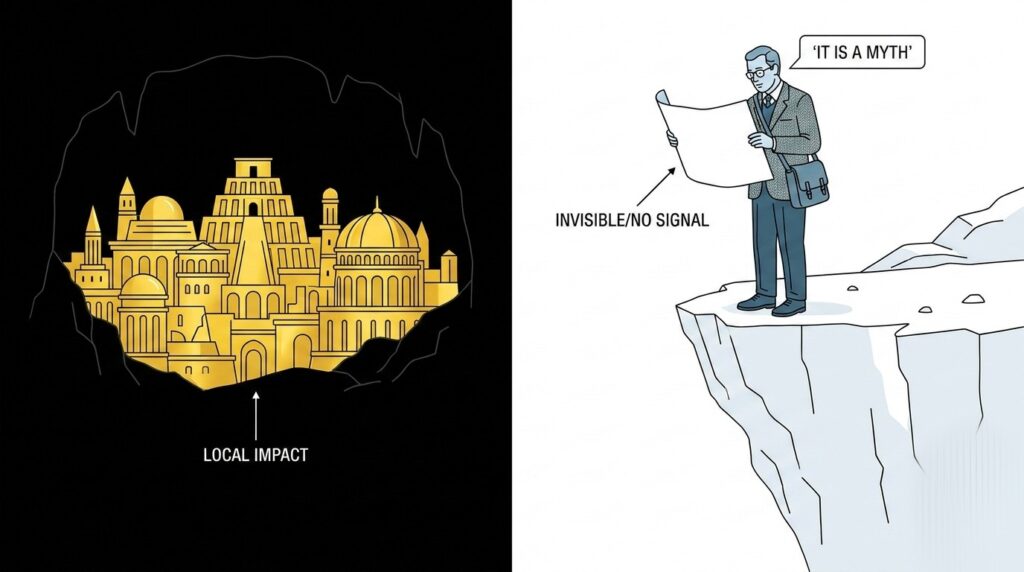
There is a massive mistake that local community builders make: They do incredible, life-changing work in the dark.
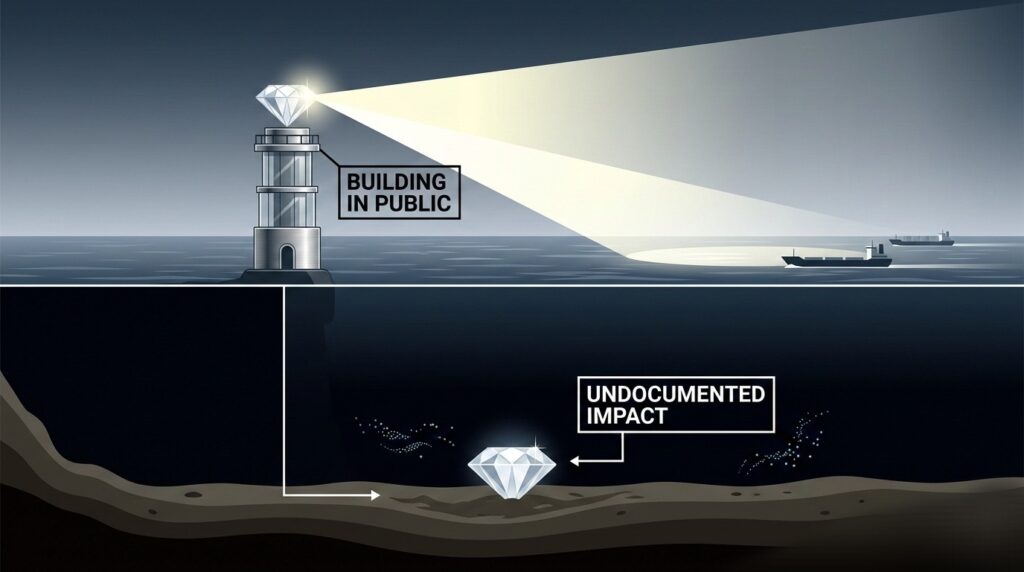
They work 12-hour days transforming the lives of local youth, but they refuse to document it. They don’t post on Twitter, they don’t record YouTube videos, and they don’t “build in public.” They believe that the work should just speak for itself.
But in 2026, if you do not document your work, you do not exist. (That’s why personal brands are the new CV)
Because they remain invisible on social media, they cannot attract the attention of modern investors, tech builders, or global supporters. They become invisible martyrs, exhausted and unnoticed.
5. The Funding Challenges of Community Learning Centres
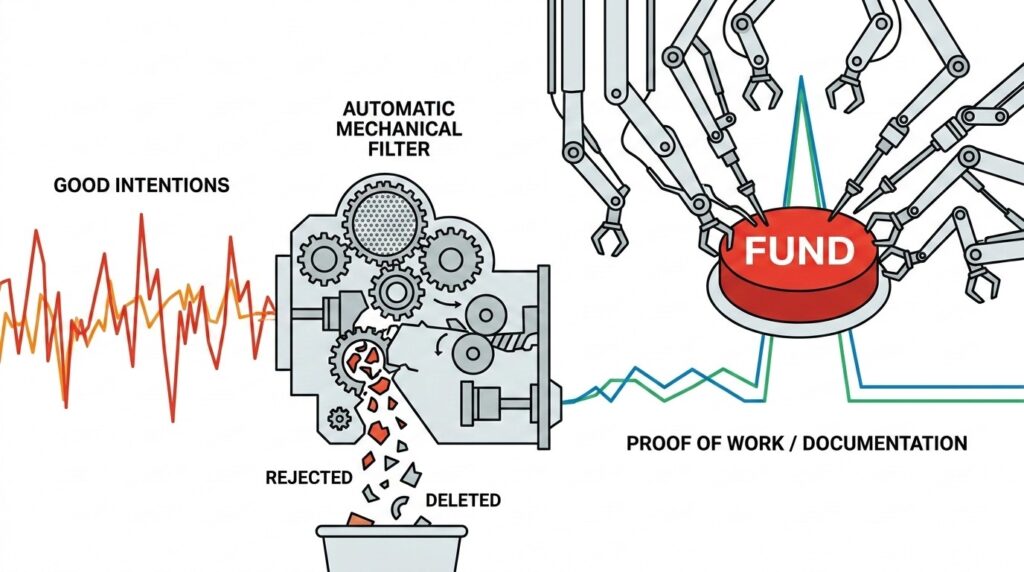
This leads directly to the ultimate bottleneck: Funding. You cannot pay internet bills, upgrade hardware, and compensate local mentors with “good intentions.”
Decentralized education is incredibly cost-effective (OpEx is low), but it still requires capital. When community centres fail to build in public and fail to show their daily operations, they cannot build trust with funders.
Philanthropists and CSR programs do not fund secret projects; they fund transparent, data-backed systems. Bridging the gap between the raw work happening in the POD and the financial capital needed to sustain it is a daily, stressful grind…
So What’s the Real Solution?
Consider the architecture of the Linux operating system. It powers the global internet, international financial markets, and supercomputers. Yet, it is not controlled by a central corporation.
It is a highly decentralized, open-source ecosystem built by thousands of independent developers operating in total physical isolation.
How does a decentralized system avoid collapsing into absolute chaos?
Through rigid, non-negotiable protocols. Linux developers possess ultimate autonomy at the edge; they can build whatever they need on their local machines, but the core foundation they all share is strictly governed and entirely transparent.
A community learning centre must adopt this exact architecture. This is the architecture Apni Pathshala has adopted in its POD network. The local mentor is not a lone hero running an experiment. They are a node inside a shared operating system.
The network provides locked digital environments, structured self-paced roadmaps, troubleshooting support, and transparent reporting mechanisms
Local friction becomes shared data. One POD learns ( the entire network updates).
The Paradox of Structure
“The fragile wants tranquillity, the antifragile grows from disorder.” Nassim Taleb
A centralized school breaks down when its core administration is disrupted. A decentralized network of learning centres is antifragile.
Conclusion
A community centre can survive because it is structurally designed. Running a community learning centre is not about idealism, it is about endurance. It demands trust-building, system design, emotional strength, and daily consistency. The struggles are real, but so is the transformation when a community begins to take ownership of learning. Decentralised education works only when structure and support are in place behind the scenes.
If you want to understand the deeper system behind decentralized education, read now
👉 How Communities Sustain Education Without Heavy Funding
You might Explore the Apni Pathshala model, understand the infrastructure, and see how you can participate in building India’s distributed learning network.
What exactly is decentralized learning, and how does it work in practice?
Decentralized learning shifts education from a single central authority to community-led learning hubs. Instead of depending only on one school system, learning happens through local centres, mentors, digital tools, and flexible structures. Communities take ownership, resources are shared, and students get access to education that is more accessible, relevant, and adaptable to their needs.
Who is Nassim Nicholas Taleb and why is he widely discussed in economics and philosophy?
Nassim Nicholas Taleb is a Lebanese-American essayist, scholar, and former trader known for his work on uncertainty, risk, and randomness. He is best known for concepts like the “Black Swan,” which explains how rare and unpredictable events shape the world far more than we expect.
Why are community centres powerful in building accountability and trust?
Because accountability grows when responsibility is shared. In community centres, children and adults don’t just attend, they participate, contribute, and take ownership. When people consistently show up, support each other, and work toward common goals, trust is built naturally, not through rules, but through repeated actions and shared experiences.
In 2026, should students focus more on a college degree or on skills?
A Degree can open doors, but skills determine how far you go. In today’s job market, employers value problem-solving ability, practical experience, and adaptability just as much as formal qualifications. The smartest approach isn’t choosing one over the other, it’s understanding how to balance education with real-world skills.