There is a silent killer in the traditional education system. It isn’t a lack of funding, and it isn’t a lack of intent.
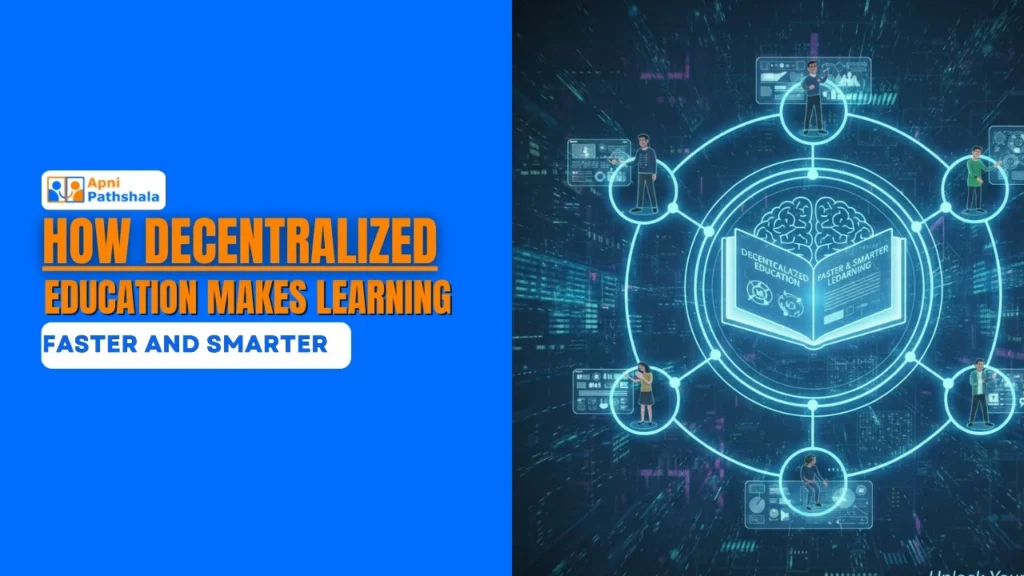
This is where a decentralized education model changes everything. Instead of relying on slow, centralized bureaucracies
(Bureaucracy is when you have to follow lots of rules and ask many officials before getting something done)
Community learning centres operate at the “edge”, making decisions directly where students learn.
In simple terms: centralized schools make decisions far away from the student. PODs make decisions right next to the student

Latency is the time it takes for a system to respond to a problem. In a traditional school, the decision-making architecture is a top-down bureaucracy. If a student is failing to understand a new syllabus, the teacher notices.
The teacher tells the Head of Department. The HOD forms a committee. The committee writes a proposal to the Principal. The Principal waits for the Board’s approval.
By the time the decision is made to change the teaching method, six months have passed. The student has already failed the exam.
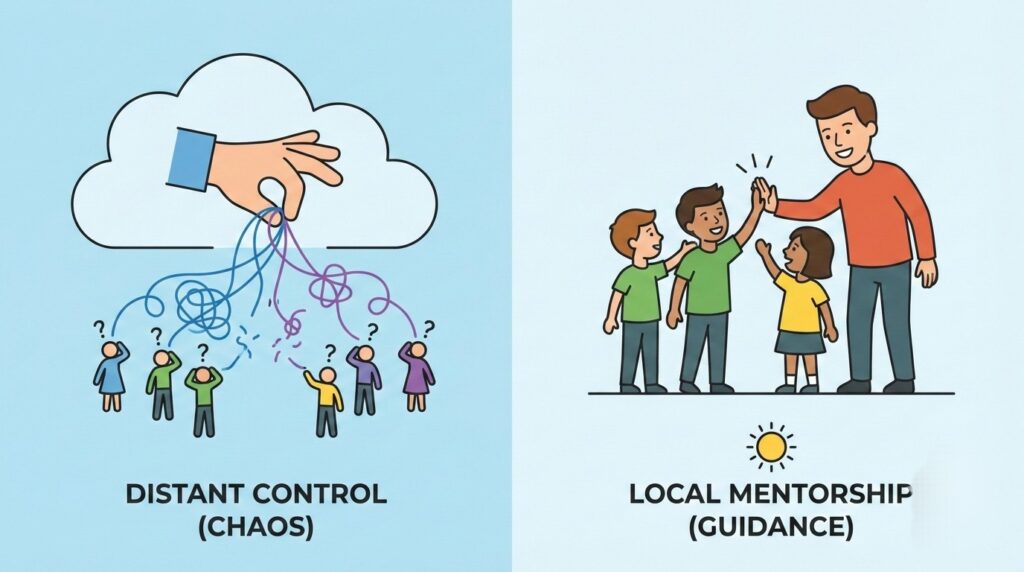
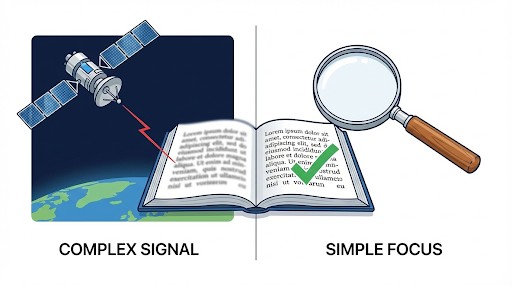
Traditional education operates like outdated “Cloud Computing.” Every piece of data has to travel to a distant, centralized server (the principal/board) to be processed, creating massive delays.

Community-Based Education centres, like the Apni Pathshala PODs, flip this architecture entirely. We do not use the Cloud. We use Edge Computing.
We process the data and make the decisions right at the “edge” of the network in the 100 sq. ft. room, at the exact moment the student needs it. Here is the architecture of decentralized decision-making that makes community education relentlessly efficient.
But..What Is a Decentralized Education Model?
A decentralized education model distributes decision-making power to local learning centres instead of concentrating authority in distant school boards or central administrations.
In India, community learning centres like Apni Pathshala PODs represent this model by combining local mentorship with AI-driven academic systems.
A cross-country study (Chaudhury et al., 2006) found that teachers from the local area are less absent across all six countries studied. Hiring teachers on local, short-term contracts outside civil-service systems has shown improved student outcomes in some contexts (PMC/NBER research).
1. How Decentralized Education Models Reduce Decision-Making Delays
In the military, elite units like the Navy SEALs operate on a principle called “Decentralized Command.” The general at the base does not tell the soldier on the ground exactly when to pull the trigger. The soldier has the training, the context, and the authority to execute in real-time.
Community learning models apply this to education.
The central NGO or management team does not dictate the minute-by-minute schedule of a POD. Instead, authority is handed to the Local Mentor (the community Didi or Bhaiya).
Because the mentor lives in the same lane as the students, they possess hyper-local context that a distant principal never could
- If a festival is happening in the lane, the mentor makes the executive decision to shift the POD timings by two hours.
- If a student is visibly stressed because of a situation at home, the mentor makes the decision to switch their day from “Heavy Coding” to “Light Reading.”
No committees. No permission slips. Zero latency. The mentor is the CEO of that 100 sq. ft. room.
2. How Community Learning centres Use AI for Real-Time Learning Decisions
Humans are great at making empathetic macro-decisions. They are terrible at making statistical micro-decisions.
In a classroom of 20 kids, a human teacher cannot actively decide the perfect next question for every single student based on their historical weak points. The human brain cannot process that much data.
In a community learning centre, we offload micro-decisions to the machine.
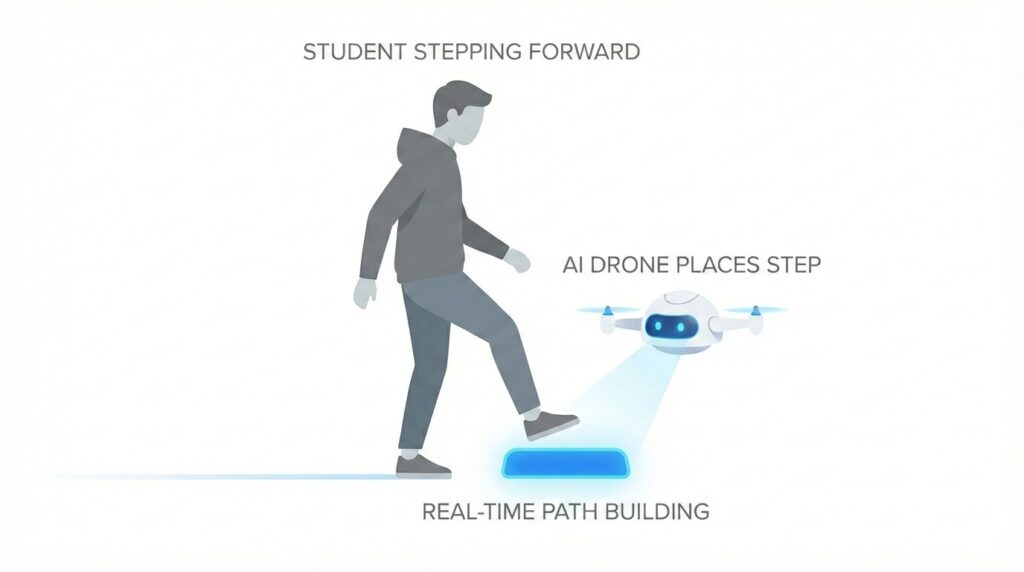
When a student logs into their Apna PC, systems like Eklavya AI take over the academic routing.
- Did the student fail the last three Physics questions on thermodynamics? The algorithm instantly decides to route them to a remedial foundational video.
- Did they ace the math module? The algorithm instantly decides to increase the difficulty level.
By letting the software make hundreds of micro-decisions based on real-time performance data, we free up the human mentor to make the decisions that actually require a soul: discipline, encouragement, and emotional support.
3. Why Local Accountability Improves Education Outcome
Bureaucracies make bad decisions because the people making the decisions do not suffer the consequences of being wrong. If a school board sets a terrible policy, the board members don’t lose their jobs; the students lose their futures.
Community education centres operate on pure Skin in the Game.
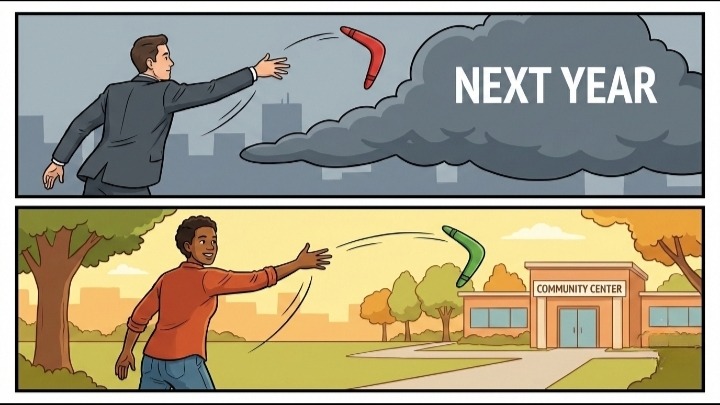
The decisions are made by the community, for the community. If a local POD decides to implement a new “Spoken English Saturday” routine, they get immediate, brutal feedback.
- Do the kids show up?
- Are the parents happy?
- Is the local mentor capable of facilitating it?
If it fails, they don’t wait for the end of the academic year to pivot. They change the routine by Monday. This high-speed iteration cycle ensures that the centre is constantly evolving to serve the actual needs of the local economy, not the theoretical ideas of a distant academic board.
4. How Technology Replaces Bureaucracy in Modern Education
Traditional schools make decisions about discipline using heavy rules and punishments. “If you are caught playing games in the computer lab, you will be suspended.” This requires constant monitoring, policing, and human conflict.
We don’t make decisions about discipline. We let the code do it.
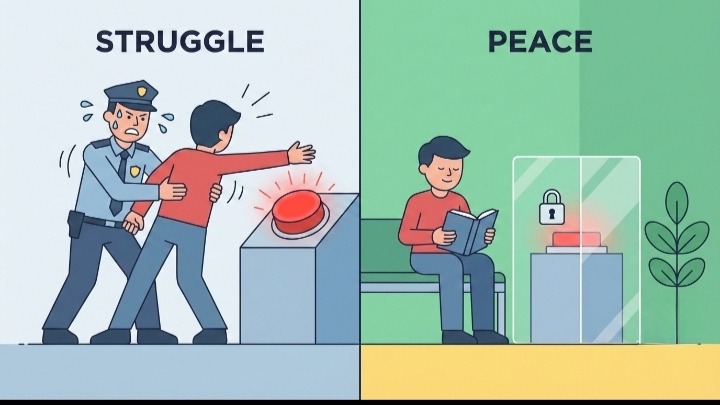
Using ApniPrerna, the digital environment is locked down at the root level. The decision of whether a student can access a distracting site isn’t up for debate. It isn’t a negotiation with the mentor. The system simply does not allow it. We replace bureaucratic arguments with binary code.
Conclusion: Agility is the Ultimate Asset
The modern world does not reward massive, slow-moving institutions. It rewards agility. It rewards the ability to look at new data, pivot, and execute immediately.
By pushing the decision-making power down to the “Edge” to the software, the local mentor, and the community itself, we aren’t just running a more efficient education centre.
We are training the next generation of students in an environment that reflects the real world: fast, data-driven, and relentlessly accountable.
Read how community learning centres are fundamentally different from tuition centres, and why that difference matters for your child’s future.
What is a decentralized education model?
A decentralized education model shifts decision-making from centralized authorities to local learning centres, enabling faster and more context-aware solutions for students.
Why is local accountability important in education?
Local accountability ensures that mentors, parents, and students are directly connected, improving transparency, trust, and responsiveness.
Can decentralized community learning centres help students score 99 percentile in competitive exams like JEE?
Yes. Decentralized centres allow real-time feedback, quick correction of weak areas, and structured mock practice. This faster, data-driven approach improves a student’s chances of achieving high percentiles like 99 in JEE.
How are community learning centres different from traditional schools?
Community learning centres operate within neighborhoods, use local mentors, and leverage technology for personalized learning, unlike traditional schools that rely on centralized administration.