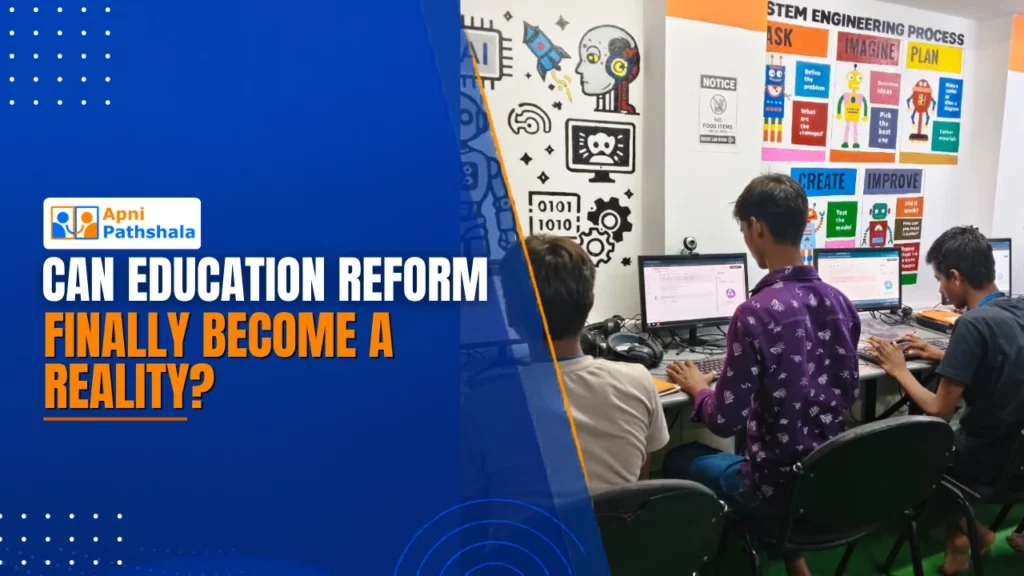
For years, education reform has been discussed through new policies, better teaching methods, technology, and changing classrooms. But the most exciting part is that many of these changes are no longer ideas for the future; they are already becoming part of how students learn today.
The real question is not whether education can change. It is how we can make that change meaningful, practical, and accessible to more students.
Education Is Changing, One Opportunity at a Time
Education has never remained the same.
Blackboards changed classrooms. Books expanded access to knowledge. Computers introduced students to a digital world. The internet made information available at an unprecedented scale.
Now, Artificial Intelligence is opening another door.
Students can ask questions, explore concepts, practise skills, create projects, and discover new areas of interest in ways that were difficult to imagine a few years ago.
But the purpose of all this change remains the same:
Help students learn better.
The National Education Policy 2020 also recognises technology’s role in strengthening education and creating better learning opportunities.
Education reform, therefore, is not about choosing between traditional education and technology.
It is about bringing the strengths of both together.
What Does Real Education Reform Look Like?
Imagine a student who does not understand a concept in class.
Today, technology can give that student another opportunity to understand it.
They can revisit the topic, find another explanation, practise, and keep learning.
Another student may finish the classroom activity early and want to explore further.
A student interested in coding may want to build something of their own.
These are small moments, but they can change how students experience education.
Reform does not always mean rebuilding the system from scratch.
Sometimes, it means adding better possibilities to the learning journey that already exists.
Technology Is Creating More Ways to Learn
A teacher remains at the centre of education.
Teachers understand their students, recognise their difficulties, encourage them, and provide the human connection that learning needs.
Technology can add another layer of support.
Digital resources can provide additional practice.
An online platform can make learning available beyond classroom hours.
An AI tutor can offer another explanation when a student needs it.
According to UNESCO’s work on technology in education, technology can create valuable educational opportunities when it is used thoughtfully and connected to genuine learning needs.
Digital education is moving in that direction: not replacing the classroom, but expanding what the classroom can offer.
AI Can Make Learning More Personal
Every student learns differently.
Some understand concepts quickly. Others need more examples or more time.
Artificial Intelligence can help create learning experiences that respond to these differences.
Students can ask questions in their own words, request explanations, practise concepts, and explore topics according to their learning needs.
This is where Eklavya AI fits into the larger education ecosystem.
The idea is not to replace teachers with AI.
It is to give students another learning companion while teachers continue to guide the overall learning journey.
Teacher + technology can create possibilities that neither can create alone.
Access Can Open the Door to Learning
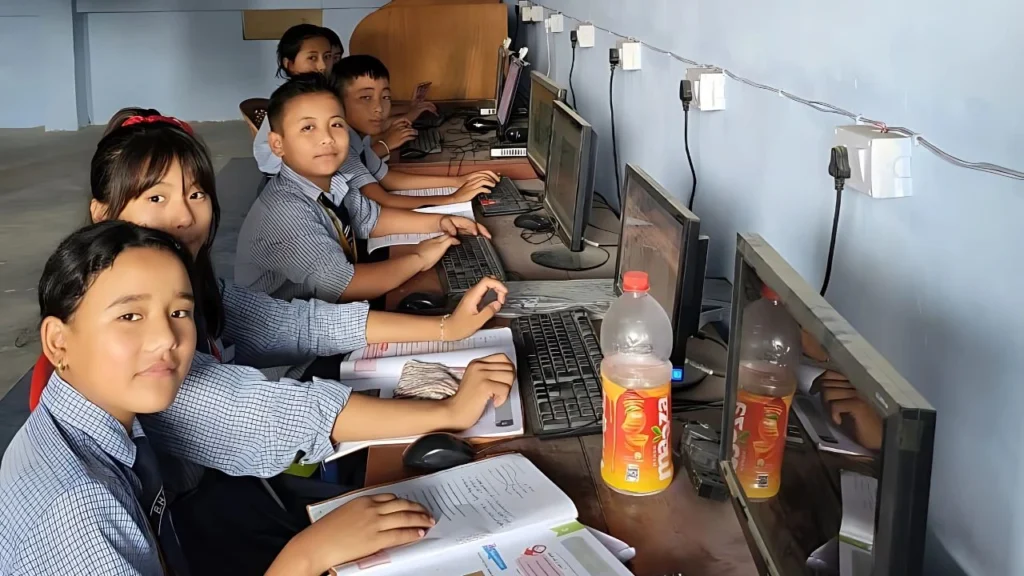
For digital education to work, students first need access to technology.
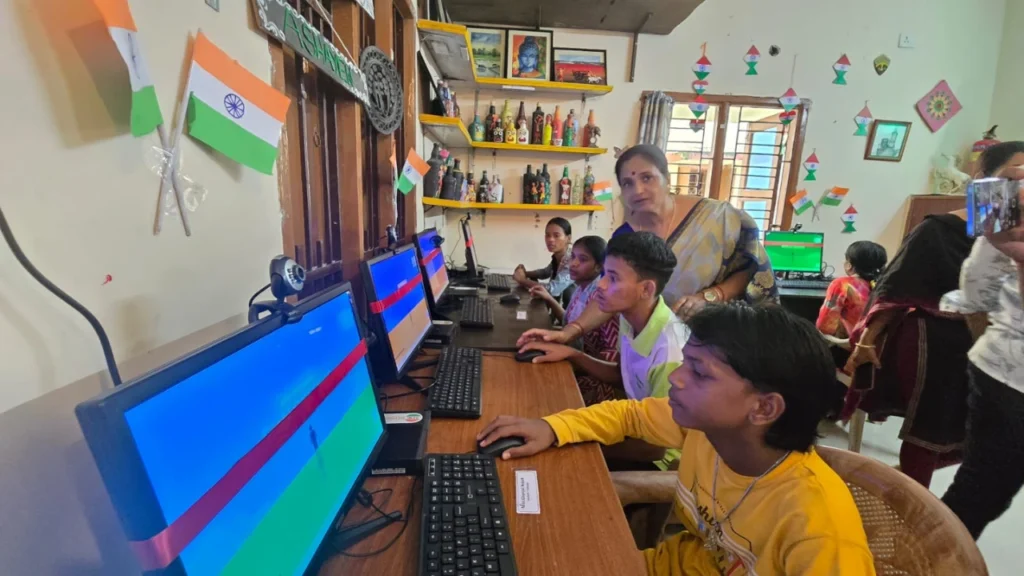
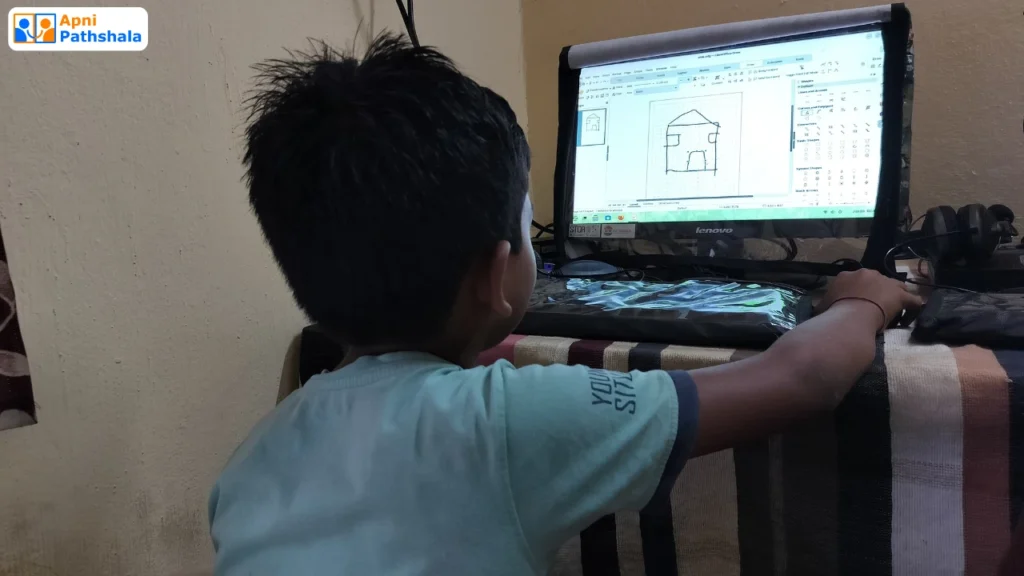
A computer can become a student’s first opportunity to explore coding, create a website, edit a video, research a topic, or discover a new career.
That is the thinking behind Apna PC: access to computers becomes part of a larger learning opportunity.
But what makes the difference is what students do after they get access.
A device can provide the starting point.
Learning happens when students begin using it.
Learning Should Not End When the Class Ends
Curiosity does not follow a school timetable.
A student may want to practise something after class.
They may discover a new interest while working on a project.
They may want to learn something outside their regular lesson.
This is why local learning environments matter.
Through Apni Pathshala’s Learning PODs, students get access to community-based spaces where they can use computers, explore digital skills, and learn according to their interests.
A POD can be where a student learns their first computer skill.
It can also be where another student writes their first piece of code or creates their first website.
The important part is that students get the opportunity to try.
Students Need More Than Academic Knowledge
The future workplace is changing quickly.
Students will need academic knowledge, but they will also need digital confidence, creativity, critical thinking, problem-solving skills, and the ability to learn new things independently.
This is why future-ready education cannot stop at completing a syllabus.
Students should also have opportunities to create, experiment, collaborate, and solve problems.
Digital learning can help make those experiences more accessible.
It can take students from simply consuming information to actively using technology to create something of their own.
Education Reform Becomes Stronger When Communities Participate
Education does not belong to one organisation.
Teachers have a role.
Schools have a role.
Parents have a role.
Communities have a role.
Technology organisations have a role.
When these groups work together, educational innovation becomes much easier to implement.
A school understands its students.
A teacher understands the classroom.
A community understands local needs.
Technology provides new possibilities.
Organisations can help bring these pieces together.
This is why community-based learning models can play an important role in making education reform practical.
Measuring What Students Can Actually Do
Education is often measured through attendance, examination results, enrolment, and completion rates.
These numbers matter.
But other outcomes are worth noticing.
Can a student use a computer confidently?
Can they search for information independently?
Can they create something?
Can they use AI to understand a concept rather than simply copy an answer?
Can they discover a skill that could become part of their future career?
These are also signs of progress.
And sometimes, one small achievement can change how a student sees their own potential.
So, Can Education Reform Finally Become a Reality?
Yes. And in many ways, it has already started.
It starts when a teacher tries a new approach.
It starts when a school creates a digital learning opportunity.
It starts when a community creates a place where students can learn.
It starts when a student uses technology to build something for the first time.
One change may seem small.
But thousands of these changes, happening across classrooms and communities, can create something much bigger.
Education reform does not need to wait for a perfect system.
It can be built one student, one classroom, and one opportunity at a time.
Building the Next Chapter of Education
This is the approach Apni Pathshala is working towards through its different learning initiatives.
Through Learning PODs, students get community-based learning spaces.
Through Apna PC, they can access computers and use them as tools for learning and creation.
Through Eklavya AI, students can explore personalised AI-supported learning.
Together, these initiatives reflect one larger belief:
Technology becomes meaningful when it creates better opportunities for students.
And education reform becomes meaningful when those opportunities reach the learner.
If you are a school leader, teacher, NGO, CSR organisation, or community working to improve education, explore Apni Pathshala and see how technology and community-led learning can work together.
Education reform doesn’t become real just because we announce it.
It becomes real when a student can feel the difference.
Frequently Asked Questions
1: What is Eklavya AI?
Ans. Eklavya AI is an AI-powered learning platform that provides personalised support to help students understand and learn better.
2: What is the National Education Policy (NEP) 2020?
Ans. NEP 2020 is India’s education policy focused on making education more holistic, flexible, inclusive, and future-ready, including the meaningful use of technology in learning.
3: What does UNESCO say about technology in education?
Ans. UNESCO highlights that technology can support access, inclusion, quality, and better learning when it is implemented with the right conditions and teacher preparation.
4: What is Apna PC?
Ans. Apna PC provides students with access to computers and digital learning opportunities, helping them build practical technology skills.