The day your 10th Board results drop is the most dangerous day of your academic life.
I remember scoring 85%, looking at that printed marksheet, and convincing myself I had just survived a world war. My logic was flawless: “I did the hard work, 11th grade is going to be brutal, therefore, I deserve a two-month brain coma.”
So, I spent the next 45 days binge-watching KGF 2 and every Marvel movie ever made.
I was relaxing so hard I was basically a piece of furniture. This is the exact lie 99% of Indian students tell themselves.
We treat the post-10th vacation like a retirement party. Surprisingly, some seniors will tell you: “Beta, just focus on your 11th syllabus and relax for now.”
But here is the strange part, 11th grade is just a relatively diff.
If you wait until college to learn how the digital economy works, you are already four years behind.
The ₹500 Momo Problem
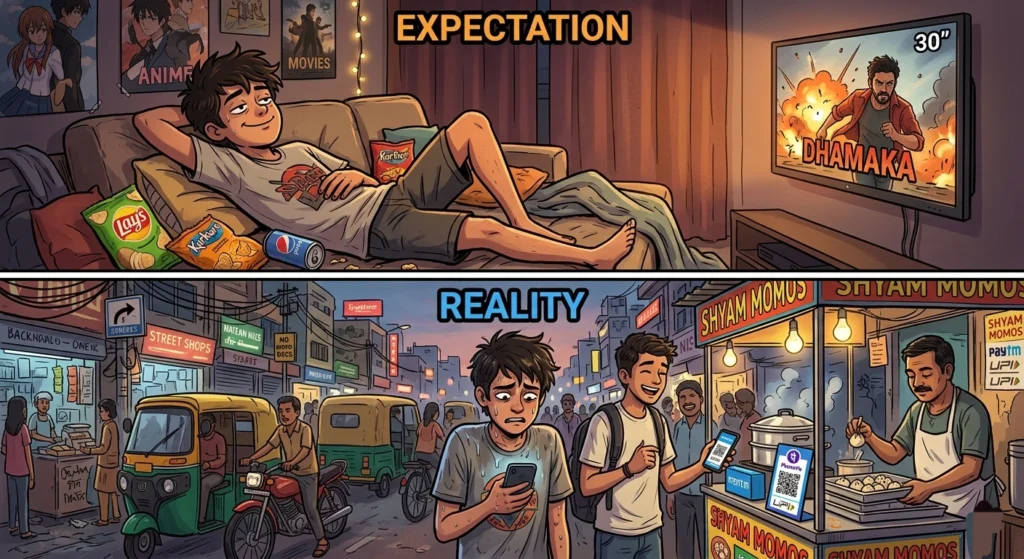
My mindset violently shifted when I looked at my most funny friend, Akshay.
Akshay was my exact age, but he had just started working as a short-form video editor for a real content creator.
Let’s be brutally honest for a second. At 16 years old, asking your parents for ₹50 every time you want to eat momos is exhausting and slightly humiliating.
You want freedom, but freedom isn’t free.
Why Google’s “Course Advice” Will Get You Replaced by Tuesday
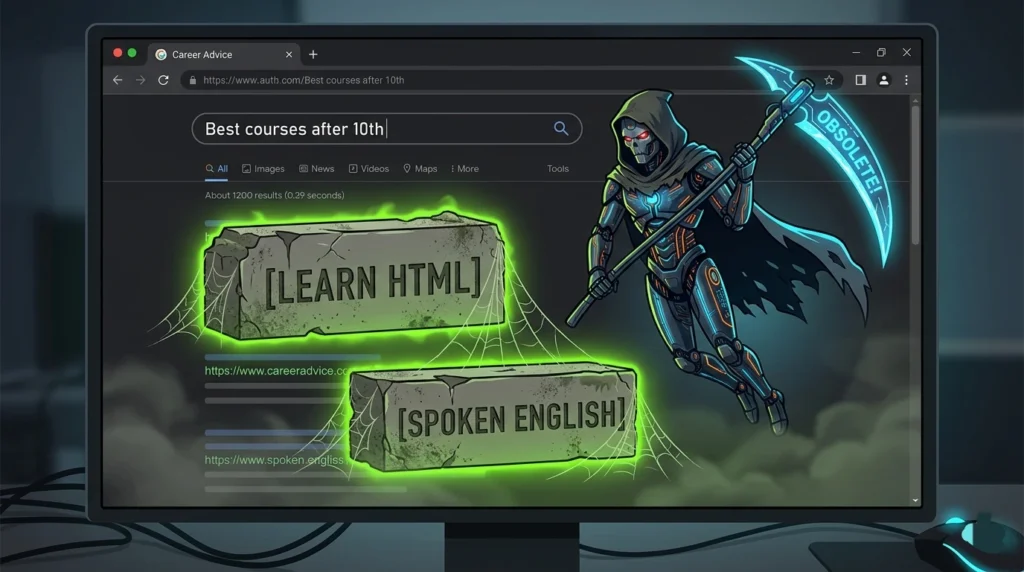
If you search for “courses after 10th,” Google gives you terrible 2014 advice.
They tell you to learn “Basic C++” or “Spoken English.” If you learn those outdated skills today, ChatGPT will replace you by next Tuesday. You need high-leverage skills that actually build wealth.
Here is what the real 2026 economy looks like:
| The “Dead” 2016 Skills | The High-Leverage 2026 Skills | Why it Matters Now |
| Basic C++ / Java | Building Custom GPTs | AI writes code. Humans direct the AI. |
| “Video Editing” (Cutting clips) | Short-Form Retention Editing | Engineering dopamine pays the bills. |
| HTML Web Design | No-Code SaaS Building | You don’t need 4 years to launch an app. |
| Spoken English Classes | Digital Content Creation | Distribution is the ultimate currency. |
Skill 1: Short-Form Retention Editing (The Akshay Route)
Don’t just learn “Premiere Pro”, that’s useless. Learn how human psychology works on a screen.
If you spend five minutes on any creator subreddit, you will see a brutal truth: editors who just “trim videos” are competing for ₹500 gigs.
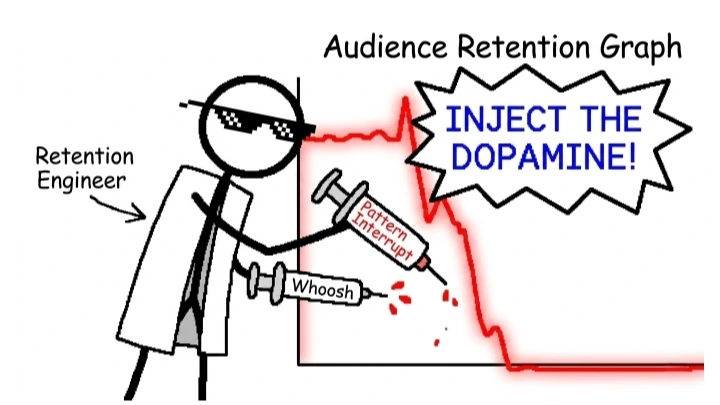
The 16-year-olds making actual money don’t even call themselves video editors. They call themselves “Retention Engineers,” and they treat content like a psychological puzzle.
They study audience drop-off graphs to see exactly which second a viewer gets bored and swipes away.
Here is what they actually do: They use aggressive pattern interrupts. They change the visual frame every 3 seconds.
They use sound design. subtle whooshes, risers, and pops to subconsciously reset the viewer’s attention. They remove every single millisecond of dead air so the video feels like a high-speed train.
You are not editing a video; you are hacking the human brain’s dopamine receptors. Hold human attention for 60 seconds, and every business will pay you.
Where to Start (Free):
→ Paddy Galloway (YouTube) – Dissects the psychology of why viral videos work.
→ DaVinci Resolve – Professional, completely free editing software.
Skill 2: AI Prompt Engineering & Custom GPTs
Everyone knows how to use ChatGPT to cheat on a homework assignment.
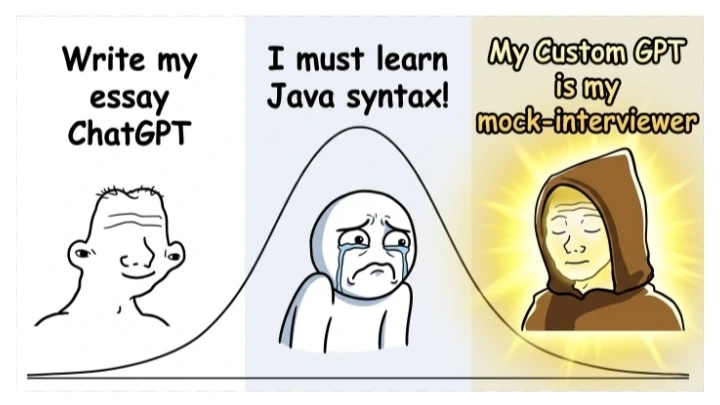
But if you look at how top-tier professionals use AI, typing “write me an essay” is absolute peasant-level behavior.
The high-income skill in 2026 isn’t asking the AI a question; it is learning how to constrain and program the AI to act as a highly specific employee. This is called Prompt Architecture.
Instead of opening a blank chat, you build a “Custom GPT.”
Here is what you should actually do: You upload 50 PDFs of data, write a massive 500-word “System Prompt” that dictates exactly how the AI should think, and give it strict rules.
You can build an AI that writes cold emails exactly like your favorite copywriter, or an AI that acts as a brutal mock-interviewer for your exams.
This is how you are learning how to build and manage a digital brain.
Where to Start (Free):
→ LearnPrompting.org – A structured, regularly updated open-source course.
→ DeepLearning.AI – High-quality free short courses by Andrew Ng.
Skill 3: No-Code SaaS & 3D Prototyping
You no longer need to spend four years learning complex backend coding to build software.
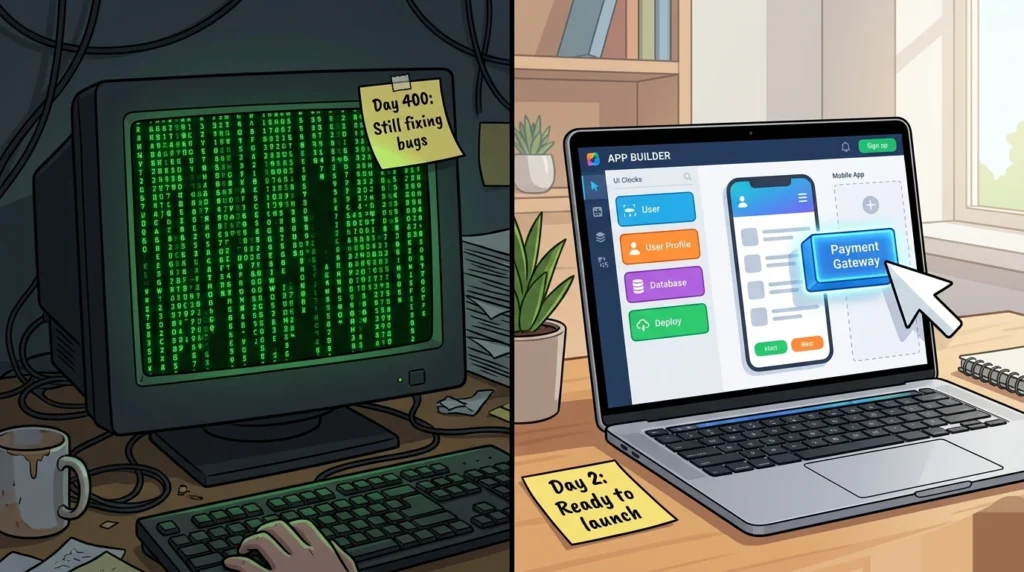
The No-Code revolution has completely destroyed the traditional barrier to entry in the tech world. If you scroll through r/SaaS (Software as a Service), you will find teenagers who have built fully functioning, money-making apps over a single weekend. They don’t write a single line of Java or C++.
They use visual, drag-and-drop tools like Bubble, Webflow, and Make.com.
Here’s the simple action plan – connect a pre-built database to a beautiful front-end design, plug in a payment gateway like Razorpay with one click, and launch a real web app while their classmates are still memorizing basic HTML tags in school.
They solve a specific problem, package it into an app, and sell it.
If you have an idea on a Monday, you can launch a functioning tech startup from your childhood bedroom by Friday.
You study, you build, and you share it with the world.
Where to Start (Free):
→ Bubble Academy – Takes you from zero to launching a full web app.
→ Webflow University – Professional-grade, free visual development courses.
Why Skills Mean Nothing If Nobody Knows You Exist
But here is where things get incredibly interesting.
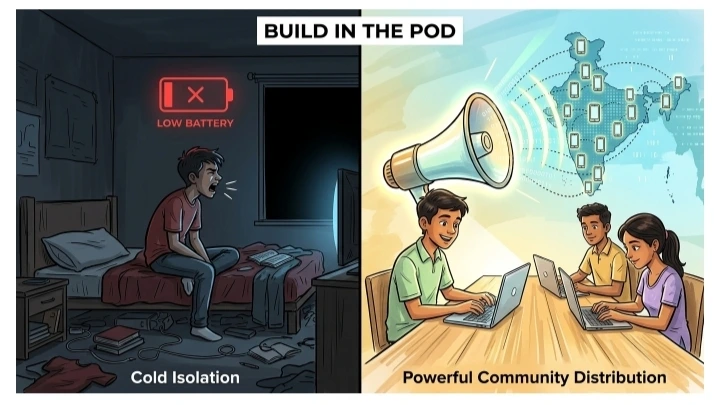
You can learn all these skills, but if nobody knows you exist, you have absolutely zero leverage. The highest ROI action you can take at 16 years old is to become a creator. You experience Asymmetric Returns: you write one piece of content, and it reaches 10,000 people while you sleep.
You don’t need a fancy studio; you just document what you are already doing.
- Are you going to the gym? Talk about your workout splits on YouTube.
- Are you studying for JEE? Make a vlog about your study routines.
- If you don’t want to show your face, start writing your thoughts on X (Twitter).
Why You Will Inevitably Fail in Your Bedroom
Let’s be realistic about learning these skills.
If you try to learn No-Code building or Retention Editing alone in your bedroom, you will get bored in two days and go back to watching KGF.
Willpower always fails when you are isolated. This is why physical environments like an Apni Pathshala POD actually work.
You step into a physical room with real humans. You use AI tools to learn the theory fast, and you sit next to other ambitious 16-year-olds who are actually building things.
You upgrade your environment, and your brain naturally follows.
Watching Iron Man build a suit is entertainment; building your own digital leverage is a superpower.
Stop treating your post-10th vacation like a retirement party. Find an Apni Pathshala POD, pick a skill, and start building.
if this felt a little uncomfortable to read, that’s kind of the point.
Understand the Problem First
👉 Curious about why ChatGPT is banned in exams? Read Out
👉 Uncover the hidden problem ChatGPT presents for CBSE students. Read More
👉 Discover the best skill-based courses after 12th. Read Now
How do I actually start learning without losing focus?
Stop trying to rely on willpower alone in your bedroom. Find a physical community of builders like an Apni Pathshala learning POD where the norm is creating, not just consuming.
Is it too early to learn skill-based courses after 10th board exams?
Absolutely not. At 15 or 16, you have the ultimate luxury: time without the pressure of college placements.
Which skill-based courses after 12th will help you secure a successful career in 2026?
In 2026, skill-based courses that offer hands-on learning and industry-relevant skills are key to building a successful career. Popular options include web development, digital marketing, graphic design, cybersecurity, and data analytics. These courses not only provide practical knowledge but also open doors to high-demand jobs. Check out the best skill-based courses after 12th and kickstart your career today!
Why has ChatGPT been banned for students during exams in India?
In India, using ChatGPT during exams has been banned as it violates academic integrity. The tool’s ability to generate answers instantly raises concerns about fairness and cheating, leading to strict actions by exam boards to maintain a level playing field for all students.