Every class has one student who tops every test but goes quiet when the teacher asks them to explain an answer to the class. The one who writes a brilliant project but lets someone else present it. The one who freezes in the first interview, even though they know the answers.
None of them lacks intelligence. What they lack is practice in a different set of skills: speaking up, working with others, managing time, and handling setbacks. These are soft skills, and most Indian schools never put them on the timetable.
That gap matters more every year. Colleges run group discussions. Employers say they hire for attitude and train for skill. And as AI takes over more routine tasks, the very human skills of explaining, collaborating and adapting are becoming the ones that set people apart.
The good news: soft skills development is not about personality. Soft skills can be learned, practised and improved like any subject. This guide explains what they are, which 8 matter most for students, why schools struggle to teach them, and simple ways to build each one.
What Are Soft Skills?
Soft skills are the personal and social skills that decide how well you work with others, handle situations and use what you know. Think communication, teamwork, confidence, time management and the ability to adapt.
If marks show what a student knows, soft skills show what they can do with it. Two students can have the same 92% in Class 12. One can explain their idea clearly in a group discussion, take feedback without sulking and finish a project on time. The other can’t, yet. That difference is soft skills.
They are sometimes called life skills, people skills or 21st-century skills. Employers often just call them “attitude”. And they matter more than many families think. In the World Economic Forum’s Future of Jobs Report 2025, employers ranked resilience and flexibility (67%), leadership (61%), and empathy and active listening (50%) among the top core skills they look for, right next to analytical thinking.
Technical and Soft Skills: What’s the Difference?
Hard skills are the technical abilities you can test directly: solving an equation, writing Python code, typing at 40 words a minute, using Excel. Soft skills are how you apply them with and around other people.
| Particulars | Hard skills | Soft skills |
| What they are | Technical, subject-based abilities | Personal and social abilities |
| Examples | Maths, coding, accounting, a language’s grammar | Communication, teamwork, time management |
| How they’re learned | Classes, textbooks, courses | Practice, feedback, real situations |
| How they’re tested | Exams, certificates | Group work, presentations, interviews |
| Shelf life | Some change as technology changes | Useful in almost every job, for life |
Students need both. A good coder who can’t explain their work struggles in a team. A confident speaker with no real skills runs out of things to say. The strongest students combine technical and soft skills, and soft skills make the hard ones visible.
8 Soft Skills for Students (and How to Practise Each)
1. Communication
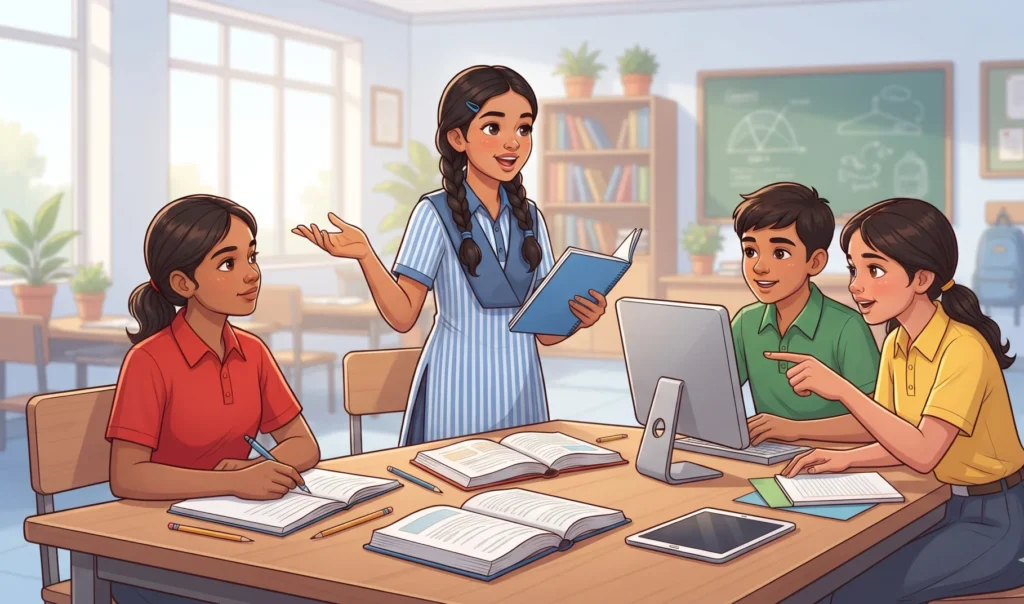
Knowing the answer is half the job; saying it clearly is the other half. Communication means explaining an idea simply, listening properly and writing a clear message. Practise it: once a week, explain one topic you studied to a younger sibling in 2 minutes. If they understand, you do too. If you think in Hindi or a regional language first, our guide on improving communication skills has a step-by-step plan.
2. Teamwork
Group projects in school often mean one person does all the work. Real teamwork means dividing work, trusting others and owning your part. Practise it: in your next group project, ask to be the one who sets deadlines and checks in with everyone.
3. Problem-solving
This is the ability to stay calm when there’s no answer key, break a problem into parts and try something. Practise it: when you’re stuck, write down three possible approaches before asking for help.
4. Confidence
Confidence isn’t loudness. It’s being willing to raise your hand, ask a question or try something new without fear of looking silly. Practise it: speak once in every class for a week, even if it’s only a question.
5. Time management
The student who studies 10 hours the night before an exam and the one who studies 1 hour a day for 10 days have the same hours, but not the same results. Practise it: plan tomorrow tonight, with just three priorities.
6. Adaptability
New syllabus, new school, a new tool like AI: things change fast. Adaptable students adjust instead of complaining. Practise it: learn one new app or tool each month and use it for a real task.
7. Empathy and listening
Understanding how others feel makes you a better teammate, friend and, later, a better leader. Practise it: in your next disagreement, repeat the other person’s point back to them before giving yours.
8. Self-learning
The skill that builds all the others: learning without waiting to be taught. Practise it: pick one free online course and finish it, start to end.
| Soft skill | One activity to build it |
| Communication | Explain a topic to someone younger in 2 minutes |
| Teamwork | Lead the planning in your next group project |
| Problem-solving | Write 3 approaches before asking for help |
| Confidence | Speak once in every class for a week |
| Time management | Plan tomorrow tonight, with 3 priorities |
| Adaptability | Learn one new tool a month |
| Empathy and listening | Repeat the other person’s point before yours |
| Self-learning | Finish one free online course |
Why Schools Struggle to Teach Soft Skills
Most teachers know these skills matter. The system just doesn’t leave room for them.
- The syllabus is full. With board exams ahead, a group discussion feels like lost time.
- Big classes. In a room of 50, only a few students ever get to speak, present or lead. The quiet ones stay quiet for years.
- Marks measure answers, not behaviour. No report card has a column for how well you listened or handled a setback, so these skills rarely get feedback.
- One right answer. Rote learning rewards remembering, not discussing, questioning or trying something new.
- Soft skills are treated as personality. “She’s just shy” or “he’s a born leader” makes it sound fixed, when it’s really practice.
This isn’t a criticism of teachers. It’s simply why most soft skills development happens outside the exam timetable, at home, in clubs, in community spaces and through students’ own effort.
How Students Can Build Soft Skills Outside the Classroom
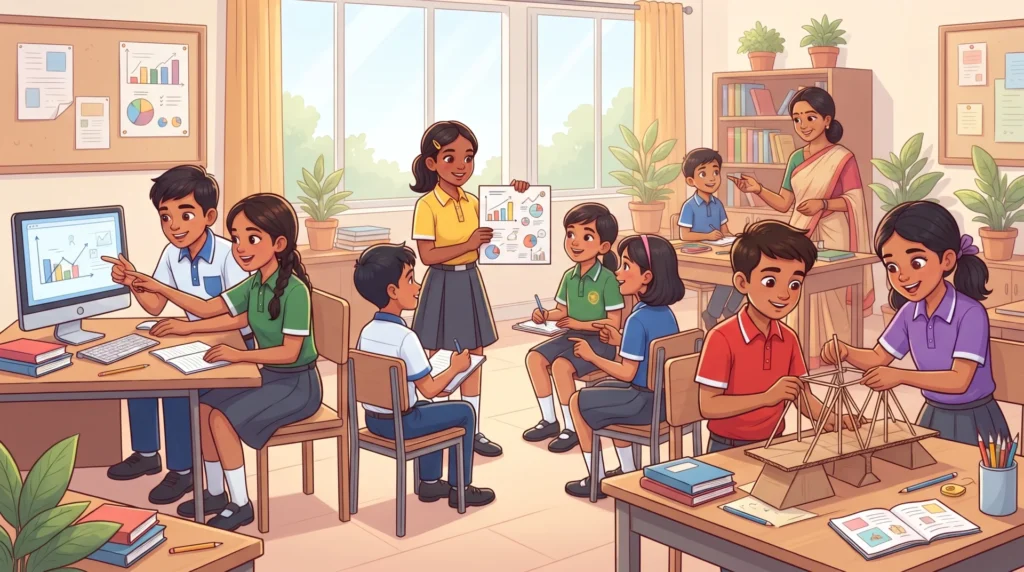
Soft skills grow through doing, not reading. Here are the activities that work best, and none of them needs money.
- Teach someone else. Explaining a topic to a classmate builds communication, patience and real understanding at once.
- Build something with others. A science model, a short film, a website: project-based learning forces you to plan, divide work and solve problems together.
- Speak in small, safe groups first. Five friends are less scary than a full class. Start there, then go bigger.
- Practise speaking in English regularly. Even 15 minutes a day of speaking practice, with friends or through an online English speaking course, builds confidence quickly.
- Take on small leadership roles. Class monitor, club coordinator, team captain: each one is a training ground.
- Finish things you start. Completing one free course, a book, or a project builds discipline and self-belief.
This is also how Apni Pathshala PODs are designed. In a POD, older students help younger ones, children work in small groups on real projects, and every batch ends with a showcase where students present what they made. Soft skills aren’t a separate subject there; they are built into how learning happens. Many students who arrive too shy to speak go on to become peer mentors. You can read more about how that path builds students’ leadership skills.
For homeschooling families, small learning groups like these also answer the common worry about friendships. See our guide on homeschooling social skills.
How to Show Soft Skills on a CV and in Interviews
Writing “good communication skills” on a CV tells an employer nothing. Everyone writes it. Show the skill through what you did instead.
| Instead of writing | Write something like |
| Good communication skills | Presented our science project to 200 students at the school annual day |
| Team player | Led a 5-member team to build a website for a local shop |
| Leadership qualities | Mentored 10 younger students in basic computer skills for 3 months |
| Hard-working | Completed 3 free online courses alongside Class 12 |
In interviews, use a simple structure: the situation, what you did and what happened. One real example said clearly beats five adjectives. This is where developing soft skills and personality pays off: you’ll have stories to tell, not just claims to make.
Want to explore how education is changing beyond traditional classrooms? Discover the Top Homeschooling Trends in India and how flexible, technology-driven learning is shaping students’ futures.
Want a place to build these skills with others? Build confidence and teamwork at an Apni Pathshala POD.
Frequently Asked Questions
1. What are soft skills?
Ans. Soft skills are personal and social skills, like communication, teamwork, confidence, time management, and adaptability, that shape how well you work with others and apply what you know.
2. Why are soft skills important for students?
Ans. They help students do well in group work, presentations, college interviews and jobs. Employers increasingly rank skills like resilience, leadership and listening alongside technical knowledge.
3. How can students develop soft skills?
Ans. By practising them regularly: teaching others, working on group projects, speaking in small groups, taking small leadership roles and finishing what they start. Community learning spaces and clubs help a lot.
4. What is the difference between soft and hard skills?
Ans. Hard skills are technical and testable, like coding or maths. Soft skills are personal and social, like communication and teamwork. Students need both.