Here’s something nobody says at the 10th result party.
While everyone is debating Science vs Commerce, passing the samosas, telling you to “take Science, options rehte hain“. A quiet economic shift is already underway.
India currently has over 4.5 lakh active AI job listings. Fresher hiring in AI and ML grew 22% year-on-year, according to NASSCOM data.
Entry-level AI roles for freshers are paying ₹6–10 LPA.
The students walking into those jobs in 3–4 years? They’re sitting in Class 10 right now. Nobody told them. Nobody told you.
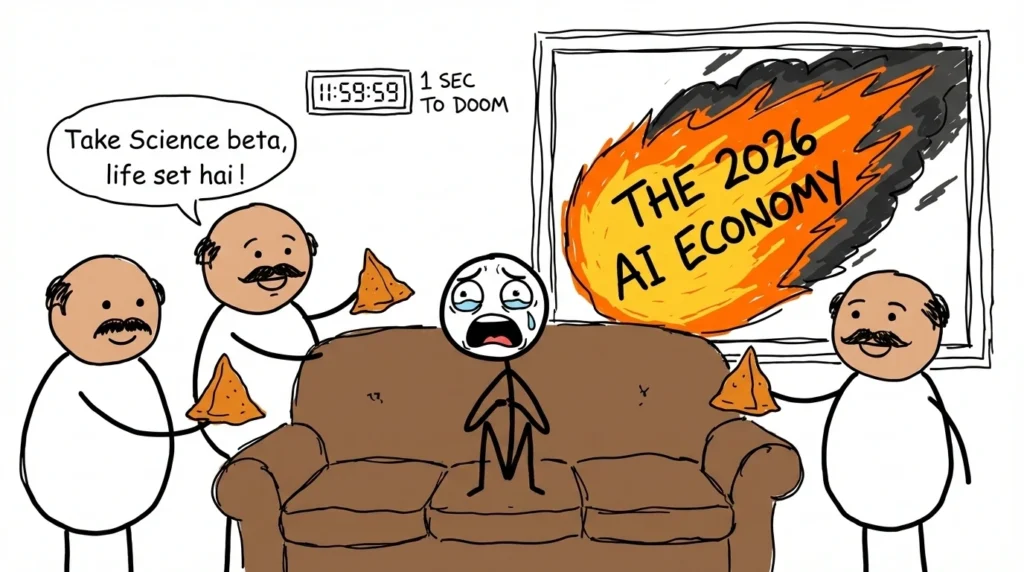
The conversation in that room was about streams.
The Real Problem: India Has a Digital Literacy Gap Nobody Talks About
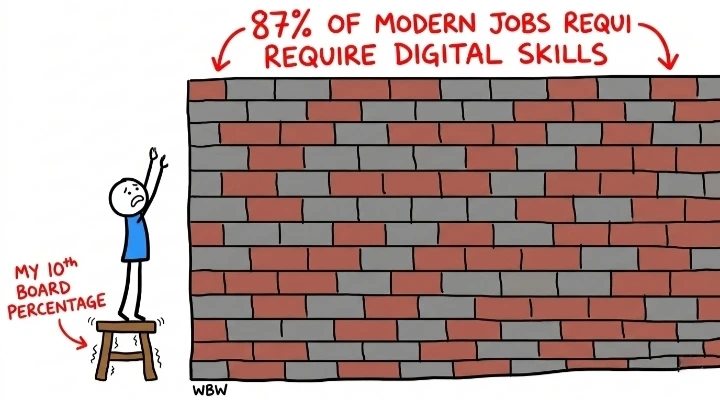
Let’s start with a number. Only 38% of Indian households are digitally literate. In rural areas, that drops to 25%.
Now hold that thought. Because here’s the other number: approximately 87% of jobs today require some form of digital literacy.
25% of rural India is digitally literate. 87% of jobs require it.
That’s not a gap. That’s a wall. And it’s being built quietly, while families debate PCB vs PCM. The students who understand this early don’t just get jobs.
They get options. Real ones.
What the AI Boom Actually Means for a 16-Year-Old
AI feels far away when you’re in Class 10.
It doesn’t feel far away when you’re 20, applying for jobs, and every listing says “familiarity with AI tools preferred.”
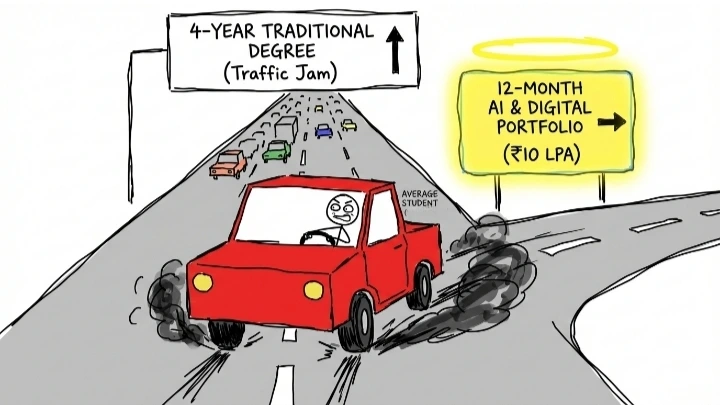
More importantly: around 30% of companies in India plan to move towards skills-based hiring, removing degree requirements entirely.
Read that again. Indian companies are dropping degree requirements faster than the global average.
Think of it like this. The old economy was a highway with one lane. degree → job. The new one has four lanes.
The degree is still there. But so are certifications, portfolios, demonstrable skills, and project work.
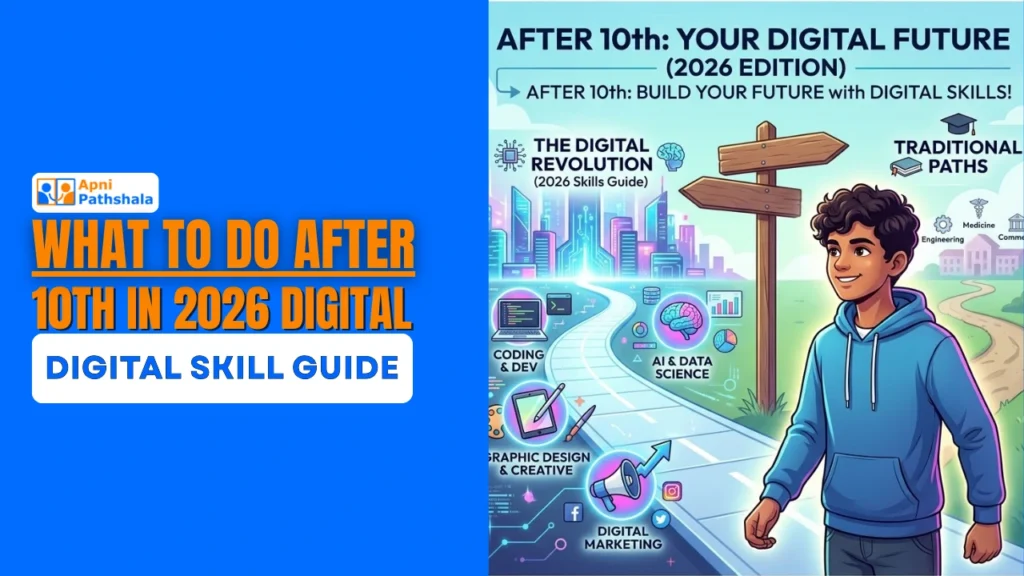
The Courses After 10th That Actually Map to This Economy
1. Computer & Digital Skills (6 months – 2 years)
This is the highest-ROI category in 2026. Not because it sounds impressive at a family dinner, but because the demand is structural, growing, and not going anywhere.
Basic digital fluency is the floor. Coding basics, digital marketing, and web design are the ceiling-raisers.
A student who exits a 1-year computer diploma with a working portfolio is more employable today than a fresh graduate who spent three years studying theory.
2. AI-Adjacent Skills (1 year)
You don’t need to become an AI engineer at 17.
But learning how to use AI tools for content, data analysis and automation is a skill that compounds quickly.
Students who build comfort with these tools early arrive at that career runway years ahead of peers who wait.
3. Hardware & Networking (1–2 years ITI)
Severely, criminally underrated. Every AI system needs physical infrastructure.
Network technicians and hardware professionals are in consistent demand in Tier-2 and Tier-3 cities, not just metros.
A licensed hardware technician in a small city often earns more than many fresh graduates in big ones. Nobody puts this on a poster, but it’s still true.
4. Digital Marketing & Social Media Management (6–12 months)
Every business in India from a local kirana to a D2C brand needs someone who understands Instagram, SEO, and paid ads. This role didn’t exist at scale ten years ago.
Today it’s one of the most in-demand entry-level jobs in the country, with freelance income possible within months of learning.
5. Data Entry, Excel & Tally (3–6 months)
Unglamorous name. Very real demand. Every SME, CA firm, and logistics company needs people who can manage spreadsheets, invoices, and basic bookkeeping.
Fastest path to employment after 10th. Underrated as a starting point that leads somewhere bigger.
6. Cybersecurity Basics (6–12 months)
India reported over 1.59 million cybersecurity incidents in 2023 ( which has obviously increased after ai boom) according to CERT-In data presented in the Lok Sabha
A fourfold increase since 2019. The demand for people who understand basic network security, ethical hacking fundamentals, and data protection is growing faster than supply.
Entry-level cybersecurity roles are opening up for diploma holders; this is one of the few technical fields where a degree is genuinely optional at the junior level.
The Access Problem (And One Real Answer)
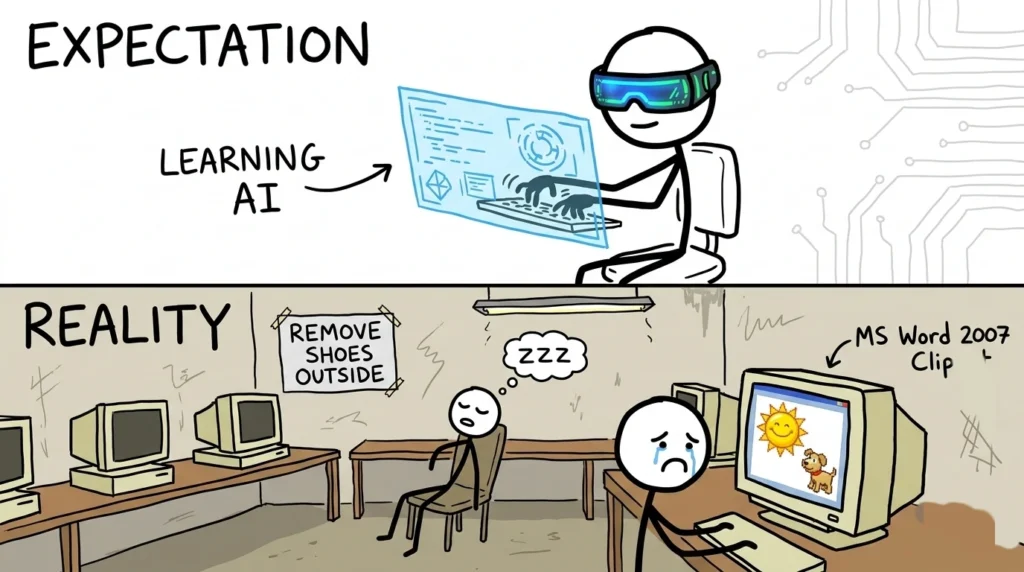
Here’s where the conversation usually breaks down. Most families know digital skills matter. Most students want to learn.
But quality computer education in smaller towns and rural India is either unavailable, unaffordable, or out of reach . It’s often taught by someone who learned MS Office in 2007 and hasn’t updated since.
Imagine wanting to learn swimming and the only option near you is a puddle.
This is the gap that community-based learning is quietly trying to fill. Apni Pathshala runs 109 digital learning centres called PODs across 22 states.
Over 22,000 students have come through these PODs, many in areas where the alternative was simply nothing.
If cost or access is a barrier where you live, check ApniPathshala.
The Identity Shift That Needs to Happen
Here’s the real problem with the diploma conversation in India. It’s not about information. It’s about identity.
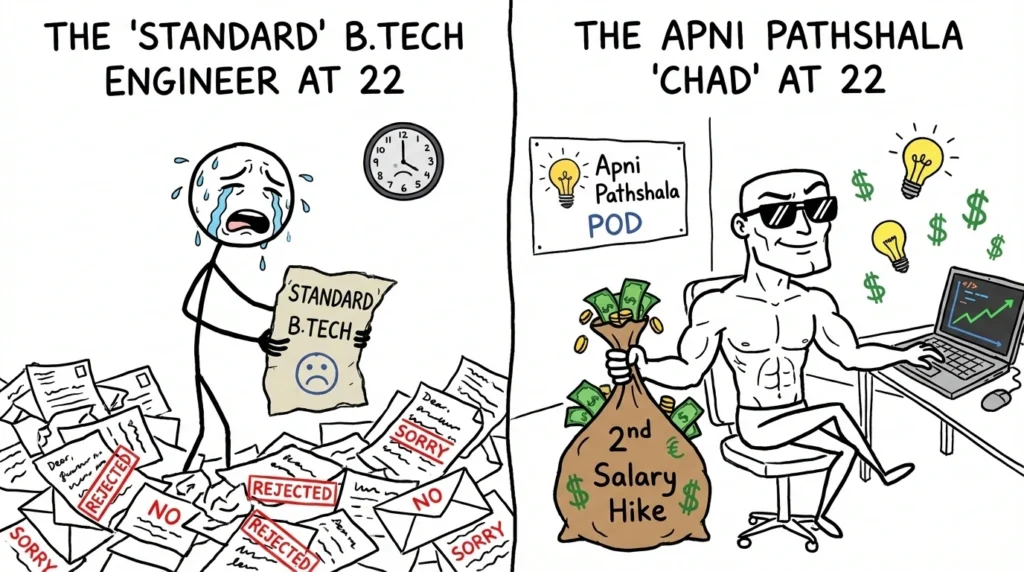
”My child is doing Science” sounds like ambition. “My child is doing a computer diploma” sounds like settling.
But here’s what actually happens in parallel universes where two students make different choices at 16:
The Science Student is 22, finishing graduation, starting to figure out what they actually want to do.
The Diploma Student is 22, has four years of work experience, no education loan, and recently got their second salary hike.
Neither story is better or worse. But only one of them was chosen with information.
Companies across India are increasingly moving toward skills-based hiring. The market is shifting to what can you do, not which college did you attend.
The choice after 10th isn’t Science vs Commerce. It’s: do you want to build for the economy that exists in 2026, or the one your relatives remember from 2006?
The digital wave is not coming. It’s here. The only question is whether your next two years are spent building for it or hoping it goes away.
If this article made you rethink how you should use technology, these guides from Apni Pathshala are the perfect next step.
They break down how modern students can actually learn better in the age of AI and constant digital distraction.
• Many students use smartphones daily but still lack real digital literacy. Read more
• Want to understand how students can actually learn AI today? Read now
The future of education isn’t about avoiding technology.
It’s about learning how to think clearly while using it.
Are students really digitally literate just because they use smartphones and apps?
Not always. Many students are comfortable using technology, but they still lack real digital literacy skills needed for learning, problem-solving, and future careers.
Can students learn AI without being a programming expert?
Yes. Today students can start with AI tools, practical projects, and simple concepts before moving to advanced skills.
Can students build a career in computer hardware and networking after 10th?
Yes. ITI courses in Computer Hardware and Network Maintenance teach practical skills like repairing systems, managing networks, and troubleshooting devices, which are in constant demand.
Will the AI economy create new career opportunities for today’s students?
Yes. As AI adoption grows, companies will need millions of professionals with digital and AI-related skills.