

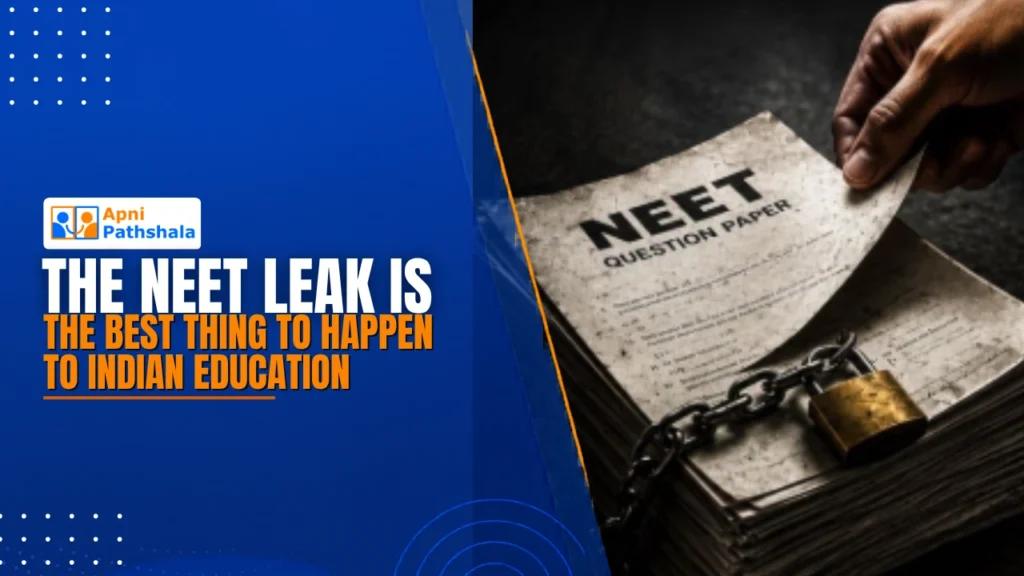
Everyone is treating the NEET paper leak as a law-and-order problem. Catch the guys who sold the paper, arrest the intermediaries, tighten the security, run the exam again. Then we can all go back to normal.
That’s the part we’re getting wrong. Normal is the problem. The leak just switched the lights on in a room we’d stopped looking at.
Here’s the thing nobody says out loud: a paper can only be leaked if the paper is the whole ballgame. Nobody leaks a football match. You can’t steal a swimming race. Those things can’t be leaked because you actually have to do them, in front of people, and the doing is the proof. We built an education system where one sealed envelope on one morning decides whether a 17-year-old becomes a doctor or spends three years in a Kota hostel. Of course somebody stole the envelope. We made it the most valuable object in the country.
We’re running an industrial-age system in an information-age world.
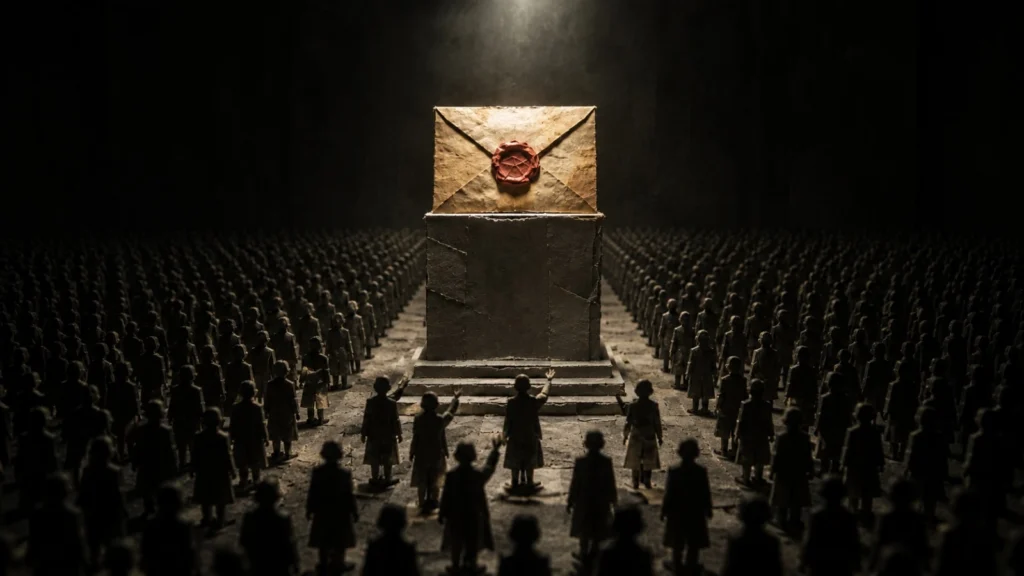
Our exam system was built when information was locked up. Textbooks were expensive, teachers were rare, libraries were far away. In that world, testing whether a kid had memorised the Krebs cycle actually told you something; it told you he’d got access to scarce material and had put in the hours.
Now every kid with a phone has more biology than any 1975 professor had in their head. Memory isn’t scarce anymore. It’s free, and it’s infinite, and it’s in your pocket. So we’ve kept the test and thrown away the reason for the test. We’re weighing kids on a scale that stopped measuring anything real about twenty years ago.
And the real damage isn’t the leak. It’s the 20-lakh-plus students who wrote the paper honestly and still got nothing. Miss the cutoff by four marks, and you walk away with a number and no evidence you ever learned anything. Two years of work and there’s nothing to show for it. No portfolio, no project, no proof. Just a rank card that says: not you.
That’s an absurd amount of waste. We take the most motivated teenagers in the country, run them through a two-year grinder, and hand 95% of them a receipt for failure.
What should replace it?
Stop asking “how do we make the exam tamper-proof” and start asking “why does one exam carry this much weight?”
The answer is a portfolio. A kid should finish school with a public trail of things she actually made and can point to. A website she built. Code she wrote that runs. A science project documented step by step. Certifications she earned one at a time, each one small enough to be finished in weeks, each one stacking into something a college or an employer can see.
You can’t leak a portfolio. You can fake one, but faking one takes more work than building one, and it falls apart the second anyone asks a question about it. That’s the beauty of it: it’s self-defending in a way an exam hall never can be.
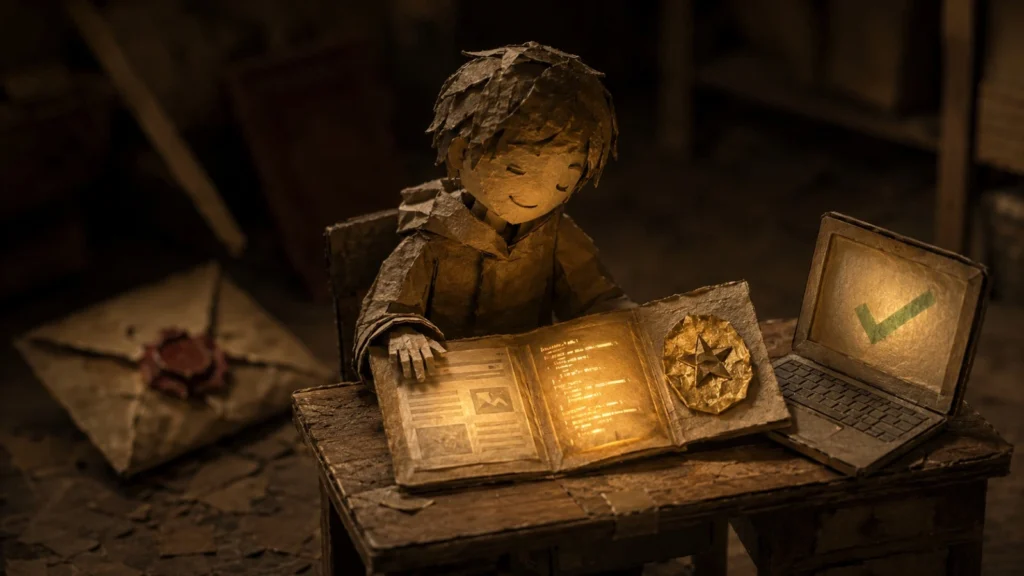
This isn’t theory. We’ve been doing it at Apni Pathshala PODs across India. A POD is a small room with computers and a local person who cares, and the kids in it aren’t preparing for a rank. They’re building. Look at the student stories: girls who’d never touched a keyboard now doing Canva, Excel, Scratch, Tally, HTML. Every one of those is a certification. Every one is a line on a page that belongs to the student and can’t be taken away by a cutoff.
Same idea behind our courses: small, finishable, stackable. And the 7 digital skills every teenager should learn before college is a better roadmap for a 16-year-old than any coaching class syllabus I’ve seen.
The uncomfortable part
The exam system survives because it’s convenient for adults, not because it works for children. Colleges get a clean sorting number. Coaching centres get a ₹50,000-crore business. Parents get a simple story to tell relatives. Nobody has to look at an individual kid and judge her on her own merits, which is hard and slow and requires paying attention.
A portfolio system takes that convenience away. That’s precisely why it won’t be adopted from the top. It’ll be built from the bottom, by parents and teachers who stop waiting.
You don’t need permission to start. Get your child building. Get a computer in front of her; that’s what Apna PC exists for. Teach her to think from first principles instead of memorising. And before you write her off as average, try these five projects.
Or start a POD in your area and do it for thirty kids at once.
The paper leaked. Good. Let’s stop guarding the envelope and start building the thing that doesn’t need one.
Frequently Asked Questions
1. How can parents discover their child’s real strengths?
Ans. Every child learns differently. Instead of judging them only by exam marks, parents should encourage them to try hands-on activities like storytelling, coding, art, public speaking, science experiments, or building small projects.
2. What is the best way to use AI while studying?
Ans. Use AI for explanations, feedback, summaries, and practice questions—but always make your own attempt before asking for the answer. This builds critical thinking instead of dependency.
3. Why are digital skills important for teenagers?
Ans. Digital skills help teenagers learn faster, communicate effectively, stay safe online, and prepare for future careers. From using productivity tools to understanding AI and cybersecurity, these skills are essential for success in today’s digital world.
4. Can I start a POD without running an NGO?
Ans. Yes. Individuals, teachers, NGOs, and community leaders can all apply. If you have the required infrastructure and a genuine commitment to educating students, you are eligible to apply.


2 Responses
nice blog
Thank you, glad you liked it.