Not with wrong numbers.
The numbers are accurate. Your child scored what they scored. The percentage is real. The rank is real.
The lie is quieter than that.
The lie is what the report card implies. The number tells you something meaningful about whether your child is prepared for what comes next.
It does not.
Only 8.25 per cent of Indian graduates are employed in roles that match their qualifications, according to the Economic Survey 2024 to 2025 tabled in Parliament.
Only 42.6 per cent of Indian graduates are employable at all, and that number is falling, not rising.
These are not students who failed their exams.
These are students who passed. Many of them passed well. The report card said they were ready.
The economy disagreed. In this blog, we will find what’s stopping us from becoming valuable to the market.
Why Good Marks Do Not Guarantee Success?
Here is the uncomfortable truth that every teacher knows and almost nobody says out loud.
Marks measure one specific skill.
The ability to receive information, hold it for a defined period, and reproduce it on demand under controlled conditions.
That is a real skill. It is also very narrow.
It does not measure whether a student can figure something out that nobody taught them. Whether they can fail at something, understand why and try differently.
Whether they can sit with a problem that has no answer key and keep going anyway.
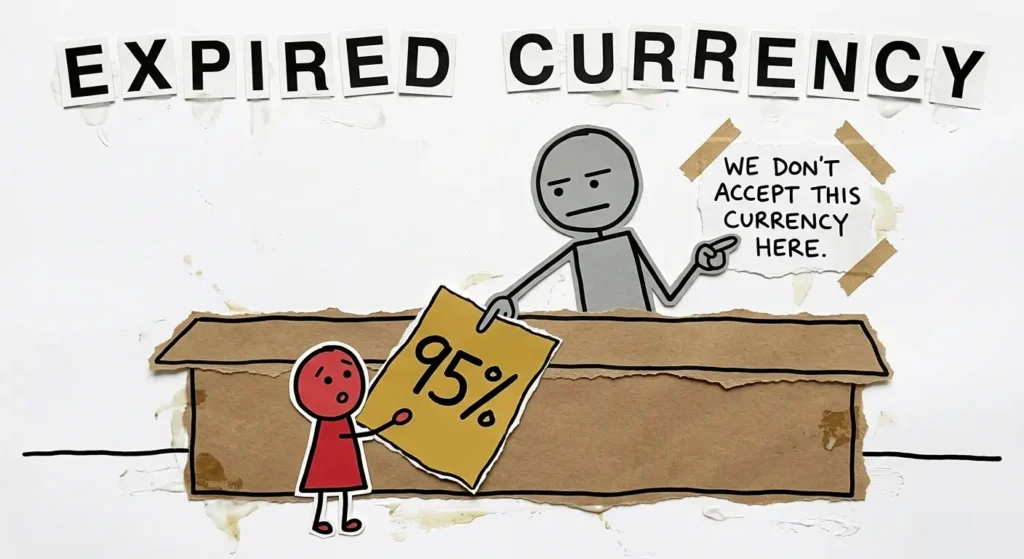
The biggest skill gaps identified by employers in 2026 are communication, problem-solving, critical thinking, and creativity, none of which appear on a report card.
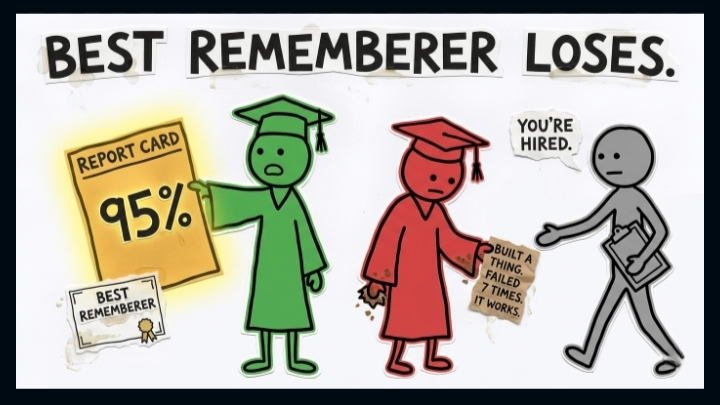
A student with 95 per cent marks has demonstrated excellent compliance with a defined system.
That is not the same as being capable.
Knowing and Doing Are Not the Same Thing
Picture two boys who love cricket.
The first one watches every match. Knows every statistic. Can tell you Kohli’s average in overseas Tests in the fourth innings under pressure.
Gets full marks on every cricket quiz.
The second one plays in the gully every evening. Tries a new shot. Gets bowled. Tries again.
Figures out on his own why his timing is off. Fixes it without anyone telling him how.
At fifteen, the first boy knows more about cricket. At twenty-five, the second boy can actually play.
Marks are the quiz. Life is the gully.
The report card has always been measuring the wrong boy.
Benefits of Self-Learning for Students
Self-learning is not about studying alone.
It is about developing a specific relationship with not knowing.
A self-learner encounters something they do not understand and thinks I can figure this out. They search. They try. They fail.
They adjust. They try again.
Eventually, they understand not because someone gave them the answer but because they built the path to it themselves.
That process, repeated hundreds of times, builds something no exam ever tests.
The confidence that confusion is temporary. That is the skill employers cannot find.
That is the skill the report card never measures.
That is the skill that determines more than any percentage what a person is capable of at twenty-five.
Employers in 2026 prioritise candidates who can collaborate effectively, think critically and demonstrate high learning agility and the ability to pick up new skills quickly as conditions change.
Learning agility. The ability to learn how to learn.
What Students Who Learn Independently Do Differently?
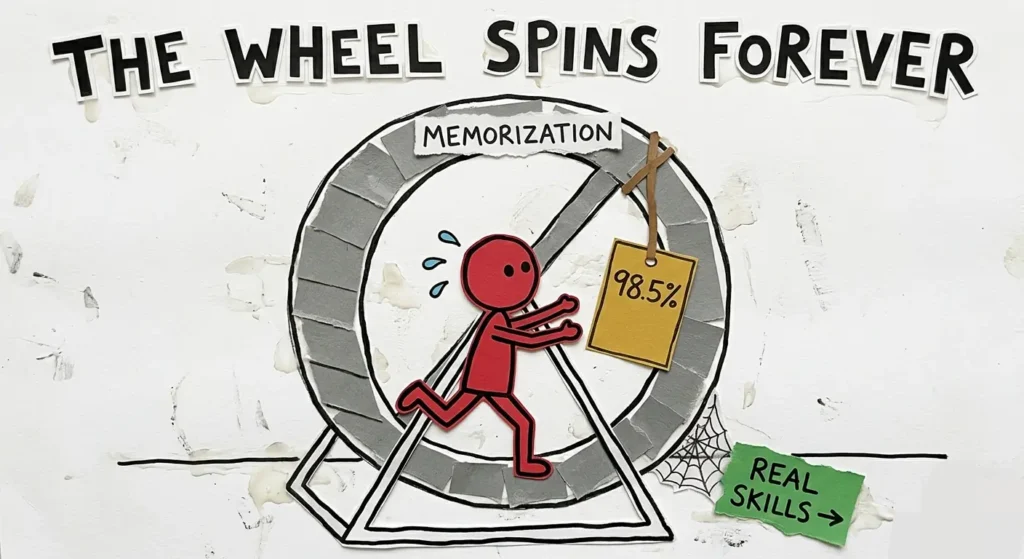
There is a specific kind of student who figures this out before everyone else. Not the topper. Not necessarily.
The one who spent time learning something nobody assigned them.
Who got stuck on a problem for three days and solved it without asking for help.
Who built something, made something, figured something out, and noticed that the feeling of figuring it out was different from the feeling of being told the answer.
That student arrives at twenty-two with something the report card student does not have.
A track record of solving their own problems.
This is what Apni Pathshala’s 107 active PODs across 22 states are quietly building in communities where this kind of learning was previously inaccessible.
Students in these centres do not sit and receive lectures.
They work through Eklavya AI, which covers CBSE, NEET, JEE, Maharashtra Board, and UP Board, chapter by chapter, question by question, getting things wrong, getting corrected specifically, and building the habit of figuring things out.
Not performing understanding.
Actually building it. 136 centres have opened. 107 are running right now.
The students inside them are learning something the report card will never measure, and the economy will eventually pay for.
Visit apnipathshala.org to bring this to your community.
How to Build Self-Learning Skills at Home
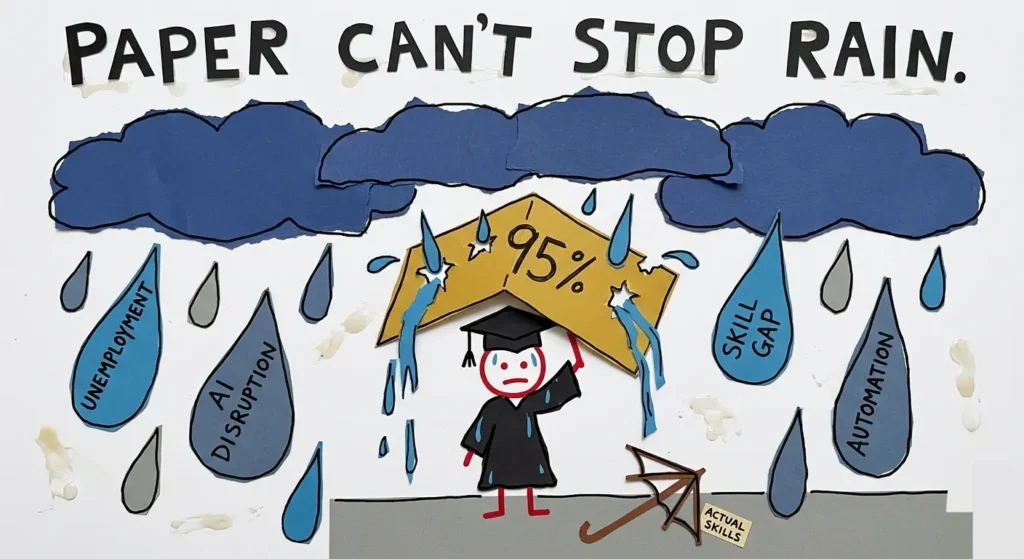
The report card is not going away.
Your child still needs good marks. The system still rewards them. Boards, colleges and many employers still use them as a filter.
But a child who only optimises for marks is building a very narrow set of capabilities on a very particular set of tracks.
The tracks end. The capabilities do not. Start asking different questions at home.
Not just what did you score, but what did you figure out this week?
Not just did you finish the chapter, but what confused you, and how did you work through it? Those questions build different children.
The report card measures what your child remembered.
Ask better questions to find out what they can actually do.
Frequently Asked Questions
1. Are community learning centres just for students who cannot afford anything else?
Ans: They were built for communities that the system left behind. But the model of self-directed learning with real feedback is where all serious education is heading. Being inside it in 2026 is early access to what expensive schools will charge for in 2030.
2. Can students really learn digital skills in Community Learning Centres?
Ans: Yes. Many students in Community Learning Centres learn computer basics, internet usage, AI tools, freelancing skills, presentations, coding, and communication through hands-on activities and peer learning methods.
3. How can parents encourage self-learning at home without creating pressure?
Ans: Stop rewarding marks. Start rewarding the process, the confusion navigated, the problem solved independently, the moment they figured something out without being told. That shift over months builds a different kind of student.