Nobody tells you the second thought comes that fast.
You decide to learn a digital skill or set something up for the kids on your street and before the idea even lands, you’re already doing the math.
Laptop prices. Course fees. Whether this month makes sense, or maybe next month, after things settle.
Whether this is realistic at all without a few thousand rupees to spare.
That calculation is why most people never start. And it’s mostly wrong.
The Real Barrier Isn’t Money
The moment someone decides to learn digital skills or set something up for kids in their neighbourhood the second thought is almost always about cost.
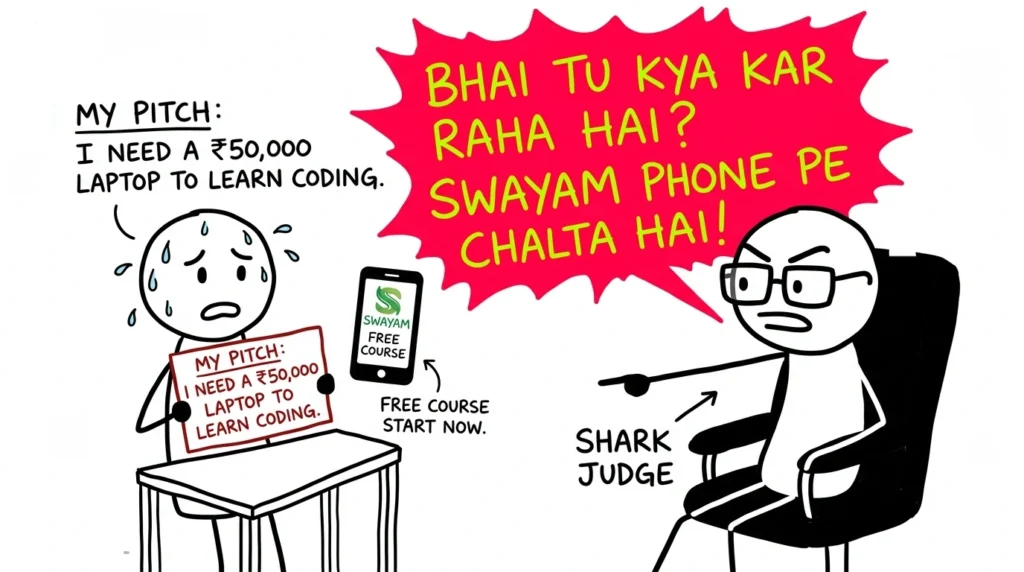
Laptop prices. Course fees.
Whether this month works, or next month, or after the wedding season settles down.
But here’s what nobody says out loud: the biggest barrier to free digital learning in India isn’t access.
It’s the belief that free means inferior. Real learning has a price tag.
That if it costs nothing, it probably teaches nothing. That belief is costing people years.
If You’re Starting for Yourself
Three platforms exist right now. Legitimate, government-backed, genuinely good and completely free.
SWAYAM
Over 11,000 courses. Class 9 through postgraduate. Faculty from IITs and IIMs.
Running since 2017. Over 6.1 crore registered learners and somehow it remains one of India’s best-kept secrets.
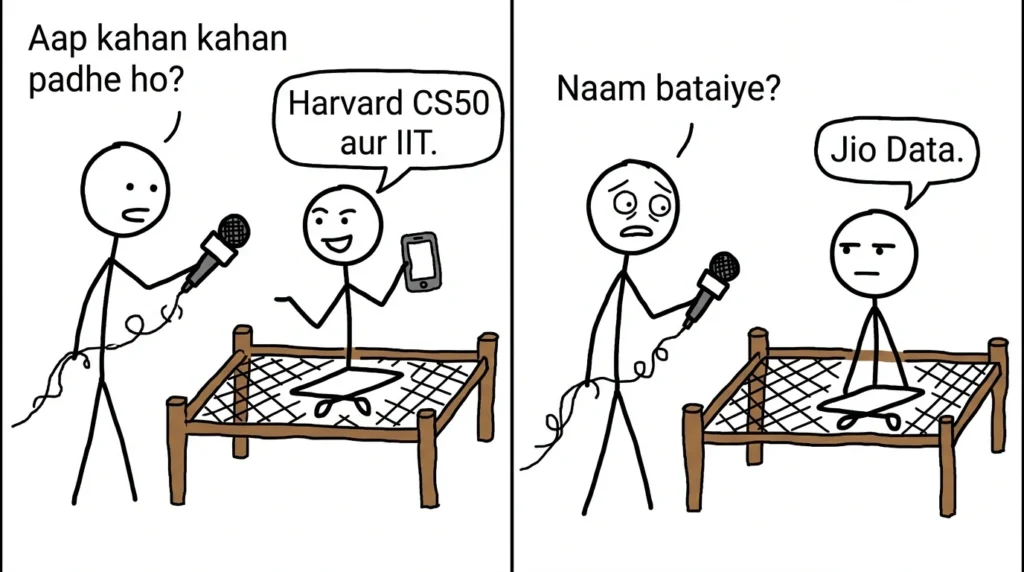
The content costs nothing to access. You only pay if you want the certificate afterward and even that’s optional.
DIKSHA
Built specifically for school students. NCERT-aligned content, accessible on any smartphone, no account required for most of it.
No friction. Just open it and learn.
For anyone asking how to learn online without money, DIKSHA is a real answer, not a workaround.
CS50 by Harvard on YouTube
Free. Full course. No login.
Harvard’s introductory computer science course, available to anyone with a phone and a data connection.
Not good for free. Objectively, one of the best computer science courses in the World. Not best-for-free. Best.
These aren’t backup options. They’re the real thing, distributed freely because the people behind them decided access mattered more than revenue.
The laptop problem is really acknowledged. But most of this runs on a smartphone. And if even that’s a constraint,
There’s a third option that approaches the problem from a completely different direction. These aren’t backup options for people who can’t afford the real thing.
They are the real thing built and distributed freely because the organisations behind them decided access mattered more than revenue.
One more thing worth saying: most of this runs on a smartphone.
The laptop problem is real, but it’s not the wall it used to be.
And if even a smartphone is a constraint, there’s an entirely different approach worth knowing about.
If You Want to Build It for Your Community
Some people reading this aren’t thinking about themselves.
They’re thinking about the kids on their street with no devices. The school had an empty room after 3 pm.
The retired teacher has time, patience, and nowhere productive to put it.
For those people the option isn’t to find digital learning somewhere nearby.
It’s to build it, right where you are. Community learning centres in India don’t require a budget to start.
They require a person willing to start. Cost? Zero upfront.
What a POD Actually Is
Apni Pathshala runs a network of community digital learning centres called PODs, 105 of them, across 22 states.
The people who opened them weren’t institutions or funded organisations, mostly.
They were teachers, parents, youth volunteers, and retired professionals.
People with a room and a genuine reason to use it.
To apply, you need:
- A dedicated room.
- Reliable power.
- An internet connection.
- One person committed to running it can be you.
What Apni Pathshala provides once you’re approved:
Ten Apna PCs with headphones and webcams on lease.
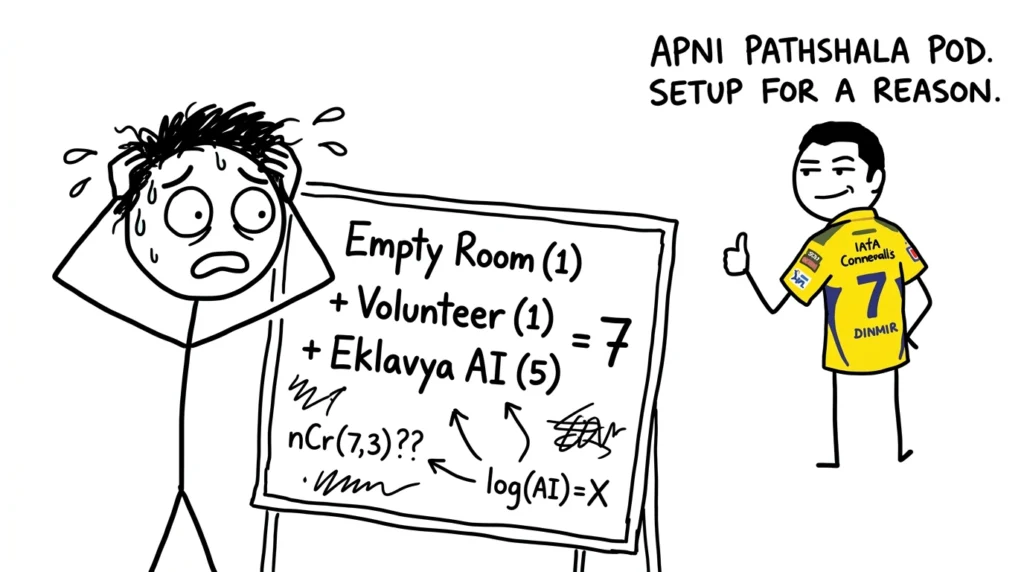
Pre-installed software: Eklavya AI for structured student learning, and Apni Prerna to block harmful content so the space stays a classroom.
A dedicated POD Admin who checks in regularly is an actual person, not a helpline.
Technical support when things break.
Access to a national network of 100+ PODs with shared resources, visibility, and practical support on operations and funding.
No upfront cost.
You can charge students a small fee to cover electricity, internet, and rent . The only rule is don’t overcharge.
Apni Pathshala takes no commission, charges no setup fee. What we ask in return: take it seriously.
Show up. Actually impact students.
PODs that do this consistently can apply for more computers as they grow.
This is a partnership not a donation programme. They bring the infrastructure.
You bring the room and the commitment. One doesn’t work without the other.
The Decision Is the Investment
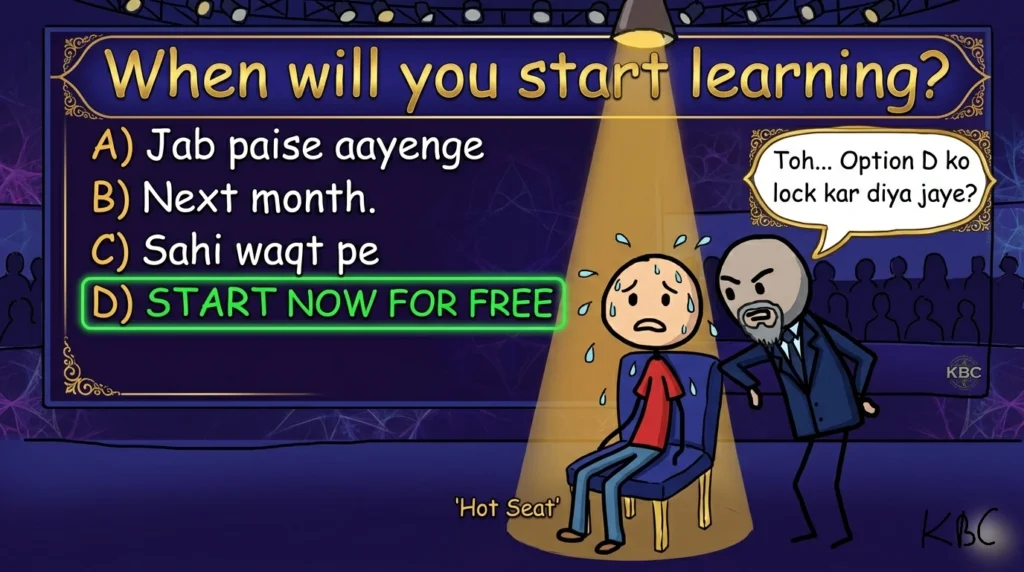
Free digital learning in India is not scarce. Platforms exist. Hardware can arrive.
Courses are already waiting.
What’s actually scarce is the moment someone stops calculating and starts.
That moment is available right now.
Ready to Act?
For learners: Start with SWAYAM or CS50 today.
No signup required for most content.
Pick one course and begin.
For community builders: Visit apnipathshala.org to apply for a POD.
The application takes about five minutes. If you have a room and the commitment, the rest can come.
How to create a safer and smarter digital learning space for your child, find out.
How Community learning centres change the future for first-generation learners, see how.
Frequently Asked Questions
1. How does Apni Prerna create a safe digital learning space?
Ans: Apni Prerna creates a safe space by controlling access to websites, monitoring activity, and encouraging focused and distraction-free learning.
2. What challenges do first-generation learners face?
Ans: First-generation learners often face challenges like lack of guidance, limited resources, and low confidence, which can affect their academic growth.
3. I want to open a learning centre but I don’t have funding. Is that a real option?
Ans: Yes. Apni Pathshala PODs require no upfront investment. The hardware comes on lease. Your contribution is the space and consistent presence. Over 100 people across India have already opened one this way.
4. How is a POD different from a regular computer centre or cyber café?
Ans: A POD is structured for learning, not browsing. Pre-installed software guides students through the curriculum. A POD Admin provides regular support. And because it runs on a partnership model not a franchise there’s no pressure to generate profit from students.