The Illusion of the 6-Kilo Backpack
Watch an Indian student walk into a board exam hall.
They are carrying six kilos of books in their backpack. They have spent the last three weeks juggling NCERTs, RD Sharma, and three different heavy reference guides, aggressively studying for six hours a day.
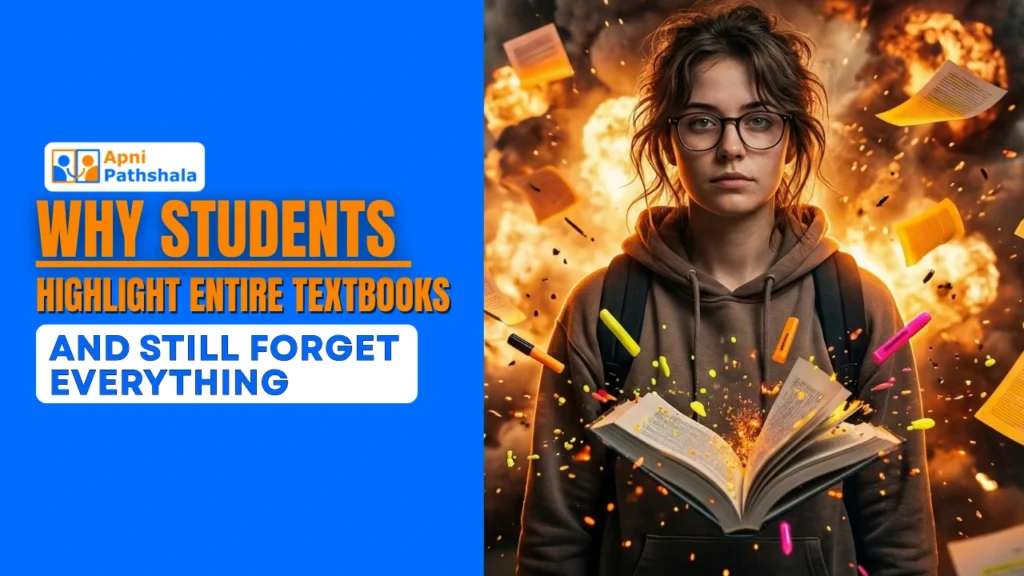
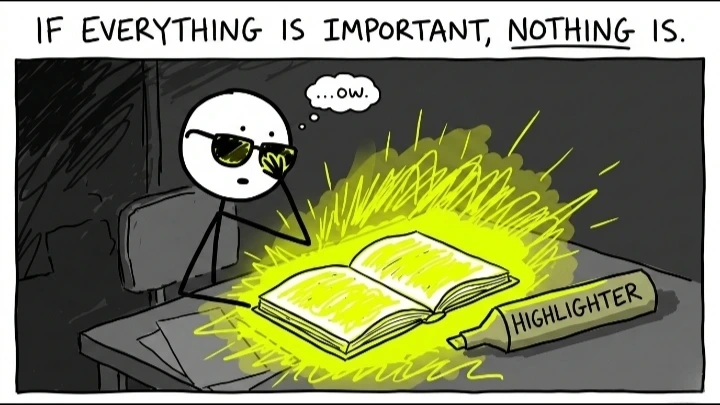
They have highlighted every single page until the book literally glows in the dark.
At this point, the only thing not highlighted is the actual concept. They sit down. They look at the very first application-based question on the paper. Total blank.
How does this happen?
How does a student who grinds for weeks, staring directly at the right information, still freeze when the clock starts ticking? This isn’t just a lack of focus. It is a structural failure.
We have somehow convinced millions of kids that carrying information is the exact same thing as understanding information.
It is exactly why millions of parents and students are frantically searching for a free AI tutor for CBSE because the traditional method is quietly collapsing.
Let’s look at what actually happens the night before a physics exam.
It’s 11:00 PM.
India’s Favourite Study Strategy
The class WhatsApp group suddenly goes hyperactive.
Someone sends a blurry, poorly lit PDF of handwritten notes. Nobody knows who wrote them.
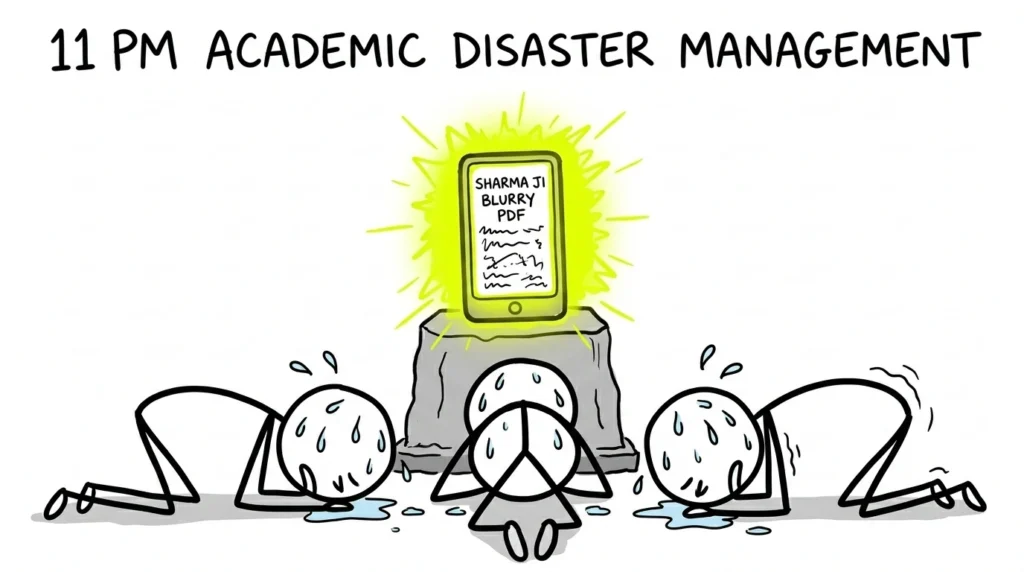
Nobody knows if the formulas are even correct. But everyone saves the PDF anyway.
It’s basically academic disaster management. We are desperately trying to cram data into our heads at the last minute because the primary source material, the textbook, failed to actually teach us. And there is a biological reason for this.
Studies in cognitive psychology show that passive reading deletes up to 70% of that information within 24 hours.
We are completely confusing the effort of reading with the actual friction of learning. But wait… hold on. If textbooks are biologically terrible for long-term retention, why is it the only tool we hand to a 15-year-old?
Here is the uncomfortable truth about modern education.
Why Textbooks Alone Don’t Work for CBSE Students
Textbooks were never actually meant to be taught. They were meant to be archives.
They were designed decades ago to safely store facts on printed paper. Somewhere along the way, we accidentally promoted them to the role of educator.
This created the Factory Model of Education. During the Industrial Revolution, factories won because they standardized everything.
They built one identical product for millions of people. Textbooks are the exact same 1950s technology.
A publisher prints the exact same 20-page chapter on “Thermodynamics” for three million completely different teenage brains. But human brains are not assembly lines. Some students read fast.
Some need visual analogies.
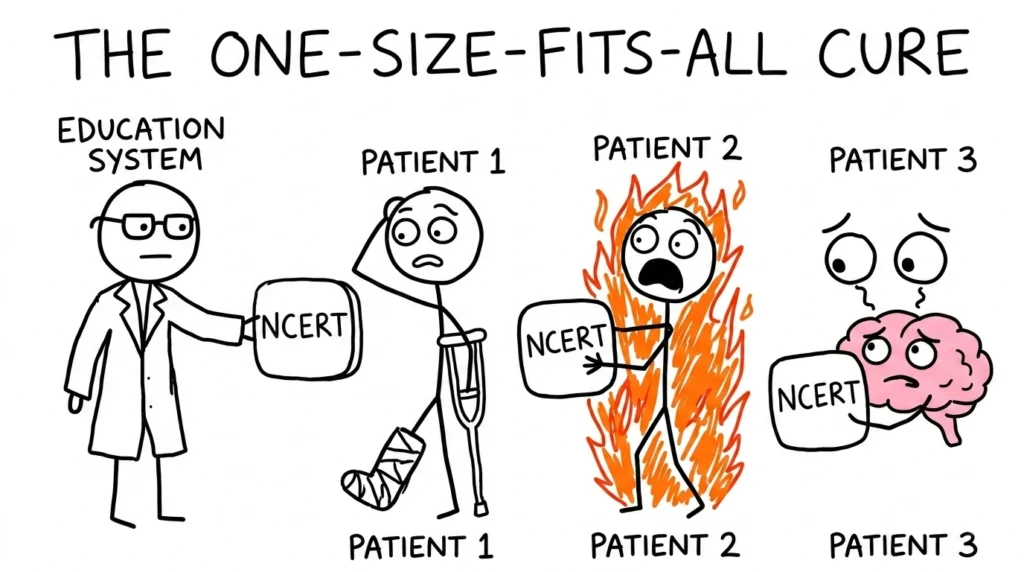
And some stare at the exact same paragraph for 15 minutes before realizing they were thinking about Maggi. Yet, we hand all of them the exact same one-size-fits-all book, and when they don’t get it, we blame the kid.
If a doctor gave the exact same medicine to three million patients regardless of their symptoms, we would call it malpractice. In education, we call it the standard syllabus.
The Book Stares Back
Look at almost any other high-stakes field. In finance, medicine, and engineering, the core tools have completely evolved over the last twenty years.
But look at education. The primary tool we use to help a student understand the complex laws of the universe is a printed block of paper.
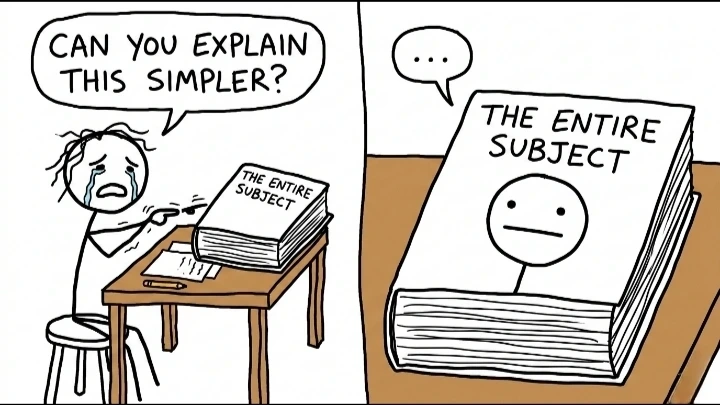
A textbook is a monologue. It speaks to you. It demands that you read and understand, but it never asks you a question back.
Imagine it is 2:00 AM. You are reading about Kirchhoff’s law, and you simply do not understand paragraph three.
If you stare at the book, the book will just stare back at you, silently judging you. It cannot rephrase itself.
It provides absolutely zero feedback loops.
Which brings us to the inevitable conclusion. Textbooks alone simply aren’t enough anymore. The smartest students today realize that textbooks are just raw databases.
To actually understand that data, you don’t need to read it five times.
Turning Study into Conversation
You need a translation layer.
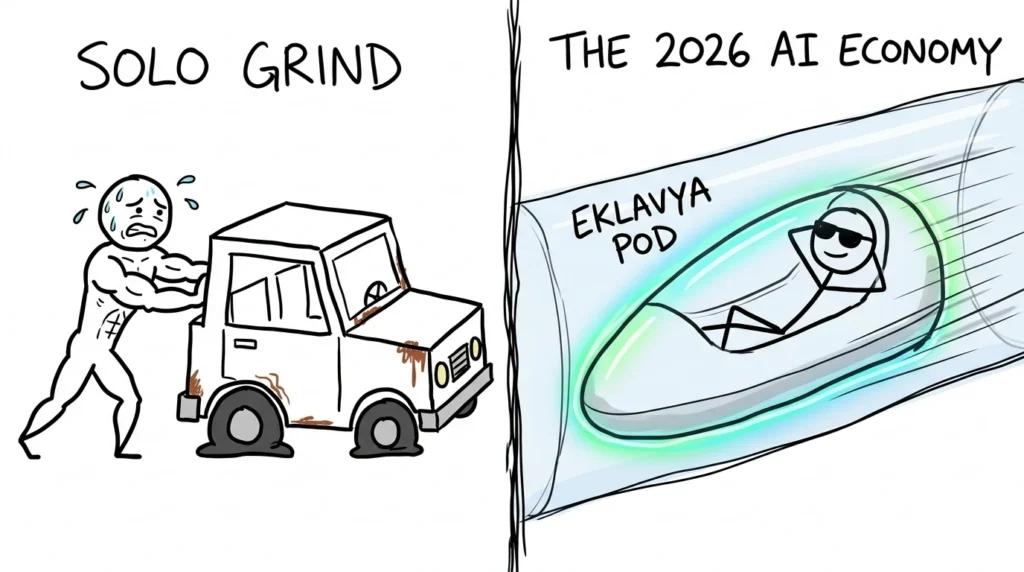
You need a system that takes the heavy, academic jargon and translates it into a language your specific brain actually understands.
This is the 2026 Learning Architecture.
[Textbook = Information] → [AI Tutor = Explanation] → [Practice = Understanding]
This is exactly where tools like Eklavya NCERT AI start to make sense. Instead of forcing every student through the exact same static page, it acts as that translation layer.
You cannot ignore the CBSE board exams, and you cannot ignore the NCERT syllabus.
But Eklavya takes that rigid, heavy syllabus and turns it into an interactive conversation.
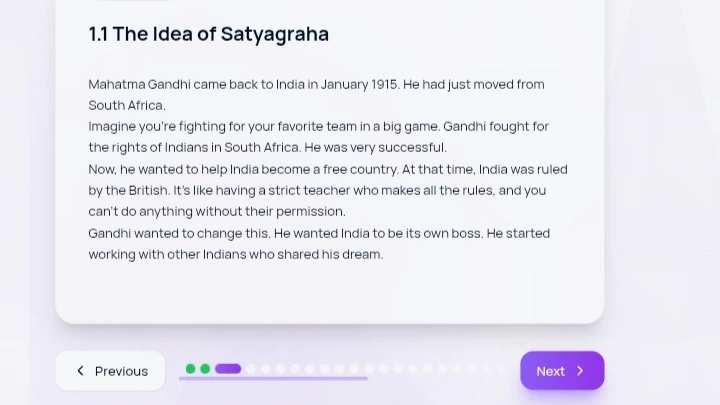
It kills the monologue and starts a dialogue. If you get stuck on a historical date or a complex math theorem, the AI adapts its explanation instantly until you actually comprehend it. It breaks a 20-page wall of text into bite-sized, conversational nodes.
It provides the instant feedback loop a printed page never couDow Textbooks are the starting line, not the finish line.
But more importantly, they are just a tool. And in the modern world, trying to pass a competitive board exam using only a textbook is like trying to cut down a tree with a spoon.
It will make you sweat, and everyone will praise your hard work.
Put the Spoon Down
But you’re still going to fail the test.
Put the spoon down and get a better tool.
Step into the future of learning and try your first bite-sized chapter on Eklavya for free today.
And honestly, it’s just a much better way to spend your Tuesday evening.
👉 Go to Eklavya NCERT AI, choose your class, pick your subject, and try one chapter tonight.
If this idea makes sense to you, you might also want to explore
👉 Build real AI skills with the right learning system. Read Now
👉 What it really takes to reach 99 percentile fast.Read Now
👉 The real value of a college degree in 2026.Read Now
Do I still need NCERT books if I use an AI tutor?
Yes. NCERT books provide the official syllabus and the exact boundaries of what you need to know for CBSE exams. An AI tutor doesn’t replace the syllabus; it acts as a translation layer to help you actually understand and retain what is inside the book.
Is Eklavya NCERT AI actually a free AI tutor for CBSE?
Yes, it is 101% free. There are no hidden paywalls or premium tiers. It is philanthropically funded to ensure that every CBSE student has access to an interactive, adaptive learning tool without the heavy financial burden of traditional tuition.
How can I study NCERT faster?
Stop trying to read it like a novel. Use the 80/20 rule to identify core concepts, and use conversational AI to break down the highly complex paragraphs into simple, bite-sized explanations. Focus on active understanding, not passive reading.
Does a college degree still guarantee success in India today?
Not necessarily. A degree can open doors, but real success now depends on skills, adaptability, and practical experience.
In 2026, what you can do often matters more than what degree you have.