

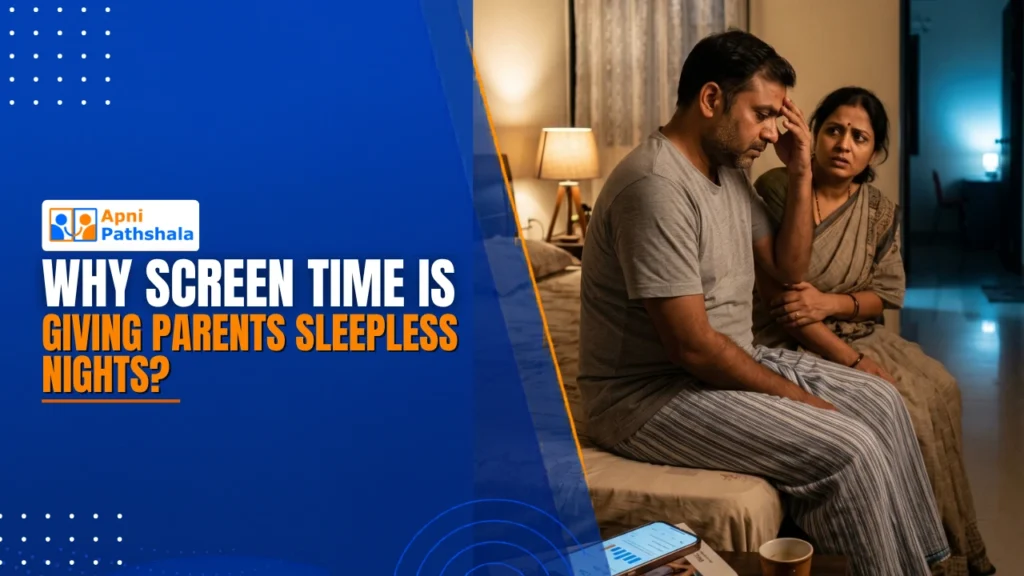
Every parent knows this feeling.
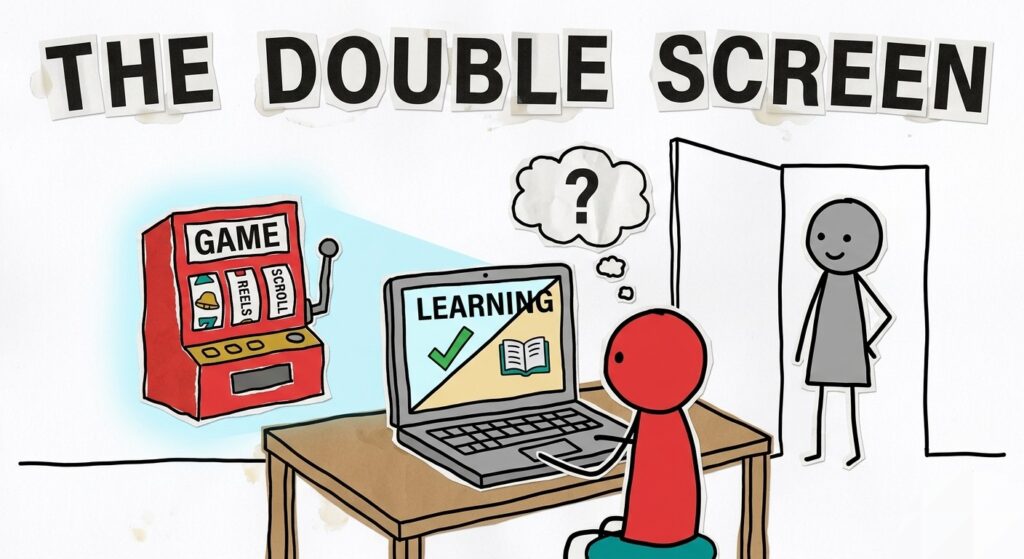
It is 8 PM. Your child is sitting at their study table with a laptop or a smartphone. The room is totally quiet. You look at them from the door. You feel happy. “My child is studying hard,” you think.
But deep down, your heart beats a little faster.
Because you know the truth. The screen is a magic door. In one single second, a child can close their math video. With just one click, they can access a gaming video or a funny reel.
When the bedroom door is closed, parents feel totally blind. You do not know if they are building a skill or wasting their time.
We buy them an expensive device for their education. But we are terrified that this same device has secretly become an addiction machine.
Why Your Child Gets Distracted Online (It’s Not Their Fault)
We tell our kids to “use the internet to study.” But we forget what the internet actually is.
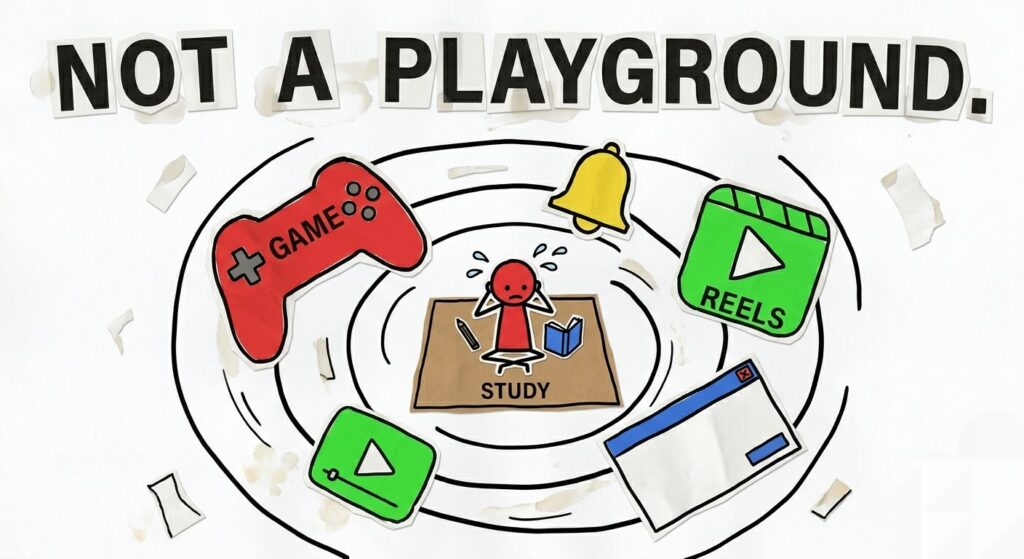
We treat the internet like a safe playground. It is not. It is a busy, noisy, and dangerous highway.
The internet was not built for a 10-year-old to study peacefully. It was built by big companies. These companies make money when you click, watch, and scroll. They hire thousands of smart engineers just to keep your child staring at the screen.
Imagine dropping your child in the middle of a crowded, noisy railway station. Now, tell them to sit on the platform and read a school book. Can they do it?
No. There is too much noise. There are too many colorful things to look at.
When your child gets distracted online, it is not their fault. The machine is designed to distract them. It is built to pull their attention away.
Why Taking Away the Screen Makes Things Worse
So, what do parents normally do?
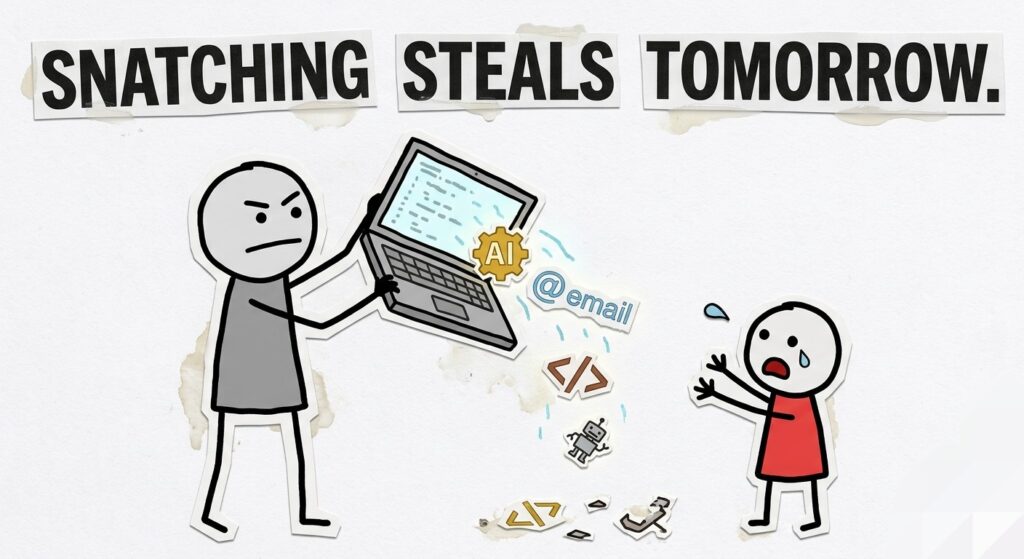
One day, you walk into the room. You catch your child playing a game instead of doing their homework. You get angry. You snatch the laptop or phone away. You say, “No more internet for you!”
But let us be honest. This does not work.
We are in the year 2026. Without digital skills, your child cannot survive in the real world. They need to know how to use AI. They need to know how to write emails, build websites, and write code.
If you ban the screen, you are blocking their future. If you lock the laptop in a cupboard, they will fall behind the rest of the world.
We do not need zero screens. We need safe screens.
What Actually Makes a Screen Safe for Children
How do we make a screen safe? We need to put strong brakes on the machine.
This is exactly why Apni Pathshala created Apni Prerna.
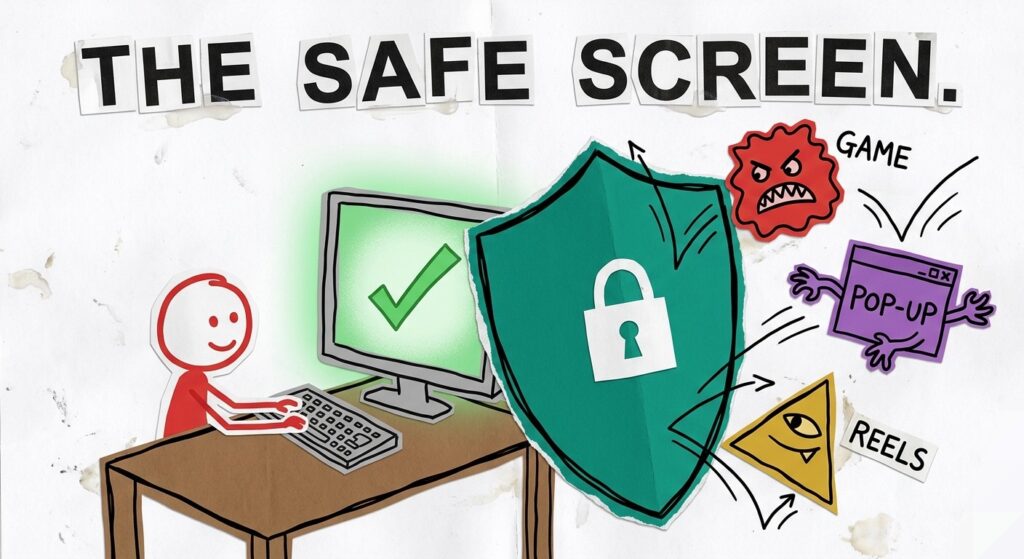
Think of Apni Prerna as a strong, invisible shield. It is not a spy camera. It does not watch your child through a webcam. It does not punish them. Instead, it acts like a smart lock installed on every Apna PC.
Before your child even opens a website, Apni Prerna is awake.
- It blocks the games.
- It stops adult content.
- It hides those colorful, distracting pop-ups.
It completely changes how the computer works. The machine stops being a noisy entertainment box. It becomes a pure, clean learning machine.
For the first time, parents can finally breathe. You get a simple report on your mobile phone showing exactly what your child learned today. No guessing. No worrying. You know they are safe.
Why Children Focus Better Outside the Bedroom
Software safety is great. But physical safety matters just as much.
A bedroom is built for sleeping and relaxing. It is very hard to focus while sitting on a bed. This is why a community micro-school, or an Apni Pathshala POD, is so powerful.
When a child walks into a local POD, their brain knows it is time to work.
They sit at an Apna PC. They are protected by the Apni Prerna software shield. But they are also protected by the room itself. A trusted local mentor sits in the room with them.
Ten other children are sitting next to them. They are busy solving math problems or building computer games on Scratch.
You cannot accidentally waste time watching funny videos when your friends are busy building their future right next to you.
The positive energy of the room keeps every single child on the right track.
Conclusion
We cannot hide our children from the digital world. The future runs on computers.
But we also cannot throw them onto the internet without a seatbelt. If we want our kids to win in the real world, we have to give them the right tools. But more importantly, we have to give them the right armor.
Give them a safe room. Give them a protected screen. And watch how fast they learn.
Want to know what else is wrong with how we measure a child’s learning today?
Read our previous blog: Your Child’s Report Card. Is lying to you a way to show that passing a school exam does not mean they are ready for the real world?
to show that passing a school exam does not mean they are ready for the real world?
Frequently Asked Questions
1. Why do parents pull their daughters out of government schools?
Ans: It isn’t because of a backward mindset. It is because high schools are often miles away, forcing girls to walk on empty, unsafe dirt roads. Parents act as protectors, choosing physical safety over a dangerous commute.
2. Why do some children score good marks but still struggle in real life?
Ans: Because marks and real learning are not always the same thing. A report card can show numbers, but it cannot measure confidence, creativity, problem-solving, communication, or practical skills. Many students memorize answers for exams but still feel lost outside the classroom.
3. Who supervises the students in a community POD?
Ans: Instead of a distant stranger, a POD is supervised by a local learning facilitator, often an educated mother, aunt, or sister from the exact same village. This builds immediate trust with parents.



One Response
Excellent article! A balanced approach to screen time and safe digital learning is exactly what today’s parents need. Very informative!