There is a small moment in almost every classroom that teachers know well.
A student does not understand something.
They look at the board.
They look at their notebook.
They look at the person sitting next to them.
And sometimes, they simply move on.
Not because they do not want to learn.
Sometimes they just do not know how to ask the question again.
That is one of the interesting possibilities artificial intelligence is bringing into education.
What if a student could ask again?
And again?
What if they could ask for a simpler explanation, another example, or a different way of understanding the same idea?
The technology is new.
The learning need is not.
Every Student Does Not Understand Something the First Time
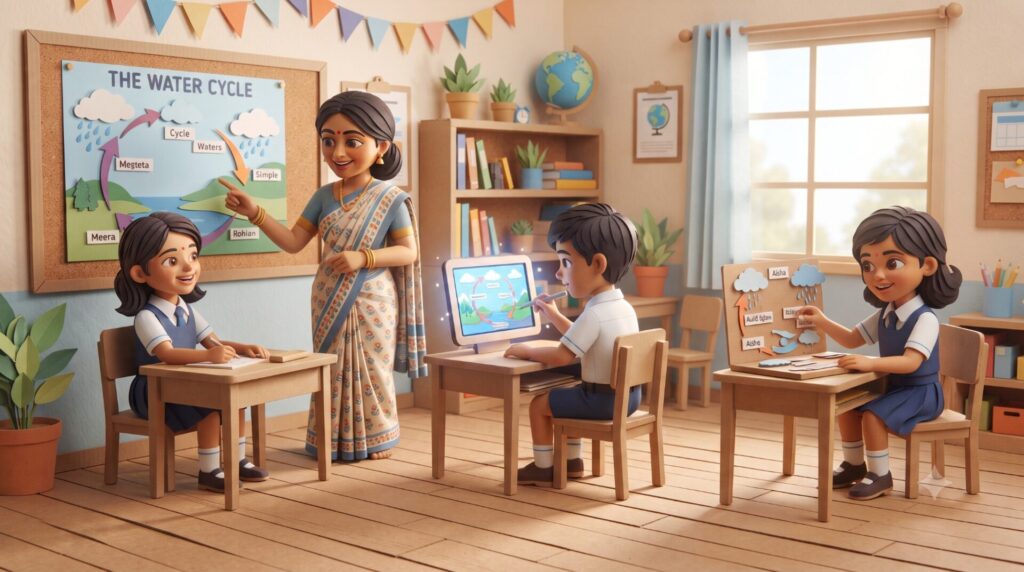
A classroom has one teacher and many students.
The teacher explains a concept, gives examples, answers questions, and moves forward.
But students do not all move at the same speed.
One student may understand immediately.
Another may need two examples.
Someone else may need five.
And there may be a student who understands the concept only after hearing it explained in a completely different way.
This is where personalised learning becomes interesting.
The idea is not to give every student a completely different education.
It is to give students different kinds of support when they need it.
AI can become one of those support systems.
What Makes an AI Tutor Different?
A search engine can help you find information.
A video can explain a concept.
A textbook can provide the lesson.
An AI tutor can create a conversation around the learner’s question.
A student can say:
“I don’t understand this.”
Then ask:
“Can you explain it more simply?”
Then:
“Give me an example.”
Then:
“Can you explain it in Hindi?”
Then ask another question.
That back-and-forth is what makes AI tutoring different.
It turns technology from a place where students find information into a space where they can interact with what they are learning.
UNESCO’s work on AI and education similarly looks at AI as a technology that can create new possibilities for teaching and learning, while emphasising the need for human-centred and responsible use.
The Most Important Feature May Be the Ability to Ask Again
Students are often told to ask questions.
But asking a question in front of an entire classroom is not always easy.
Some students are shy.
Some worry that their question is too basic.
Others may not even know exactly what they have misunderstood.
An AI tutor can provide another place to begin.
The student can ask a question privately.
They can phrase it badly.
They can make spelling mistakes.
They can ask the same thing again.
There is no bell telling them that the explanation has ended.
This does not make AI a replacement for the teacher.
It simply gives the learner one more opportunity to keep going.
This Is Where Eklavya AI Fits
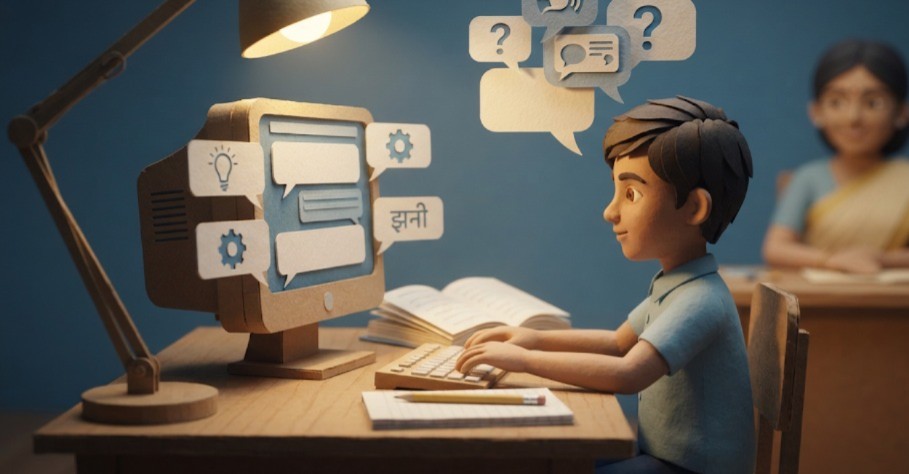
This idea is central to Eklavya AI.
Eklavya is an AI-first learning companion designed around what a student is actually studying.
Instead of treating AI as a general-purpose chatbot, the focus is on connecting learning support with the student’s curriculum, subject, chapter, and learning context.
That matters because an education tool should understand more than just the question.
It should understand where the student is in their learning journey.
A student learning a chapter should be able to ask about that chapter.
They should be able to clarify a concept, explore an explanation, practise, and continue learning without constantly moving between unrelated platforms.
That is the larger opportunity with AI in education.
Not more technology for students. Better learning support for students.
AI Does Not Remove the Teacher From the Picture
This is important.
Education is not only about answering questions.
Teachers notice when a student loses confidence.
They understand classroom dynamics.
They motivate students.
They recognise effort.
They know when a learner needs encouragement rather than another explanation.
AI cannot replace that relationship.
The more useful way to look at AI in schools is as an additional layer.
The teacher guides the learning.
The curriculum provides structure.
The student takes responsibility for learning.
And AI can provide additional support when the student gets stuck.
The National Education Policy 2020 also places emphasis on learner-centred education, critical thinking, experiential learning and appropriate use of technology.
What Happens When Students Get More Comfortable Asking Questions?
Something interesting can happen.
They may start asking better questions.
A student who initially asks, “What is this?” may eventually ask, “Why does this happen?”
Then:
“Can you give me another example?”
Then:
“What happens if I change this?”
The quality of the question can change the quality of the learning.
And that is one of the biggest opportunities AI tutoring can create.
Not simply giving students answers.
Helping them become more comfortable with curiosity.
The Real Test Is What Students Do After the Answer
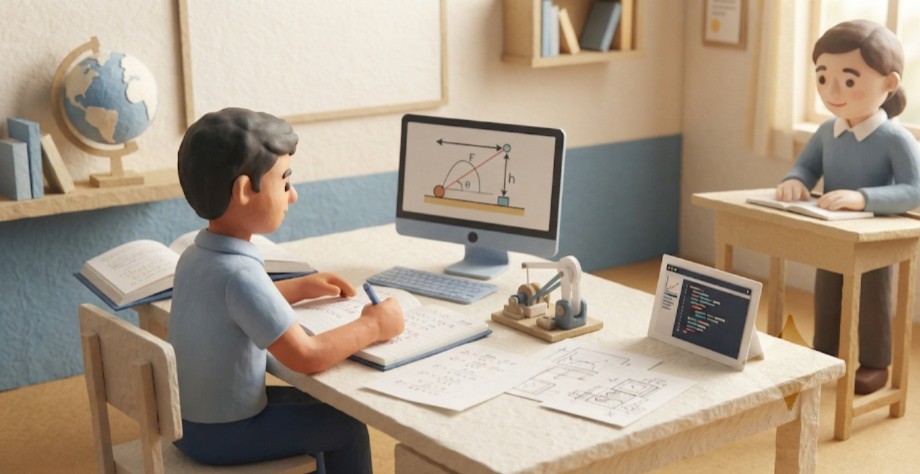
An AI explanation is useful only if the student can do something with it.
Can they solve the next problem?
Can they explain the idea themselves?
Can they apply it to a project?
Can they remember it later?
This is why AI should be part of a broader learning environment rather than the entire environment.
Students still need teachers.
They need practice.
They need computers and digital access.
They need peers.
They need opportunities to create.
Apni Pathshala’s Learning PODs are one example of that broader environment; community learning spaces where students can access technology, practise digital skills, and explore learning independently.
The technology provides an opportunity.
The learning happens through what the student does with it.
AI Literacy Will Become Part of Learning
As AI becomes more common, students will need to understand more than how to type a prompt.
They will need to know when to trust an answer, when to question it, how to verify information, and how to use AI without allowing it to do all the thinking for them.
That is why AI literacy will become increasingly important.
Students should learn to use AI as a thinking partner, not simply an answer machine.
UNICEF’s work on digital learning also emphasises the importance of creating digital learning opportunities that respond to children’s needs and circumstances.
The Future May Belong to Students Who Keep Asking
The most valuable part of an AI tutor may not be the answer it gives.
It may be the fact that the student feels comfortable asking one more question.
Then another.
Then another.
Because learning rarely happens in one perfect explanation.
Sometimes it takes a second explanation.
Sometimes a third.
Sometimes a completely different example.
And sometimes, it takes a student simply having enough confidence to say:
“I still don’t understand. Can you explain it again?”
That is not a weakness.
That is learning.
Maybe the Best AI Tutor Is the One That Keeps the Conversation Going
AI in education is still developing. Schools, teachers, parents and students are still figuring out what works best.
But one thing is becoming clear: technology becomes more useful when it responds to a real learning need.
At Apni Pathshala, that is the direction behind Eklavya – creating another layer of learning support around the student rather than treating AI as a replacement for education.
And the same idea connects with the broader work of creating spaces where students can learn independently, practise skills, and explore technology.
If you want to see this approach in practice, explore Eklavya AI and discover how an AI learning companion can become part of a student’s learning journey.
You can also explore Apni Pathshala’s Student Stories to see what students can do when they get the opportunity to keep learning, experimenting, and creating.
And if you want to explore the bigger role digital learning can play in preparing students for what comes next, read How Digital Learning Is Helping Schools Build Future-Ready Students.
Because sometimes, the most important thing a student needs is not another answer.
It is the confidence to ask one more question.
Frequently Asked Questions
1: What is Eklavya AI?
Ans. Eklavya AI is an AI-powered learning companion that helps students understand concepts, ask questions, and get personalised learning support based on their studies.
2: Where can you read real student success stories from Apni Pathshala?
Ans. You can explore Apni Pathshala’s Student Stories to discover real journeys of students, their learning experiences, and the opportunities they created for themselves.
3: How can digital learning support children?
Ans. Digital learning can help children access educational content, develop digital skills, and continue learning through flexible and engaging learning opportunities.
4: How can AI support education?
Ans. AI can personalise learning, support teachers, and create new ways for students to learn, while keeping education inclusive and human-centred.