For years, we described the digital divide in a simple way: some students had computers and internet, while others did not.
That gap still matters.
But there is another gap that is becoming harder to see.
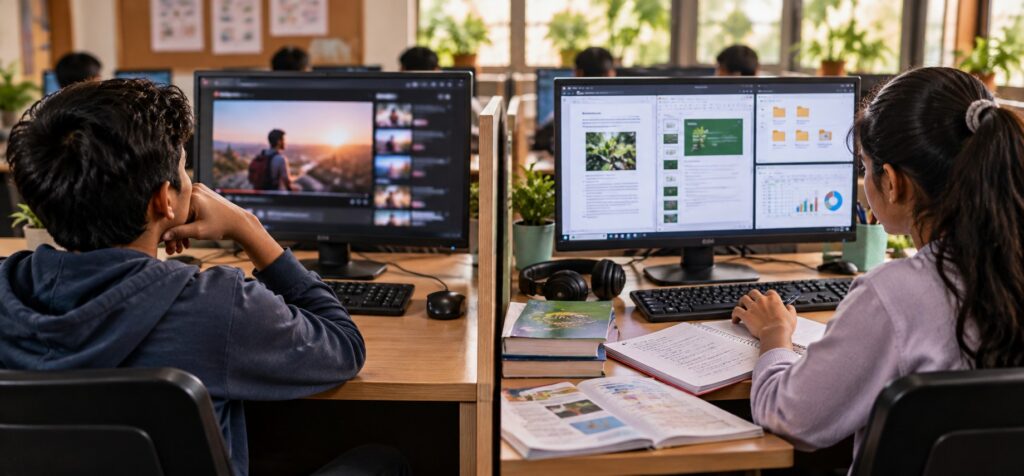
Two students can sit in front of the same computer and walk away with completely different opportunities. One knows how to search, check information, create something and solve a problem. The other may know how to use a phone all day but still struggle with a keyboard, a document, an email or a reliable online source.
The next digital divide may not be about who has a device. It may be about who knows what to do with it.
The Device Was Never the Whole Story
A computer opens a door.
It does not teach a student where to go.
A 2026 study of undergraduate students in Kerala found that access to appropriate learning devices and reliable internet at home were significant predictors of digital literacy. At the same time, students showed weaker competence in areas such as professional digital communication. Journal A Jess
That distinction is important.
Access still matters enormously. But having access and knowing how to use it are two different things.
The same laptop can be used to watch videos for hours, or it can become a place to research a topic, learn Excel, write something, build a website or practise coding.
The device has not changed.
What the student can do with it has.
Digital Literacy Is More Than Knowing How to Use a Computer
When people hear “digital literacy”, they often imagine typing, opening applications or browsing the internet.
Those are only the basics.
A digitally capable student should also know how to find useful information, decide whether a source deserves trust, communicate clearly online, manage files, protect personal information and use technology to create something.
This broader understanding is reflected in Apni Pathshala’s Digital Literacy Cluster, which covers typing, file management, office software, email, online safety and digital communication.
The purpose is not to make students “good with computers”.
It is to make them comfortable enough with technology to use it for real life and learning.
That becomes even more important as AI becomes part of everyday education.
A student who has learned to question information online has a much stronger foundation for questioning an AI-generated answer too.
The Gap Is Also About How Technology Is Used
Imagine two students with the same internet connection.
One spends the evening scrolling through short videos.
The other searches for a tutorial, follows it, creates something, gets stuck, searches again and eventually finishes a small project.
Both are online.
But only one is turning connectivity into capability.
This is why digital inclusion is becoming a much bigger conversation than simply getting people connected.
UNICEF’s Digital Education Strategy 2025–2030 puts learning outcomes and skills acquisition at the centre of digital education and specifically recognises gender, disability and language-related digital divides. UNICEF Global
Being connected matters.
Knowing what to do once you are connected matters just as much.
Why This Matters for Students
The skills gap can appear quietly.
A student may know how to use Instagram but not how to write a professional email.
They may search Google every day but not know how to check whether a source is reliable.
They may use an AI tool but accept its first answer without asking whether it is correct.
They may have access to a computer but feel uncomfortable creating something from scratch.
These gaps become more important as students move towards higher education and work.
The tools change quickly. Employers expect people to adapt. New opportunities increasingly require some level of digital confidence.
The World Bank’s World Development Report 2026 places digital skills and skills development alongside digital infrastructure and inclusion in the wider conversation about benefiting from AI and the digital economy.
The message is straightforward:
Access creates possibility. Skills help people use that possibility.
Learning Has to Move From Consumption to Creation
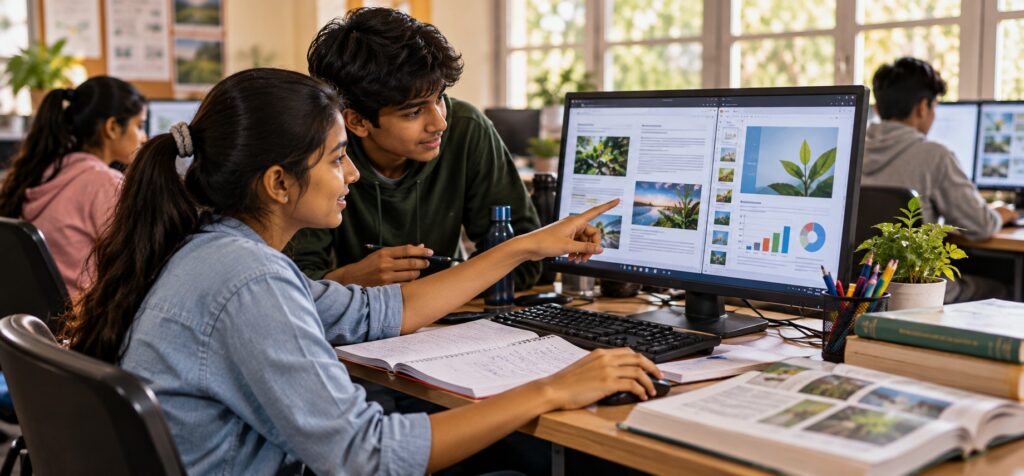
One of the simplest ways to build digital skills is to let students create.
Do not only show them a tutorial.
Ask them to make something.
Instead of only explaining spreadsheets, let them use one to solve a real problem.
Instead of teaching what a website is, let them build one.
Instead of explaining AI, let them use it to explore an idea and then decide whether the output actually makes sense.
This is where practice changes everything.
An Indian experimental study on vocational training found that adding project-based experiential learning and digital skills to sector-specific training produced better employment outcomes than vocational training alone. Connect4Impact
The lesson goes beyond vocational training.
Skills become valuable when students get a chance to use them.
Apni Pathshala has explored this approach through How Digital Literacy Opens New Opportunities for Students, where the focus is not simply on learning technology, but on what students can actually do with it.
A Learning Environment Can Change the Outcome
Students cannot always build digital confidence alone.
They need somewhere to practise.
A school may introduce a computer. A teacher may demonstrate a tool. But students also need time to explore, make mistakes and try again.
This is where community learning spaces can make a difference.
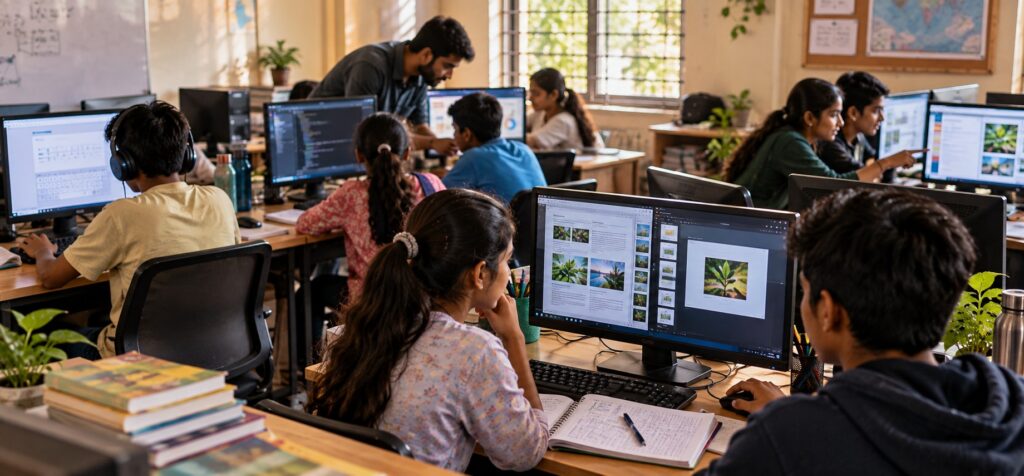
Apni Pathshala’s Learning PODs create local environments where students can access technology, develop digital skills, practise independently and learn alongside others.
A student might first enter a POD knowing only how to use a smartphone.
A few months later, that same student may be creating presentations, managing files, researching online, learning coding or working on a project.
The important part is not the device.
It is the progression:
Access → Practice → Confidence → Creation.
The Digital Divide Is Becoming More Complicated
The old question was:
“Who has a device?”
The better questions now are:
“Who knows how to use it?”
“Who knows what to trust?”
“Who can create with it?”
“Who can learn something new without waiting for someone else to teach them?”
A recent Indian study reinforces this wider view. Digital access contributes to digital literacy, but digital competence has several dimensions beyond basic usage.
So closing the digital divide cannot mean choosing between devices and skills.
We need both.
Students need computers and connectivity.
They also need guidance, practice, digital safety, meaningful projects and opportunities to use technology regularly.
From Digital Access to Digital Confidence
This is where the conversation can become more positive.
India has already made enormous progress in expanding digital access.
The next opportunity is to make that access more useful.
A student should not feel nervous when they sit in front of a computer.
They should feel curious.
They should know where to begin.
They should be comfortable searching, creating, asking questions and trying again.
That confidence is what turns digital access into digital capability.
And once students develop it, they can keep learning even when the technology around them changes.
What the Next Generation Really Needs
The next generation will use tools that many of us cannot predict today.
That means schools cannot prepare students by teaching only one software package or one platform.
They need to develop students who can learn new technology when it arrives.
That means teaching them how to:
- Find and evaluate information
- Communicate digitally
- Stay safe online
- Create with technology
- Solve problems
- Learn independently
These skills can travel with students from school to college, from college to work, and from one technology platform to the next.
The Real Divide Is What Happens After the Screen Turns On
The digital divide is changing.
The first challenge was getting technology into students’ hands.
The next challenge is making sure those students can use it to create opportunities for themselves.
At Apni Pathshala, that is why digital learning is connected with community spaces, practical skills and independent learning. The goal is not simply to put students in front of a screen.
It is to help them become confident enough to do something with it.
If you are a school, educator, NGO or community organisation thinking about how digital skills can become part of students’ everyday learning, explore Apni Pathshala and see how its community-led approach works.
And if you want to understand what digital literacy can look like when it becomes a real opportunity rather than just a course, explore Apni Pathshala’s Digital Literacy Cluster.
Because the next digital divide may not be visible when two students sit in front of identical screens.
It will be visible in what they are able to do once the screen turns on.
Frequently Asked Questions
1: Can digital literacy create opportunities beyond the classroom?
Ans. Yes. Digital literacy helps students build practical skills, explore career opportunities, and become more independent in a technology-driven world.
2: Is access to AI enough to close the digital divide?
Ans. No. According to the World Bank’s World Development Report 2026, access alone is not enough. Digital skills, reliable infrastructure, and locally relevant technology are essential to ensure AI benefits everyone.
3: What should students learn to become digitally literate?
Ans. Digital literacy goes beyond using computers. It includes typing, file management, digital tools, online communication, and safe internet practices that help students become confident, independent learners.
4: Is having access to technology enough to bridge the digital divide?
Ans. Not entirely. A 2026 study published in the Asian Journal of Education and Social Studies found that meaningful access to digital devices, reliable internet, and opportunities to develop practical digital skills are essential for reducing the digital divide.