

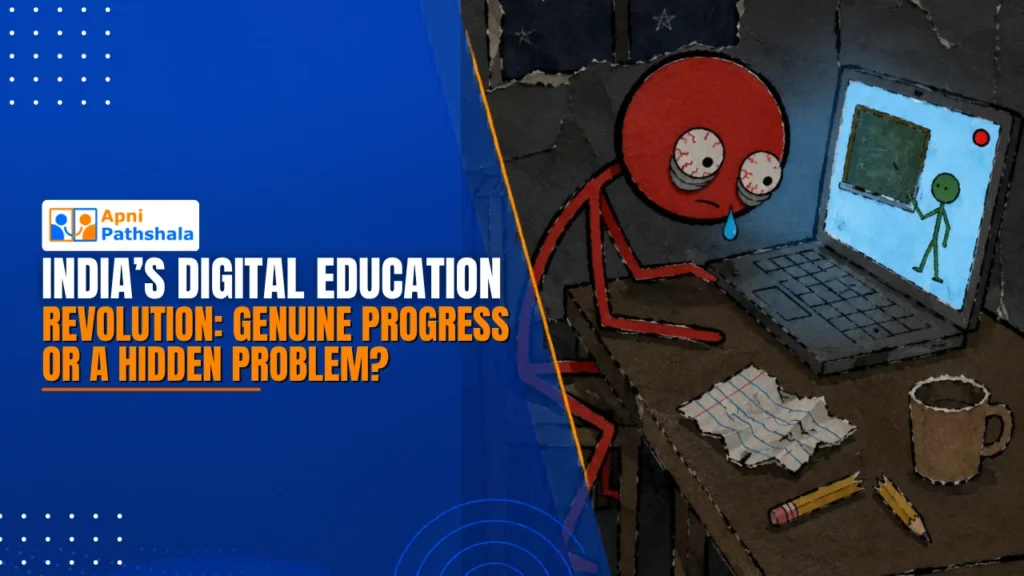
I have a little secret to share.
A few years ago, when schools shut down and everything moved to screens, I cheered.
We all did, right?
Everyone was talking about the digital education revolution. We thought that handing out tablets and downloading learning apps was going to fix all the problems with school.
We imagined a world where a student in a small village and a student in a big city would suddenly get the exact same amazing education.
But it is now 2026.
The dust has settled.
And if you are a parent watching your kid stare blankly at a screen, or a college grad wondering why school is still so stressful, you might be thinking the following:
“Wait a minute. Why does learning still feel so broken?”
You are not crazy.
We didn’t really change education. We just moved the exact same boring stuff onto a glowing rectangle.
Let’s put on our detective hats and look at what actually happened.
The Real Digital Learning Challenges in India: Digitizing a Broken System
To understand the pros and cons of online learning in India, we need to talk about video games.
Imagine a really boring, stressful video game called The Great Indian Exam Quest.
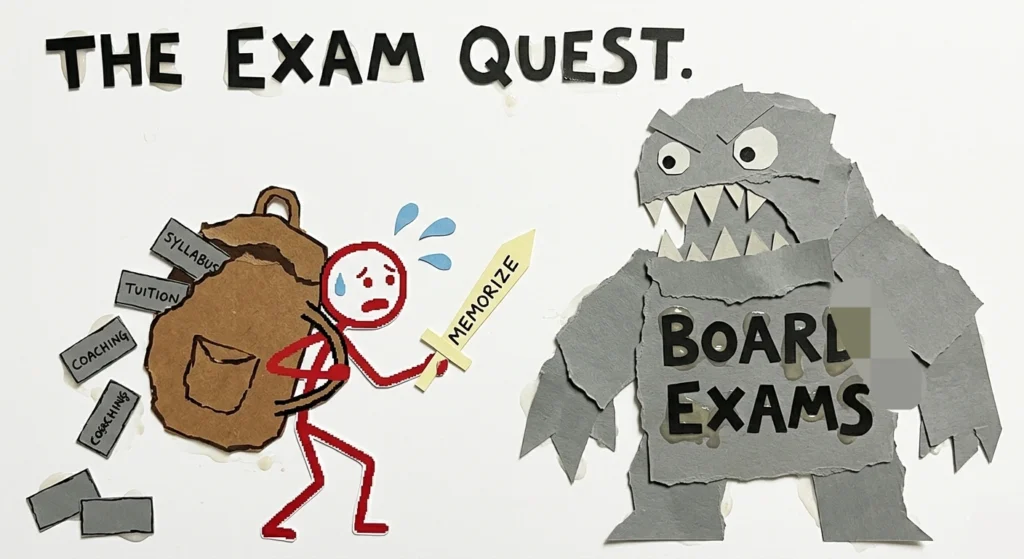
The rules of this game are terrible.
You don’t win by being creative, asking questions, or exploring. You win by grinding.
You read a textbook, you memorize the answers, and you write them down exactly as you read them. If you ask, “Wait, but why does this work?” you lose points.
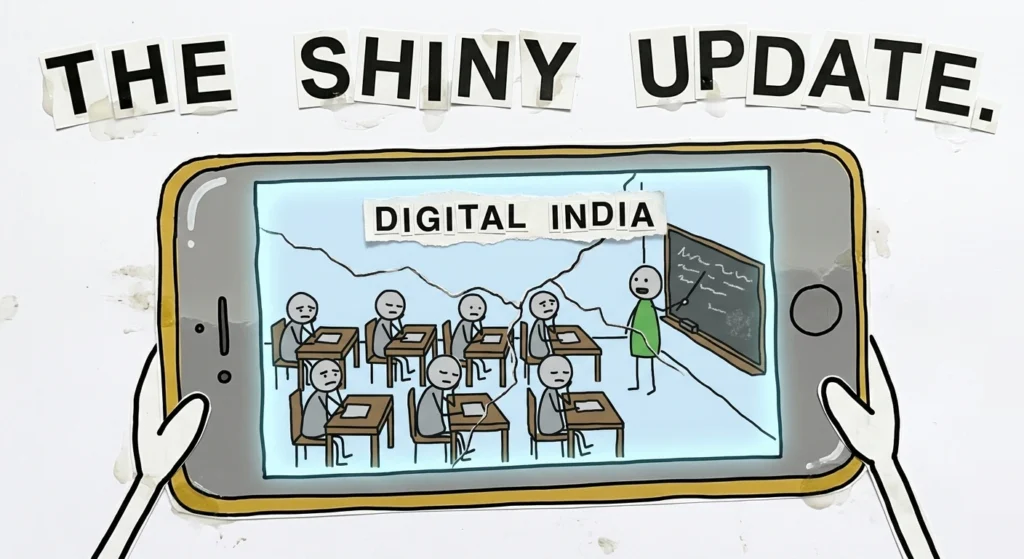
When the digital education boom happened in India, the game makers gave us a huge “update.” Millions of rupees were spent.
We logged into the new update.
And guess what?
The game was exactly the same.
The monster was still there. The heavy backpack was still there.
We didn’t change the rules. We just gave the game 4K graphics.
We took a boring lecture where 50 kids sit quietly in a room and turned it into a boring video that a kid watches alone in their bedroom.
This is why we are seeing so much screen fatigue.
Staring at a video of a teacher for six hours doesn’t make you smarter. It just makes your eyes hurt and your brain tired.
The Impact of Digital Education on Rural Students (And the Hidden Human Divide)
When people talk about digital learning challenges in India, they usually point to one big thing.
Let’s call it the Hardware Gap.
Gap 1: Missing Laptops and Bad Internet
This gap is the famous one. We know the impact of digital education on rural students was rough because many kids simply didn’t have phones or internet.
Bridging the digital divide by giving out cheap tablets is super important.
But as a content detective, I started looking closer at the clues.
Let’s imagine we magically gave every single kid in India a free, super-fast iPad tomorrow. Would our education problems disappear?
Nope.
Because of a hidden second gap.
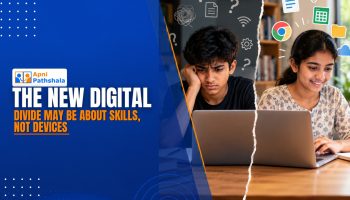
Gap 2: The Human Gap
I looked at the goals the government set out (like the NEP 2020 digital education goals).
One of the biggest goals is something called foundational literacy and numeracy (FLN). That is a fancy way of saying, “Can a kid read a simple sentence and do basic math?”
Even kids with screens are struggling with this.
Why?
Because screens are good at giving you information, but they are terrible at making you care.
You can’t learn to read just by tapping a screen.
Learning is a team sport. It is messy. It happens when you make a mistake, look at your friend, laugh, and ask a teacher for help.
An app can’t give you a high-five when you finally solve a tough math problem.
Why Technology Alone is Failing: The Limits of Online Learning?
So, what do we do?
Do we smash our phones and go back to old dusty classrooms?
No! Technology is amazing. We are just using it backward.
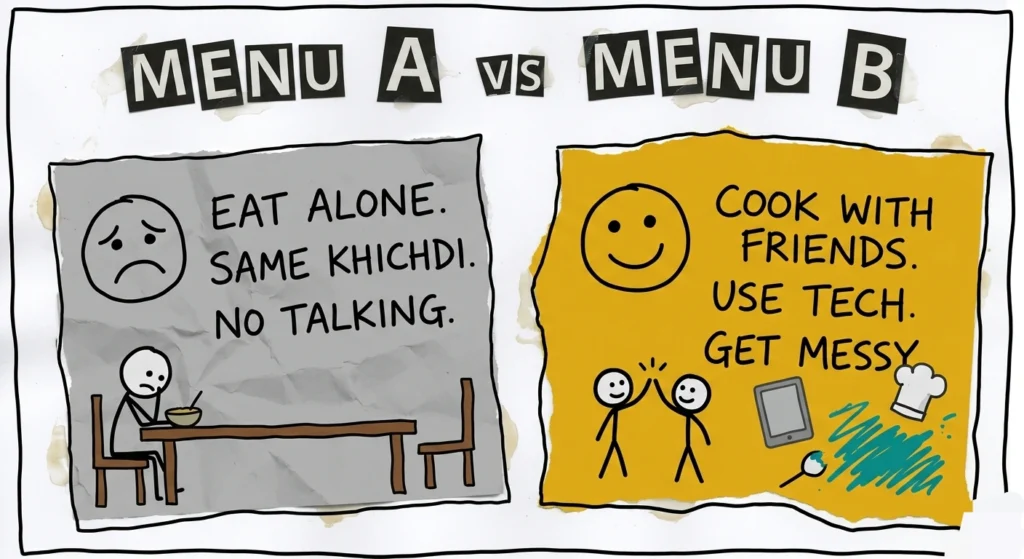
Right now, online school is Menu A.
But we need Menu B.
We need a way to mix the cool superpowers of the internet with the magic of real human beings.
This is exactly why Apni Pathshala realized that apps aren’t enough.
The inevitable, totally logical solution is something called Apni Pathshala PODs.
The Solution: How Community-Based Learning Centers (PODs) Bridge the Gap
What is a POD?
Think of it as a community-based learning center.
It is the perfect middle ground. It’s a real, physical space in your neighborhood. Kids go there and meet up with their friends and a smart, caring human mentor.
- The Digital Part: They still use world-class technology and apps to learn at their own speed. If a kid is super fast at math, the app lets them race ahead.
- The Human Part: They aren’t sitting alone in a bedroom. They are in a POD with their peers. If they get stuck, a real human is there to help them untangle the problem. They learn teamwork, they talk, and they build confidence.
We don’t have to choose between a lonely digital screen and a crowded, old-school classroom.
Apni Pathshala PODs take the best parts of the internet and put them back into the real world, right where humans belong.
The Future of Digital Education in India is Human
India has so many bright, young minds.
But we cannot unlock their potential if we keep feeding them the same old broken system on shinier screens.
Next time you see an ad for a new learning app, ask yourself:
Is this teaching a kid how to think or just giving them a new place to stare?
At Apni Pathshala, we are done with the old game.
We are building PODs because we believe kids deserve world-class digital tools and a high-five from a real friend.
It is time to stop playing The Great Indian Exam Quest and start building a real future.
Want to see how Apni Pathshala is transforming neighborhoods into thriving learning hubs?
Discover how our community Pods are bringing the joy back to learning, one small group at a time.
Check out the tools they should try in “Free Tools Every Indian Student Must Learn in 2026”
Frequently Asked Questions (FAQs)
1. Why is digital literacy important for students today?
Ans: Because being online is not enough. Students need to know how to use technology safely, learn better, find the right information, and build skills for their future.
2. How can self-learning tools help students become independent?
Ans: Self-learning tools help students think, practice, and find answers on their own instead of depending only on teachers or ready-made answers.
3. Does screen time affect foundational literacy?
Ans: Yes. Passive screen time severely hinders foundational literacy and numeracy (FLN). Young children require physical friction, social cues, and guided practice to learn basic reading and math. Over-reliance on screens leads to attention fatigue, reduced comprehension, and significant gaps in early cognitive skill development.
4. Why was Apni Pathshala started?
Ans: Apni Pathshala was started to make digital learning accessible for every child, especially those who do not have enough resources, guidance, or opportunities to learn future-ready skills.



4 Responses
I think India needs to switch all competitive exams from offline to online.
Thank you for sharing your thoughts. Online exams are a good step, but equal digital access for all students is also very important.
Very thought-provoking article. Technology alone cannot transform education without real human connection and learning support.
Thank you for your thoughtful feedback. We completely agree, technology works best when it is supported by human guidance, care, and real learning support. That connection is what makes digital education truly meaningful.