An AI course can teach a student how a tool works. But the real learning begins when they close the lesson and ask themselves, “What can I actually build with this?”
As AI learning becomes easier to access, students have more opportunities than ever to learn new tools. The next step is helping them turn that knowledge into something useful, creative, and their own.
The AI Learning Boom Has Changed the Question
AI is no longer limited to computer science classrooms.
Students are learning it for coding, design, research, content creation, automation, and many other areas. A recent Economic Times report highlighted how college students are increasingly adding AI courses to their education to build practical, job-relevant skills. (Economic Times)
That growth is encouraging.
But finishing an AI course is only the beginning.
A student may know what prompting is. They may understand how an AI tool works. They may have completed several lessons.
Then comes the more interesting question:
What can they do with what they have learned?
A Course Gives Knowledge. A Project Makes It Real.
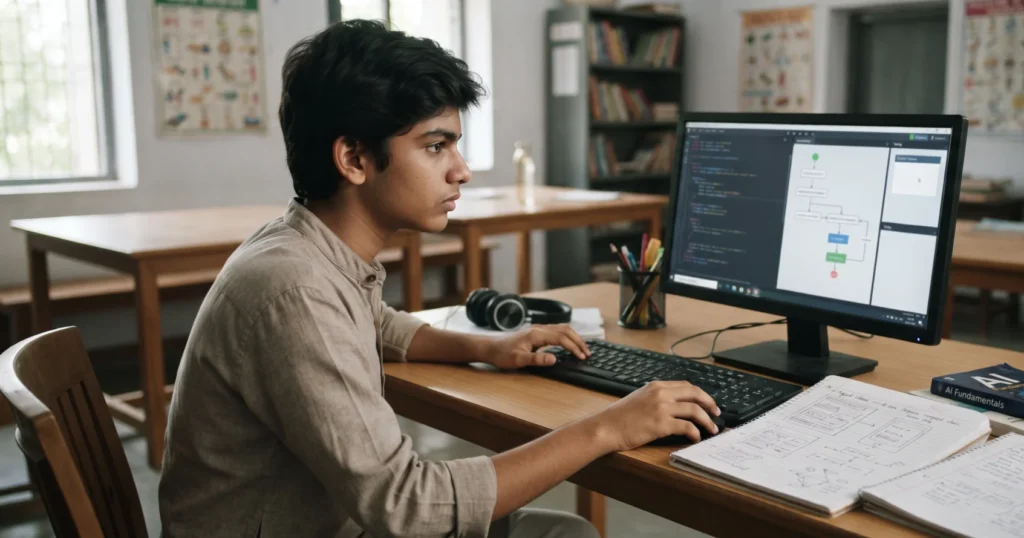
A course usually gives students a planned path.
A project gives them a problem.
They have to decide what they want to create, figure out what they need, test different ideas, make mistakes, and try again.
That process teaches something a course cannot always provide: ownership.
A student building a small AI-powered quiz is not only learning about AI.
They are also learning how to think about a user, structure an idea, test it, and improve it.
The project does not need to be complicated.
It just needs to solve something or create something.
Start With a Problem, Not a Tool
One common mistake is choosing the technology first.
A student decides, “I want to build an AI chatbot,” before deciding what problem the chatbot should solve.
It can be more useful to start with a simple question:
What is something that could be easier, faster, or more useful?
Perhaps students need a better way to revise notes.
Maybe a school wants a simple quiz generator.
Perhaps an organisation spends hours doing a repetitive task.
Or maybe a student simply wants to understand how AI can help them create something.
Once the problem is clear, the technology becomes easier to choose.
Why Projects Matter in the AI Era
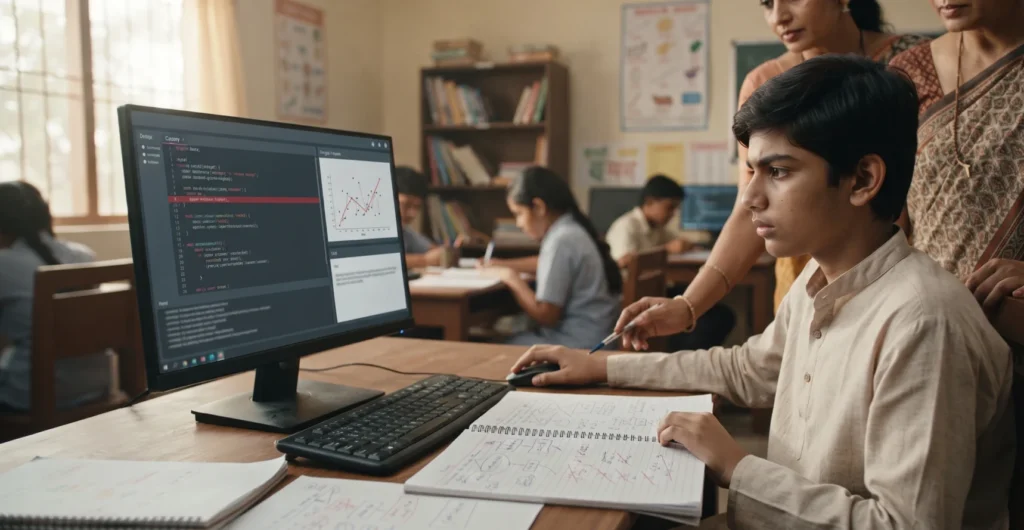
AI skills are becoming valuable, but technical knowledge alone is not enough.
The World Economic Forum highlights skills such as analytical thinking, creativity, collaboration, and resilience alongside technology-related abilities.
A project brings these skills together.
A student has to think.
They have to make decisions.
They have to solve problems.
They have to explain what they built.
And when something does not work, they have to figure out what to change.
That is where learning becomes practical.
The First Project Does Not Have to Be Impressive
Students often compare their first project with the advanced projects they see online.
That can make starting feel intimidating.
But a first project can be very simple.
A quiz generator.
A study assistant.
A basic website.
A small automation.
A simple game.
The goal is not to impress everyone.
The goal is to finish something.
Once a student builds one project, the next idea becomes easier to imagine.
That confidence is valuable because it changes the student’s relationship with technology.
They stop thinking only, “What can this tool do?”
They begin asking, “What can I do with this tool?”
AI Can Help Students Build, Not Just Answer
AI becomes particularly useful when students use it during the building process.
A student can ask AI to explain an error in their code.
They can ask for another approach.
They can test an idea.
They can compare different solutions.
But there is an important difference between asking AI to complete the entire project and using AI to understand and improve their own work.
The second approach keeps the student involved.
UNESCO’s AI Competency Framework for Students also emphasises moving beyond simply using AI to understanding, applying, and creating with it.
That is the direction education needs to encourage.
A Project Can Become Proof of Learning
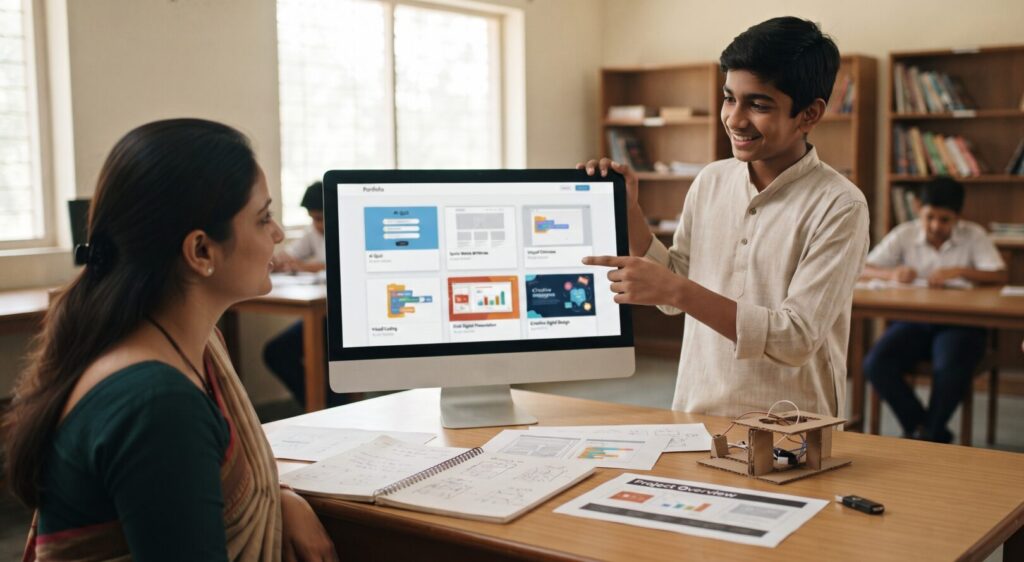
A certificate shows that a student completed a course.
A project shows what they did with that knowledge.
Imagine two students applying for an opportunity.
One says, “I completed an AI course.”
The other says, “I completed an AI course and built this study assistant. Here is how I designed it, what went wrong, and how I improved it.”
The second student has something tangible to discuss.
Projects can become part of a student’s portfolio and give them evidence of their skills.
Coursera’s 2026 Global Skills Report also points to the growing importance of Generative AI learning alongside human capabilities such as critical thinking and judgement.
This Is Where Learning Environments Matter
Building something can be exciting, but it can also be frustrating.
What happens when the code stops working?
Who can look at the first version?
Where can a student practise regularly?
Sometimes, students do not need another course.
They need a place to keep going.
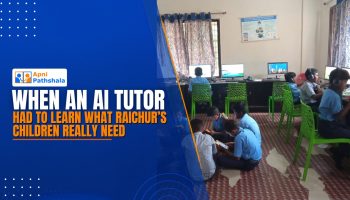
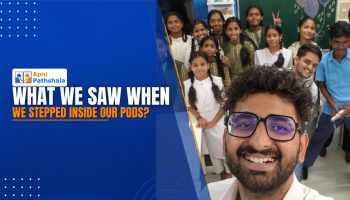
This is one reason Apni Pathshala’s Learning PODs 0 are important. They create community-based learning spaces where students can access technology, practise digital skills, work on projects, and learn alongside others.
The environment gives students room to experiment.
Students decide what to do with that opportunity.
From Learning a Tool to Creating Something
Apni Pathshala has already seen what happens when students move from learning technology to actually using it.
Through initiatives such as 100 Websites in a Week, students were encouraged to take their digital learning into a practical outcome by creating and publishing websites.
That is a simple but important shift.
The student is no longer only completing a lesson.
They are producing something that did not exist before.
The same mindset can apply to AI.
Learn the tool.
Find a problem.
Build something small.
Test it.
Improve it.
Then try something harder.
The Best AI Learning May Be the Learning That Continues
The value of an AI course does not end when the final lesson is completed.
That may actually be when the more interesting part begins.
A student can take what they learned and turn it into a project.
That project can reveal another question.
That question can lead to another skill.
And that skill can eventually become part of a career.
This is how learning grows.
Not in one giant jump, but through small attempts that gradually become stronger possibilities.
Give Students a Reason to Build
Students do not need to begin with the next big AI product.
They need permission to experiment.
They need access to the right tools, enough time to practise, and an environment where making mistakes is part of the process.
At Apni Pathshala, this thinking drives learning opportunities where students can move from learning → practising → creating.
If you are a student, teacher, school, NGO, or organisation working to make technology more meaningful in education, start with one simple question:
What could your students build if they had the opportunity to try?
Explore Eklavya AI to see how AI can become part of a student’s learning journey, or discover Apni Pathshala to learn more about the learning environments being created for students.
And if you want to see what practical digital learning can look like when students actually create something of their own, explore the 100 Websites in a Week initiative.
Because the goal of learning AI should not be to collect another certificate. It should be to give a student enough confidence to look at a blank screen and say, “Let me see what I can build.”
Frequently Asked Questions
1: Why are college students learning AI skills alongside their degrees?
Ans. Because students increasingly see AI skills as a practical way to prepare for changing job requirements, rather than relying only on traditional degree coursework.
2: What can students achieve when they get the right digital tools and guidance?
Ans. Apni Pathshala’s 100 Websites, 100 Students in a Week Challenge shows how students can turn digital learning into real outcomes by creating and publishing their own websites.
3: How does Apni Pathshala create learning opportunities through its PODs?
Ans. Apni Pathshala PODs create community-based learning spaces where students can access digital education, build practical skills, and learn with technology
4: Why do students need AI competencies today?
Ans. UNESCO highlights that students need AI competencies to use AI responsibly, understand its impact, and develop the skills required to learn and work effectively in an AI-driven world.