You can understand a learning centre through numbers, reports, and updates. But you understand its real story only when you sit inside it and watch students learn, create, and take their own steps forward.
That is why a visit to a POD is never just a visit. It is a chance to see what is working, understand what students need, listen to the people running the centre, and come back with better questions.
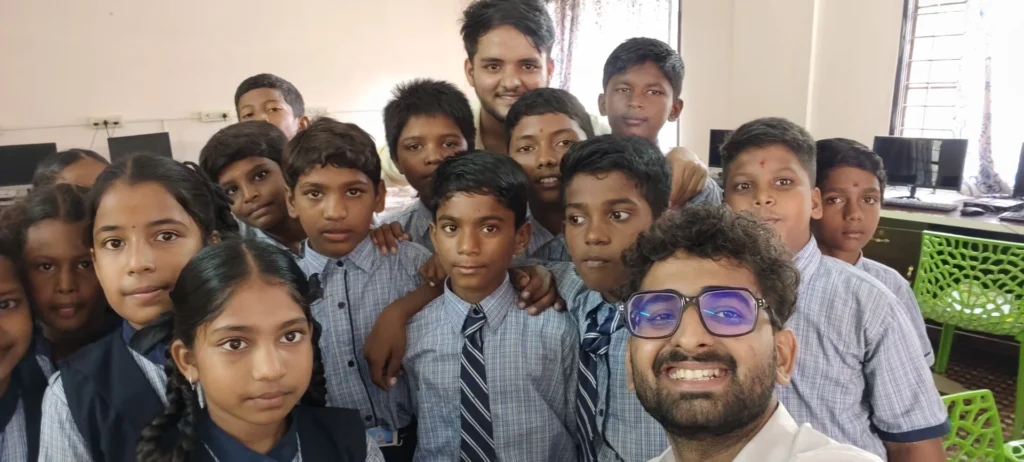
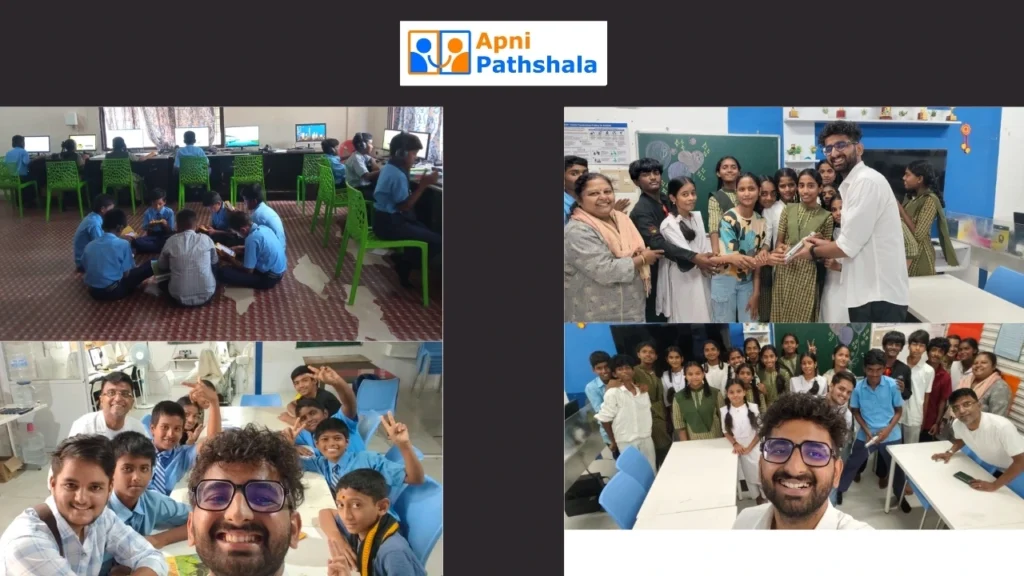
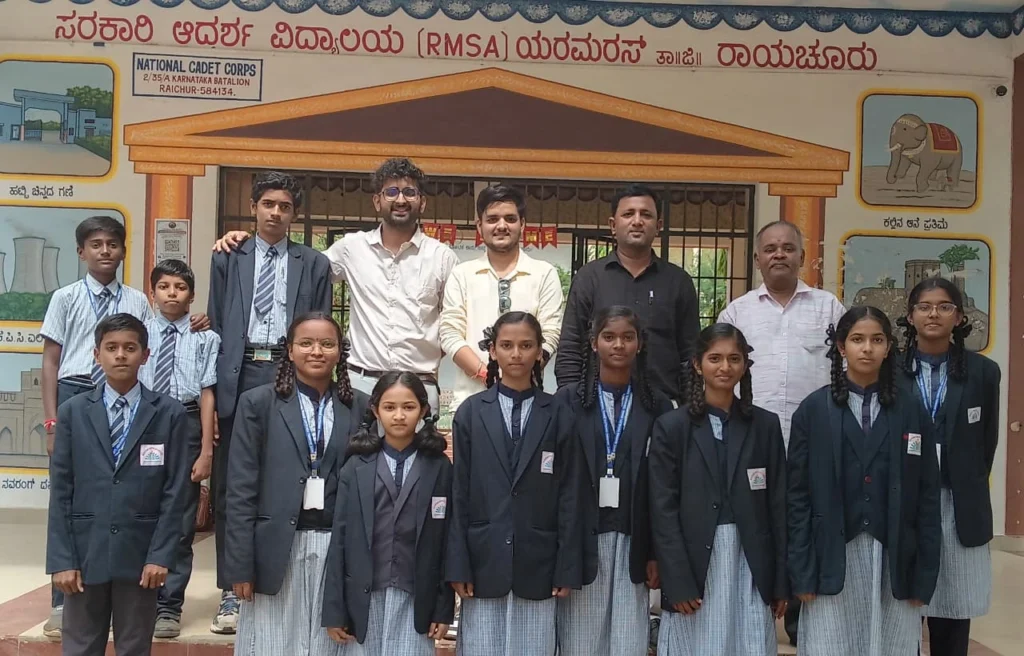
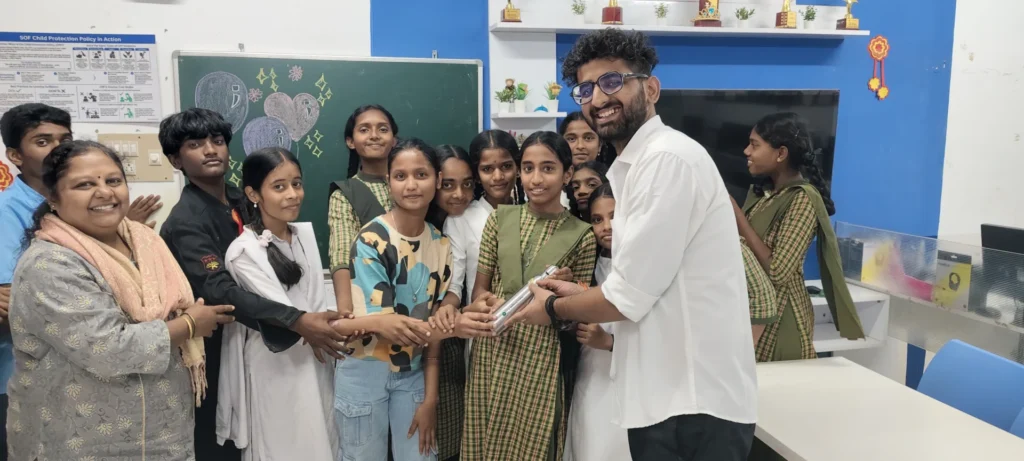
Recently, Sagar Tiwari (CEO of Apni Pathshala) and Aman Singh (Project Manager at Apni Pathshala) visited two of our PODs in Bengaluru: SOF Attiguppe and Diya Foundation.
What they saw reminded them that sometimes the most important part of a learning centre cannot be measured in a report.
You See a Different Story When You Step Inside
From a distance, a POD can look simple.
There are computers. Students are learning. A team is managing the centre.
But spend some time there, and the picture becomes much bigger.
You see students working at different levels.
You see someone learning something for the first time.
You see another student who has already become comfortable with a skill.
You see questions, mistakes, conversations, experiments, and sometimes completely unexpected forms of learning.
This is one reason Apni Pathshala’s Learning PODs are more than just spaces with computers.
They are places where students can practise, explore, learn from others, and gradually become more independent.
And the only way to truly understand that experience is to be there.
Shifting Orbits Foundation (SOF) Attiguppe: Understanding the Learning Environment
The first stop was the Shifting Orbits Foundation (SOF) Attiguppe Centre in Bengaluru.
Sagar Tiwari, CEO of Apni Pathshala, and Aman Singh, Project Manager at Apni Pathshala, spent time at the centre, interacting with the people involved and observing the learning environment directly.
SOF works with economically challenged families and runs after-school learning centres designed to provide sustained educational support to children. Its model supports children’s educational journeys beyond regular school hours.
Visiting a centre like Attiguppe gives a different perspective from looking at a programme through reports or numbers.
You see how students learn.
You see how the centre functions.
You understand the different interests and needs students bring with them.
And you get to hear directly from the people who work with them every day.
That is why these visits matter to Apni Pathshala.
The better we understand what happens inside a learning space, the better we can support it.
At Diya Foundation, Independence Looked Different
The second visit was to Diya Foundation, and this was perhaps one of the most interesting parts of the visit.
What stood out was not just what students were learning, but how independently they were using those skills.
Some students were making bracelets and thinking about how they could promote what they had created. Others were demonstrating practical skills such as cooking. There was something very different about watching students work with their hands, make decisions, and take ownership of what they were doing.
And this was not an isolated activity. It reflected Diya Foundation’s broader approach, where practical life skills and employability are an important part of the learning journey. Diya’s programmes include hands-on training in areas such as cooking, Digital learning, household management, digitalisation, retail, hospitality and office skills, with the broader aim of building independence and employability.
Their current Learning Hub also brings together culinary skills and digitalisation, giving learners opportunities to build practical skills through structured and self-paced learning.
Seeing that philosophy in practice made the visit especially meaningful.
Independence isn’t always one big achievement. Sometimes, it looks like a student making something, learning how to cook, deciding what to do with their work, and taking the next step without waiting for someone else to do it for them.
That was one of the things we carried back from Diya Foundation.
A learning space becomes powerful when students start thinking, “I can do something myself.”
Independence Is Also Part of Learning
We usually have familiar ways of measuring student progress.
Marks.
Certificates.
Course completion.
Attendance.
But not every important change fits into a number.
A student taking responsibility for a task is progress.
A learner trying something without waiting for instructions is progress.
A student creating something with their own hands is progress.
Someone helping another learner is progress.
These moments may not appear in a traditional report, but they can tell us something important about how a student is developing.
This is also why the UNESCO approach to digital education looks beyond technology itself and considers how digital tools can support inclusion, access, teaching, and learning.
The technology matters.
But what it enables a student to do matters more.
A POD Is Not Just About Computers
It would be easy to describe a POD as a place where students get access to computers.
But that would only describe the equipment.
The real purpose is the learning environment around it.
One student may use the computer to develop basic digital skills.
Another may explore coding.
Someone may create a website.
Another student may discover video editing.
Someone else may simply gain the confidence to try something independently.
There does not have to be one identical outcome for everyone.
That is what makes a community learning space different.
It gives students room to discover their own direction.
Apni Pathshala’s approach is built around creating these opportunities close to the communities where students live and learn.
Why Leadership Needs to See the Ground Reality
Managing a programme is different from experiencing it.
A report can tell you that a centre is functioning.
A visit can tell you how it feels to be a student there.
A coordinator can explain what happens every day.
A student can show you what actually matters to them.
A teacher or mentor can point out a challenge that may never appear in a dashboard.
When these perspectives come together, the organisation can make better decisions.
This is especially important as learning models grow.
The National Education Policy 2020 emphasises experiential learning, critical thinking, technology, and learner-centred education.
To make those ideas work in practice, someone has to keep listening to what is happening on the ground.
The Most Useful Feedback Does Not Always Come as a Complaint
Sometimes, feedback is simply an observation.
A student needs more time.
A teacher needs a better resource.
A process takes longer than expected.
A learner discovers an unexpected interest.
Or a student starts doing something independently that nobody specifically asked them to do.
That last kind of feedback can be especially valuable.
Because it tells us that the learning environment may be creating possibilities beyond the original plan.
The students at Diya Foundation creating and thinking about promoting their bracelets are one such example.
The activity itself is important.
But the independence behind it is what makes the observation memorable.
Learning Spaces Should Grow With Their Students
A good learning space cannot remain exactly the same forever.
Students change.
Technology changes.
Communities change.
Their needs change too.
That means the people building these spaces have to keep learning, too.
For Apni Pathshala, visiting PODs is one way of doing that.
We can listen to students.
We can speak with teams.
We can observe what is happening.
And then we can take those lessons back into the larger system.
The aim is not perfection.
It is continuous improvement.
As UNICEF’s digital learning work also highlights, meaningful digital learning depends on understanding children’s needs and circumstances, rather than treating technology as a solution in itself.
What We Took Back From Bengaluru
The visits to SOF Attiguppe and Diya Foundation reinforced a simple truth.
A POD is successful not merely because students enter the centre.
It becomes meaningful when students begin doing something with the opportunity.
Learning.
Practising.
Creating.
Helping.
Exploring.
Becoming independent.
That is the difference between a space that provides access and a space that creates possibilities.
And sometimes, you only understand that difference when you step inside.
The Next POD Story Could Be Yours
Every community has students who are curious about something.
Some want to learn computers.
Some want to create.
Some need a place to practise.
Some simply need their first opportunity.
A POD can give them that starting point.
If you are a school, NGO, organisation, or community that wants to create a similar learning environment, visit Apni Pathshala’s POD page and explore what it takes to bring a POD to your community.
You can also fill out the Start a POD form. Once you submit it, our team can connect with you and understand what you are looking to build.
And if you want to see another example of how a local learning space can create opportunities for students, read How Self-Learning Can Change a Student’s Future
Because sometimes the best way to understand what students need is to stop looking at the numbers, step inside the POD, and listen to the students themselves.
Frequently Asked Questions
1: What does Diya Foundation focus on?
Ans. Diya Foundation helps young adults build practical life and vocational skills, with a focus on greater independence, confidence, and employment opportunities.
2: What is Shifting Orbits Foundation working towards?
Ans. Shifting Orbits Foundation supports the long-term education of children from underserved communities, aiming to help them continue their journey from cradle to college.
3: How can you start an Apni Pathshala POD?
Ans. Visit the Start a POD page, fill out the form, and our team will connect with you to take the next steps.
4: How can self-learning change a student’s future?
Ans. Self-learning helps students build confidence, develop practical skills, and discover new opportunities by taking greater ownership of their learning.