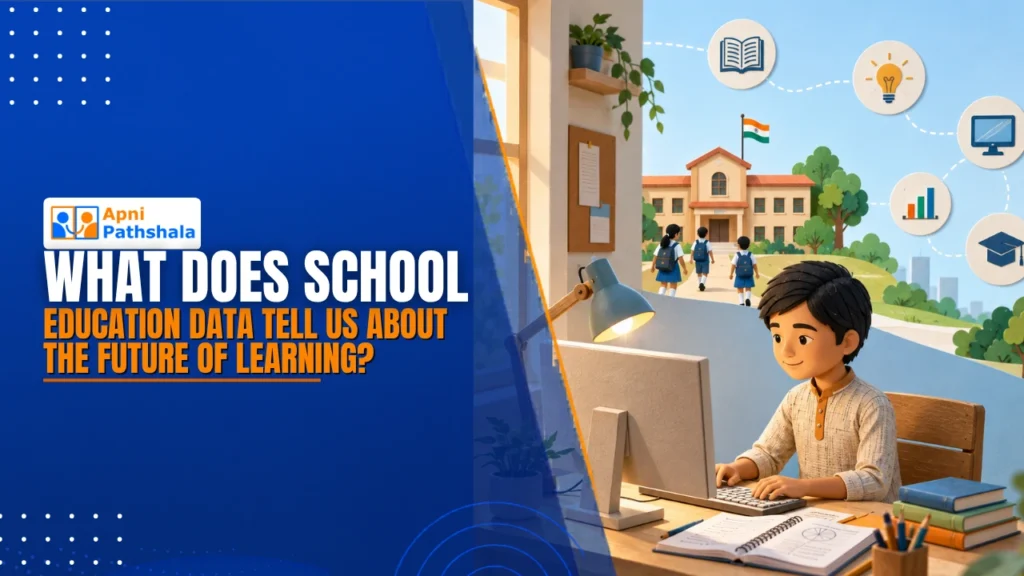
A number can tell us how many schools exist, how many students are enrolled, and how much infrastructure is available. But behind every number is a child whose learning journey can look completely different.
That is why education data matters. It helps us understand where school education stands today, and, more importantly, where we need to go next.
India’s School Education System at a Glance
The latest UDISE+ 2025–26 report shows the enormous scale of school education in India: around 14.67 lakh schools, 1.03 crore teachers, and 24.72 crore students.
These numbers represent millions of learning journeys. The report also records progress in retention, teacher availability, inclusion, and infrastructure. But once access improves, another question becomes important:
What kind of learning experience are students getting?
That is where the future of education begins.
The UDISE+ platform provides detailed information about India’s school education system and helps policymakers and educators understand schools, students, teachers, and infrastructure at a national level.
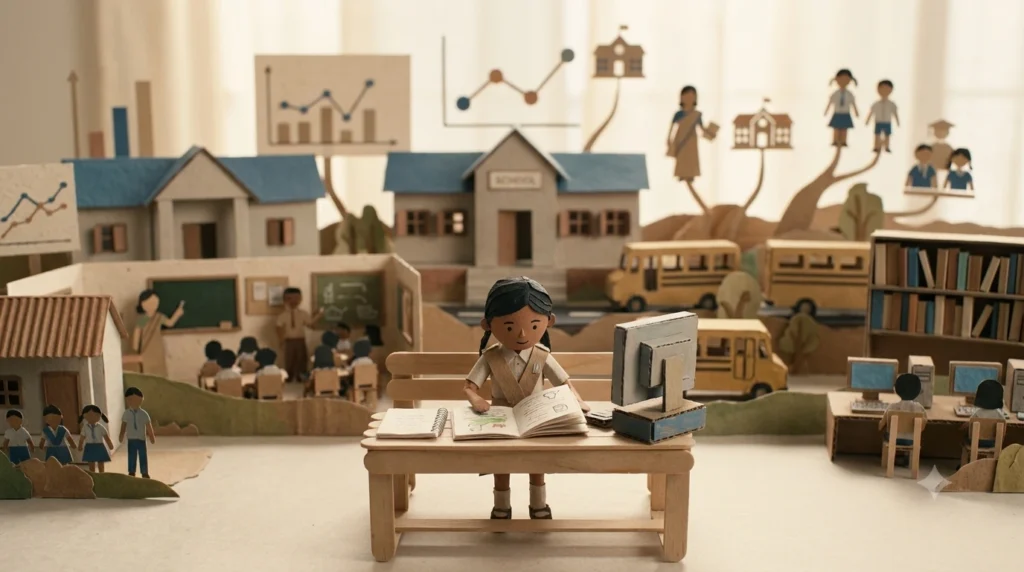
What Data Tells Us About Digital Education
One key change in recent school education data is the growing availability of digital infrastructure.
According to the latest UDISE+ report, 69.9% of schools have computers and 67.4% have internet connectivity.
This is an important foundation. What matters next is what students can do with it.
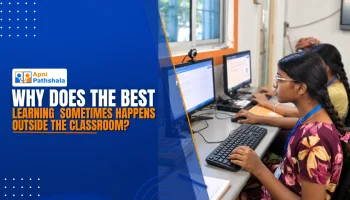
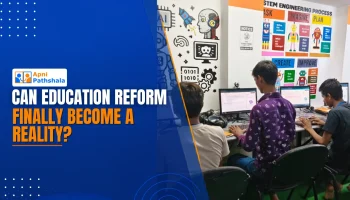
A computer can help a student research, practise, create, learn coding, or explore something new.
The next step is turning those possibilities into real learning.
This shift also connects with the broader growth of digital learning in education, where technology is increasingly being used to give students more ways to access knowledge and develop new skills. UNESCO’s work on digital education explores how technology can support access, inclusion, teaching, and learning when it is introduced with clear educational goals.
Every Student Has a Different Learning Journey
There is no single way in which every student learns best.
One student may understand through a teacher’s explanation; another may need an example or more practice. A curious student may want to explore further.
Technology gives schools another way to respond to these differences.
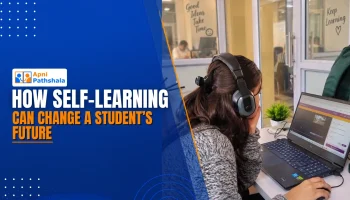
Digital resources allow students to revisit topics. Interactive tools allow them to practise. AI can provide additional explanations and support when a learner needs another way to understand a concept.
The National Education Policy 2020 also emphasises learner-centred education, experiential learning, critical thinking, and the meaningful use of technology.
This can make school education more flexible without reducing the importance of teachers.
Data Can Help Us Ask Better Questions
The biggest value of education data is not simply knowing the numbers.
It is knowing what questions to ask next.
If millions of students are enrolled, how are they progressing?
If more schools have computers, how are students using them?
If internet access is expanding, what are students learning through it?
And how can technology support teachers?
UDISE+ provides information that supports evidence-based planning and policymaking.
But data becomes truly meaningful when it leads to action.
This is where community learning can add another layer.
A Learning Space Can Change What Access Means
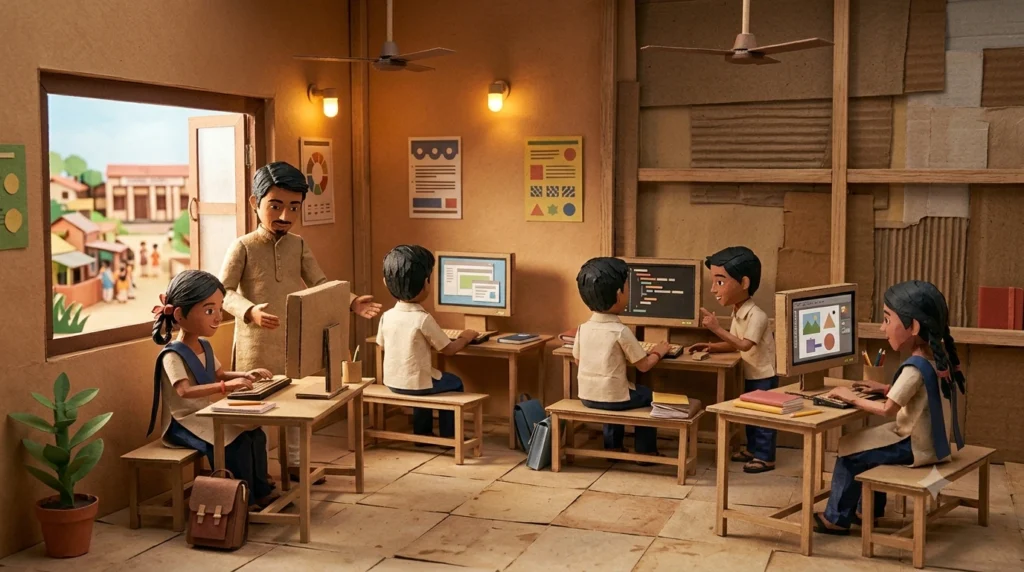
Not every learning need fits inside a school timetable.
A student may need extra practice, want to explore coding, discover design, or simply need regular access to technology.
This is where community learning spaces can complement formal school education.
At Apni Pathshala, Learning PODs are designed as local learning spaces where students can access technology, develop digital skills, practise independently, and explore their interests.
A POD does not replace school.
It extends the learning environment around the student.
A student can learn something in school, practise it at a POD, explore it digitally, and return with greater confidence.
Students Are More Than Numbers
A national report can contain millions of records.
But behind every record is a student: someone discovering computers, learning to code, needing another explanation, or finding an interest they never had the chance to explore.
Data helps us understand the size and direction of the education system.
Student experiences help us understand its impact.
We need both.
The Future of Education Will Be Measured by What Students Can Do
| Instead of asking | Ask |
| Does the school have computers? | Are students using them? |
| Does the school have internet? | What are students learning through it? |
| How many devices exist? | What can students create with them? |
| How many programmes run? | What changes for learners? |
As digital access expands, the way we measure educational progress can also evolve.
Instead of asking only:
“How many schools have computers?”
We can ask:
“How many students are using them to learn and create?”
Instead of asking whether a school has internet, we can ask what opportunities that connectivity creates for students.
And instead of counting digital programmes, we can ask what difference those programmes are making to learning.
These questions connect infrastructure with outcomes.
From Information to Learning Support
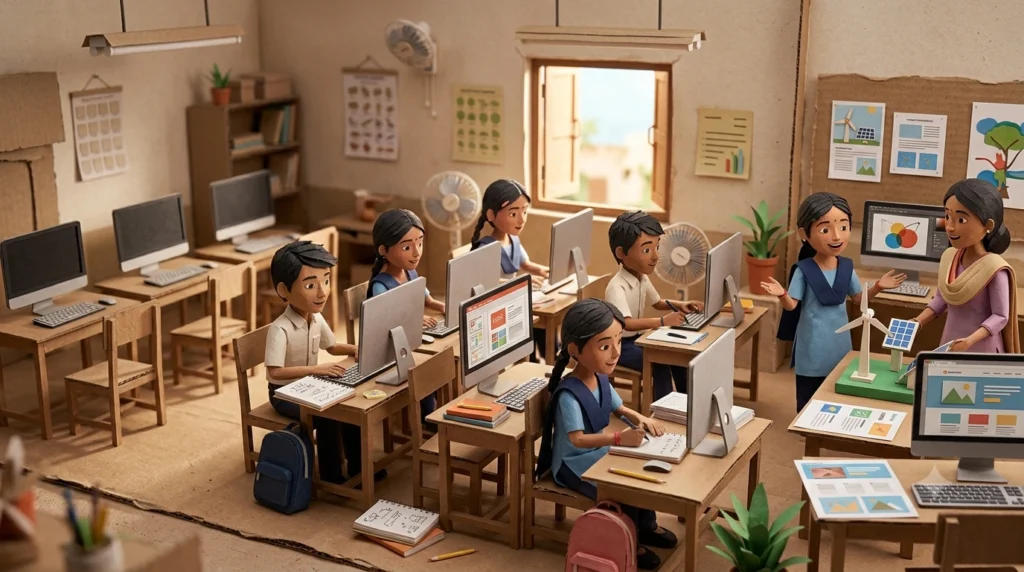
The next stage of school education will increasingly depend on understanding students more deeply.
Digital tools can help identify learning patterns, provide additional resources, and give students another way to explore concepts.
This is where Eklavya AI becomes part of Apni Pathshala’s broader learning ecosystem.
Eklavya is an AI tutor designed to support students in their learning journey, giving them another way to ask questions, explore concepts, and receive additional learning support.
Teachers provide guidance, while Eklavya adds another layer of support.
The goal is not to make education technological for technology’s sake.
The goal is to make learning more responsive to the student.
From Data to the Student
The latest UDISE+ data shows an education system operating at an enormous scale, with progress across access, infrastructure, teachers, retention, and inclusion.
But the future of education is ultimately experienced at a much smaller level: inside a classroom, a Learning POD, a conversation between teacher and student, or the moment a learner finally understands something difficult.
At Apni Pathshala, we believe education should create more opportunities for students to learn, practise, explore, and grow.
UNICEF’s work on digital learning also reflects the importance of making digital learning useful for children, focusing on creating digital learning opportunities that respond to children’s needs.
If you are a teacher, school leader, educator, NGO, or community organisation working towards better learning opportunities, explore Apni Pathshala and discover how community-based learning can complement school education.
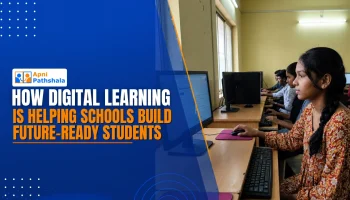
You can also read How Digital Learning Is Helping Schools Build Future-Ready Students to explore how digital learning can help students develop the skills they need for tomorrow.
Because behind every education statistic is a student, and the real success of education is the opportunity that student gets to become.
Frequently Asked Questions
1: How does digital learning prepare students for the future?
Ans. Digital learning builds problem-solving, creativity, digital confidence, and independent learning skills that students need for the future.
2: Where can I find official data about schools and education in India?
Ans. You can explore official school education data through the Government of India’s UDISE+ portal.
3: Can students use AI tools for daily revision?
Ans. Yes. Platforms like Eklavya help students revise syllabus-based concepts, ask doubts, practise questions, and revisit difficult topics at their own pace.
4: How can computers make daily revision more effective for students?
Ans. Computers can help students revise through notes, practice exercises, educational resources and self-paced learning, while building essential digital and critical-thinking skills.