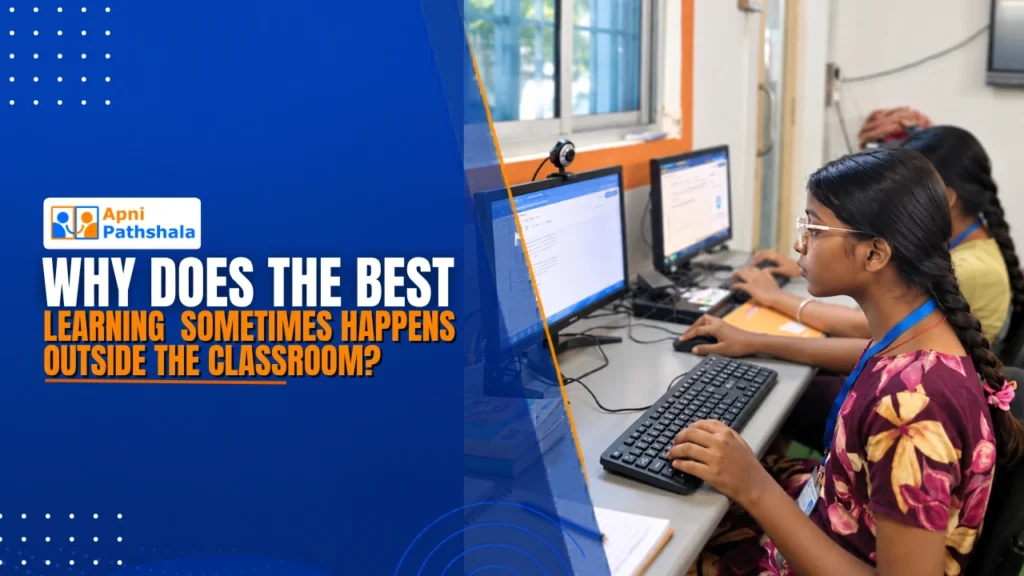
A classroom gives students a foundation, but curiosity does not always wait for the next lesson. Sometimes, students learn most when they have the freedom to explore, practise, make mistakes, and try again.
That extra space can turn a lesson into a skill, a curiosity into a project, and a student into a more confident learner.
When the School Bell Rings, Learning Does Not Have to Stop
A school day has a fixed timetable. Learning does not.
A student may leave class thinking about a difficult mathematics problem. Another may become curious about coding after using a computer. Someone else may want to understand how a website, video, or digital tool works.
These moments may not fit neatly into a timetable, but they still count as learning.
The classroom provides structure and guidance. Learning outside the classroom gives students another opportunity to explore what interests them. This is why after-school learning and community-based education can become valuable parts of a student’s journey.
What Happens When Students Get Their Own Learning Space?
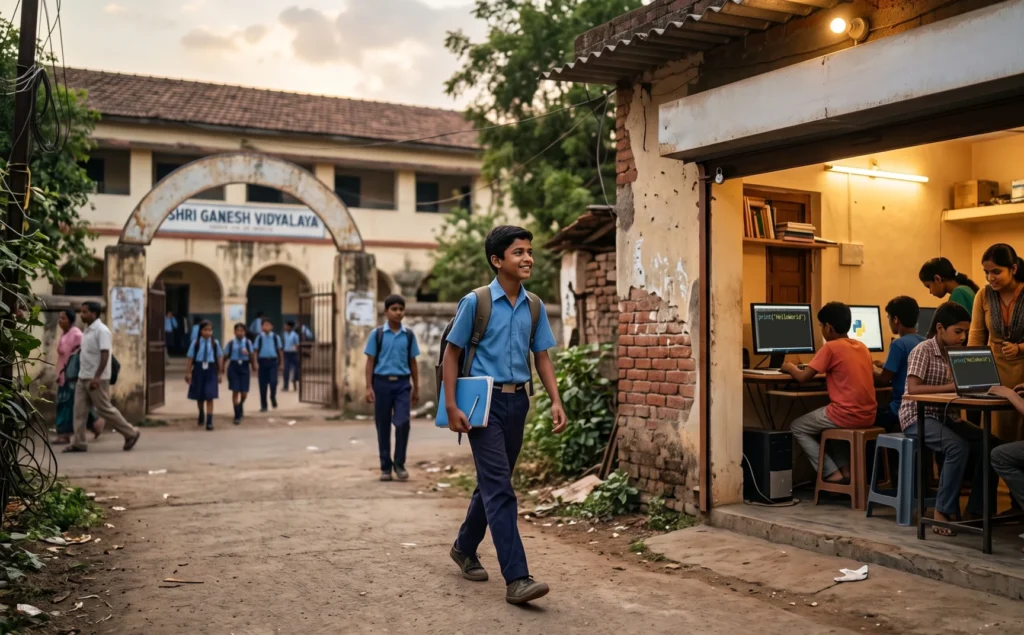
Imagine a student entering a space where they can decide what they want to practise.
One student learns basic digital skills. Another works on a school project. Someone starts coding. Another explores video editing or website creation.
There is no single path.
That is the value of a dedicated learning environment.
Apni Pathshala’s Learning PODs are built around this idea, creating community learning spaces where students can access computers, build digital skills, and explore learning based on their interests.
A POD is not simply a room with computers. It can become the place where a student discovers what they can do.
The First Computer Can Open a New World
For some students, computers are part of everyday life. For others, regular access to one can be a completely new experience.
First, they learn to type. Then they search for information, create a document, make a presentation, discover Excel, and perhaps begin coding or design.
The important change is not just technical. It is confidence.
The student begins to move from “I don’t know how to use this” to “I can figure this out.”
Through Apna PC, Apni Pathshala makes computers available as practical tools for students to learn, create, and build digital skills.
Learning Becomes More Interesting When Students Can Choose
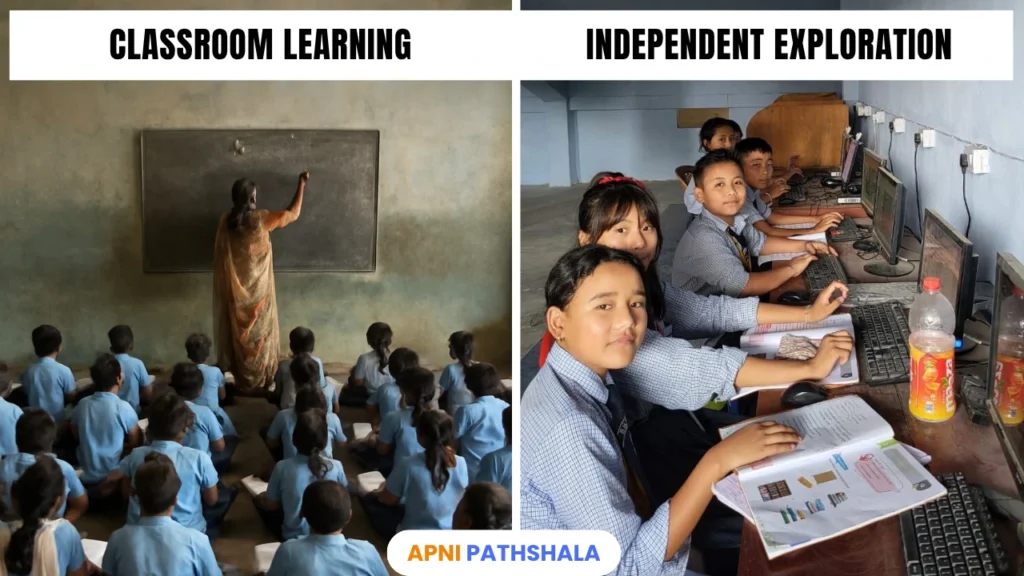
One of the biggest differences between classroom learning and independent exploration is choice.
A student who learns basic computer skills may become interested in graphic design. Someone learning Python may want to create a game. A student working on a presentation may discover an interest in visual communication.
These interests are not always part of the original lesson, but they can reveal what a student genuinely enjoys learning.
When students are interested, they are more likely to keep practising.
This connects to experiential learning; learning through doing, experimenting, and applying knowledge. The National Education Policy 2020 also emphasises experiential learning, creativity, and critical thinking.
Technology Can Make Learning More Personal
Digital tools have changed how students can learn outside traditional classrooms. They can revisit topics, explore examples, practise skills, work on projects, or ask questions.
Artificial Intelligence adds another possibility. AI-powered tools can provide additional support when students need another explanation or want to explore a topic further.
When used thoughtfully, technology can complement teachers and give students more ways to learn. UNESCO’s Digital Education work highlights technology’s potential to expand learning opportunities.
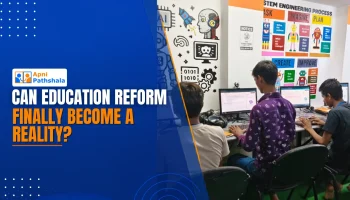
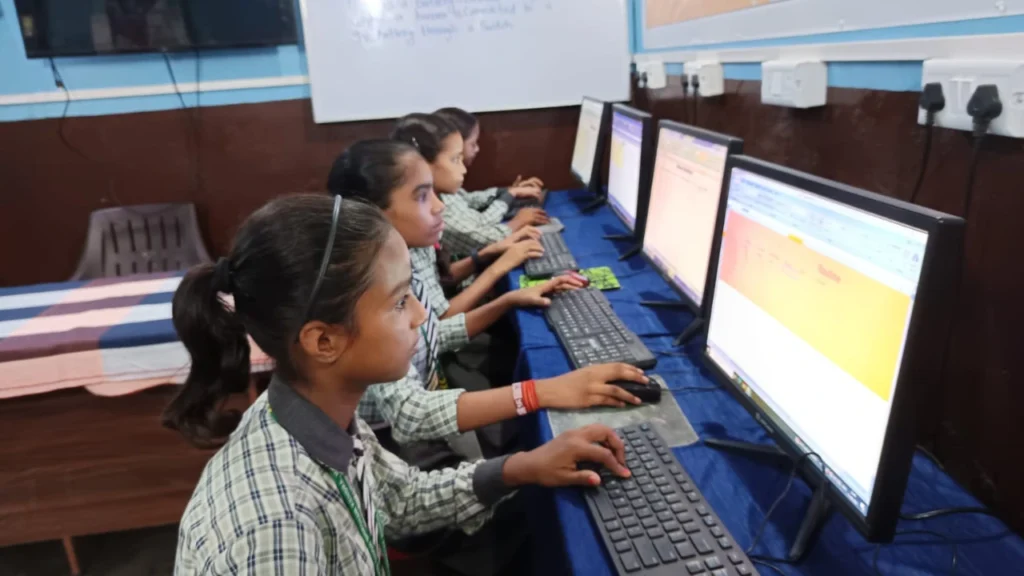
[IMAGE 1 – Students using computers in a community learning space while a teacher or mentor guides them.]
The Best Learning Can Also Be Social
Learning outside the classroom does not mean learning alone.
Sometimes the best explanation comes from another student. One learner knows a shortcut. Another has already solved the problem. Someone else knows how to use a particular tool.
They share what they know.
This creates a learning environment where students can learn from one another. A student who once needed help may eventually help someone else.
They are not only learners. They can become contributors too.
From Learning to Creating
An important moment comes when knowledge turns into action.
A student stops watching and starts making. They build a website, create a video, write code, design something, or solve a problem.
The project does not have to be perfect. It simply needs to be theirs.
Creating something helps students see the connection between what they learned and what they can actually do.
Outside the Classroom Does Not Mean Outside Education
Learning outside the classroom does not replace schools. Schools remain essential. Teachers remain essential. Curriculum remains important.
Additional learning spaces simply add another layer.
The classroom provides the foundation. A learning space provides practice. Technology provides additional resources. Peers provide encouragement.
Together, they create a richer learning environment. UNICEF’s Digital Learning work also focuses on making digital learning responsive to children’s needs.
What Happens When Students Get the Opportunity?
One student may discover computers. Another may discover coding. Someone may develop confidence. Another may find a career interest.
These outcomes may not always appear in an examination result. But they can shape a student’s future.
Because education is not only about what students know.
It is also about what they believe they can do.
Maybe the Next Lesson Starts After School
The most meaningful learning moment might happen after the textbook is closed.
It might be a student finishing a project, teaching themselves a digital skill, or helping another student solve a problem.
That is why learning outside the classroom matters, not because the classroom is less important, but because students deserve more opportunities to discover how much they can learn.
At Apni Pathshala, community-based learning creates those opportunities. Through Learning PODs, digital tools, and access to computers, students can learn, practise, explore, and discover what they can do.
If you are a school leader, educator, parent, NGO, or community organisation looking to create better learning opportunities, explore Apni Pathshala and see how community-based learning can become part of a student’s journey.
You can also read How a Small POD in Maharajganj Is Changing Lives With Digital Education to see how a local learning space can become the starting point for digital education.
Sometimes, the classroom teaches the lesson, but the opportunity to explore is what turns that lesson into something a student can carry forward.
Frequently Asked Questions
1: What is an Apni Pathshala POD?
Ans. An Apni Pathshala POD is a community-based digital learning centre where students learn computer skills, digital tools, creativity, communication, and coding with support from local leaders and Apni Pathshala.
2: How can Apna PC help students with daily revision?
Ans. Apna PC gives students regular access to a computer to practise concepts, revise lessons, and build digital skills through hands-on learning.
3: How can a small learning centre create real change in a rural community?
Ans. By giving students hands-on access to computers, practical digital skills, and consistent guidance. Apni Pathshala’s Maharajganj POD shows how digital education can build confidence and open new opportunities.
4: How can digital education improve student learning?
Ans. Digital education gives students flexible access to learning resources, supports digital skills, and creates more inclusive learning opportunities. UNESCO – Digital Education