For years, classrooms have followed the same structure: one teacher teaching and students listening.
But in reality, not every student learns this way. Many hesitate to ask questions, struggle to understand concepts, and slowly lose confidence.
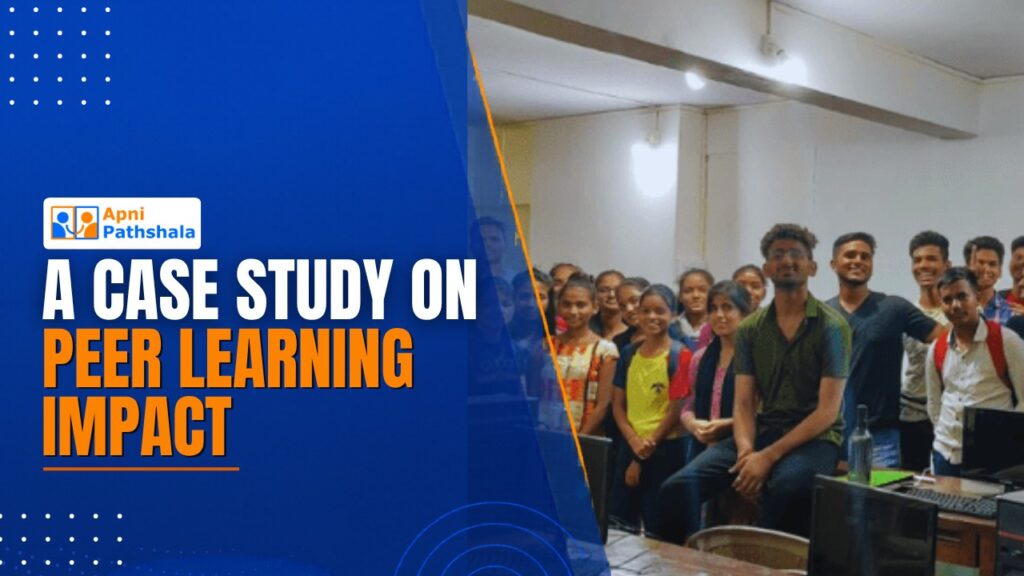
To address this gap, Learn From Peers (LFP), a POD working under Apni Pathshala, introduced a different approach: one where students don’t just learn, but actively participate, teach, and grow together.
Today, LFP is not just an idea. It has expanded across 87+ branches, creating a learning environment where students are not passive learners but active contributors.
What is Learn From Peers?
Learn From Peers is a structured peer-learning initiative built on a simple principle:
“Students understand better when they learn from each other.”
Instead of depending entirely on teachers, students:
- Explain concepts to their peers
- Learn in small groups
- Solve problems collaboratively
- Build confidence through participation
This creates a space where learning feels natural, less pressured, and more engaging.
Scale and Daily Learning System
One of the strongest indicators of LFP’s impact is its scale.
The model is currently active across 87+ branches, showing that it is not limited to a single centre but has been successfully replicated in multiple locations.
Classes run from 9:00 AM to 8:00 PM, with different batches operating throughout the day. This flexible schedule allows students from different backgrounds and timings to participate.
This structured yet flexible system ensures continuous engagement and accessibility.
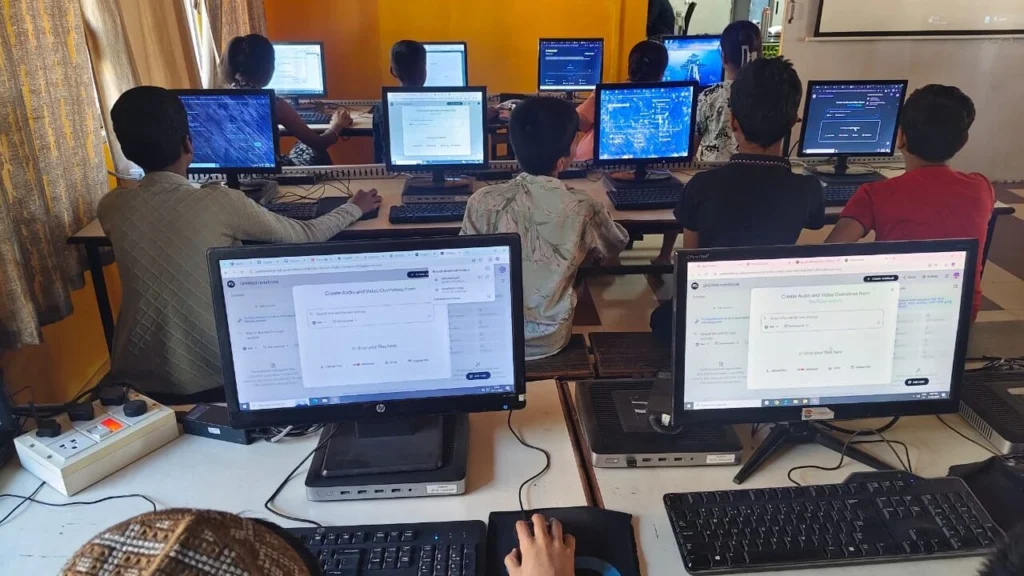
The Team Driving the Model
Behind every successful system is a committed team.
Ankit Kadam coordinates LFP, with Gaurav Singh serving as the manager and mentor. Supporting them is a team of mentors, including Sumit, Nitin, Bablu, and Chitransh.
Their role goes beyond teaching. They guide students, maintain discipline, ensure safety, and create a positive environment where students feel comfortable expressing themselves.
Feedback from parents and students consistently highlights the supportive nature of mentors and the safe, encouraging environment of LFP centres.
Real Impact: What LFP Has Achieved
The scale and impact of LFP clearly show that this model works.
- 4,000+ students mentored and impacted
- 30+ students already working in internships and real roles
- 20+ mentors actively guiding students
- 100+ students learning daily in offline centres
In some cases, even a single government school has trained and certified 300+ students, showing how scalable the model is.
This is not just education; it is a real transformation at scale.
Learning Structure and Courses
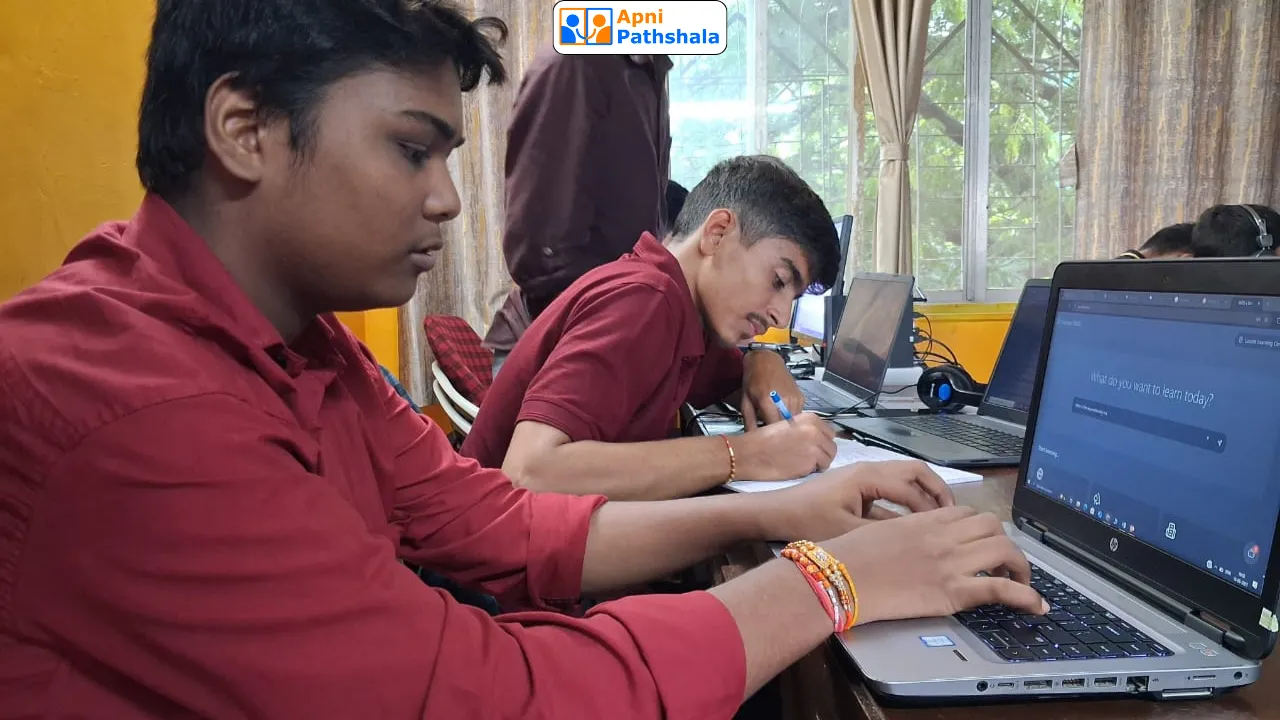
LFP follows a structured learning pathway that helps students grow step by step.
Students usually begin with a Level 1 free basic computer course to build their foundation. After that, they move into Scratch, WordPress, Digital Marketing, and Web Development.
To expand opportunities, LFP is also planning to introduce courses like App Development, Excel Fundamentals, and Graphic Design. Additionally, LFP has already conducted free HTML and CSS batches to make coding accessible to beginners.
Learning Beyond the Classroom
LFP ensures that learning is not limited to daily sessions.
Every Saturday, AI lectures introduce students to modern tools and technologies. These sessions help students understand future skills and stay updated with emerging trends.
The initiative also actively involves parents through:
- Parent-Teacher Meetings (PTMs)
- Annual Day events
- Certificate distribution ceremonies
These interactions allow parents to see their children’s progress, often leading to positive feedback and increased trust in the system.
Real Challenges on the Ground
Like any real-world initiative, LFP also faces practical challenges.
One major issue is a lack of coordination from schools, which sometimes affects outreach and implementation.
During summer periods, student attendance drops, making it difficult to maintain consistency.
Certain batches, particularly those related to social media and MKCL courses, experience lower participation.
Another challenge arises when new students directly join advanced courses without basic knowledge. In such cases, they need to be moved to Level 1 (a free foundational course) to build a strong base.
Despite these challenges, LFP continues to adapt and improve its system.
Real Student Stories: From Learners to Mentors
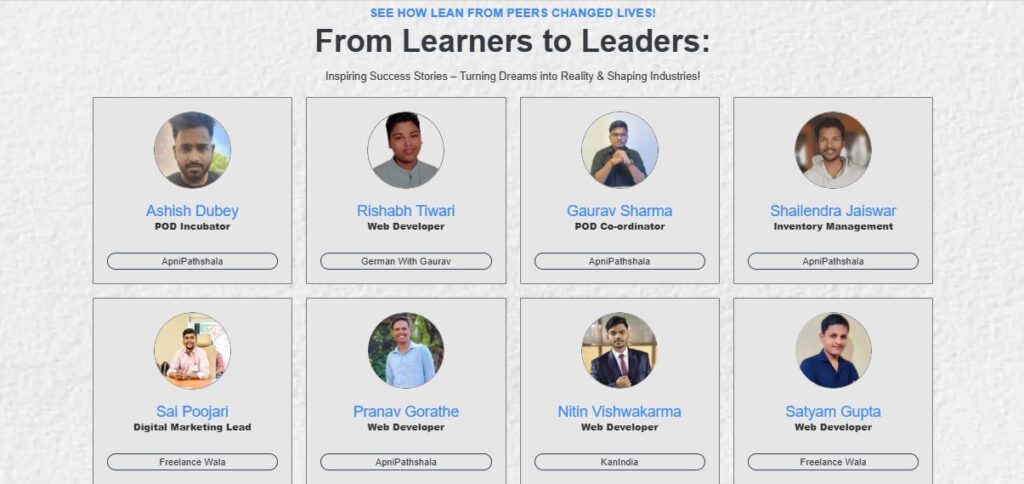
The strongest proof of LFP’s impact is its students.
Nitin (Mentor)
Nitin has been actively involved in mentoring students and supporting peer learning sessions. His role includes helping students understand difficult topics, maintaining engagement, and ensuring that every student participates.
His journey highlights how students can grow into responsible mentors within the same system.
Sumit Mishra (Mentor)
Sumit once had severe stage fright and couldn’t even ask questions in class. But after being encouraged to explain a topic, everything changed. Today, he leads sessions, speaks confidently, and helps other shy students open up.
Gaurav Singh (Mentor)
Gaurav started with no knowledge of coding or websites. Today, he teaches Level 1 batches, designs course content, and helps students learn Excel and business skills.
This journey is also reflected in the growth of mentors and contributors like Sumit, Bablu, Rishabh, Seema, and others, who continue to support and strengthen the peer learning environment.
These stories show a clear pattern:
Students enter as learners and leave as leaders.
Building Awareness and Expanding Reach
To ensure more students can benefit from this learning model, LFP consistently works to build awareness at the ground level.
This is done through a combination of digital and offline efforts, including regular social media updates, Instagram stories, website content, and direct engagement with schools. The team also conducts frequent school visits throughout the month, helping students and parents understand how the learning system works.
These continuous efforts not only increase visibility but also build trust within the community, allowing more students to join and experience a different way of learning.
Conclusion
Learn From Peers is not just a learning method; it is a shift in how education is approached.
As a POD under Apni Pathshala, it demonstrates that learning becomes more effective when students are actively involved.
From 87+ branches to growing student participation, LFP proves that:
- Learning improves through collaboration
- Confidence grows through participation
- Leadership develops through responsibility
Despite real challenges, the model continues to expand and create meaningful impact.
It is gradually transforming traditional classrooms into active learning communities.
If you are a student looking to build real skills,
or a parent searching for a better learning environment,
If you’re looking for a learning environment where students don’t just study but truly grow, Learn From Peers is one such example under a larger vision.
To explore more such initiatives and understand how education is being reimagined, visit:
Apni Pathshala
Because sometimes, the best learning doesn’t come from being taught,
…it comes from learning together.
Read the story of another LFP student who went from learning digital skills to helping others learn them:
Read: Students Who Became Mentors
Want to understand the journey beyond the written story?
Watch the LFP student journey on YouTube and hear directly how learning, confidence, and responsibility can change a student’s path.
Frequently Asked Questions
1. What are the benefits of students teaching other students?
Ans. When students teach their peers, they strengthen their own understanding while improving communication, confidence, leadership, and problem-solving skills. The NCT-LFP stories show how peer learning helped students overcome stage fright and learning gaps and eventually lead sessions for others.
2. How can students build better digital learning habits beyond daily revision?
Ans. Students can improve their digital learning habits by using computers not only for revision but also for practical skill-building, projects, creativity, and independent learning.
3. Where can students learn practical computer skills through affordable and peer-based learning?
Ans. Students can explore Learn From Peers, a learning initiative that provides practical digital-skills training through peer-to-peer and project-based learning. It offers courses in Basic Computers, Scratch, WordPress, Web Development, and Digital Marketing, helping learners build useful skills through hands-on practice.