

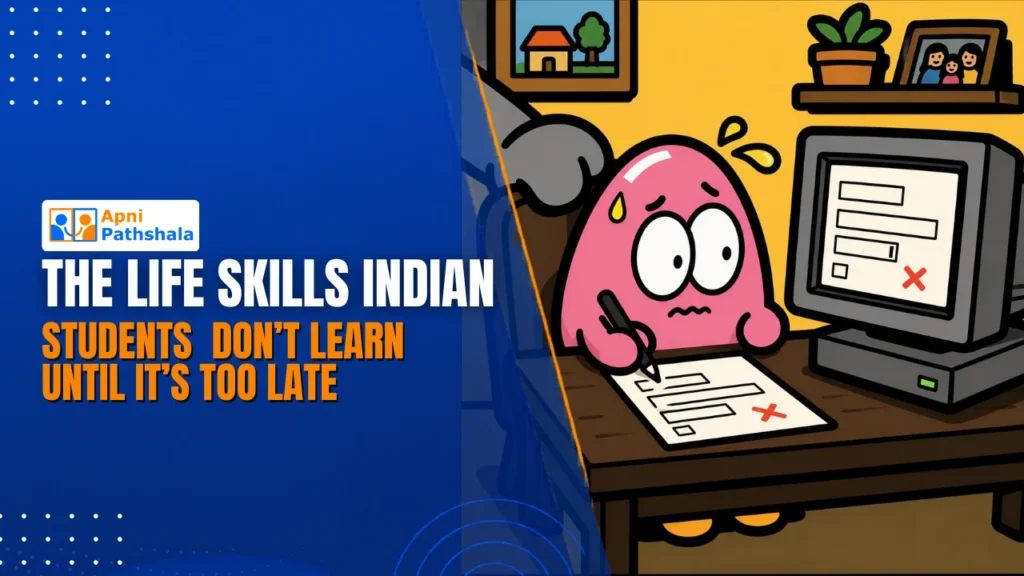
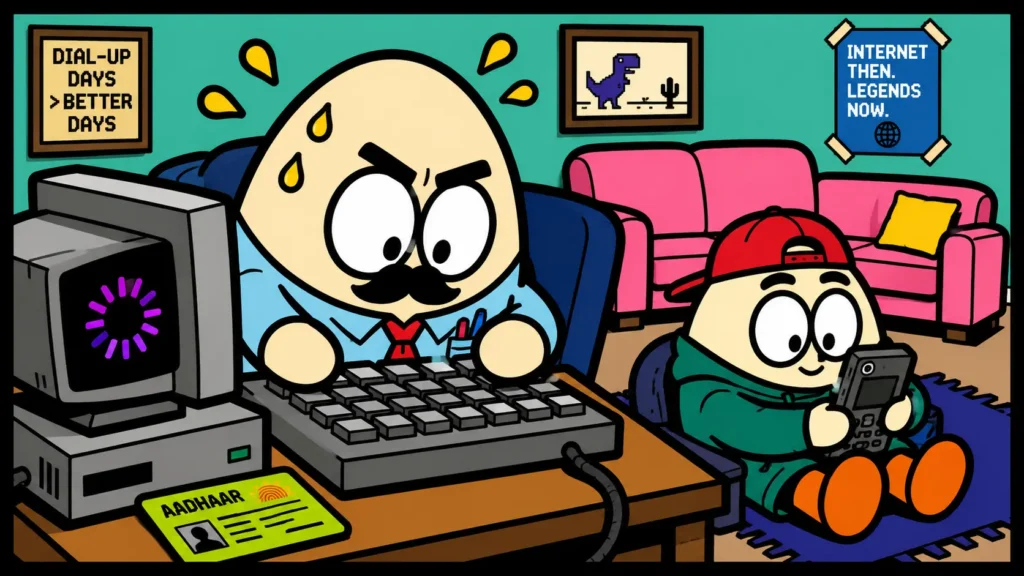
Right now, in a quiet Indian living room, a father is sitting with his son’s college admission form open on a laptop.
The website has already logged out twice. He checks the name’s spelling again, matches the Aadhaar number, and searches for the branch’s IFSC code. He compresses a photo because the portal says the file size is too large, uploads the marksheet, and waits for the spinning circle to stop, keeping one finger ready near the payment button.
His 17-year-old son is sitting next to him. Not helping. Just watching.
Sometimes he looks at the screen. Sometimes he scrolls through reels. Mostly, he just waits for his father to finish.
The father is not careless, nor is he trying to control his son’s life. He has seen forms rejected for silly mistakes. He has stood in bank lines. He knows one wrong detail can waste days. So, he takes the laptop and does it himself.
It feels like love. In that moment, it probably is love.
But something else is happening quietly in the background:
The boy is losing one more chance to learn how to handle life without someone taking over.
This is the quiet life skill gap in many Indian homes. We aren’t talking about the big issues discussed in seminars. We are talking about the small, invisible moments.
The student who cannot fill a form without panic. The student who cannot write a clear email, who cannot ask a teacher a question without pushing a parent forward….who uses AI to copy, but not to think.
Who scores well, but hides one bad test because failure at home feels unsafe.
This is about the missing skills Indian students learn only after school, when mistakes become costly. And it brings us to one uncomfortable question:
Are we helping our children so much that we are quietly making them helpless?
We don’t need “good child”
In many Indian homes, a “good child” has a very fixed, specific image.
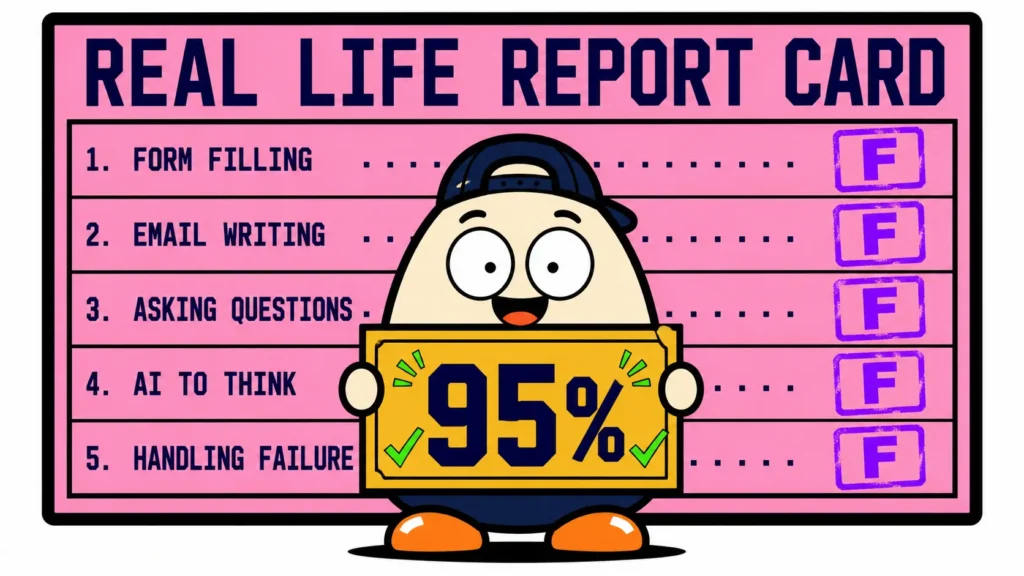
They listen. They don’t argue. They sit quietly at their desks. They study. They say, “Ji Papa” and “Theek hai Mummy.” From the outside, this looks like perfect discipline.
But silence can hide a lot.
The same child who can solve complex maths problems may not know how to write a simple email.
The same child who scores 95 in English may struggle to articulate a single genuine, original thought. The same child who navigates Instagram flawlessly may panic when Gmail asks for a subject line.
No one ever let them struggle with the small stuff.
When the child opened the form, the father said, “Ruko, galat bhar doge.” When the child had a school issue, the mother said, “Main teacher se baat karti hoon.” When the child got a project, the parent bought the chart paper, printed the photos, and by Sunday night, the file had more adult handwriting than student effort.
Then, one day, those same adults ask, “Why don’t you have confidence?”
But confidence does not magically appear at 18. It grows from small, repeated proofs: I tried. I made a mistake. I fixed it. Nothing terrible happened.
When Adults Take Over
Independence grows exactly like a muscle. By Reps. Let me correct myself…By “Consistent Reps”
- Writing an email is a rep.
- Filling a form is a rep.
- Asking a shopkeeper for change is a rep.
- Calling customer care is a rep.
- Checking if a link is fake is a rep.
- Getting low marks and looking honestly at the mistake is a rep.
Each successful rep tells the child, “I can handle this.”
But many children are robbed of these reps for years. Not because their parents are bad, but because parents are fast. Adults can complete the form faster, communicate with the teacher more effectively, and avoid mistakes entirely.
In the short term, everything becomes smooth. In the long term, the child learns to wait. Wait for the father. Wait for the tuition sir. Wait for the parent.
And the scariest part is waiting can look exactly like discipline.
A quiet child at a desk may be deeply focused… or simply waiting for someone to tell them what to do next.
When Marks Run the House
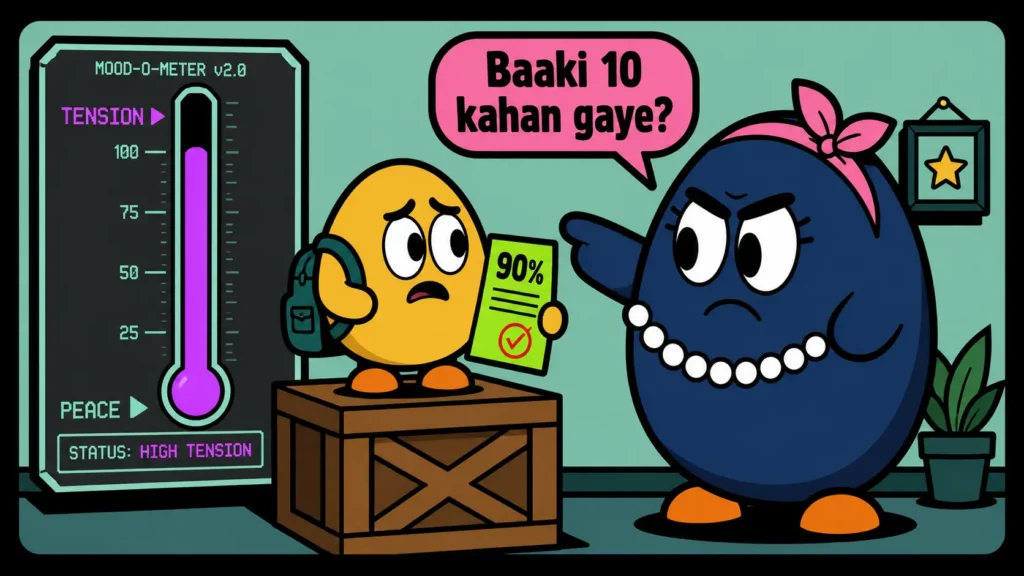
Most Indian children know exactly what the first question will be after a test: “Kitne marks aayenge?”
Sometimes the school bag is still on their shoulder. If they say 90, another question immediately follows: “Baaki 10 kahan gaye?”
Parents might say it lightly, but children do not hear it lightly. They learn that marks are not just feedback; they literally dictate the mood of the entire house. Good marks mean peace. Bad marks mean questions, comparisons, and tension.
So, children adapt. They hide answer sheets. They delete result messages. They stop asking “silly” questions and choose safe, memorised answers over original thinking.
They try to look perfectly prepared, even when they are deeply confused. But life does not reward looking prepared. Life asks you to act when no one gives you step-by-step instructions.
When Reels Are Easy, But Email Is Hard
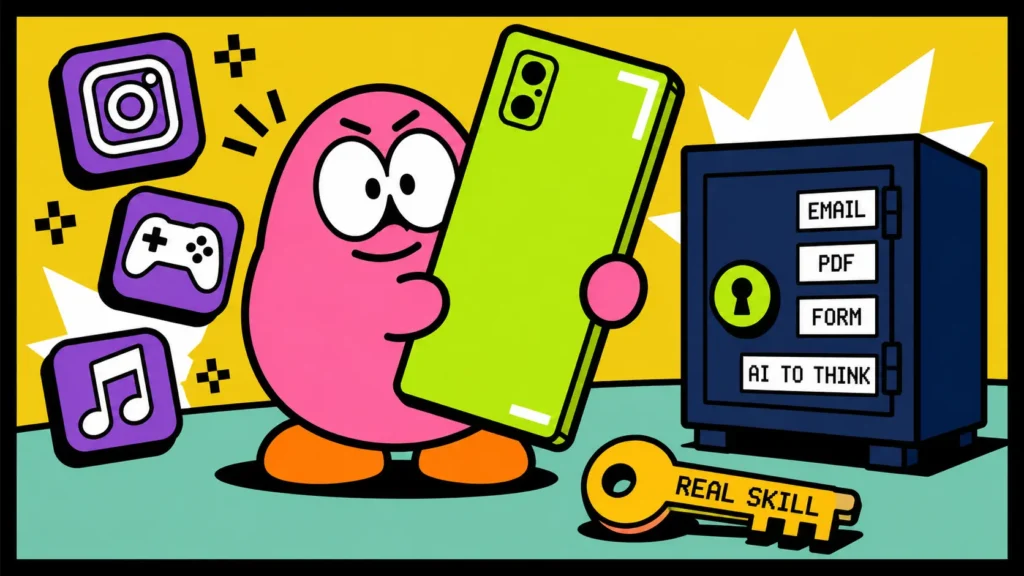
Many parents proudly say, “Aaj kal ke bachche technology mein humse tez hain.”
Sometimes yes. Often, no. A smartphone is designed to make everyone look fast.
A child can scroll, search for songs, edit reels, use filters, and download apps. But ask them to write a proper email, make a clean document, compress a PDF, check if a screenshot is fake, or use AI to understand a topic (and then explain it in their own words).
Suddenly, the “tech-brained” child looks sideways for help.
That is because phone usage is not a digital skill. Real digital skill means knowing what to trust, what to question, what to create, and what to avoid. A child who spends three hours on Instagram is not ready for the digital world.
Life Has No Steps (at all)
School has a neat, clear system: Read. Revise. Write. Score.
Life is messy. Life gives unclear forms, awkward calls, bad links, late replies, and failed interviews. Life gives you problems where there is no back exercise with solved examples.
So the real questions are entirely different:
- Can the child ask for help without feeling shame?
- Can they speak up when they are nervous?
- Can they disagree without being rude?
- Can they handle one bad result without hiding it?
- Can they sit with confusion for ten minutes before giving up?
These skills are not built in a single weekend workshop. It forms at home, at the shop, and on the laptop, in small moments where an adult stays nearby…but refuses to take over.
Why Indian Parents Over-Help
It is easy to blame parents, but it’s unfair. Most parents step in because they are scared, and their fear is entirely justified.
Indian parents know that one wrong form can waste days, and one missed deadline can close a massive opportunity. They have fought these hard systems themselves. So when their child struggles, they rush in.
But childhood desperately needs some safe struggle. Not shame or fear, just small friction. The kind that teaches a child they are capable of surviving a problem.
A Simple Rule: If the mistake is not dangerous, let the child try first.
Let them read the form. Let them write the email. Let them use AI, and then ask them what they actually understood. Sit next to them, but keep your hands away from the keyboard.
That one habit will completely change your child.
What Apni Pathshala PODs Actually Practise
This is exactly why Apni Pathshala PODs matter.
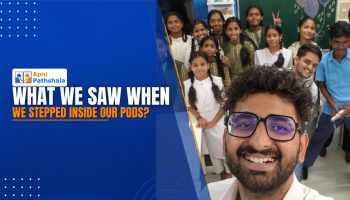
A POD is not just another tuition centre where children sit and stare at a board. It is a guided space where students practise becoming capable.
The mentor is present, but the mentor does not become the student’s replacement brain. If a child is stuck, the mentor asks, “What have you tried?” If a child uses Eklavya AI, the goal is to ask, test, get stuck, try again, and finally understand.
Students use computers with their own hands. They make mistakes. They learn how to recover.
The safety net is still there; it just changes shape. Instead of saving students from every problem, the POD gives them enough support to face the problem themselves.
That is how real confidence starts. From conviction, which is the byproduct of proof: I tried. I struggled. I figured it out.
Ask This Instead of “Kitne Marks Aaye?”
For years, Indian homes have asked: “How many marks did you get?”
Keep asking it. Marks do matter. But start asking one more question:
“What did you handle on your own this week?”
Maybe the answer is small. “I wrote a blog.” “I filled a scholarship form.” “I checked if a link was fake.”
No relative will call to celebrate your child attaching a PDF correctly, but these are the quiet signs that a child is becoming ready. Not just ready to score, but ready to live.
Do not stop helping your child. Change how you help. Start with, “I am here while you try.” Do not say, “Move, I will do it.”
Because one day, life will not ask who packed the bag or filled the form. Life will ask the child: Can you take responsibility?
If the answer is yes, the child is life-ready.
Build PODs That Teach Students to Act
A classroom gives students a place to sit. A POD gives students a place to practise responsibility.
At Apni Pathshala, we are building micro-learning PODs where students learn digital skills, AI literacy, communication, and independence through real practice.
If you are a CSR leader, NGO, school, local changemaker, or public representative, partner with Apni Pathshala to bring a POD to your community.
Because the future will belong to children who can stand up, think clearly, and do the work themselves.
We all know learning happens in discomfort. But why do students completely shut down when a physics problem gets hard, but happily fail a video game level thirty times in a row without shedding a single tear?
Find out the exact psychology behind it: Why Video Games Feel Better Than School
Frequently Asked Questions
1: What are the most important life skills for students?
Ans. Clear communication, digital literacy, basic financial awareness, and the ability to ask for help safely. These practical skills matter far more in the real world than board exam scores.
2: Why are students lacking practical skills today?
Ans. Overhelping. Parents naturally want to protect their kids and save time. But by doing everything for them, parents accidentally steal the daily responsibility reps kids need to grow up.
3: How can parents teach responsibility to children?
Ans. Step back slowly. Give them small, guided tasks. Have them fill out their own forms, write their own emails, or ask the shopkeeper for change while you stand nearby for support.
4: How do Apni Pathshala PODs build real-world skills for teenagers?
Ans. PODs provide guided independence. Mentors act as supportive coaches, not problem-solvers. Using tools like Eklavya AI, students are encouraged to think critically and figure out answers on their own, building quiet confidence over time.


4 Responses
Very insightful. Preparing students for life should be just as important as preparing them for tests.
Exactly! Preparing students for tests is useful but preparing them for life is the actual mission
A very important reminder that life skills are just as valuable as academic success. Practical, relatable, and worth reading for every student and parent!
The best education teaches students how to live, not just how to score.