

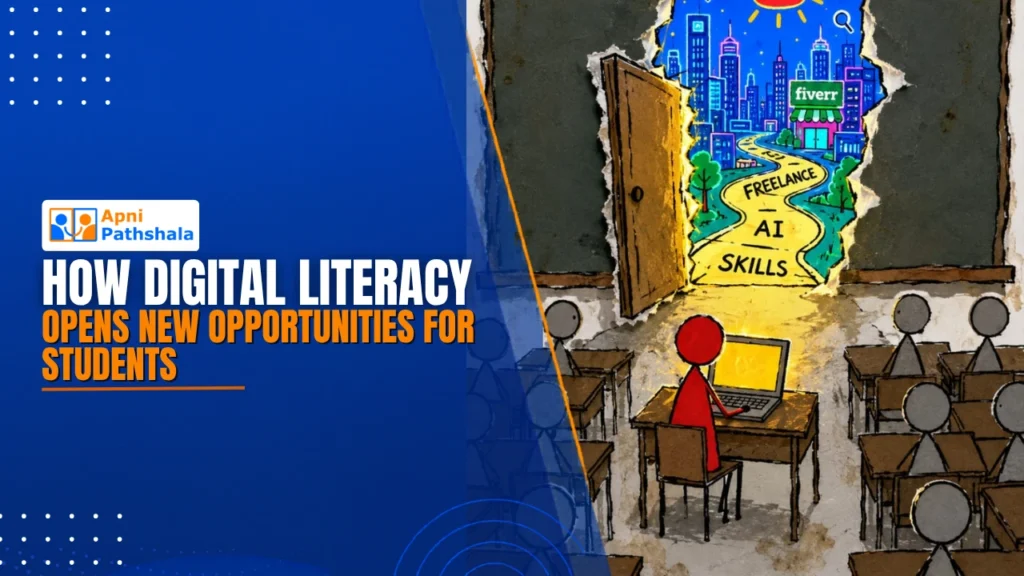
Digital literacy is no longer optional for students… it’s the skill that decides who gets hired, who earns online, and who gets left behind. Here’s what it actually means and why it matters more than your degree.
I was in 10th grade. Bored. Half-watching YouTube.
Then I saw a video about graphic design and Fiverr. I got obsessed. Spent hours learning. I never made a rupee from it.
But 15 days later, I got a video editing offer. Out of nowhere. From someone who had just seen what I could do.
I didn’t get that offer because of a certificate. I got it because I’d taught myself to move around the internet like it was my neighborhood.
That’s what digital literacy actually is.
What Is Digital Literacy Today?
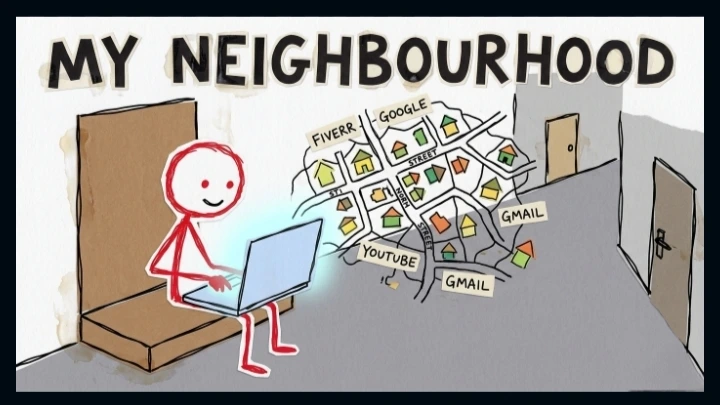
Most students think they’re digitally literate because they live on their phones.
They’re not.
Digital literacy today means knowing how to find, evaluate, create, and communicate using digital tools and understanding the consequences of what you do online. It’s not about owning a smartphone. It’s about what you can do with it that actually matters.
Here’s a test. Ask your friend how they’d verify if a freelance client is legitimate before taking on work.
Most will go blank.
They use Instagram six hours a day and still can’t answer that. That blank stare is the gap. And it costs people real opportunities.
What Is the Difference Between Computer Skills and Digital Literacy?
This one confuses a lot of students and their parents.
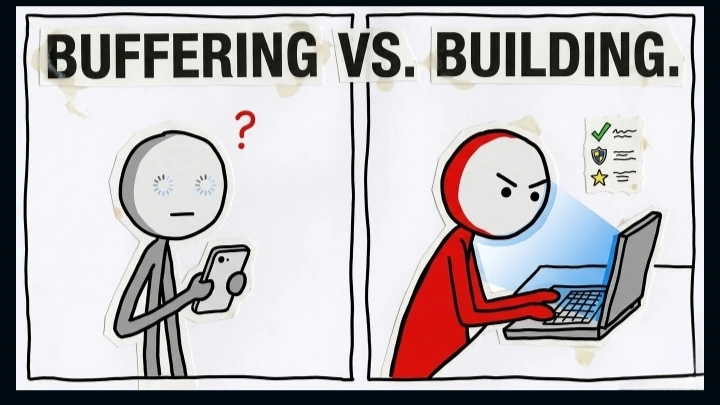
Computer skills and digital literacy are genuinely different things.
- Computer skills = operating the machine. Opening folders, typing documents, using Excel.
- Digital literacy = what you do with the internet once you’re in it. Finding credible sources. Spotting a scam. Building a professional presence before you ever graduate.
Computer skills get you into the car. Digital literacy teaches you to read the road.
Jobs that require digital literacy pay better and are harder to replace than jobs that only require basic computer skills.
That difference alone should make every student pay attention.
Why Is Digital Literacy Important for Students?
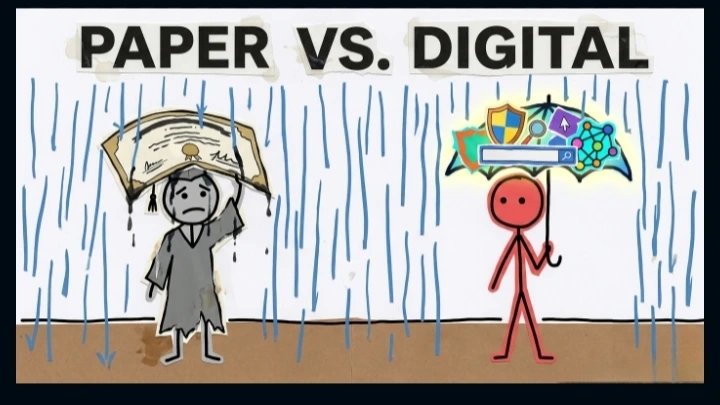
Because 92% of jobs now require some form of digital literacy, pulled from an analysis of 43 million job postings. Not tech jobs. All jobs.
And yet nearly a third of the workforce has few to no digital skills.
When I suggested freelancing to my friends in school, they were interested. But they had no idea how to tell a real project from a scam. One bad experience and they were done. Their parents told them to stay away. Their parents weren’t wrong… the risks are real!
But the answer was never to stay offline. It was to get better at reading the internet.
There’s a 27% gap in digital skills between employed and unemployed youth. But that’s a knowledge gap!
Knowledge gaps are fixable.
Start here: before you try any platform, spend one hour studying profiles of people already doing the work you want to do.
- What do they offer?
- How do they talk about themselves?
- What makes them look credible?
You’re reading the market before entering it. That alone puts you ahead of most students.
The AI Era Changed Student Employability (Fast)
86% of students already use AI tools regularly for their studies, mostly to cut corners on assignments.
That’s not digital literacy. That’s a shortcut.
Digital literacy in the AI era means knowing how these tools work well enough to actually direct them. Where they hallucinate. Where they’re useful. How to check what they produce.
A student who can use AI to multiply their output, not just generate text, is worth far more to any employer than someone who just prompts and pastes.
The WEF’s Future of Jobs Report 2025 that 60% of employers now expect digital access to be the most transformative force reshaping work. And 39% of skills currently required in jobs will change by 2030.
That sounds scary. It’s actually an opening for the students willing to keep learning instead of assuming they already know enough.
Pick one tool this week. Not five. One. Go past the surface. Understand where it breaks. That depth is what makes you irreplaceable.
Digital Literacy and Economic Mobility: The Part Nobody Says Out Loud
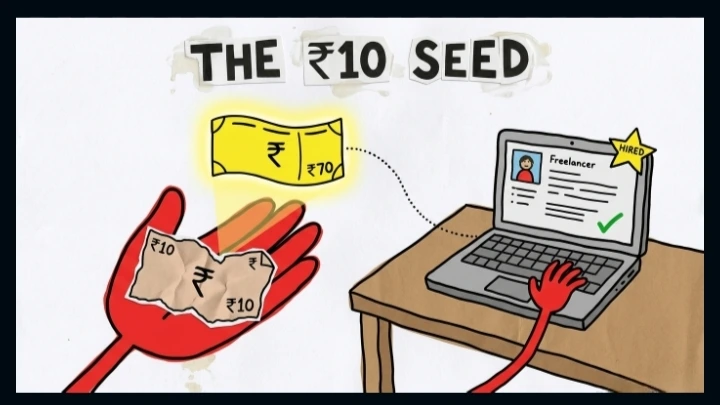
Investing in digital literacy can return up to $7 in economic gains for every dollar spent. It’s a US number. But it aligns with Indian market.
Tbh, that’s what access to digital skills actually does for people in lower-income communities.
When I was figuring this out at 15, I had access to the resources I needed. A lot of students don’t.
And the students who need digital skills the most in small towns, lower-income households, and places where nobody around them has ever worked online are the ones least likely to have a proper computer centre nearby.
Graduates with AI and ML skills have an employability rate of 48%. Roles in data analysis and backend development sit around 39%. These aren’t numbers from elite colleges. They’re what happens when any student gets consistent, guided access to digital learning.
That’s workforce readiness. And it starts with access, not ambition.
But What If You Don’t Have Access to Any of This?
Everything above assumes you have a computer, stable internet, and someone to guide you. Most students in India don’t have all three.
This is exactly why organizations like Apni Pathshala exist.
Apni Pathshala runs 107 PODs… community-based learning centres in neighborhoods where students lack basic digital access. Practical spaces where a student can sit down, learn computer basics, practice real digital skills, and get structured guidance, often for the first time.
BTW, 10 students from our Pods cracked the IIT advanced. ( Read here)
Students who walk into a POD get:
- Basic computer skills – typing, documents, email, internet research
- Guided digital learning outside the standard school curriculum
- A structured environment to build real confidence with technology
- Support from community leaders who understand their local context
The students who need digital literacy the most are usually the ones with the least access to it. Apni Pathshala is closing that gap. One community at a time.
If you’re a student looking for a learning space near you, or a community leader who wants to bring this kind of support to your area, Apni Pathshala’s POD model is worth knowing ABOUT.
Conclusion
Digital literacy is a muscle you build by using it.
If you have access, start now. Pick one skill. Go deep.
If you don’t, please check if there’s an Apni Pathshala POD near you. That’s where it starts.
See how access to digital education is helping students build skills, confidence, and brighter futures.
Frequently Asked Questions
1: Why does my child learn faster on a computer than in a classroom?
Ans: Because a computer waits for them. They can pause, rewind, and repeat tough lessons at their own speed without feeling shy or embarrassed in front of 40 other students.
2: Are hybrid learning pods better than traditional schools?
Ans: They do not replace schools; they fix what classrooms miss. Hybrid pods mix the personalized speed of online learning with the sharp focus of a physical room.
3: How to fix the lack of social interaction in online learning?
Ans: Move the student out of their lonely bedroom and into a community learning space. Here, they use computers but still sit alongside their friends and neighbors.
4: What skills can students gain through digital education?
Ans: Students can learn computer basics, online research, digital communication, problem-solving, creativity, and other skills that are valuable for future education and employment.

12 Responses
I total agree, if you know how to use computer you have multiple career to pursue and you start learning faster and better & more easily.
Thank you for sharing your thoughts. You’re absolutely right; when students learn how to use computers in the right way, it opens many new learning and career opportunities for them.
Powerful blog. It clearly shows that digital literacy is not just about using devices, but about building confidence, independence, and real opportunities for students. Apni Pathshala’s POD model can truly help bridge this gap for children who need access the most.
Thank you, this means a lot to us. We’re glad the blog could reflect how digital learning can build real confidence and opportunities for students.
I agree with this blog
Thank you! Glad you liked the blog and connected with the message.
Great article! Digital literacy is opening doors to opportunities that many students never had access to before. Very inspiring read.
Thank you so much! Digital literacy can truly open new opportunities for students.
Reading this blog made my day and have a very proud feeling that Apnipathshala is doing great……
Thank you so much. Your words truly motivate us to keep creating better digital learning opportunities for students.
The teachers explain everything clearly and make learning easy.
Practical sessions help students understand concepts better.
The class environment is friendly and supportive.
A great place to improve computer skills with confidence.
Thank you for sharing this. It means a lot to us to see students learning comfortably and building confidence through practical digital sessions.