

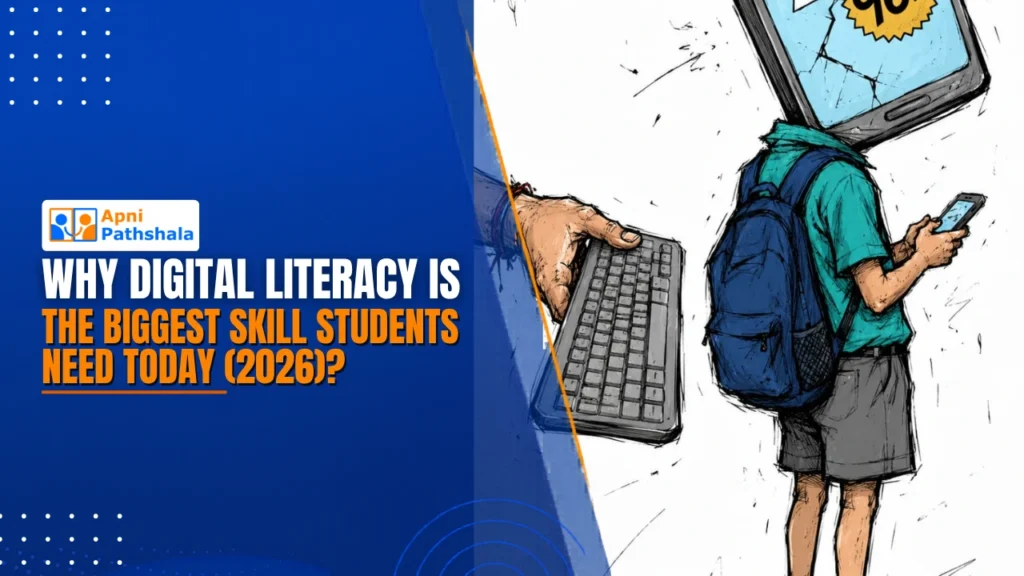
Stop Calling Your Child “Tech-savvy” (They Are Not)
Your child’s 96% in boards might be hiding a skill gap you can’t see.
And nobody. Not the school, not the tuition, sir, and not the report card are going to warn you about it.
Stats show that 82% of Indian teenagers know how to operate a smartphone. But only 57% ever use it for anything related to studies. Usually, it is just entertainment.
And that’s not their fault.
Nobody sat them down and said, “This little device in your hand?
It’s not just for reels and games. It’s a doorway. Let me show you how to walk through it.”
The Report Card on the Fridge
Let me tell you about Meena.
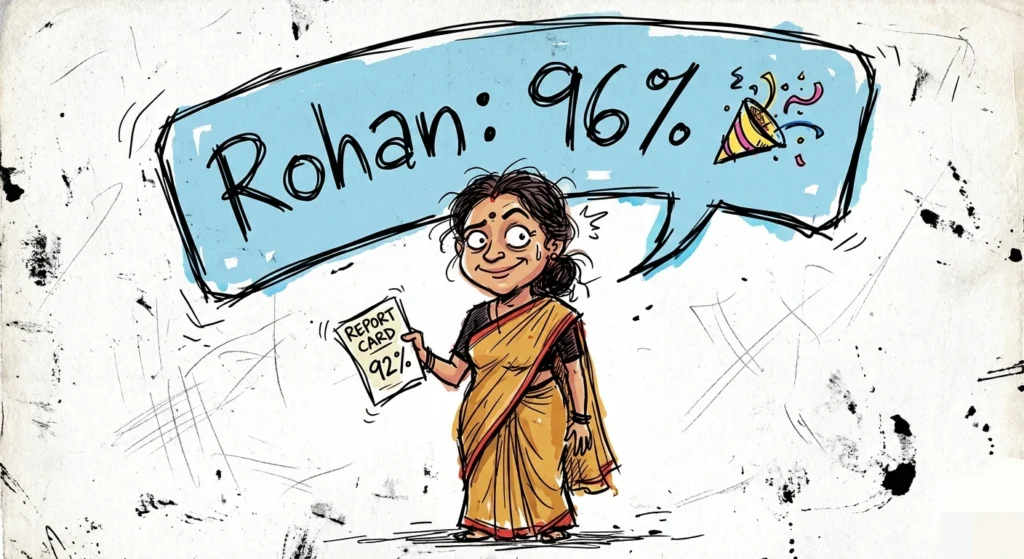
Meena is staring at her son Arjun’s Class 10 report card. 92%.
She feels that quiet, proud feeling that Indian parents know well. It is the one where you want to call your sister and mention it just casually. (“Haan, bas 92 aaye. Thoda aur mehnat karta toh 95 aa jaate.”)
Then she opens WhatsApp.
Her neighbor has posted, “Blessed to announce Rohan scored 96% on boards.” Proud of my boy!
Suddenly 92% feels small.
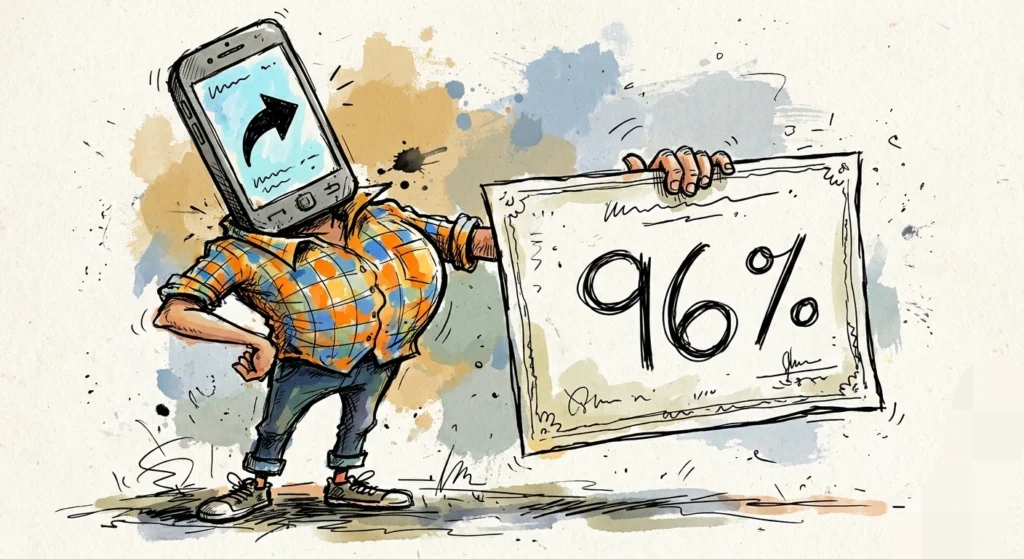
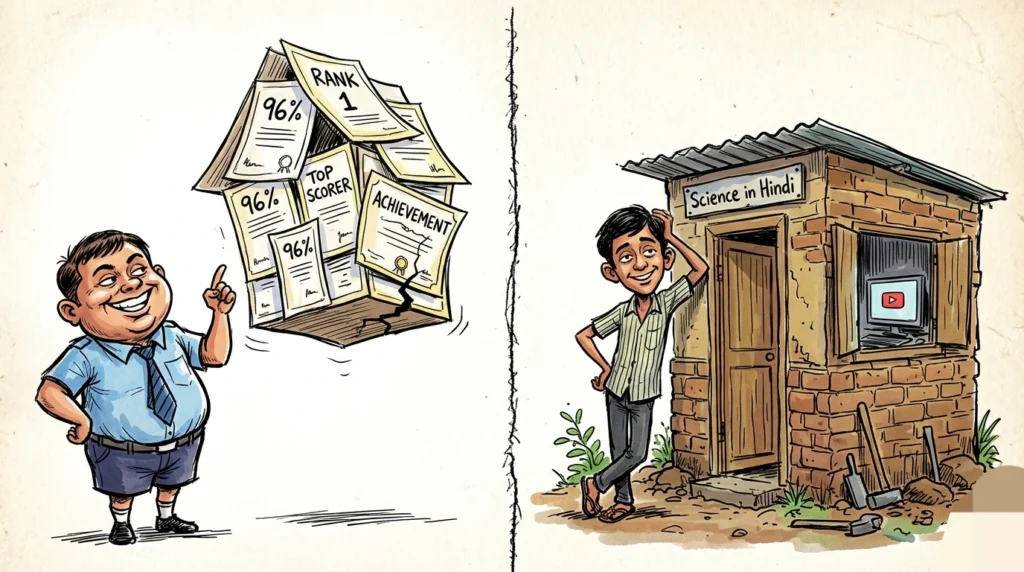
Here’s what Meena doesn’t know about Rohan, the 96% boy.
Rohan can’t search for information beyond the first link Google shows him. He thinks “research” means copying a paragraph from Wikipedia.
If you ask him to write a simple email without ChatGPT doing it for him, he freezes.
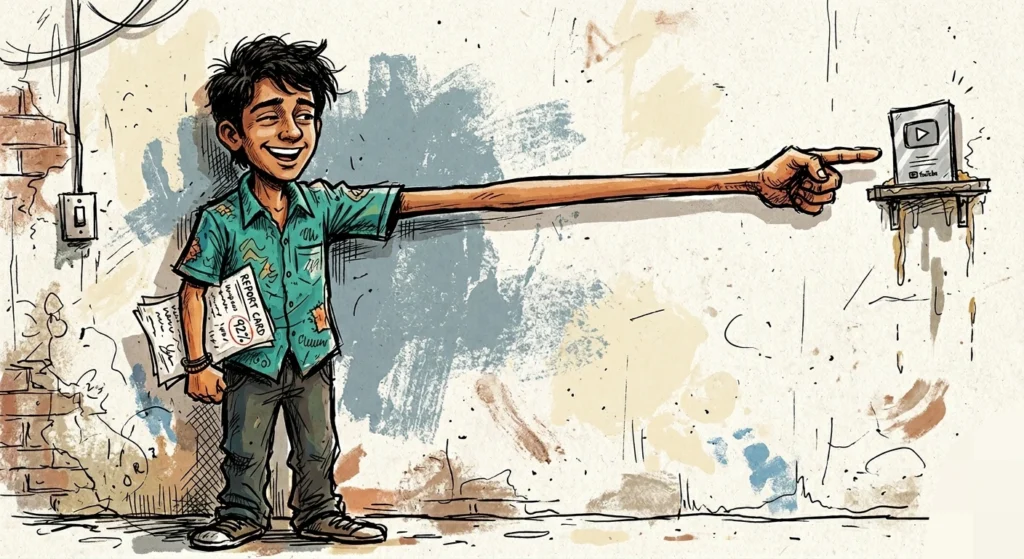
Now Arjun, Meena’s son with “just” 92%, spent his summer differently.
He got curious about video editing. He watched YouTube tutorials, messed up a hundred times, Googled his mistakes, and slowly figured it out. He started a tiny channel where he explains science topics in Hindi.
It has 400 subscribers. No big deal.
But in the process, he learned something no tuition class teaches. He learned how to figure things out when you don’t already know the answer.
One boy can repeat what he was taught. The other can teach himself something new.
Which skill do you think lasts longer?
So, what exactly is digital literacy?
Most of us picture a child typing fast or coding. That’s a small slice.
The real thing is simpler: the ability to learn anything, safely, using the internet.
It means your child can:
· Search and find useful information. not just the first link.
· Tell the truth from a fake.
· Explain what they learned in their own words.
· Protect themselves from scams, bullies, and shady content.
· Create something original, a video, a document, or an explanation instead of just scrolling.
Most kids today are great at the last one: consuming. But if they can do this… they are better than most.
Why is digital literacy important for students in school?
Here’s a simple way to think about it.
When you build a house, what is the first thing you make sure is strong?
The foundation. Not the paint. Not the curtains. It is the base on which everything else stands.
Digital literacy is that foundation.
If your child has it, every subject becomes easier.
They can look up math concepts explained in five different ways until one clicks. They can learn anything, anytime, without waiting for a teacher or a tuition class.
Without that foundation, they are stuck.
If the teacher didn’t teach it, they don’t know it. If the tuition sir skipped a chapter, it’s gone. Their learning is entirely in someone else’s hands!
How Does a Lack of Digital Skills Affect Future Careers?
Imagine two students. Same school. Same syllabus.
One memorizes brilliantly. Top marks. But whenever something unfamiliar shows up, she needs a teacher, a tutor, a parent. She never learned to find answers on her own.
The other also scores well. But somewhere along the way, she learned how to search, verify, and teach herself using free tools. When stuck, her first instinct is, “Let me figure this out.”
Fast forward ten years. Both are in jobs that didn’t exist when they were in school, and that’s not a guess.
The World Economic Forum says 170 million new roles will emerge by 2030, and 92 million old ones will disappear.
Who adapts? Well, you know…
The Real Reason Your Child Uses Technology Only for Entertainment
Here it is, plainly.
Your child’s smartphone is currently a ₹15,000 entertainment machine.
It is used for reels, games, and WhatsApp forwards. Not because your child is lazy, but because nobody ever showed them that the same device can be a classroom, a library, a tutor, and a workshop all in one.
We handed them the most powerful learning tool in human history and implicitly said, “Here, have fun.”
The good news is that it’s not too late. The foundation can still be built.
But every year we wait, the habit of using the phone for entertainment only gets harder to break.
How can I improve my child’s digital literacy?
You don’t need expensive courses, and you don’t need to be a tech expert. Here are five small, real things any parent can start with:
1. Ask “search it” instead of “I’ll tell you.”
Next time your child asks you a question, don’t answer immediately. Say, “Let’s find out together.” Open Google. Type the question. Show them how you pick which link to trust.
2. Turn consumption into creation.
After your child watches a video, ask gently: “What did you learn? Can you explain it to me in your own words?” Or even: “Can you make a small video explaining this to your younger cousin?” Creating is always better than consuming.
3. Teach safety as a normal conversation, not a scary lecture.
Talk about not sharing passwords. Talk about profiles that look fake or messages that ask for money. Do this not to scare them, but to arm them. 38% of teenagers still don’t know how to block or report someone online. That’s our gap to fill.
4. Let them struggle a little before helping.
This one is hard for parents. We want to fix things. But when your child hits a tech problem, like an app not working or a file not opening, don’t jump in. Say, “Try searching the error message. See what comes up.” The struggle is learning.
5. Point them to free resources that already exist.
There are tools like Eklavya AI that are completely free and help students learn CBSE, NEET, and JEE concepts at their own pace. There are community learning centres (PODs) across India that teach exactly this foundation. No fees. No catch. It’s just a place to build the skill.
Visit apnipathshala.org if you want to find or open a POD near you.
CONCLUSION
I’m not asking you to stop caring about marks. I’m Indian. I know marks matter and open doors.
But here’s the thing. Digital literacy doesn’t fight marks. It supports them.
A student who has marks and knows how to learn independently is one bad exam away from figuring out what went wrong and fixing it.
The foundation is free to build. It just takes intention.
Digital literacy tells you what they can figure out when they don’t know.
Once they know the basics, they can actually start building things.
Check out the tools they should try in “Free Tools Every Indian Student Must Learn in 2026.“
What if your child is afraid to use a real computer? We noticed such situations happening in a lot of homes. Read about it in You Bought a Computer for Their Future. Now You’re Scared of It.
Frequently Asked Questions
1. Is using a smartphone enough to make a student digitally literate?
Ans: No. Real digital literacy means knowing how to use technology for learning, problem-solving, safety, and creating something useful, not just scrolling or watching videos.
2. How much screen time is actually safe for children?
Ans: Safe screen time is not just about “how many hours.” What matters more is what children are doing on screens. Learning, creating, and skill-building are far healthier than endless scrolling and entertainment.
3. Why do some students become independent learners while others always depend on tuition or teachers?
Ans: Independent students learn how to search, explore, and solve problems on their own using the right digital tools. Self-learning builds confidence, curiosity, and real-world skills that go beyond marks.
4. What if my child struggles to understand topics in school?
Ans: Eklavya AI helps students learn CBSE concepts in a simple and interactive way using AI-powered guidance, practice, and doubt-solving anytime.



4 Responses
Very insightful article. Digital literacy is not just about using phones or apps, it is about learning, thinking, and creating. Appreciating this important conversation around students and future-ready skills.
Thank you for your thoughtful comment. Glad you found the article insightful. Digital literacy is truly about learning, thinking, and creating for the future.
It’s changed my POV to see education in terms of digital literacy thanks.
Thank you so much for sharing this. We’re glad the blog helped you see education from a digital literacy perspective. That’s exactly what Apni Pathshala is working toward, helping students not just study but become ready for the digital world.