The Indian private tuition industry is a multi-billion-dollar empire built on a single, embarrassing secret.
Most students who fail CBSE because of the education system was mathematically designed to ignore them when they are confused.
It is 9:00 PM, and the Class 10 Board Exams are four months away. Anshika opens the Science textbook to Chapter 12. She reads it once and doesn’t quite “get it.”
She reads it again, and it is still foggy. She closes the book, rubs her eyes, and tells herself she will just “ask sir tomorrow in tuition.”
She does not raise her hand. Because asking a “dumb” question in front of 25 peers feels like social suicide.
You know this exact feeling, right? We all do. But nobody ever says it out loud. She goes home in silence and opens the same book again.
So what actually went wrong? It wasn’t a lack of effort. It was a complete and total lack of feedback.
The Real Problem Nobody Is Naming
India’s private tuition industry is an absolute giant
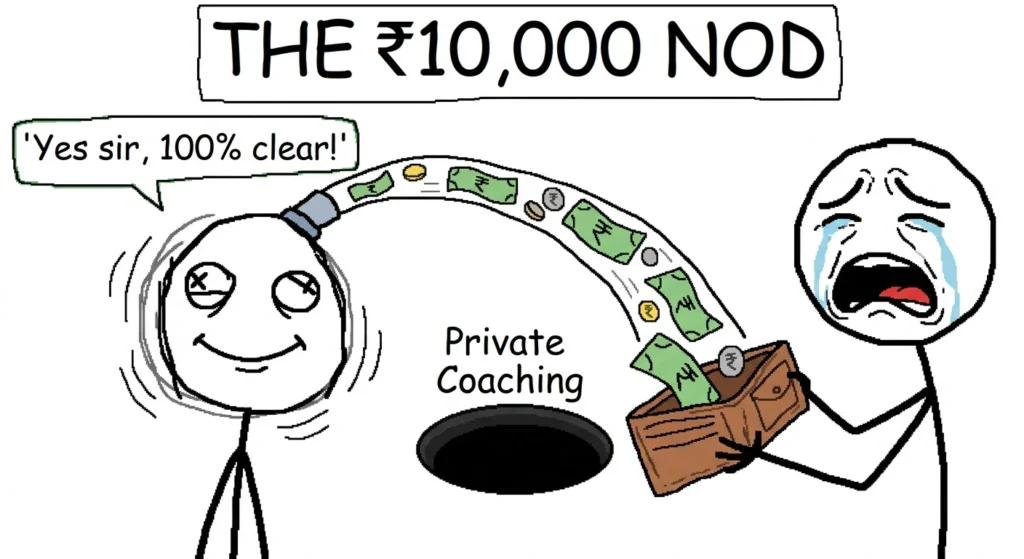
Exactly 27 percent of students across India are enrolled in private coaching. At the higher secondary level urban families spend an average of ₹9950 per year on private coaching
For many, it costs more than the actual school fees. Stop and think about this for a second
How many times have you or your child nodded along in a crowded classroom pretending to understand a concept just so the teacher would move on
That single silent nod of fake understanding is costing your household thousands of rupees a year
Despite this massive financial drain there is surprisingly little evidence that coaching consistently improves actual learning outcomes
Families are pouring money into a black hole
The industry grew anyway because “confusion under pressure” looks a lot like a massive business opportunity
The Syllabus famously has “No Feelings”
Here is a simple thought experiment. Imagine you are learning to drive
Your instructor sits in the passenger seat and explains the rules. Then he steps out and watches 29 other students drive while you are still on the road
When you make a mistake nobody tells you. You just keep driving “wrong” and slowly build permanent muscle memory for the exact error
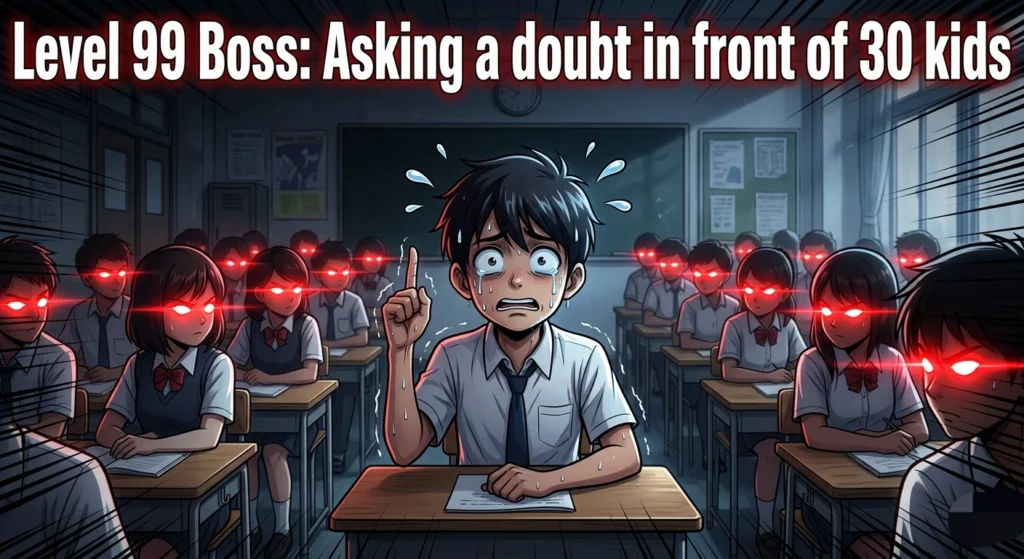
That is exactly what most tuition looks like today. One teacher and thirty students and ninety minutes
The teacher explains and some students get it while some do not. When that one kid actually raises his hand to ask a doubt everyone else in the room low-key hates him for pausing the class
But secretly half of them are completely lost on the exact same concept. The class moves forward regardless
Why? Because most classrooms are not built for understanding. They are built for finishing the syllabus on time
The students who do not get it stay confused. The problem is not that the student is “slow”
The problem is that nobody noticed he was stuck
The Compounding Interest of Failure
CBSE Class 10 covers five core subjects
Each subject has 12 to 15 chapters and each chapter builds directly on the previous one
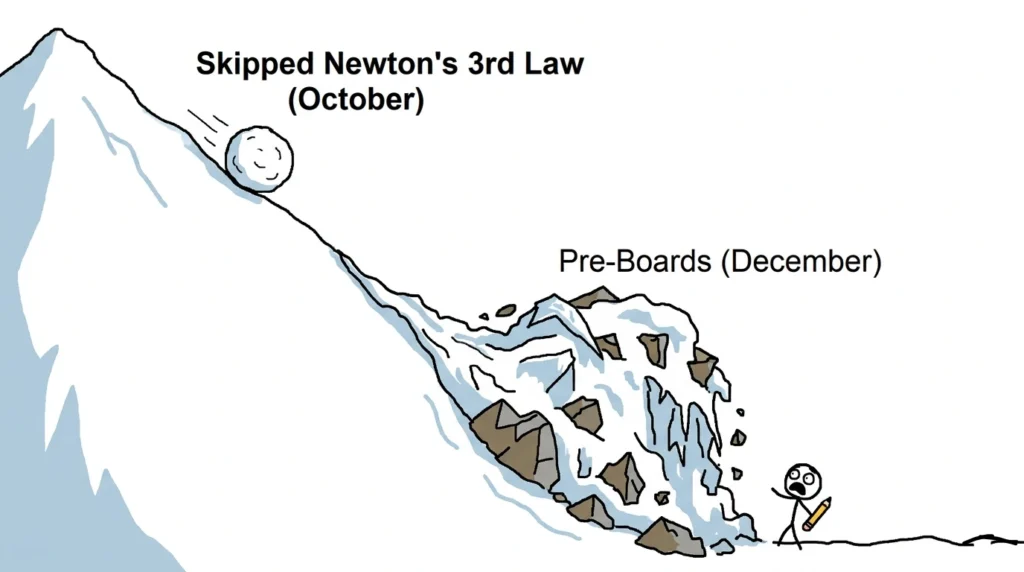
If you misunderstand Newton’s third law you will absolutely struggle with momentum. If you misunderstand momentum the next three chapters quietly become harder and nobody tells you why
You just start feeling like you are “naturally bad at Science”. You are not bad at Science at all
You just missed one tiny conceptual step in October and by December it mutated into a massive wall
But the textbook does not know you are stuck so it does not slow down. The tuition teacher does not know either
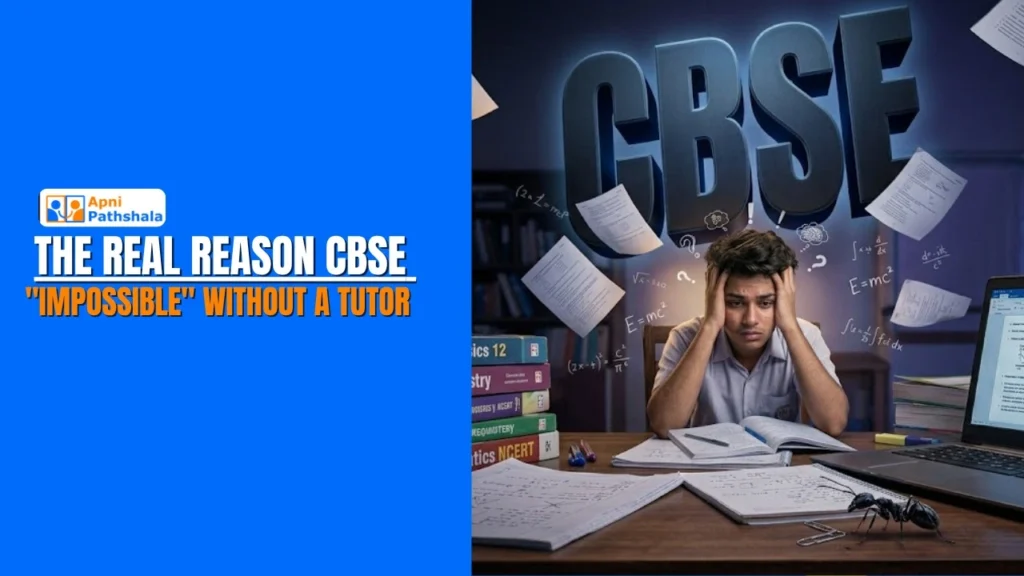
This is the real reason CBSE feels totally “impossible” without a tutor
It isn’t because the syllabus is too hard. It is because the system has absolutely no mechanism to catch individual confusion in real time
A private one on one tutor solves this
But at ₹1000 to ₹4000 per month it is an insane luxury that 95 percent of Indian households are quietly pretending is a “necessity”
Closing the Loop in 2026 (No, It’s Not Another App)
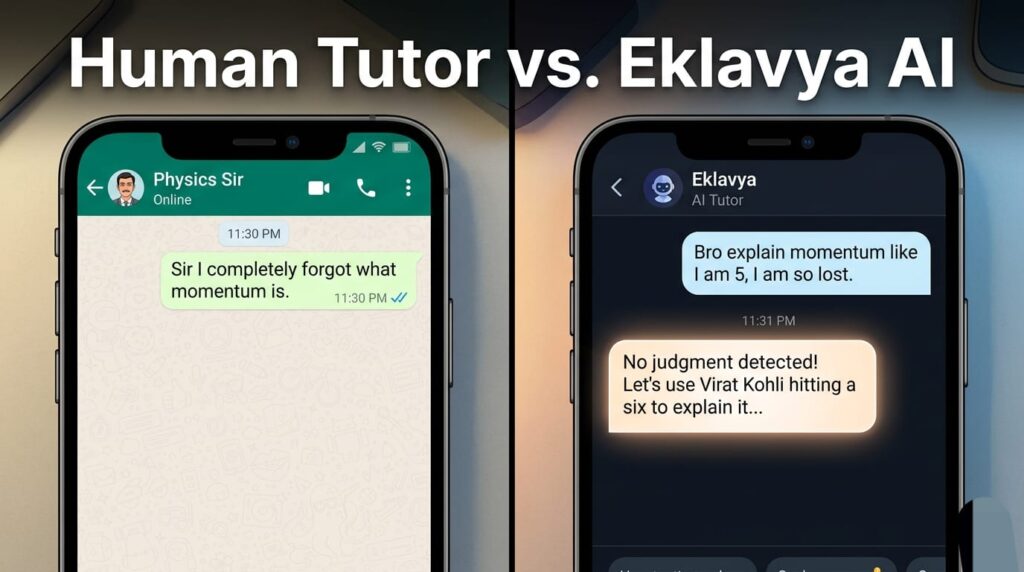
In 2026 closing the feedback loop does not require a ₹5000 a month physical tutor
It requires a system that actually “talks back”. This is exactly how Eklavya AI inside the Apni Pathshala ecosystem was engineered.It is not a generic chatbot but a strictly syllabus locked engine
When a student takes a chapter MCQ and selects the wrong answer Eklavya does not just print a red cross
It instantly recognizes why they chose that wrong answer and adjusts the difficulty. It explains the exact missing link in the concept
This means the kid who was too terrified to raise his hand in a crowded tuition room can now ask the exact same “dumb” question fourteen times at 11:30 PM with zero judgment
The Uncomfortable Truth About Studying Harder
Most parents say the exact same thing when their child scores badly
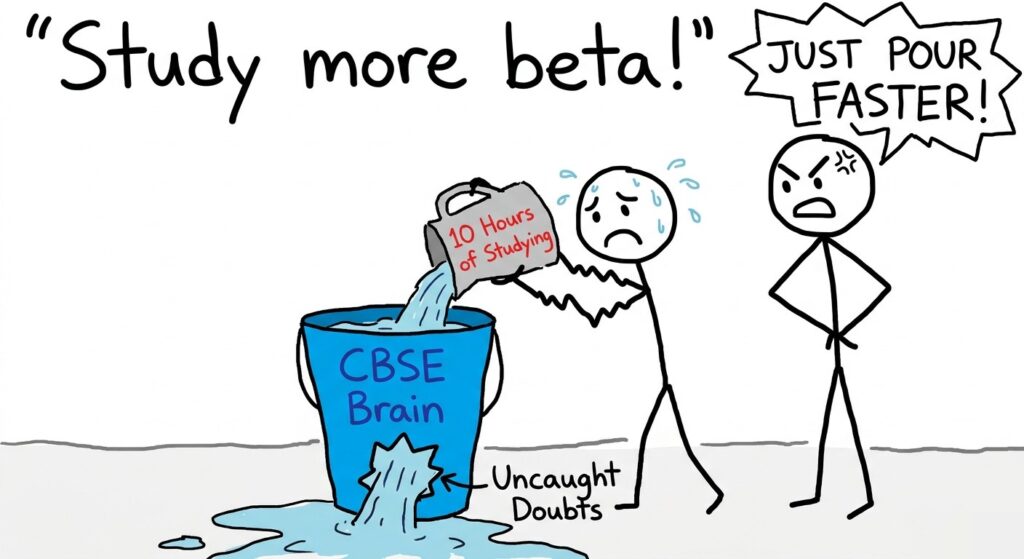
”You need to study more”
More hours and more chapters and more revision. But here is the thing nobody ever says out loud
If a student is already putting in 3 to 4 hours a day and their conceptual gaps are not being caught then more hours of the same broken loop does not fix anything
”Studying harder” without feedback isn’t studying. It is just repetition without correction
They are the ones whose mistakes got caught early before their doubts compounded into massive walls by February
A textbook will not “talk back” to you. A crowded tuition class will not wait for you. But in 2026 you do not have to be a victim of a broken design
The real problem is not that Indian students do not study hard enough
It is that nobody notices when they stop understanding
Who should use Eklavya AI?If you want to see what that feels like, you can try learning inside an Apni Pathshala POD near you where Eklavya AI is built to do exactly this: catch your mistakes in real time, explain them, and not let you move forward half-understanding things.
This is just the surface. The real issue is explained here, don’t miss it
No pressure. Just… don’t ignore the gap again.
Who should use Eklavya AI?
Students who struggle with concepts, feel shy asking doubts, or want flexible learning support can learn better with Eklavya AI.
Why are PODs important today?
Because many students struggle with traditional systems, and PODs offer a flexible, student-friendly way to learn.
How should students choose the right course?
Based on interest, strengths, and future goals, not just trends or peer pressure.
Are students learning or just completing answers?
That’s the real question every student and parent should think about.