Across India right now, a massive, silent shift is happening at thousands of study tables. From Class 6 all the way to Class 10, students have discovered a modern magic trick. You take a highly complex NCERT science question, paste it into ChatGPT or Gemini and hit enter.
In exactly four seconds, the screen spits out a beautifully formatted, grammatically perfect answer. Homework that used to take three excruciating hours is now done in ten minutes. Parents walk by, see their kid typing furiously, and assume they are raising the next Elon Musk.
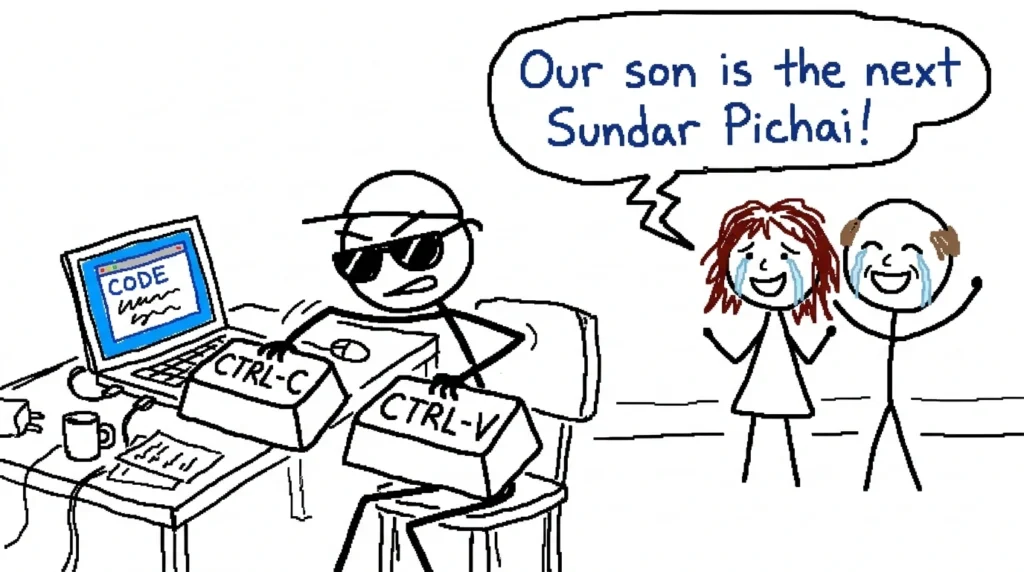
(Or they’re secretly panicking about AI taking over the world, completely unaware their kid is just using it to write an essay on soil erosion). The student closes the laptop, feeling like an absolute tech genius who has successfully hacked the educational matrix.
But fast forward to the monthly unit tests, and a very strange mystery unfolds. The marks aren’t going up. In fact, retention is actively dropping. How does having 24/7 access to the smartest artificial intelligence in human history actually make a 13-year-old structurally weaker at academics?
It’s a question driving millions of parents to look for a genuinely effective free AI tutor for CBSE because the current general AI trend is quietly backfiring.
Why ChatGPT Makes You Feel Smart (Without Making You Smarter)
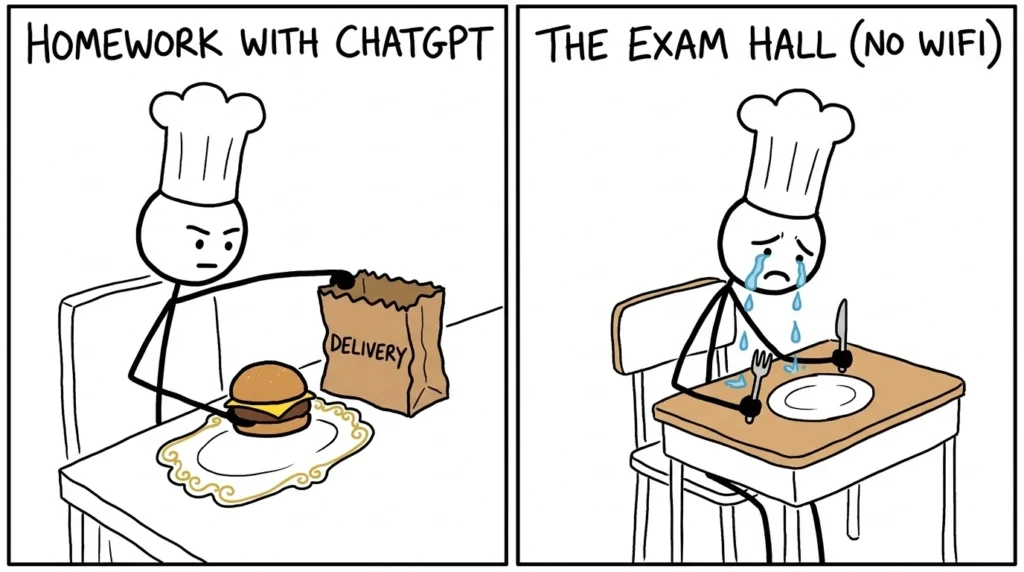
General AIs like ChatGPT and Gemini are designed to be Output Engines. Their primary biological imperative (so to speak) is to do the work for you, as quickly and smoothly as possible. When a 7th grader reads a perfectly written ChatGPT answer, their brain experiences a dangerous neurological trap called “The Illusion of Competence.”
They confuse recognizing the correct answer with actually owning the knowledge. Using ChatGPT to study for your board exams is exactly like ordering a gourmet meal on Swiggy, plating it nicely, and telling people you learned how to cook.
You got the final product, and your hunger is solved for the night, but you built absolutely zero underlying skills. When exam day arrives, and the internet is turned off, you are going to starve.
When AI Gives You an Ocean (But You Only Needed a Glass)
Beyond the psychology, there is a massive structural flaw with using general AI for Indian schooling.
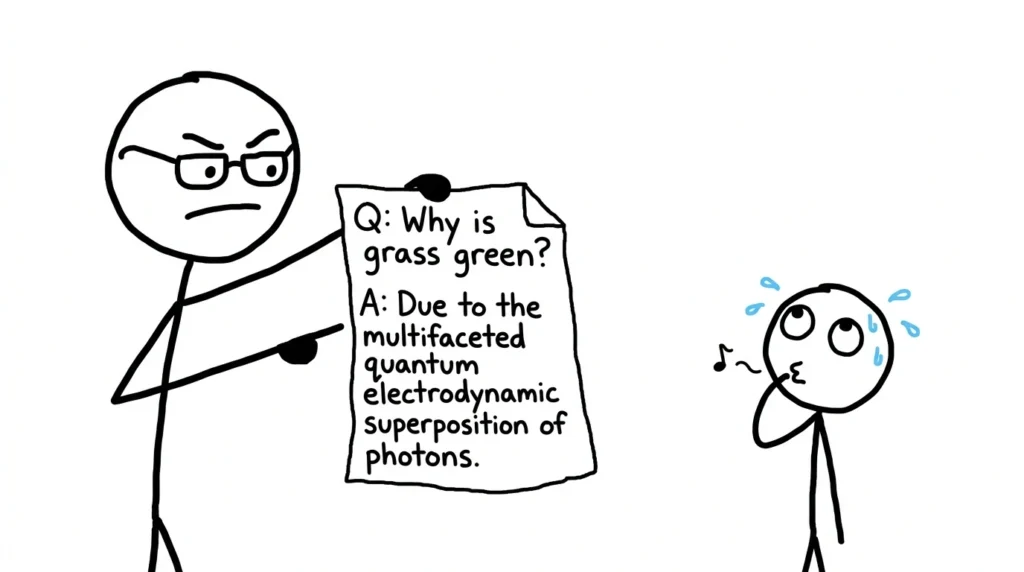
ChatGPT is trained on the entire, infinite expanse of the internet. It does not know you are in 8th grade, and if you ask it to explain the “reflection of light,” it has no idea where your syllabus ends.
It might give you an answer involving 11th-grade quantum electrodynamics or complex wave theory. It gives you an ocean when you only needed a glass of water….And let’s be honest, your school teacher is going to be highly suspicious when a 14-year-old suddenly uses the phrase “multifaceted paradigmof photon behaviour”in a Tuesday unit test.
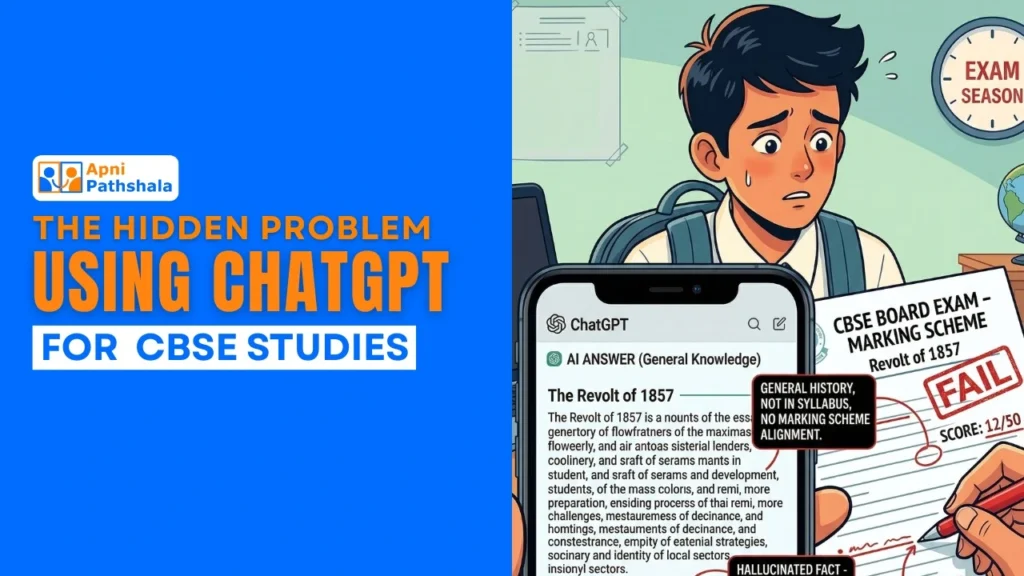
CBSE board exams do not test infinite knowledge. They test a highly specific, tightly fenced NCERT syllabus. If you write outside that boundary, or if you miss the exact keywords the examiner’s marking scheme requires, you lose marks. General AI simply doesn’t know the boundaries of your textbook.
The Virat Kohli Principle of Feedback
If Virat Kohli wants to fix a slight flaw in his cover drive, what does he do?
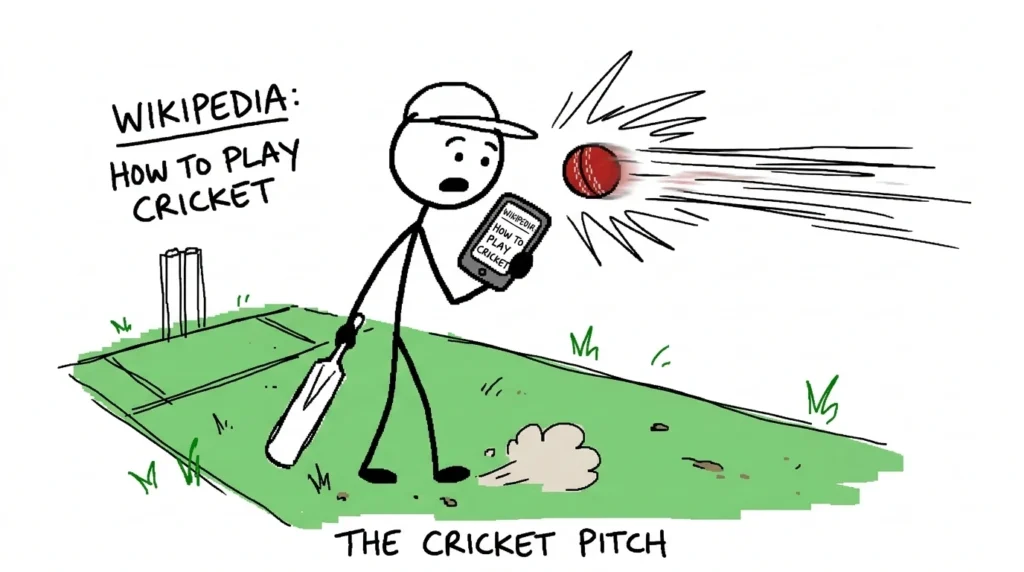
He doesn’t sit in his living room and read a beautifully written Wikipedia article about the physics of cricket. He puts on his pads, steps into the practice nets, and hires a hyper-specialized coach to throw balls at him at 140 km/h.
He takes a swing, he fails, he gets instant feedback on his footwork, and he tries again. He doesn’t need an oracle; he needs a feedback loop. Giving a Class 9 student a blank, infinite chatbox is a terrible idea for the exact same reason.
You don’t need an AI that just hands you the final essay so you can effortlessly copy it down into your notebook. You need a net session.
How Real Learning Actually Happens
But here is the most important realization: The problem is not AI itself. The problem is how students are using it. We are handing kids an answer key when they actually need a coach. This is the exact reason specialized tools like Eklavya NCERT AI were built.
Eklavya is fundamentally engineered as a Learning Engine, not an Output Engine. Instead of just giving you the final answer to copy-paste, it is designed to build the cognitive muscles in your brain through a highly structured, gamified system. Here is how it structurally outclasses general AI for CBSE students:
1. The Fenced Syllabus:
Eklavya is strictly trained on the NCERT syllabus for your exact class. It knows the boundary. If you are in Class 6, it will never confuse you with Class 9 jargon. It translates the exact concepts you need into a language you actually understand, keeping you safely within the CBSE marking scheme.
2. The Active Quiz Loop (The Anti-ChatGPT):
ChatGPT gives you an essay to stare at. Eklavya gives you a bite-sized concept, and then immediately tests you on it with an interactive quiz.
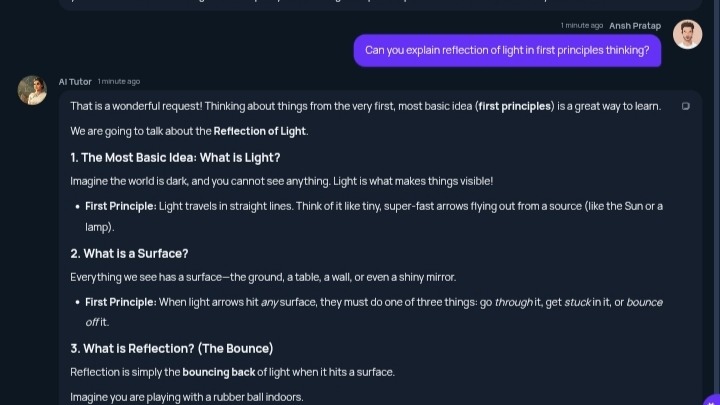
It forces you to actively recall the information, which is the only scientifically proven way to move data into long-term memory.
3. The Gamified Progression:
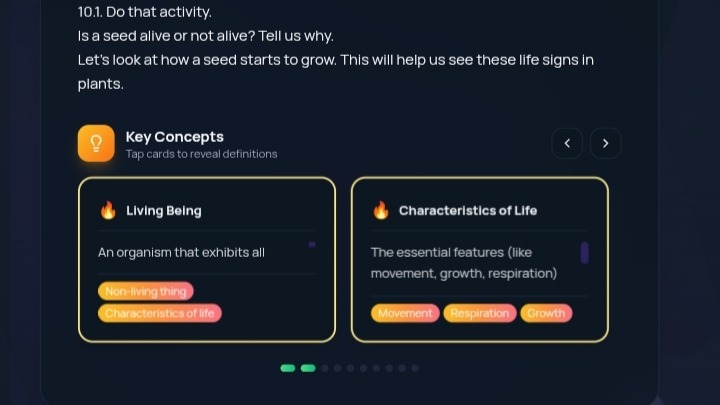
If you get a question wrong on Eklavya, it doesn’t just hand you the correct answer and move on.
It stops, acts like a friendly, patient tutor, and explains exactly why your logic was flawed. It gives you a gamified progress bar, turning the heavy burden of the syllabus into achievable, satisfying daily wins.
Why General AI Feels Powerful but Fails in Exams
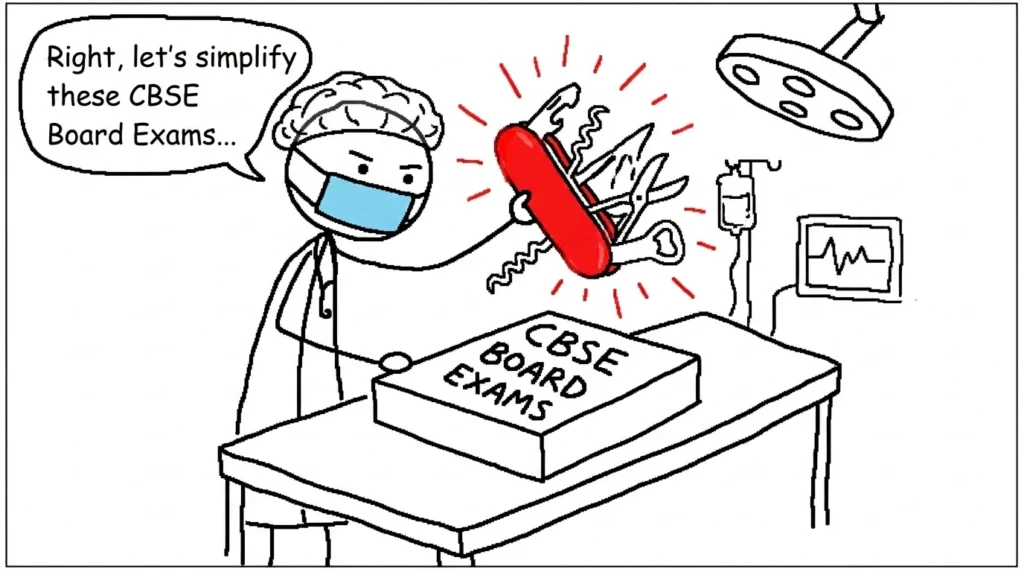
General AI is an incredible tool for the modern world. But using ChatGPT to prepare for your CBSE exams is like bringing a Swiss Army Knife to a surgical operation.
It is a very cool tool, and it has a hundred different gadgets, but it is ultimately going to make a massive mess of your syllabus.
Stop relying on the illusion of competence. ChatGPT gives you answers. Eklavya builds the brain that finds answers. Drop the generalist and get the specialist.
Conclusion
Textbooks are still important. But they were never designed to be your only learning tool.
The smartest students today combine NCERT textbooks with interactive AI learning systems that actually explain concepts, test understanding, and build real retention.
If you want to experience what that looks like, start with your first AI-guided NCERT chapter on Eklavya today.
But if you want to go even deeper into how modern learning actually works, these guides from Apni Pathshala are a great place to continue
• Before you highlight the next chapter, Read now.
• Want to learn AI faster and smarter? Read now.
These articles break down the psychology of studying, why traditional methods fail, and how modern tools can help students actually understand what they learn.
Is ChatGPT good for Class 10 board exams?
While it can explain general concepts, ChatGPT is not optimized for the CBSE marking scheme. It often provides information outside the NCERT syllabus boundary, which can lead to confusion and lost marks in board exams. A specialized AI tutor is much safer.
What is the difference between ChatGPT and an AI tutor like Eklavya?
ChatGPT is an output engine designed to give you answers instantly. Eklavya is a learning engine. It uses the exact NCERT syllabus, breaks it into bite-sized lessons, and uses active quizzes and gamified feedback to ensure you actually learn the concept, rather than just copying it.
Is it possible to learn AI effectively without expensive courses?
Yes. Today, AI can be learned through hands-on practice, open tools, and project-based learning.
Students who experiment, build small projects, and solve real problems often learn AI faster than those who rely only on lectures or theory.
Why do students highlight entire textbooks but still forget everything?
Highlighting entire textbooks often gives students a false sense of learning because it is a passive study method. Instead of improving understanding, it only marks information without helping the brain actively process it. Effective learning happens when students use active techniques like summarizing, questioning, and practicing concepts.