There is a massive, expensive lie at the centre of the modern education sector.
The lie dictates that quality education requires a ₹50-crore building. It tells us that to teach a child, we need acres of land, a massive administrative block, and a fleet of yellow buses.
Because of this lie, when NGOs, governments, or corporate foundations try to “fix” education, they start by pouring concrete.
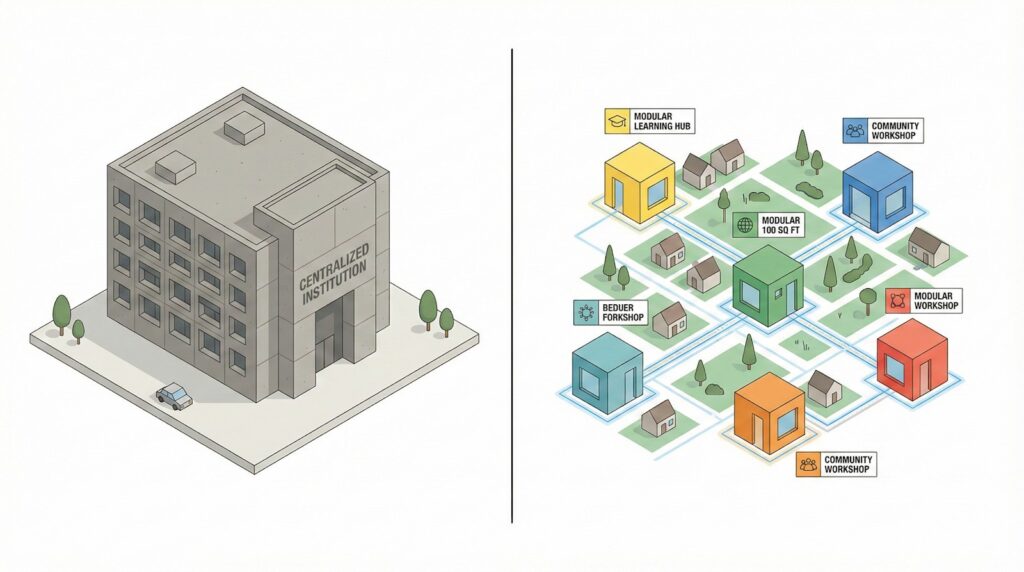
They rely heavily on massive CapEx (Capital Expenditure). They build a beautiful, giant school in a rural area.
But within five years, the funding dries up. The organization realizes they cannot afford the crushing OpEx (Operational Expenditure).
They cannot maintain the building, and they cannot retain expensive city teachers who refuse to travel to the village. The building becomes a ghost town.
If we want to sustain education in India, we must build it like software: decentralized, agile, and asset-light. We must stop relying on Financial Capital and start leveraging the most abundant, free resource available: Social Capital.
Let’s understand how the community learning centre in India, specifically the Apni Pathshala “POD” model proves that education is an execution problem, not a real estate problem.
1. Zero Real Estate (The Decentralized Model)
The highest barrier to entry in education is land.
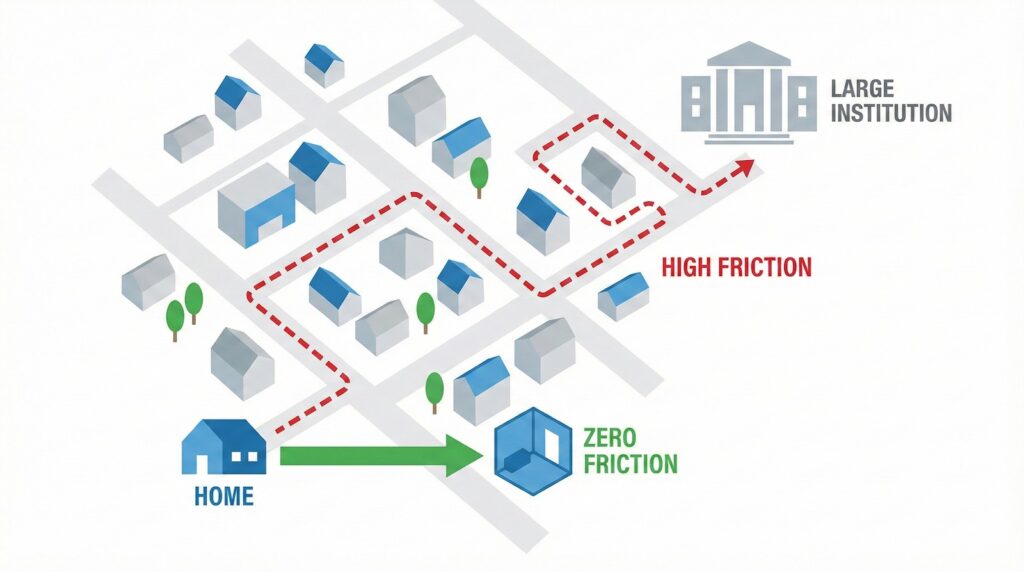
If you want to open a traditional school, 80% of your budget burns before a single student opens a book. An Apni Pathshala POD completely bypasses this friction.
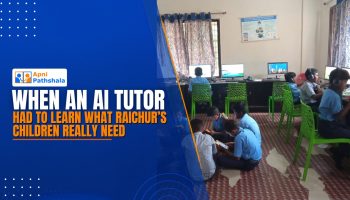
We do not buy land. We do not build campuses. Instead, a POD opens in a 100 sq. ft. room that already exists inside the community. It could be a spare room in a local resident’s house, an empty storefront, or a community hall.
By embedding the learning space directly into the neighborhood, the real estate cost drops to near zero.
More importantly, it removes the friction of distance. Parents don’t need to pay for transport. Students don’t lose two hours a day traveling. The learning centre becomes as familiar, safe, and accessible as the local grocery shop.
2. Social Capital > Financial Capital (The Local Mentor)
The second massive cost of traditional education is the “Hero Teacher.”
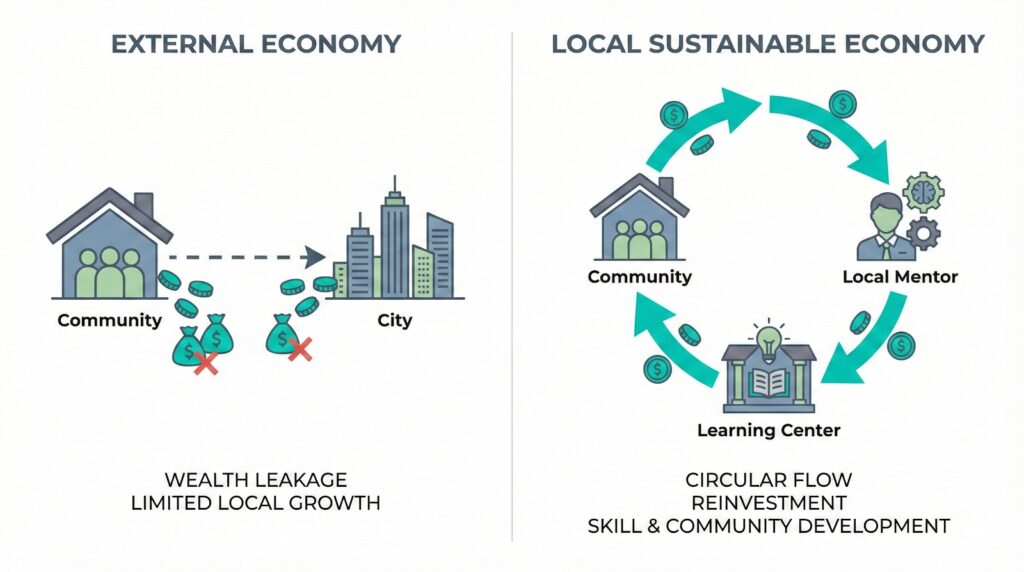
Institutions bleed money trying to hire top-tier subject experts and convince them to relocate to Tier-2 or Tier-3 areas. This is unsustainable. The moment the NGO funding stops, the teacher packs up and leaves.
A Community Learning Centre flips this model. We do not hire a Master of Physics. We partner with a local “Didi” or “Bhaiya“ , a trusted young adult from the exact same neighborhood.
Their job is not to lecture. Their job is to Facilitate.
- They ensure the centre opens on time.
- They ensure students log in.
- They provide a safe, disciplined environment.
Because they live in the community, they do not demand metropolitan corporate salaries.
They earn a respectful, sustainable local income, creating a micro-economy. The community sustains them, and in return, they sustain the centre.
3. Technology as the Great Deflator
If the local mentor isn’t teaching the syllabus, who is?
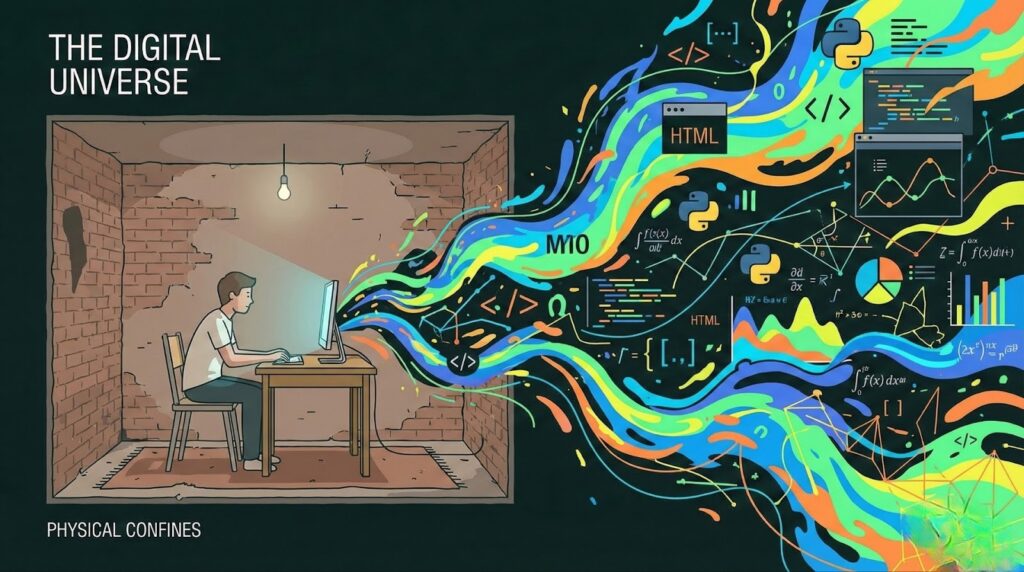
This is where technology acts as the ultimate cost-deflator. Software costs money to build once, but it is free to replicate a million times.
Instead of paying a ₹50,000 monthly salary to a lecturer, a POD uses Apna PCs. This hardware is powerful, durable, and radically affordable.
Once the student sits at the PC, the software takes over. The student accesses world-class instructors, interactive coding modules, and AI tutors entirely online.
We have successfully decoupled the Environment from the Content. The physical environment is provided cheaply by the community. The educational content is provided infinitely by the internet.
4. Automated Discipline (ApniPrerna)
Skeptics will immediately ask: “If there is no strict principal, won’t the kids just play games and waste the internet?”
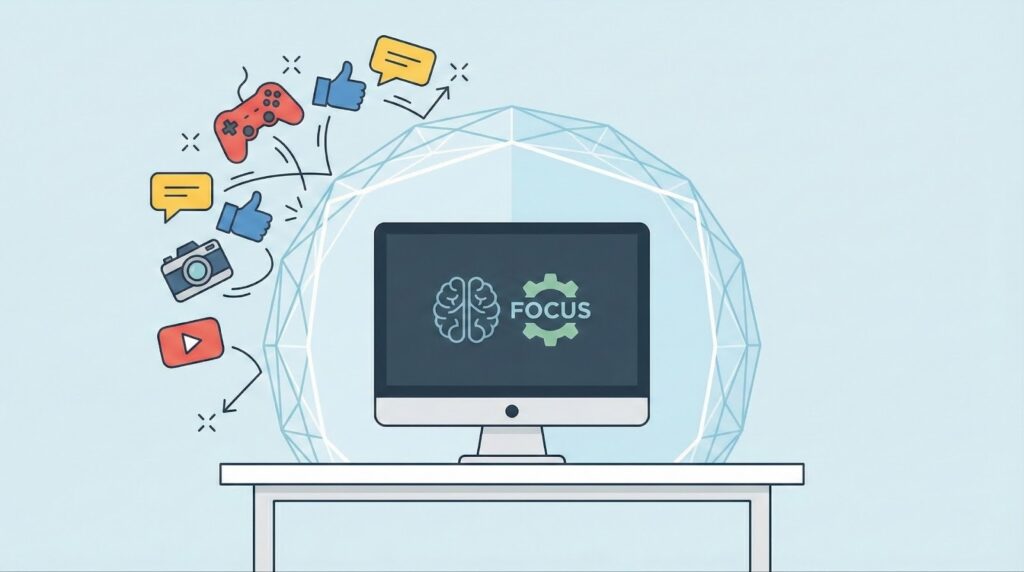
In a traditional setup, you pay humans to enforce discipline. You hire guards, wardens, and strict administrators. That is human OpEx.
In a POD, discipline is baked into the code. Every Apna PC runs on ApniPrerna (a custom digital environment designed exclusively for learning). It acts as an invisible, zero-cost digital librarian. It blocks distractions, unsafe websites, and games at the kernel level.
The mentor doesn’t have to shout to keep the room focused. The system simply doesn’t allow the noise to begin. We replaced the high operational cost of “policing” with a one-time line of code.
5. The Economics of Trust
When a massive outside organization builds a school, the community treats it like a hotel.
They use it, but they do not own it. If a window breaks or a computer crashes, they wait for “management” to come and fix it.
When a POD opens in a neighbor’s house, run by a local youth, the psychology changes entirely. It operates on Trust and Ownership.
- If a PC has a loose wire, a 15-year-old senior student fixes it.
- If a child skips a session, the mentor literally walks two doors down to ask the parents why.
- If the rent needs to be negotiated, the community handles it internally.
You cannot buy this level of accountability with a CSR grant. It cannot be mandated by a corporate office. It only exists intight-knit communities where social reputation matters.
Conclusion: The Asset-Light Future
We need to stop waiting for billionaires and massive government grants to build modern “Cathedrals” of education.
The future of education is decentralized. It is a network of thousands of small, 100 sq. ft. rooms powered by affordable PCs, guided by local youth, and driven by community trust.
This is an initiative funded by Malpani Ventures with a single obsession: Democratizing access.
Curious how this 100 Sq. Ft. model works on the ground?
👉 Explore the Apni Pathshala POD model in action.
Want to see how safety, discipline, and digital learning come together?
👉 Discover how our Community Learning Centres operate.
How do Community Learning Centers work without heavy funding?
They minimize Capital Expenditure (no land purchase, no large buildings) and reduce Operational Expenditure by using local mentors and affordable technology instead of expensive full-time teachers.
Why is it called the “third space” students need?
Because it is neither home nor school. It’s an informal, supportive environment where students can experiment, build confidence, collaborate, and develop skills that matter beyond exams.
What stages of startups does Malpani Ventures invest in?
Malpani Ventures typically invests at early stages, such as Pre-Seed and Seed, helping companies that are just starting to gain traction.
How is Apni Prerna different from normal computer software?
Unlike regular operating systems that allow unrestricted access, Apni Prerna is purpose-built for education. It prioritizes discipline, safety, and structured learning.