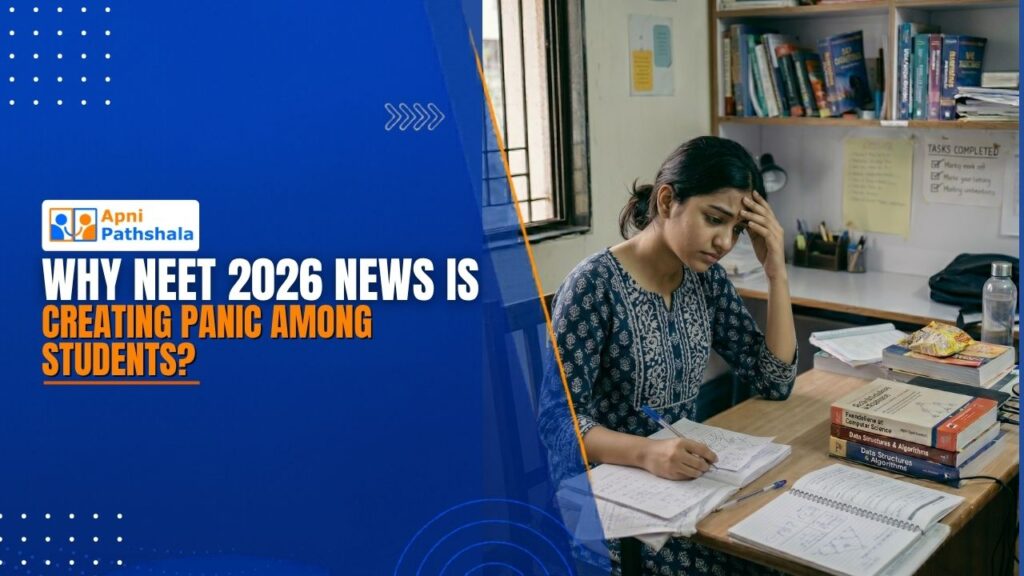
On May 3rd, at 5:20 PM, over 22 lakh students dropped their pens.
They walked out of their exam halls, took a very deep breath, and thought: It is finally over. The late nights, the stress, the fear, the endless reading of NCERT books. It was done.
But on May 12, the news broke that the NTA had failed, and the NEET 2026 cancelled re-exam date would be issued soon.
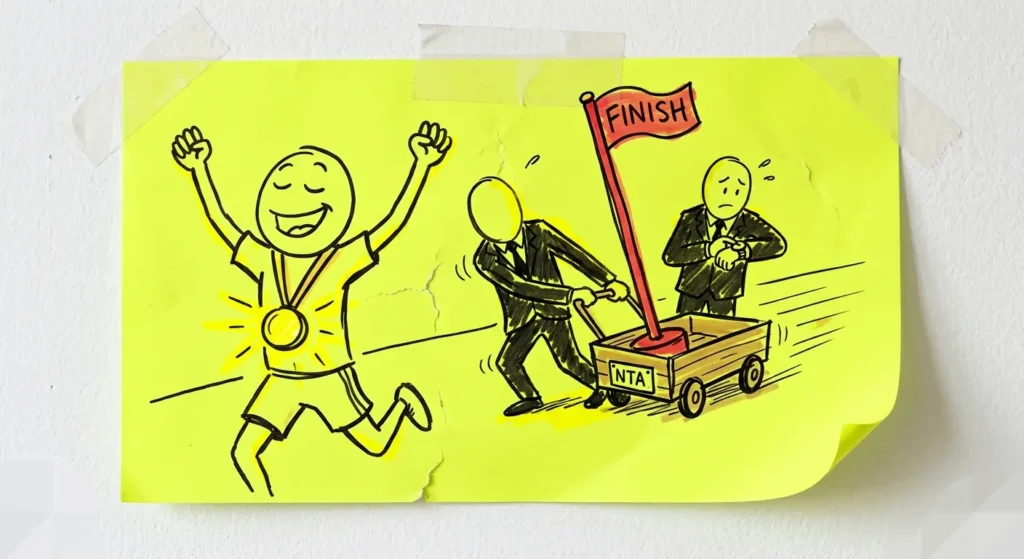
Imagine running a brutal marathon. You cross the finish line; your legs are shaking. You collapse in bed and sleep. The next morning, you get a phone call saying the track was broken and you have to run the marathon again.
This is exactly what the NTA just did to the youth of India.
Behind the loud news headlines about the CBI probe, there is a silent panic happening inside millions of homes. But behind these loud news headlines, a silent panic is unfolding in millions of homes.
Students are not just tired. They are broken.
The Truth Behind the NEET 2026 Cancelled Re-Exam Date
Let us look at the clear facts first.
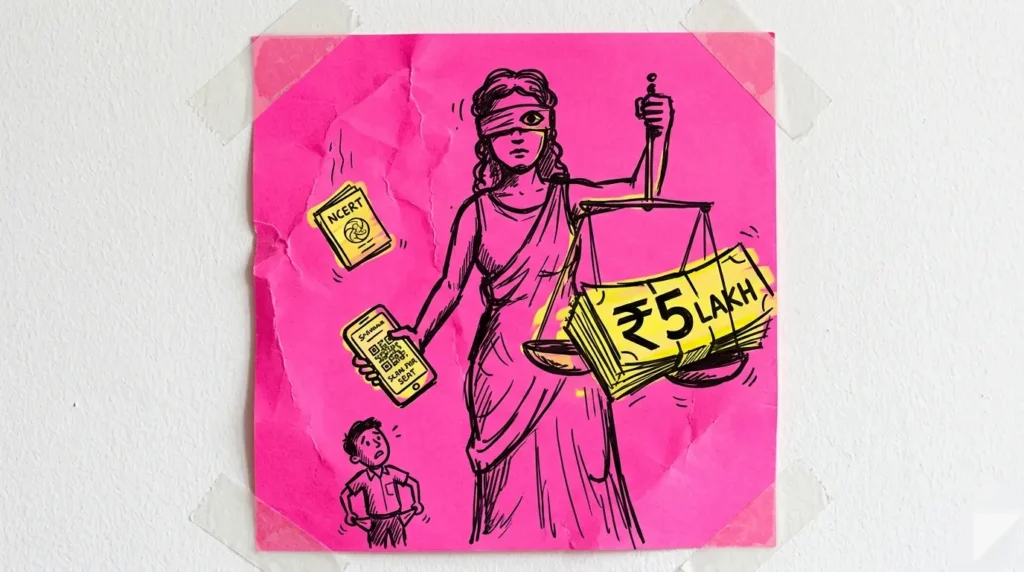
A few days after the May 3rd exam, reports began circulating about a “guess paper.” This handwritten paper was shared on WhatsApp groups and sold for lakhs of rupees in places like Sikar, Rajasthan. Some reports say it was sold for up to Rs 5 lakh just days before the exam.
When the police checked this guest’s papers, they found something shocking. Around 140 questions matched the actual NEET 2026 Chemistry and Biology sections perfectly.
The paper was fully leaked.
Because the leak was so big, the government had no choice. On May 12, they cancelled the exam completely. The CBI has now taken over the case to crack down on the criminal network.
The NTA will soon announce the NEET 2026 update with new re-exam dates.
The NTA said students will not have to pay the exam fee again. They think this solves the problem.
But it does not fix the real damage done to the students.
The Real Reason Students Are Panicking
If you are a student reading this, or a parent watching your child cry, you know the truth. The panic is not about forgetting the syllabus.
The panic is about a broken promise.
Students were told a simple comforting lie since childhood: “Work hard, do not sleep, study your books, and you will get a medical seat. Honesty wins.” But the news of rich students buying Telegram PDFs shattered that dream forever.
It proved that people with money can bypass hard work.
Right now, students are suffering from something we call The Re-Boot Burnout.
When you finish a huge exam, your brain naturally dumps the information to relax. It is a biological safety system. Asking a student to open their Biology book again ten days later feels physically sickening.
You are not lazy. Your brain is just exhausted from surviving the first test. Asking it to “re-boot” and load that heavy information again is unnatural and deeply unfair.
They did not just cancel an exam; they cancelled a million teenage summers.
Why One Offline Exam Is a Single Point of Failure?
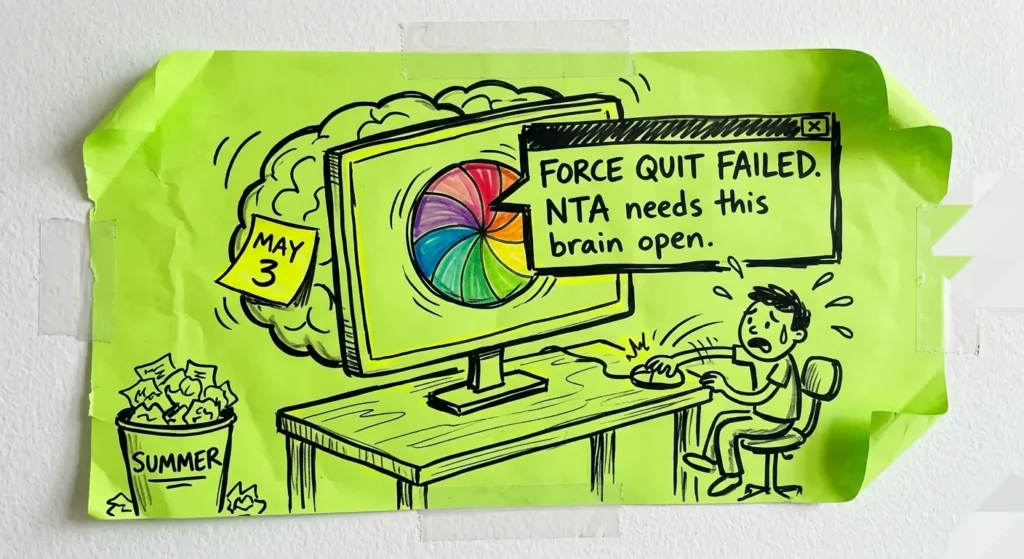
Why does this keep happening in our country? We saw leaks in AIPMT 2015. We saw massive problems in NEET 2024. And now, a total disaster in NEET 2026.
The problem is not just bad police security. The problem is the exam’s core idea itself.
We call this The Single-Point-of-Failure Exam.
Think about it like this. If a city gets all its electricity from one single, giant generator, what happens if one bad person cuts the main wire? The entire city goes dark.
That is what happened here. One leaked paper in Rajasthan ruined the lives of innocent students in Kerala, UP, and Bihar.
We use advanced AI and digital tools for everything today. Yet, we decide the future of 22 lakh future doctors based on one single, 3-hour offline paper test.
A system where a three-hour exam decides your whole life is not a test of your intelligence. It is a test of your obedience.
And the NTA just failed its own test. The system proved it cannot protect the hard work of honest children.
The Need for a New Way to Learn
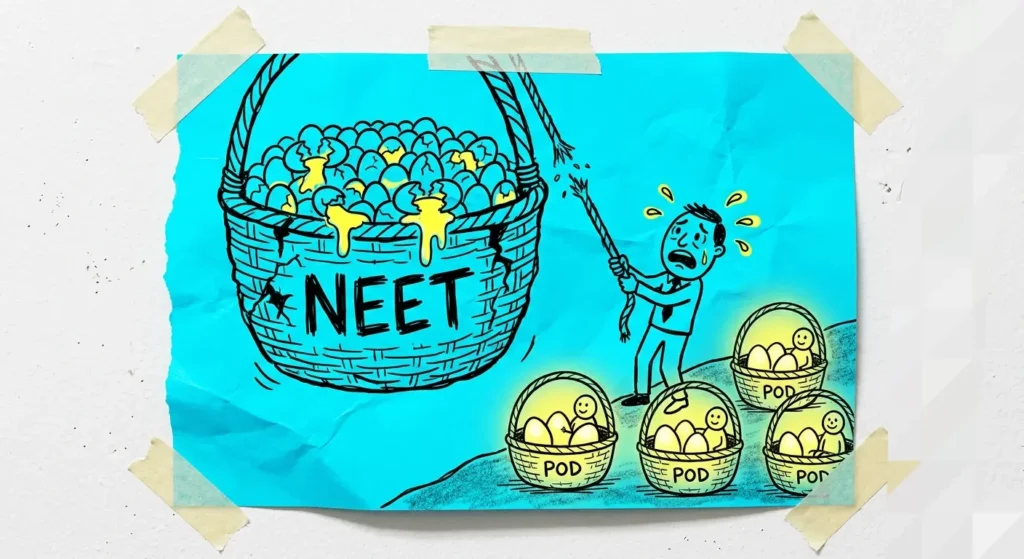
This massive failure shows us why the traditional, high-pressure offline system is outdated. We cannot place all our trust in a single final exam day.
We need continuous, safe, and digital learning. This is exactly why Apni Pathshala is building community PODs across India.
In a POD (Point of Digital Learning), students do not cram for one single day. They use an Apna PC. They learn every single day using our smart tool called Eklavya AI.
Eklavya AI does not judge a student based on a single bad day. It tracks their progress daily. It finds their weak topics and helps them understand the concept, chapter by chapter.
If you use a digital system that tests you continuously, there is no pressure of a single “leak” destroying your life. You build your skills over time.
We also use Apni Prerna to keep the computer environment safe from bad websites, so learning happens peacefully.
We need to stop worshipping the offline pen-and-paper exam. We need to move towards digital learning where a student’s hard work is protected every single day.
A Survival Guide for the Next 40 Days
While waiting for the NEET 2026 cancelled re-exam date, you must protect your mental health.
Right now, students are stuck in an Exam Hangover. The rush of May 3rd is gone, leaving only anger, headache, and confusion.
The NTA re-exam dates are coming. You have roughly 40 to 60 days to prepare again. How do you survive this without losing your mind?
- Do not fight the anger: It is okay to be furious. Take two or three days completely off. Do not touch your books. Watch a movie. Sleep. Let your brain rest.
- Treat May 3rd as a Mock Test: You already know the NEET exam latest news. You cannot change the past. Instead of reading the whole thick book again, just look at the mistakes you made on May 3rd. Fix those specific weak spots using Eklavya AI or Google.
- Accept the reality: The students who cheated will be removed. This re-exam is your chance to fight on clean ground. Focus on daily practice, not on the news.
Conclusion
To the students: You are not failing because you cannot study. You are struggling because the system failed to protect your hard work.
To the parents reading this: Your child is not a machine. Do not tell them to simply “study harder.” Tell them you are proud of the work they have already done.
Sit with them. Make them a cup of tea. Just listen to their frustration. We cannot control the NTA or the news. But we can control how we react.
Take a deep breath, pick up the pen one more time, and show them that your hard work cannot be stolen.
Frequently Asked Questions
1. What is the difference between digital literacy and computer science?
Ans: Computer science teaches how machines are built and programmed. Digital literacy teaches how to survive, learn, and communicate safely in the real world using those machines. This is exactly why paper exams fail to capture true capability.
2. Why is early digital safety crucial for children?
Ans: Because the internet does not filter itself for minors. Without safety boundaries, a child is one click away from predatory content or financial fraud. Unrestricted access turns the device into a digital babysitter instead of a tool.
3. How can rural students access quality digital education?
Ans: Community-led models bridge the physical gap. By providing a structured room with mentors and offline-capable software, rural children get hands-on access without needing personal laptops.