Every Children’s Day, adults ask children what they want.
What do you want to eat?
What gift do you want?
Where do you want to go?
This year, we wanted to ask a different question:
What do you want to become?
The answers children give to that question can tell us much more than the name of a future profession.
They tell us what they notice. What excites them. What they believe is possible. And sometimes, they reveal a dream that has only just started taking shape.
At Apni Pathshala PODs, we see this happen in small ways every day. A child who first comes to learn basic computer skills may eventually start exploring design. Another may become interested in programming. Someone else may discover that they enjoy creating things, explaining concepts or helping another student.
For Children’s Day on 14 November, we looked at some of these journeys and asked what they tell us about the dreams children are building.
One Question, Many Dreams
No single kind of dream exists.
For some students, technology becomes a doorway into creativity. For others, it becomes a way to build practical skills for the future. Some discover an interest in programming, while others become more confident with tools they had never used before.
During Apni Pathshala’s #ChaloBanaye campaign, students took part in a specific activity called “Create Your Future”. They were asked to imagine their future careers and use AI to turn those ideas into visual creations.
It was a simple activity, but it carried an important message:
Children need opportunities to imagine before they can begin building.
Here are some of the kinds of journeys we have seen.
8 Student Journeys Behind the Dreams
1. From Curiosity to Coding
For some students, the computer starts as something unfamiliar.
Then they begin typing.
Then they start understanding how programs work.
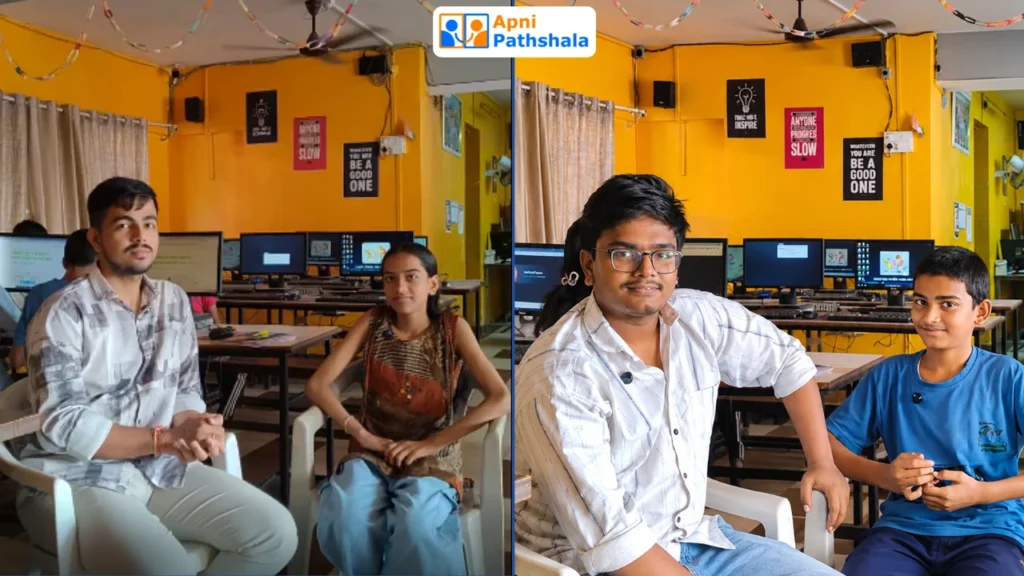
One documented student learning journey at an Apni Pathshala POD involved learning Python fundamentals such as variables, data types, input and output, and simple programmes.
The real change wasn’t simply learning Python.
It was reaching the point where a student could look at a computer and think:
“I can make something with this.”
That shift can change how a child sees technology: from something they consume to something they can create.
2. From Presentations to Excel
Another student journey shows a different kind of progress.
After completing presentation practice, the student moved on to Excel.
It may sound like a small step, but learning often works exactly this way.
One skill makes the next skill less intimidating.
A student becomes comfortable creating a presentation, then starts exploring spreadsheets, organising information and working with a different kind of digital tool.
The dream does not always arrive first.
Sometimes confidence creates the dream.
3. Discovering Design
At another POD, a Class 10 learner progressed towards learning Photoshop.
There was no dramatic overnight transformation.
It started with becoming comfortable around computers, practising regularly and then moving towards a more advanced creative tool.
For a young learner, that progression can open a completely different possibility: maybe technology is not only for studying. Maybe it can also become a creative skill.
That is how a vague interest can slowly become a direction.
4. Learning to Create With AI
The recent #ChaloBanaye campaign gave students another way to explore their imagination.
Students created AI-generated visuals, imagined classrooms from the 1990s, visualised their ideal POD and, most importantly, imagined their future careers.
The campaign recorded 1,041 combined student attendance entries across Days 2–5, along with participation from multiple PODs.
The number matters because it shows participation.
But the more interesting part was what students were being encouraged to do: take an idea in their head and turn it into something they could see.
That is a different kind of digital learning.
5. Learning to Learn Independently
Some students do not need someone to give them every next step.
They need access, guidance and the confidence to try.
One documented student example involved using ChatGPT to learn how to create an animation video step by step.
The important part was not the AI tool itself.
It was the behaviour behind it:
“I want to make something. I don’t know how yet. Let me learn how.”
That is the kind of self-learning technology can support when it is used with purpose.
6. Turning Digital Skills Into Employment
For some learners, the dream eventually becomes much more practical: earning independently.
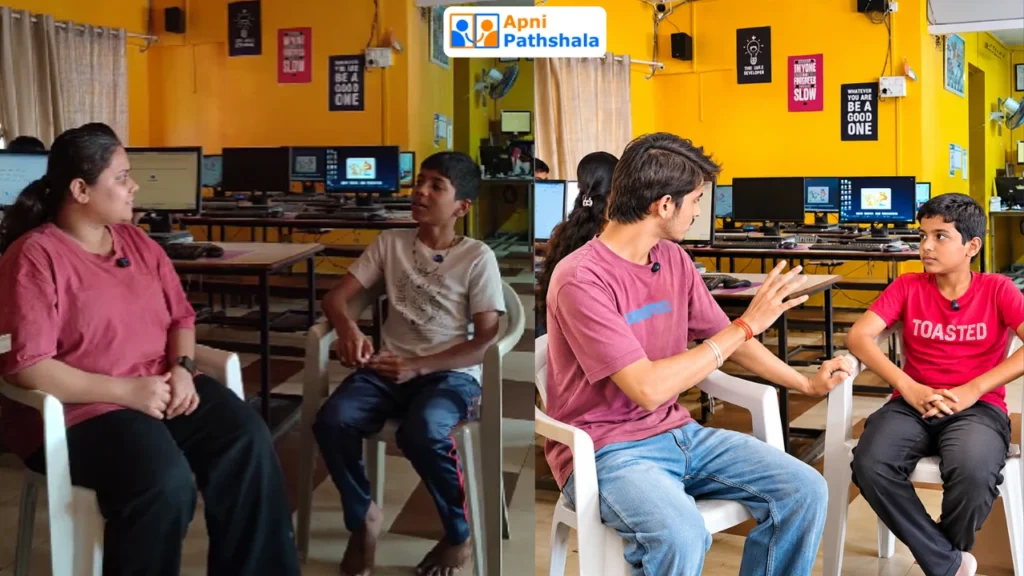
Apni Pathshala’s student stories include learners who moved from computer education into real employment opportunities. One learner progressed through DCA, Tally and CCC training before becoming a clerk at Bank of India.
Another learner developed MS Office skills and later worked as ground staff at Nedumbassery Airport while continuing to learn Advanced Excel.
These journeys remind us that a child’s dream does not have to remain an abstract ambition.
With the right opportunities, skills can eventually connect to real work.
7. Dreaming Beyond the Classroom
One of the strongest examples comes from a student who was selected for the Indian Army.
A classroom cannot decide what a child will become.
But it can give that child confidence, discipline, skills and exposure that help them move towards their goal.
That is why education should not only ask whether a student completed a chapter.
It should also ask:
What did this child discover about themselves while learning it?
8. Becoming Someone Who Helps Others
Another kind of progress is easy to miss.
A student learns something and then starts helping another student.
The learner becomes a guide.
That is how leadership begins: often long before a child ever calls themselves a leader.
At Apni Pathshala, this idea is part of the journey from learner to mentor, where students can gradually build leadership skills for students through peer learning, projects and responsibility.
The dream may not have a job title yet.
It may simply be:
“I want to be able to help.”
And that is a meaningful dream too.
What These Dreams Need From Us
Children do not need adults to decide their future for them.
They need adults to give them enough opportunities to discover it.
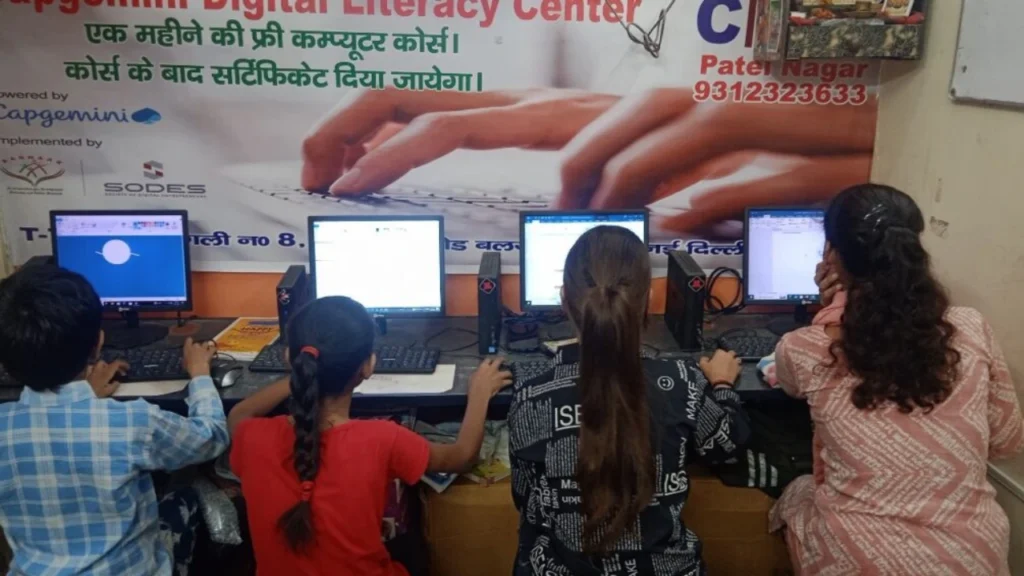
A child interested in computers needs access to a computer.
A child interested in design needs opportunities to create.
A child curious about coding needs somewhere to practise.
A child who wants to become independent needs opportunities to make decisions and solve problems.
And a child who has no idea what they want to become needs something equally important:
time to explore.
That is why a learning space matters.
An apni pathshala pod is not only about completing lessons. It can give children a place to practise, experiment, ask questions and discover interests they may not have encountered otherwise.
Sometimes the biggest change is not visible in a certificate.
It is visible when a child starts saying:
“I want to try this.”
“I think I can make this.”
“I want to learn that.”
“I can help someone else.”
Those are small sentences.
But they are often the beginning of much bigger journeys.
Children’s Day Is a Chance to Listen
Children’s Day is usually associated with celebrations, activities and school events.
But perhaps the most meaningful thing we can do on 14 November is much simpler.
Ask a child what they want to become, and actually listen to the answer.
Do not immediately tell them whether the dream is realistic.
Do not tell them which career is better.
Ask what made them interested in it.
Ask what they would like to learn.
Ask what they would like to try.
A child’s first dream doesn’t have to be their final career.
It only needs to give them a direction to explore.
And sometimes, the best thing education can do is make that exploration possible.
At Apni Pathshala, that is what we want learning to become: not just a place where children receive information, but a place where they discover what they might do with it.
Every child deserves that chance.
Help more children chase their dreams: partner with Apni Pathshala.
Frequently Asked Questions
1. Why is Children’s Day celebrated on 14 November in India?
Ans. Children’s Day is observed in India on 14 November, the birth anniversary of Jawaharlal Nehru. The day focuses attention on children’s education, well-being, and development.
2. How can children discover what they want to become?
Ans. Exposure matters. Giving children opportunities to explore computers, creativity, projects, communication, and different skills can help them gradually discover their interests.
3. How can a POD help children explore their future?
Ans. A POD gives children access to digital learning, computers, projects and guided practice. Parents can also understand the role of a POD through apni pathshala pod.
4. How can children build confidence while learning?
Ans. Children build confidence by practising, creating, solving problems and helping others. Activities that encourage peer learning can also help develop leadership skills for students.