A student can score well in an exam and still feel unsure about what to do next.
They may know the answers from a textbook, but struggle to make a presentation. They may understand a computer lesson, but not know how to use it to solve a real problem. They may have good marks, but hesitate when they have to speak, work in a team or make a decision independently.
This is where skill development becomes important.
Skill development is not only about preparing someone for a job. It is about helping a person become more capable: communicating, solving problems, using technology, working with others, learning independently, and eventually applying knowledge in real situations.
For students, parents, and teachers, the idea is simple: education gives you knowledge, while skills help you use it.
What Is Skill Development?
Skill development is the process of learning, practising and improving abilities that help a person perform a task effectively in real life, education or work.
A skill does not become useful simply because someone has read about it. It develops through practice.
For example, knowing what a presentation is does not mean a student can confidently create and present one. Understanding the basics of coding does not automatically mean a student can build a working project. Reading about communication does not make someone a good communicator.
Skills grow when knowledge is followed by practice.
This is why students should not treat skill development as something to start only after graduation. It can begin much earlier, through classroom activities, projects, computer practice, communication exercises, teamwork and everyday responsibilities.
Why Skill Development Matters for Students
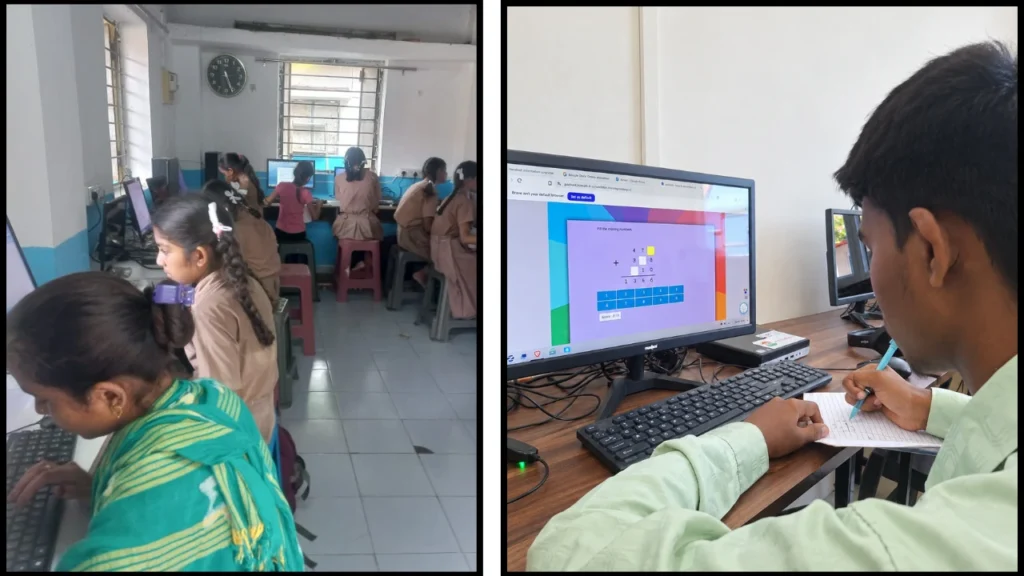
School education gives students a foundation, but the world outside school often asks them to do more than remember information.
A student may be expected to:
- communicate an idea clearly
- use a computer confidently
- solve an unfamiliar problem
- work with other people
- manage time
- search for reliable information
- learn something without constant supervision
- adapt when technology or circumstances change
These abilities do not develop overnight.
For students, early skill development can also make learning more practical. Instead of asking only, “What will come in the exam?”, students begin asking, “Where can I use what I am learning?”
Parents also have an important role here. Skill development does not always require expensive coaching or another certificate. A child can develop useful skills by creating a presentation, helping with a household task, learning a new digital tool, explaining something to a younger sibling or completing a small project.
Teachers can make the same shift in classrooms by giving students opportunities to practise, create, and solve problems instead of only completing written exercises.
Types of Skills
Skill development is a broad category. A student does not need to choose between digital skills, soft skills or vocational skills. A strong learning journey can include all of them.
| Type of Skill | What It Includes | Simple Example |
| Digital skills | Computers, internet, software and digital tools | Creating a document or presentation |
| Soft skills | Communication, teamwork and confidence | Presenting a project to classmates |
| Technical and vocational skills | Practical skills related to a profession or trade | Electrical work, design or machine operation |
| Life skills | Everyday decision-making and personal abilities | Managing time or solving a daily problem |
Digital Skills
Digital skills are becoming basic skills rather than optional extras.
Students may need to know how to use a computer, create documents, search for information, organise files, use online learning platforms and understand basic digital safety.
As students grow, these skills can move towards areas such as coding, design, data, digital communication and other technology-related fields.
But digital skill development should not mean simply learning where buttons are located.
The goal is to help students use technology to create, solve and learn.
Soft Skills
Soft skills are the abilities that affect how people communicate, work and respond to situations.
Common examples include communication, teamwork, problem-solving, confidence, adaptability, and time management.
A student who can explain an idea clearly may perform better in a group project. A student who knows how to listen and divide responsibilities can contribute more effectively to a team.
If you want to explore this area in more detail, read about soft skills development and the practical skills students often do not learn through textbooks alone.
Technical and Vocational Skills
Technical and vocational skills are more closely connected to specific tasks, occupations or industries.
They can include areas such as electrical work, healthcare support, automotive work, construction, manufacturing, beauty and wellness, agriculture, digital technology and many other fields.
Vocational skill development matters because not every successful career follows the same academic route.
A student may prefer learning by doing rather than learning mainly through theory. That does not make the path less valuable.
The key question is whether the learner is developing a skill they can apply confidently and responsibly.
Life Skills
Life skills are often overlooked because they do not always appear as a separate subject.
Managing time, making decisions, handling money, communicating with others, staying organised, solving everyday problems and responding calmly to challenges are all useful skills.
These abilities matter whether a student eventually becomes a teacher, engineer, designer, entrepreneur, technician or anything else.
Skill Development in India: Government Support
The government supports skill development in India through several initiatives and institutions.
The Ministry of Skill Development and Entrepreneurship (MSDE) coordinates skill development efforts, builds vocational and technical training frameworks, and supports the development of skills aligned with employment and industry needs.
One major programme is the Pradhan Mantri Kaushal Vikas Yojana (PMKVY). The Government describes PMKVY as a flagship, outcome-based skill training scheme intended to help Indian youth take up skill training, certification, and improve employability.
PMKVY 4.0 also places emphasis on areas such as reskilling and upskilling, digital and blended learning, industry-linked courses and newer areas including AI/ML, Web 3.0, AR/VR and other emerging fields.
Students and families should always check the latest eligibility, course availability and application information on official government portals before enrolling.
For a broader list of government-supported learning opportunities, you can also explore government free online courses with certificates.
Government skill programmes are only one part of the larger skill-development ecosystem. Students can also develop skills through school projects, apprenticeships, online learning, community programmes, internships and self-learning.
How Students Can Start Building Skills for Free
Skill development doesn’t have to start with a paid course.
A student can start with one skill and one small project.
Step 1: Choose one useful skill
Do not try to learn ten things at once.
Choose something that connects with your interest or future goal.
For example:
- interested in computers → learn basic digital tools
- interested in design → learn simple graphic design
- interested in communication → practise speaking and writing
- interested in business → learn basic budgeting and presentation
- interested in technology → start with coding or problem-solving
Step 2: Learn the basics
Use free educational resources, government platforms, tutorials or school resources.
The aim at this stage is understanding, not collecting certificates.
Step 3: Practise by doing
This is where many students stop.
If you learn presentation skills, make a presentation.
If you learn coding, build something small.
If you learn design, create a poster.
If you learn communication, record yourself explaining a topic.
A skill becomes stronger when the learner has something to show.
Step 4: Get feedback
Ask a teacher, parent, mentor or friend to review your work.
What was good?
What was confusing?
What could be improved?
Feedback turns practice into progress.
Step 5: Build consistency
You do not need three hours every day.
Even 20–30 minutes of focused practice can become meaningful when repeated regularly.
Students who struggle to stay consistent can also learn from a practical guide on how to complete online course, especially when self-learning becomes difficult.
Skills vs Degrees: Do You Need Both?
This should not be treated as a competition.
A degree and a skill serve different purposes.
A degree can provide structured academic knowledge, subject depth and a recognised qualification. Skills help a person apply knowledge and perform tasks.
For many careers, both matter.
Imagine two students studying the same subject. Both understand the theory. One has also built projects, practised communication and learned how to use relevant tools.
The second student may have more evidence that they can apply what they have learned.
At the same time, skills should not be used as an argument against education.
Students should not think, “I only need skills, so I do not need to study.”
The stronger approach is:
Learn → Practise → Apply → Improve.
That cycle can continue alongside formal education.
Students who want to explore practical alternatives to traditional computer institutes can also look at free computer courses and compare what they actually teach with the skills they want to build.
A Simple Skill Development Starter Path
For a student who does not know where to begin, this four-stage path can help:
Stage 1 — Digital basics
Learn computer fundamentals, typing, documents, presentations, internet use and digital safety.
Stage 2 — Communication and soft skills
Practise speaking, writing, teamwork, confidence and problem-solving.
Stage 3 — One practical skill
Choose one area such as coding, design, video editing, data, entrepreneurship or a vocational skill.
Stage 4 — Build something
Create a project that demonstrates what you learned.
This is also how Apni Pathshala approaches skill development through its POD model.
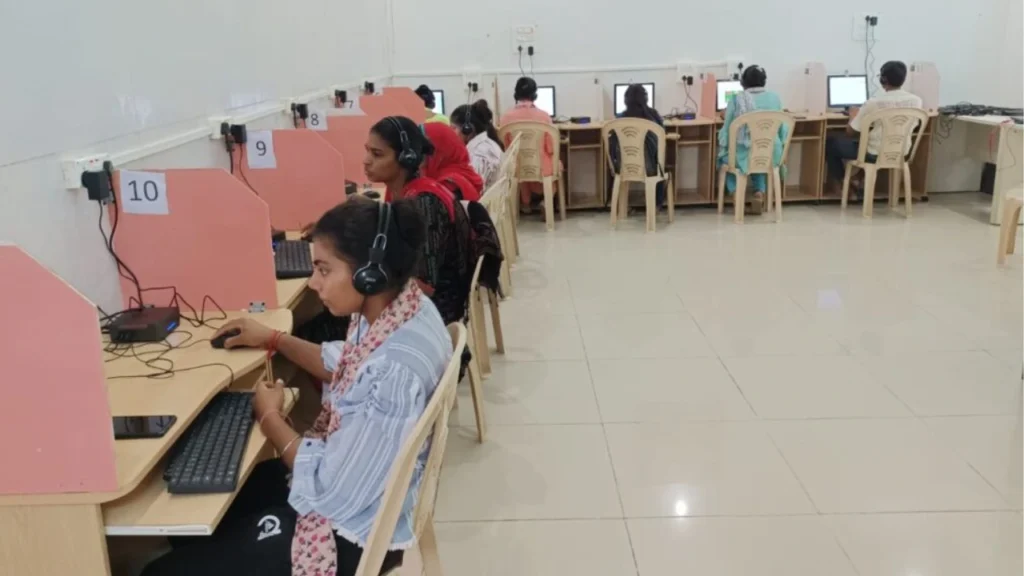
Students can move from digital basics towards more advanced digital skills while developing communication and other soft skills alongside them. The advantage of learning in a POD is that students have access to a structured environment, computers, guidance and opportunities to practise instead of only watching lessons.
The goal is not to make every student follow the same path.
It is to help each student gradually become more capable and more independent.
Build Skills That Stay With You
Skill development is not about collecting as many certificates as possible.
It is about becoming better at doing something.
For a student, that might begin with learning how to use a computer properly. Then it could become communication, design, coding, problem-solving or a vocational skill. Over time, these abilities start connecting with each other.
That is when learning becomes useful beyond the classroom.
Parents can encourage it.
Teachers can create space for it.
And students have to practise it.
At Apni Pathshala, the aim is to make that process accessible through a structured POD learning environment where students can build digital skills, develop soft skills and gradually move towards more advanced abilities.
Start building digital and soft skills at an Apni Pathshala POD near you.
Frequently Asked Questions
1. What is skill development in simple words?
Ans. Skill development means learning and practising an ability so you can use it effectively in real life, education or work. It can include digital, communication, technical and life skills.
2. What are the types of skill development?
Ans. The main types are digital skills, soft skills, technical and vocational skills, and life skills. Students can build these skills together as they grow.
3. Why is skill development important for students?
Ans. Skill development helps students apply what they learn, improve confidence and become better at communication, problem-solving and practical work. Students can also explore soft skills development to build these abilities further.
4. How can I develop my skills for free?
Ans. Students can start with free learning resources, practise through small projects and use government learning programmes. They can also explore government free online courses with certificates and free computer courses.