A student can attend school every day, sit in every class and complete their homework, yet still feel like they are not really part of the learning community.
They may have classmates but no one they feel comfortable asking for help. They may understand the lesson but hesitate to raise their hand.
Being present at school and feeling that you belong there are not always the same thing.
And that difference matters because learning is not only about lessons. It is also about confidence, relationships and the feeling that your participation matters.
A Classroom Has Different Kinds of Learners
Every classroom has students who respond differently to the same lesson.
One understands quickly. Another needs more practice. Someone learns better by discussing an idea, while another prefers to work quietly before sharing.
That is normal.
The important question is whether students have enough opportunities to participate in ways that work for them.
Research involving 43,686 students across 14 countries found that students’ sense of belonging is connected with their relationships with peers and adults and their wider school environment.
So instead of asking only:
“Is this student attending?”
we should also ask:
“Does this student feel comfortable being part of the learning?”
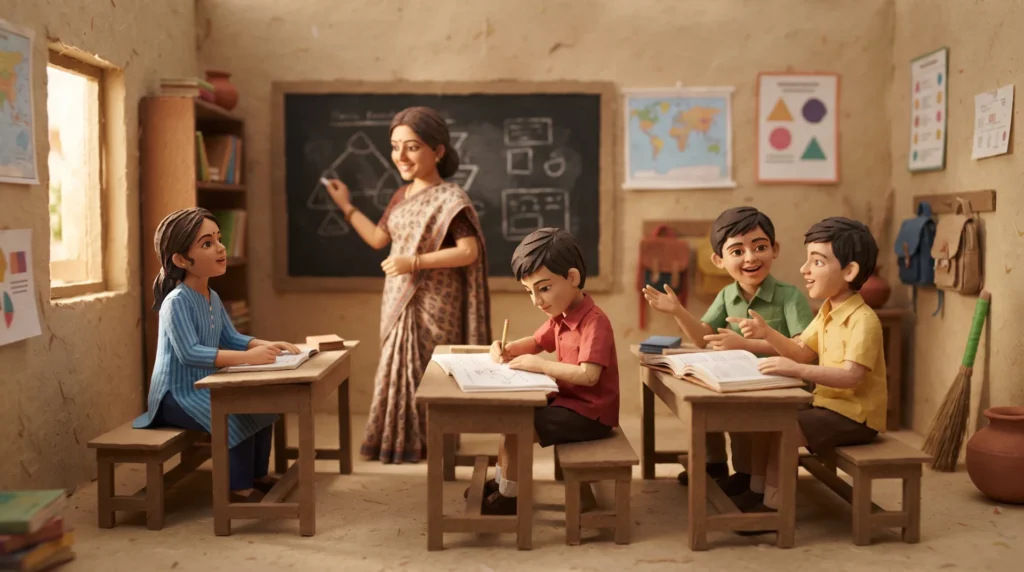
Sometimes One Small Interaction Matters
It doesn’t always take a major programme to change a student’s experience.
Sometimes it is a teacher remembering their name.
A classmate explaining something without making them feel embarrassed.
A mentor asking what they think.
Or simply someone saying, “Try it again.”
These moments may seem small, but they can make participation feel safer.
A 2026 study also explored how friendships, social support, staff-student relationships and school belonging connect with student wellbeing.
Peer Learning Gives Students a Chance to Contribute
Learning from another student feels different.
A learner may hesitate to tell a teacher, “I still don’t understand.” But they may ask a friend without hesitation.
One student explains.
Another tries.
They figure it out together.
That is where peer learning becomes more than an academic activity.
A student who receives help today may be the one helping someone else tomorrow.
Through Learn From Peers, Apni Pathshala encourages students to learn together, share knowledge and become active contributors to their learning community.
The student is no longer only receiving knowledge.
They discover that they can give something back too.
A Quiet Student Is Not Always an Uninterested Student
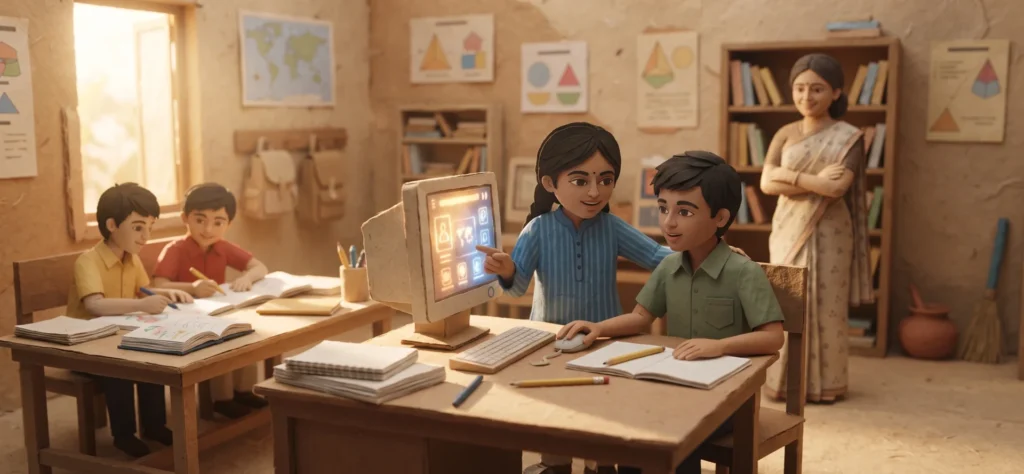
When a student stops raising their hand or participating, it is easy to assume they are not interested.
But sometimes the reason is much simpler.
They may be afraid of being wrong.
They may not feel comfortable speaking in front of everyone.
Or they may not have found a way of participating that works for them.
A good learning environment creates more than one way to participate.
Students can speak, write, build, explain, demonstrate, collaborate or take time before sharing their thoughts.
Participation does not have to look the same for everyone.
This Is Where Community Learning Can Help
School remains the foundation of a student’s education.
But not every learning need fits inside a school timetable.
Students may need additional practice, a place to explore an interest, or simply an environment where learning feels more collaborative.
This is where community learning can complement formal education.
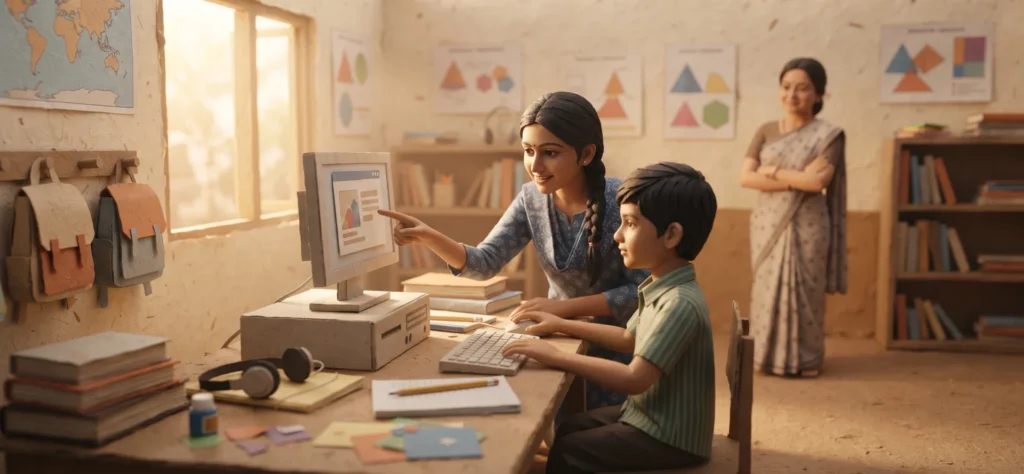
Apni Pathshala’s Learning PODs create community-based spaces where students can learn digital skills, practise independently, work with peers and explore their interests.
A POD is not a replacement for school.
It is another place where learning can continue.
Students Can Become Part of Someone Else’s Learning Journey
One of the most valuable things about a learning community is that students can move between different roles.
Today, they may need help.
Tomorrow, they may explain something to another learner.
That experience can build confidence in a way that a test cannot always measure.
The student begins to think:
“I know something that can help someone else.”
That is a powerful change.
It builds not only academic understanding but also communication, confidence and a sense of responsibility.
Education Should Make Students Feel Seen
A school can have good teachers, a strong curriculum and useful resources, yet some students may still feel invisible.
That does not mean the school is failing.
It means there is another part of education worth paying attention to:
connection.
Students need to feel that their questions matter, their ideas are welcome and there is someone they can turn to when learning becomes difficult.
That is why student belonging should not be treated as something separate from education.
It is part of the learning environment itself.
Start With One Student
If you are a student, think about your own learning environment.
Do you have someone you can ask when you are stuck?
Do you have a place where you can practise something you enjoy?
Do you have opportunities to help another learner?
If you want to find out whether an Apni Pathshala Learning POD is available near you, explore the POD network.
And if you are a parent, teacher, NGO or community member who wants to create a learning space for students, learn about starting a POD.
You can also read Why Community Learning Centres Matter More Than Ever to understand why the environment around a learner can be just as important as the lesson itself.
Because sometimes, better learning starts with something very simple: giving a student a place where they feel comfortable enough to participate, ask, learn and belong.
Frequently Asked Questions
1. Why is school belonging important for students?
Ans. A strong sense of belonging can support participation, relationships and wellbeing. Research on school belonging found that relationships with peers and adults are closely connected with students’ sense of belonging.
2. Can peer learning help students become more confident?
Ans. Yes. Peer learning allows students to explain ideas, collaborate and contribute to others’ learning. Learn From Peers is an example of this approach.
3. What can schools do to improve student participation?
Ans. Schools can provide different ways for students to participate, encourage collaboration, listen to student ideas and create an environment where asking questions feels comfortable.
4. How can community learning support students?
Ans. Community learning spaces can give students additional opportunities to practise, collaborate and explore their interests.