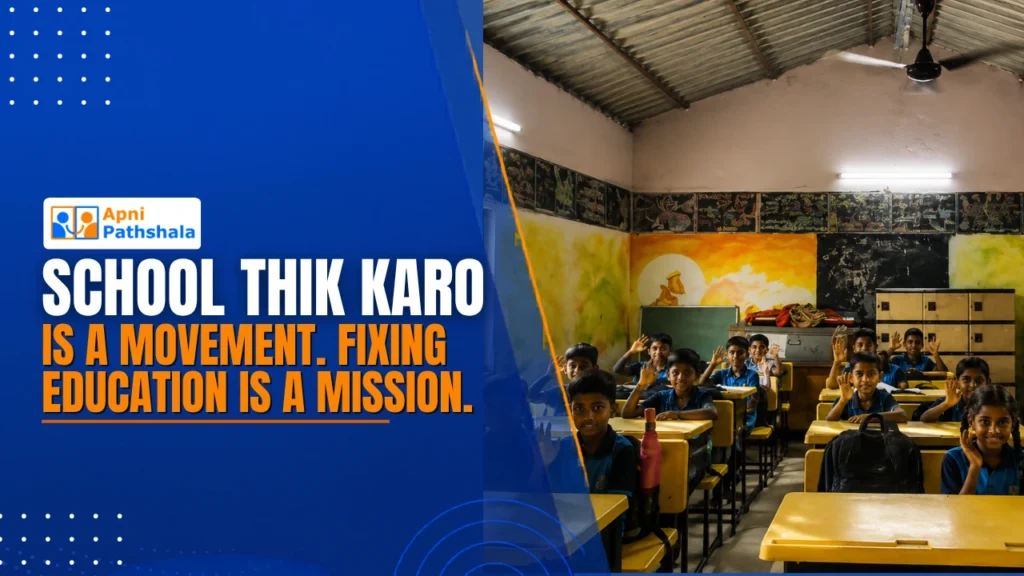
On August 15, 2026, CJP founder Abhijeet Dipke launched School Thik Karo from Santuk Pimpri, Hingoli.
The idea was simple: visit government schools, document conditions, and ask the responsible authorities to fix them.
The first School Thik Karo audit highlighted issues related to drinking water, benches, washrooms, broken windows, and basic facilities.
These are conditions every child should expect.
School Thik Karo matters because it makes us notice problems people may have stopped questioning.
The Cause Matters More Than the Political Label
Apni Pathshala supports this direction because it is about education.
Today it is School Thik Karo. Tomorrow it may be a paper leak, teacher shortage, unsafe infrastructure, or poor digital access.
Campaigns, political groups, governments, and headlines will change. Children will still go to school the next morning.
For us, the name behind a movement matters less than the problem it addresses.
If an initiative asks for better education, safer schools, accountability, or opportunities for students, that issue deserves attention.
We took the same position in The Cockroaches Forced a Resignation. Now Force Reform, where we argued that pressure matters only if it becomes lasting reform.
School Thik Karo raises the same question:
What happens after the attention disappears?
First, Fix the School
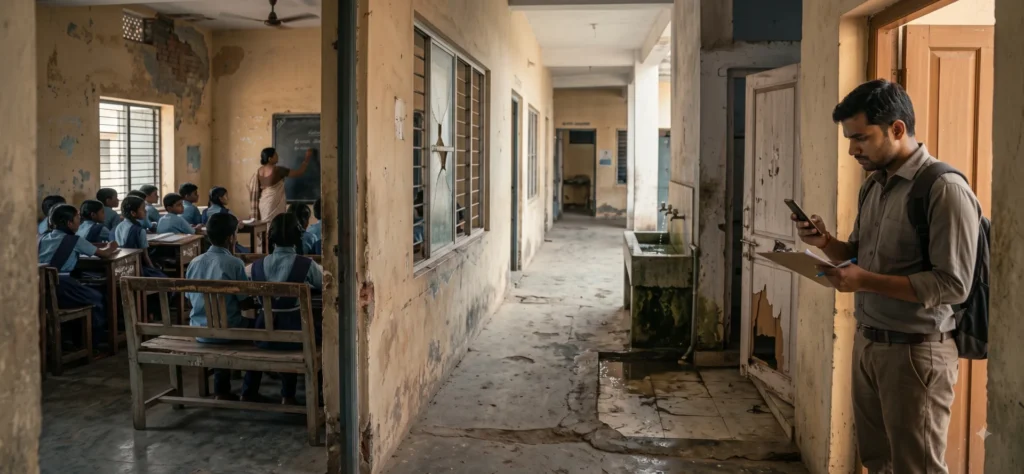
Before talking about AI, computers, digital skills, or future-ready learning, the basics have to work.
Students need safe classrooms, drinking water, functional toilets, electricity, desks, and teachers.
School infrastructure is the foundation on which learning happens.
But fixing infrastructure cannot be the final goal.
Imagine the school is repaired. The toilet works, water is available, benches arrive, and the windows are fixed.
What happens next?
Can the child use a computer confidently? Can they find reliable information online? Understand digital safety? Use AI to learn rather than copy answers?
This is the next layer of the problem.
A School Can Be Fixed, and Learning Can Still Be Broken
A safe building creates the conditions for learning. It does not guarantee meaningful learning.
A computer does not automatically create digital literacy, and internet access does not automatically teach trustworthy research.
Students need tools, guidance, practice, useful resources, and opportunities to explore.
This is where Apni Pathshala’s work connects with the larger conversation.
For more than three years, Apni Pathshala has worked with schools, NGOs, local organisations, and community leaders to bring digital learning closer to students.
Our question is simple: Does every child have a fair opportunity to learn with the tools shaping the world around them?
Apni Pathshala partners with government and private schools to support digital-skills learning using practical tools and guidance. Our POD model helps communities create local learning spaces where students can access computers, resources, mentorship, and practical skills.
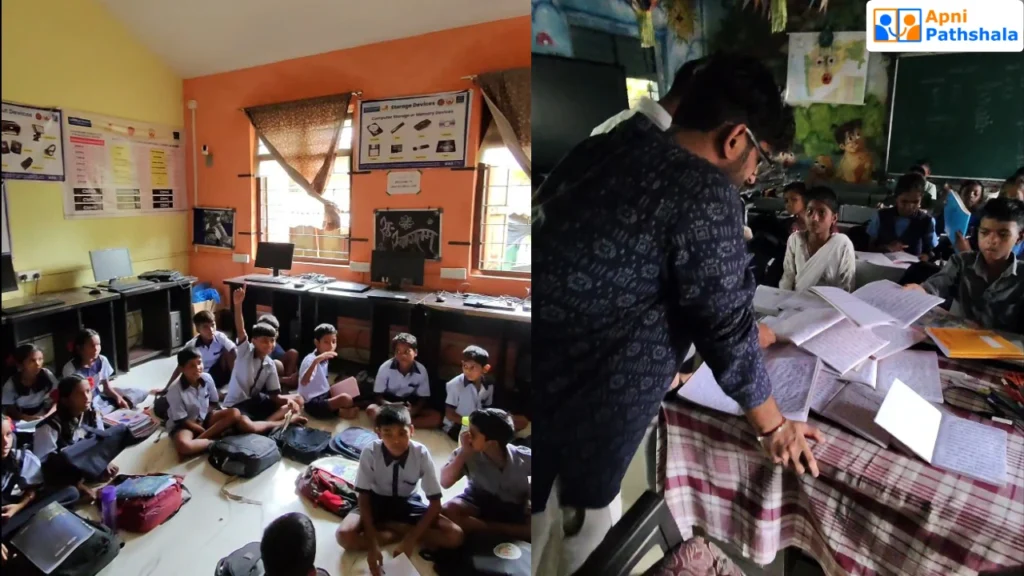
What Better Learning Can Look Like
Government schools do not need technology because technology sounds modern. They need it when it solves a real learning problem.
Our work in government schools in Raichur offers one example. Through Project Narayan, AI-supported learning was introduced to give students additional support inside classrooms.
The goal is not to replace teachers, but to give students another way to understand and practise.
Read more in How AI Is Changing Learning in Government Schools in Raichur.
Fix the roof. Fix the toilet. Fix the water. Then ask whether the learning experience is improving too.
School Improvement Needs the Community
School Thik Karo raises another question: who should care when a government school is not working?
The answer cannot always be “someone in the department.” Parents, teachers, local leaders, and communities should care.
The Ministry of Education’s 2026 School Management Committee guidelines emphasise community participation, transparency, and shared responsibility in school education.
But participation should not end with recording a video or pointing at a broken wall.
An inspection can identify a problem. Real participation asks what happens next.
Who checks whether the water problem was fixed? Who asks whether computers are actually used? Who supports students who have never learned basic digital skills?
Who comes back after the cameras leave?
That is the difference between attention and responsibility.
Accountability Must Protect Children Too
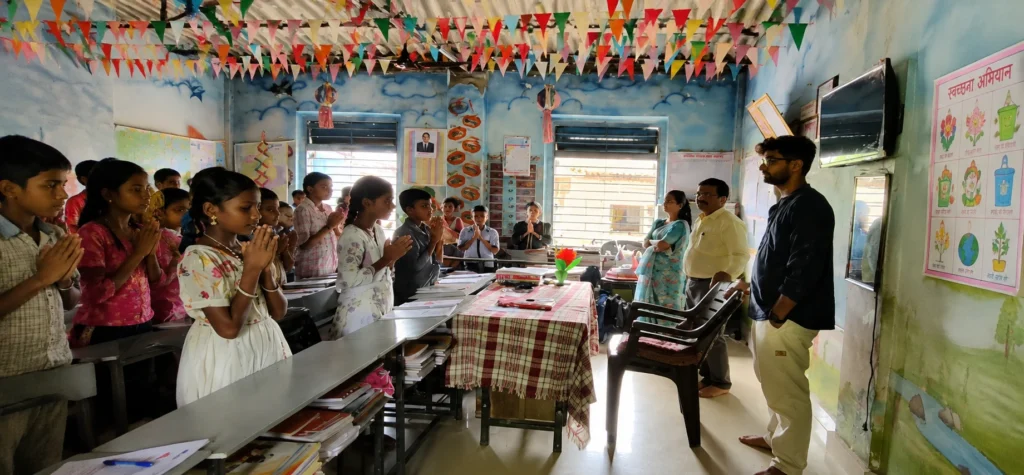
The campaign has also opened a debate about access to government schools.
After CJP announced inspections in Rajasthan, the state education department required outsiders to get prior permission before entering school premises and introduced restrictions around photography and videography. Read about the Rajasthan decision here.
Government schools need accountability. Children also need safety, dignity, and privacy.
We can document a broken classroom without turning a child into social-media content. Transparency and student safety can coexist.
The Campaign May End. The Work Cannot.
We hope School Thik Karo helps genuine problems receive faster attention, parents ask questions, authorities respond, and students benefit.
But education cannot depend on one movement.
Apni Pathshala’s work started before this campaign and will continue after it.
After a broken window is repaired, a child still needs to learn.
After computers arrive, students still need to know how to use them.
After the inspection team leaves, someone still has to return tomorrow.
Movements can bring attention. Communities have to make change last.
Fix the School. Then Strengthen the Learning.
School Thik Karo asks an important question about the condition of government schools.
Apni Pathshala wants the conversation to go one step further.
Once the school is safe and functional, are students getting the learning opportunities they need for the world ahead?
Children deserve both.
They deserve safe classrooms, clean toilets, computers, digital literacy, guidance, creativity, and confidence to learn independently.
So yes, fix what is broken. Support genuine education reform. Ask difficult questions.
But do not stop when the building looks better.
The real goal is a child who has everything needed to learn.
Help Build What Comes Next
If you are a school, NGO, educator, or community leader who sees students without meaningful access to digital learning, you do not have to wait for the next campaign.
Apni Pathshala works with local changemakers to create community-based digital learning opportunities.
Read Why the Future of Indian Education Is Decentralised and explore how your community can become part of a stronger learning ecosystem.
Movements bring attention. Communities make change last.
Frequently Asked Questions
1. How is Project Narayan bringing AI-powered learning to government school students in Raichur?
Ans. Project Narayan is introducing Eklavya AI in government schools in Raichur to give students personalised academic support connected to their curriculum. The initiative has started with three schools and aims to expand to 100 schools across the district.
2. What role can AI play in decentralised education?
Ans. AI can act as a personal learning assistant by explaining difficult concepts, asking guiding questions, helping students practise, and supporting independent learning. The blog recommends using AI as a mentor rather than simply using it to complete homework.
3. Why did Rajasthan restrict outsiders from entering government schools?
Ans. The Rajasthan Education Department issued the restriction hours after CJP announced its “School Thik Karo” inspection campaign. Visitors now need prior permission from the school principal or head.
4. Why did the school cockroach incident become such a serious issue?
Ans. Because it raised concerns beyond cleanliness. It highlighted questions about school hygiene, student safety, accountability, and how quickly authorities respond when basic conditions fail.