

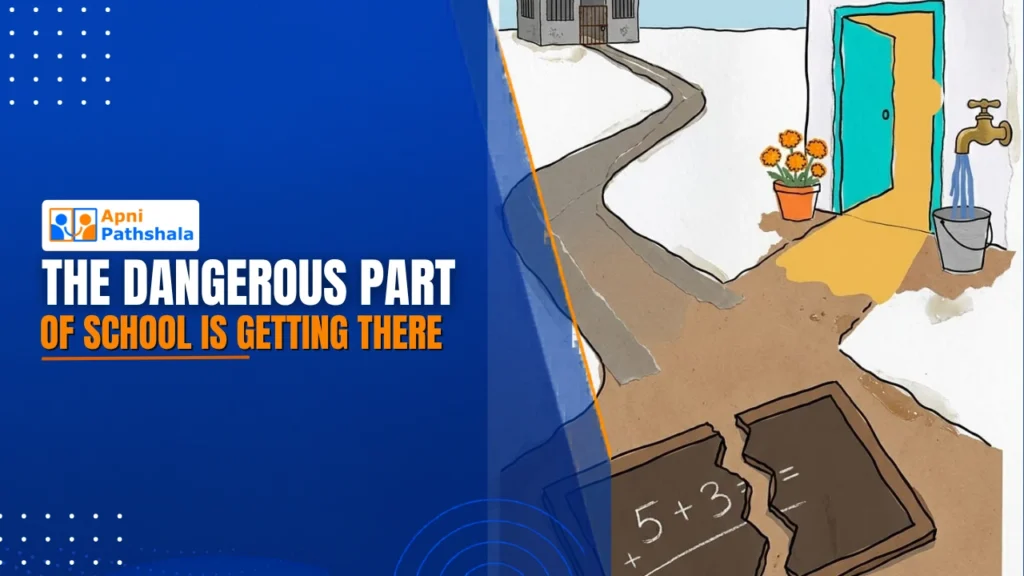
We all know what a government school looks like on a poster.
A big, newly painted building. Happy children running in the playground. But what does getting to that school look like for a village girl?
It usually means walking 5 kilometres on an empty dirt road.
It means waiting at a local bus stop where boys stand and tease schoolgirls. It means taking a shared auto packed with strange men. When a parent sees this, they panic.
And then, they make a very simple choice. They pull their daughter out of school.
Politicians call this a “backward mindset.”
But if you are a father watching your daughter walk down an unsafe road every morning, you are not being backward. You are just protecting your child.
If the road is dangerous, the girl stays home.
So, how do we fix this? We don’t need to build more giant schools far away. We just need to change the distance.
Why Parents Aren’t the Problem: The Distance Is?
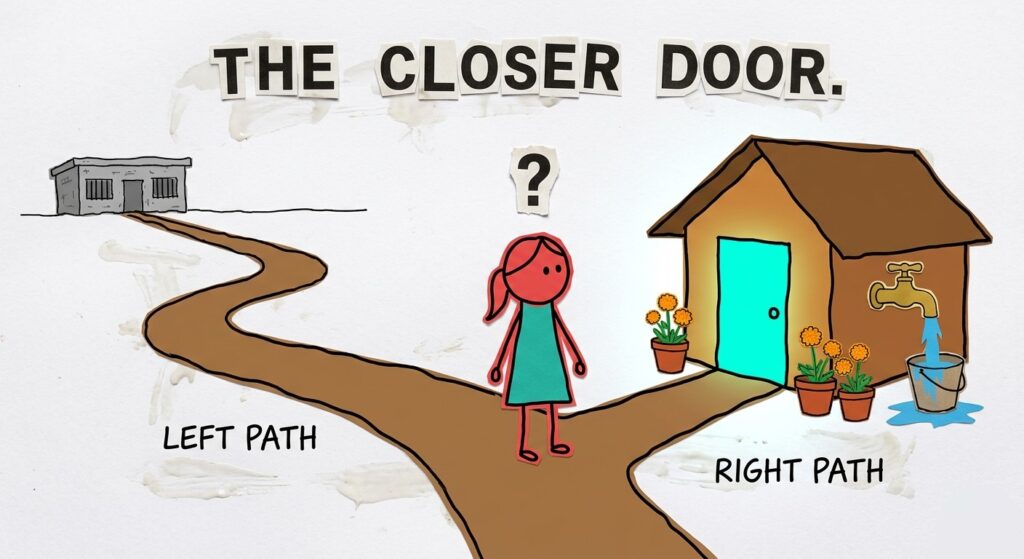
If the big school is too far, we must bring the classroom into the mohalla (neighbourhood).
This is where the Apni Pathshala micro-school comes in. We call it a POD (Point of Digital Learning). A POD is not a massive concrete building with marble floors and expensive smart boards.
It is just a clean, safe room.
- It is located within 500 meters of the girl’s home.
- It has 10 Apna PCs (computers).
- It has a working toilet.
- It is just for 20-30 children.
Because the POD is only a 2-minute walk from home, there is zero commute.
Parents do not have to worry. In fact, the POD is so close that parents can literally hear their daughters learning from their own doorstep.
The Person Parents Actually Trust
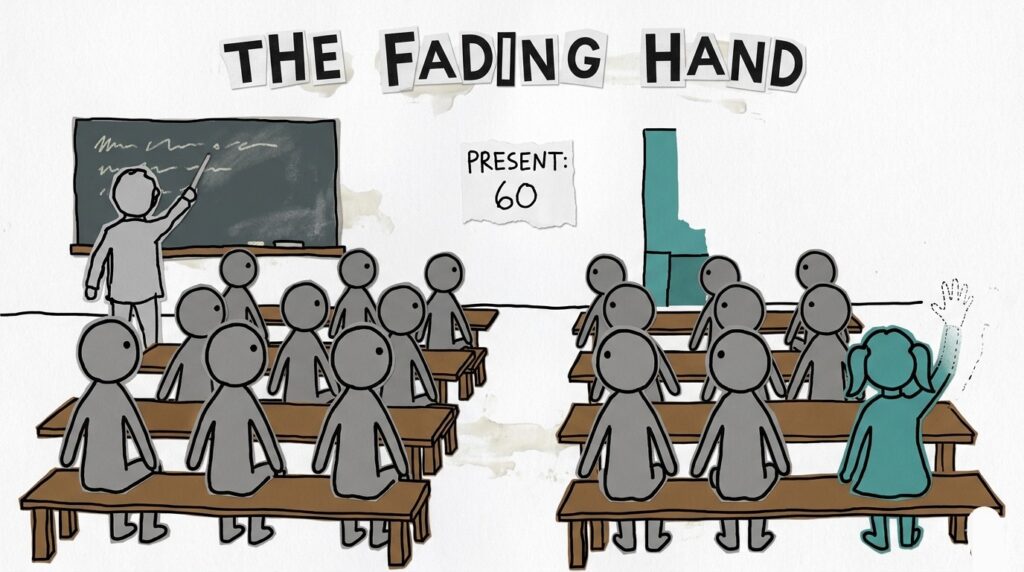
In a big school, the teacher is often a tired stranger who travels from the city. They have no real connection to the village.
In a POD, we do something completely different.
The adult sitting in the room is not a traditional teacher. We call her a Local Learning Facilitator. But in reality? She is an educated mother, an aunt, or an elder sister from that exact same village.
She does not give long blackboard lectures.
Her job is to keep the room safe. Her job is to make sure the girls sit together, open their computers, and feel confident.
Why does this work? Because parents trust her.
When a mother drops her daughter off, she thinks, “My daughter is safer here than at home.” Once you make the parents feel safe, you have already won half the battle
What Girls Are Actually Learning?
You might be wondering: If the local mother is just keeping the girls safe, who is actually teaching the math and science?
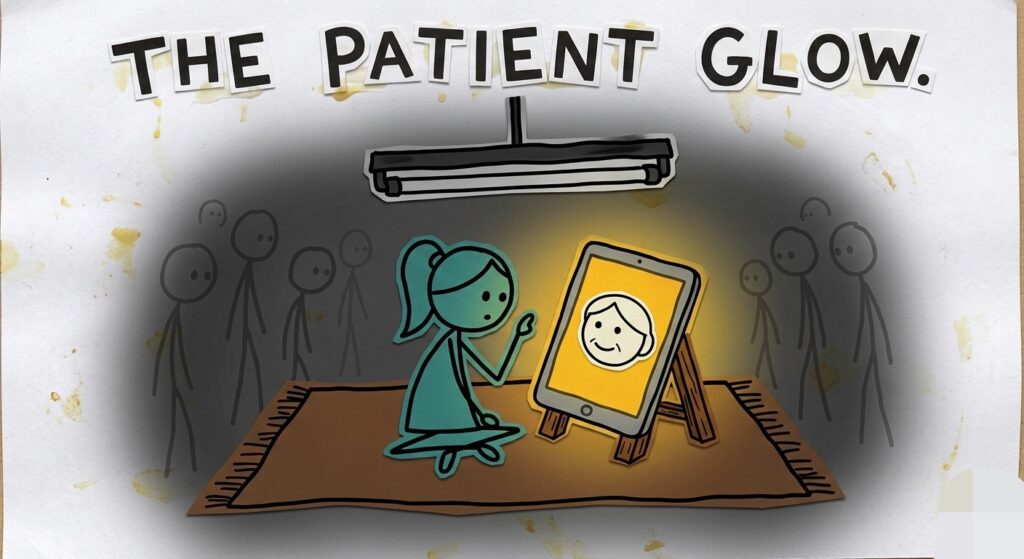
In a POD, the technology teaches, and the local mentor guides.
When a girl logs into her Apna PC, a whole world opens up. She doesn’t just read boring textbooks. She learns real skills.
- CoTutor AI: A smart virtual teacher answers her math and science doubts. If she asks the same question ten times, the AI never gets angry or scolds her.
- Scratch & Websites: A 13-year-old girl can learn how to build her own animations, simple games, and websites using drag-and-drop tools.
- Beyond Exam: She can take courses on real-life skills that schools never teach.
- Apni Prerna: A safety lock on the computer prevents her from accessing any harmful or distracting websites.
At the end of the day, she doesn’t bring home a notebook full of copied text.
She brings home a digital project. A website or a DRAWING to show her parents on their mobile phone.
That feeling of “I built this myself” builds real confidence.
Our Open Challenge: Give Us 12 Months
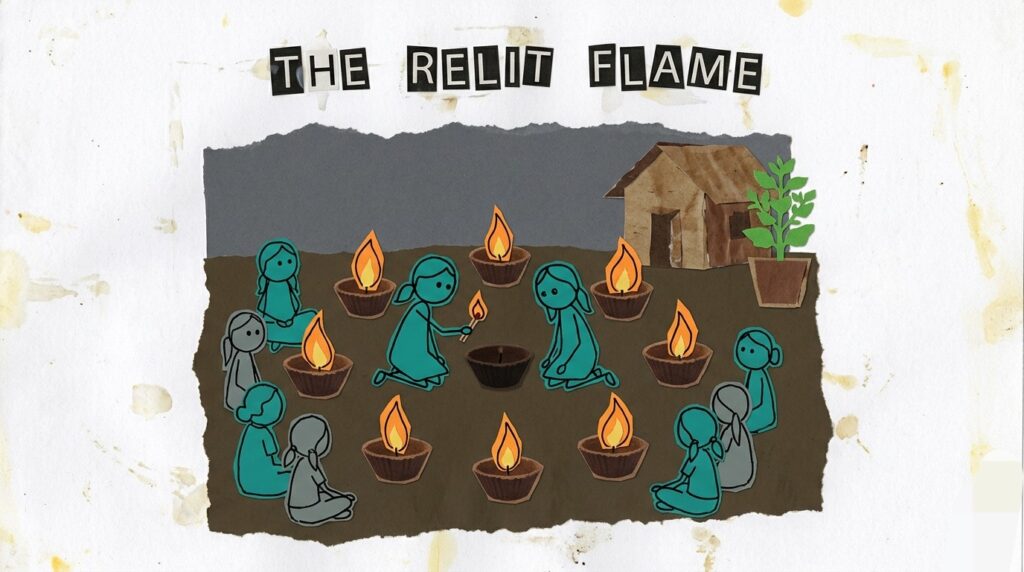
We know the government means well. But government systems change very slowly, and our children do not have the time to wait.
We do not want to just write policy papers. We want to prove this works on the ground.
So, Apni Pathshala is making an open challenge to the government education system: Let us run a pilot.
We are not asking for crores of rupees. We will fund it. Just give us permission to work in 2 districts. Let us set up 100 safe micro-schools (PODs). Give us 12 months.
Let the local education officers watch us.
If the girls do not show up or learn, we will shut it down ourselves.
But if it works? If dropout rates fall and girls start learning on their own? Then we will have a working model that can quietly change the whole country.
In education, one working example is better than a thousand paper policies.
Conclusion
India does not need more empty school buildings. We need better, safer learning environments.
If we optimize for massive buildings and government headlines, we will continue to fail our girls. But if we optimize for safety, short distances, and smart computers, we won’t just educate a child. We will build a generation of girls who know how to teach themselves.
Want to know the exact reasons why parents are forced to keep their daughters at home?
Read our previous blog: Why Do Our Girls Stop Going to School? to understand the daily choices village parents face.
Frequently Asked Questions
1. Why do parents in villages actually pull their daughters out of school?
Ans: Many parents in villages pull their daughters out of school because of safety concerns, financial pressure, distance to schools, household responsibilities, and a lack of visible career opportunities after education.
2. How does a crowded classroom destroy a girl’s confidence?
Ans: In crowded classrooms, many girls stop asking questions, expressing ideas, or participating because they fear being ignored, judged, or left behind. Over time, this lack of personal attention slowly reduces their confidence and willingness to learn.
3. Why is a computer sometimes a better teacher for a shy student?
Ans: Because a computer never scolds. Tools like Eklavya AI act as the kindest teacher in the world. A girl can make a hundred mistakes without fear of judgment or anger, allowing her to finally ask questions and understand the math sum rather than just copy it.
4. Why are students panicking over the NEET 2026 news?
Ans: Students are panicking because constant news about paper leaks, exam uncertainty, and system failures is creating fear about their future. Many aspirants feel that years of hard work can be jeopardised by problems beyond their control.

2 Responses
This article really touched my heart. As a girl, safe access to education is something that should never be taken for granted. Thank you for bringing attention to such an important reality.
Thank you so much for your kind words. We truly agree; safe access to education should never be a privilege, especially for girls.