When debating online classes vs self-learning, most parents and students miss the actual problem.
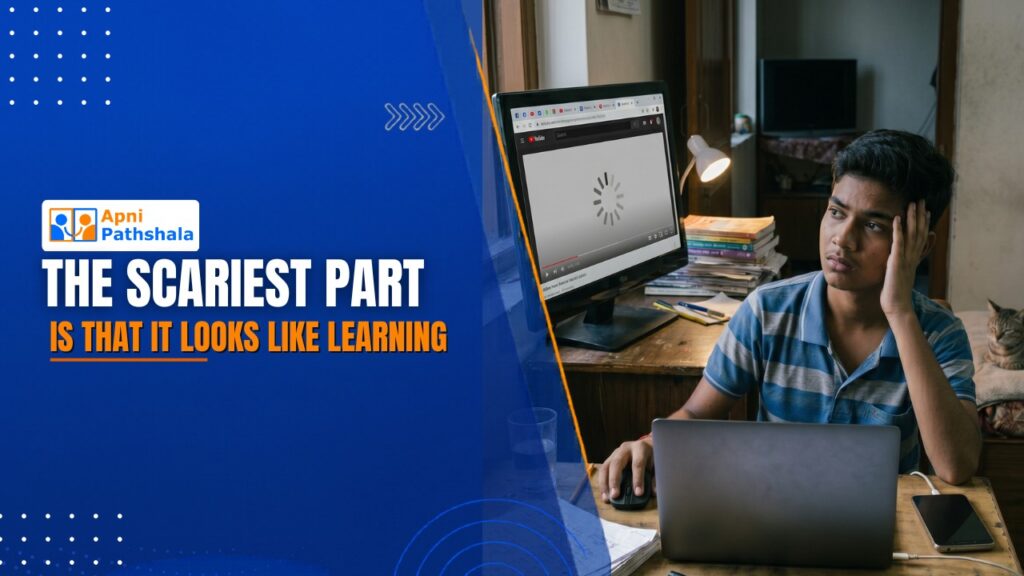
A student watching an online lecture for two hours has done the exact same thing as a student watching Netflix for two hours. Their eyes were open.
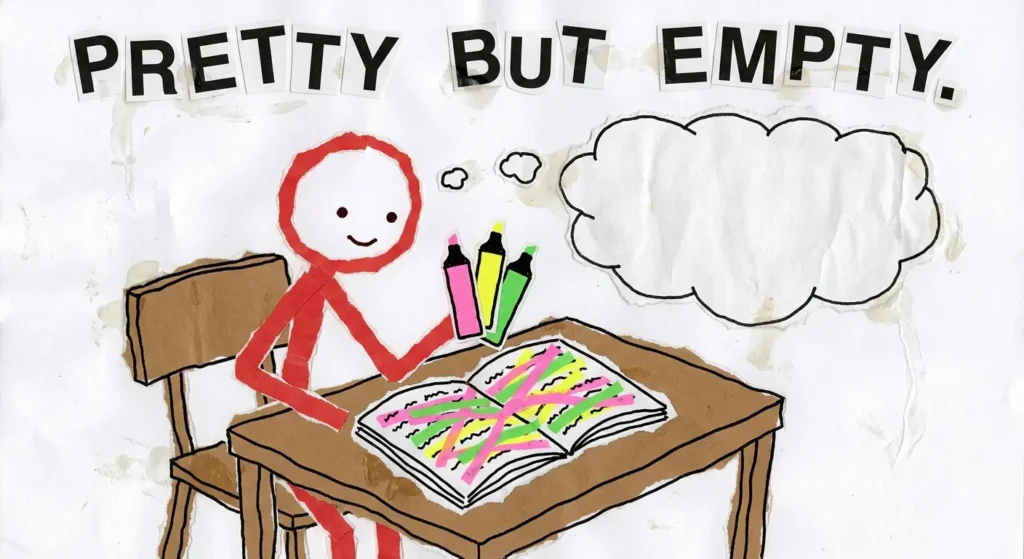
Their brain was receiving. Nothing was being built. And a student rereading the same chapter four times with three different highlighters is not doing much better. Passive is passive. The label on the tab does not change that
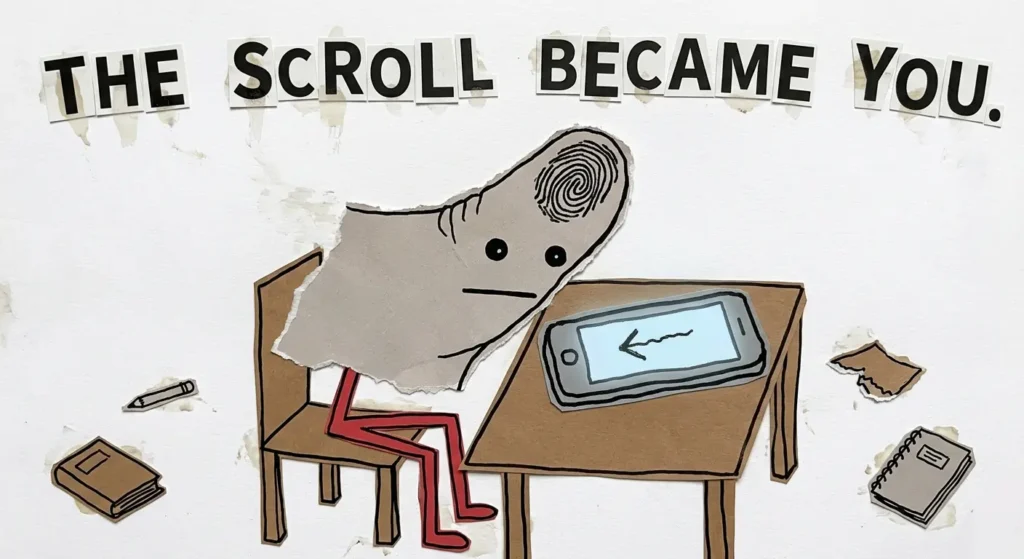
Passive is passive. The label on the tab does not change that. Three colours and feeling productive are doing exactly the same thing.
Passive is passive. The label on the tab does not change that.
Real Problem With Online Classes in India
In a nationwide study on Indian students, online classes were consistently rated as less effective than face-to-face learning. The Times of India
That number is cited as proof that online classes do not work. It is not.
It is proof that a specific kind of online class does not work. The kind where a teacher talks. A student listens. Nobody checks whether anything landed.
Over 86 per cent of Indian students feel more interactive and motivated in offline settings. IMS INDIA REPORT
Not because the classroom is magic. Because the classroom has one thing the average online lecture does not.
Accountability.
Someone notices when you are confused. Someone calls on you. Someone sees your face go blank when the concept doesn’t land, and you slow down.
Remove that, and you do not have a class. You have a very expensive YouTube video with worse production quality.
This is the failure mode of most online classes in India. Not the technology. The absence of any feedback loop inside the technology.
The Hidden Danger of Unsupervised Self-Learning
Self-learning sounds powerful.
You set your own pace. You follow your curiosity. You are in charge.
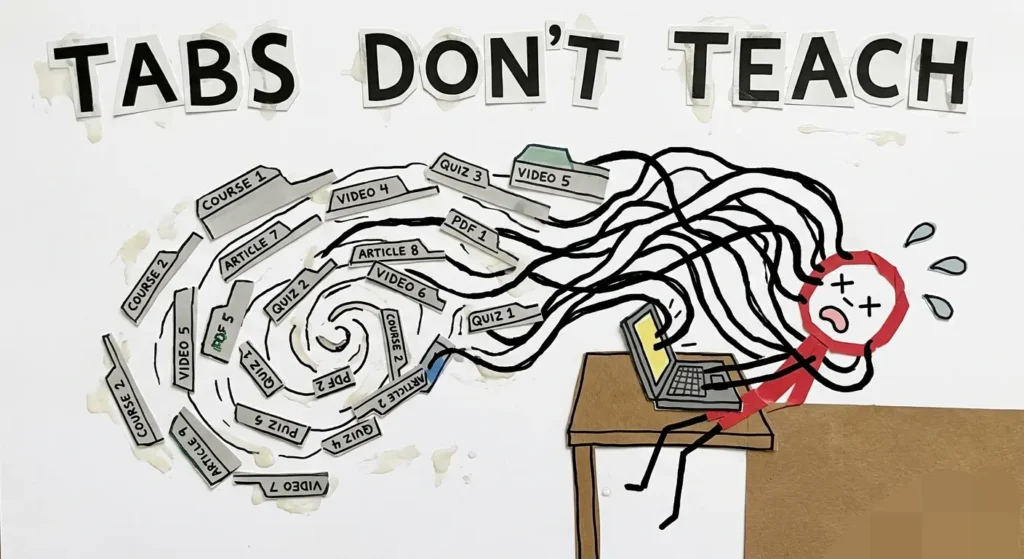
And then three weeks in, you have seventeen open tabs, four unfinished courses and the quiet suspicion that you have been moving in circles without knowing it.
Online learners who learn at their own pace report saving 40 to 60 per cent of study time, but only when the learning is genuinely active. eLearning Industry
The students who self-learn effectively are not the most disciplined ones.
They are the ones who built a system that catches their mistakes.
That tells them when their understanding is actually solid versus when it just feels solid. That does not let them move forward, leaving a gap they do not know they have.
Without that system, self-learning is not independent.
It is unsupervised confusion with a motivational poster attached.
What Actually Works: The Power of Guided Autonomy
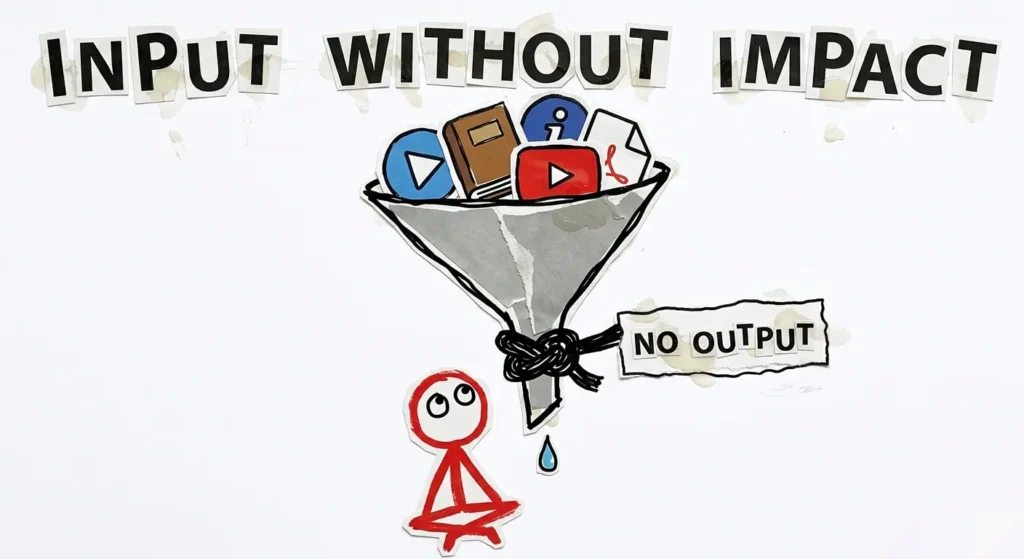
A massive meta-analysis by the Department of Education found that blended learning, combining self-direction with structured feedback, produced significantly better outcomes than either pure online classes or pure self-study alone. U.S. Department of Education
The brain does not learn by receiving.
It learns by struggling, getting it wrong, getting corrected and trying again.
Any method, online class, self-study, community learning or AI-guided practice that creates this cycle works.
Any method that skips it does not.
This is not a controversial finding. It is the most consistent result in sixty years of learning research.
The problem is that most students and most parents are still choosing between methods based on format.
Online versus offline. Self versus guided.
The problem was never online versus offline. The problem was whether the student had to think
Online Classes vs Self-Learning in Practice
A student preparing for JEE watches three hours of online lectures on organic chemistry.
Feels productive. Feels like progress. Closes the laptop. Opens the question paper. Blank.
Not because the lecture was bad. Because watching someone solve a problem is not the same as solving it yourself.
The brain was in receive mode the entire time. Nothing was encoded.
Now picture a different student.
Same topic. No lecture.
Just Eklavya AI, which covers JEE, NEET, CBSE, Maharashtra Board, and UP Board, asks her questions chapter by chapter, identifies the exact concept where her reasoning breaks down, explains it specifically, and refuses to move forward until the gap is genuinely closed.
She gets questions wrong. Several times. It is uncomfortable.
That discomfort is the learning.
This is what 107 active Apni Pathshala PODs across 22 Indian states are built around.
Not online classes. Not unguided self-study.
That discomfort is the learning.
This is what 107 active Apni Pathshala PODs across 22 Indian states are built around.
Not online classes. Not unguided self-study.
Conclusion: Which Method is Actually Better?
| Learning Format | The Reality | The Result |
| Online Classes | A teacher talks to a screen with zero accountability. | Expensive passive consumption. |
| Self Learning | A student reads alone with zero course correction. | Expensive confusion. |
| Guided Autonomy | The student drives, but the system demands active struggle. | Deep retention. |
The question was never self-learning versus online classes.
The question has always been, does your method of learning tell you when you are wrong, specifically immediately, and before it compounds?
If yes, it works.
If not, the format is irrelevant.
Frequently Asked Questions
1. Are online classes just another form of harmful screen time?
Ans: Yes, if they lack a feedback loop. When a student passively watches a two-hour lecture, the screen serves as a digital babysitter. The brain treats it exactly the same as watching a YouTube video. True learning requires active struggle, not just staring at a glowing screen. Read our full breakdown on the brutal truth about screen time and studying here
2. What is the best way for parents to monitor online studying?
Ans: Do not rely on snatching the phone away or starting fights at the dinner table. You have to change the environment. Put your child in a space where the screen is strictly a tool for learning, and the physical room itself makes them focus.
3. Can technology actually force a student to do the hard work?
Ans: Yes, but only if it is designed for accountability. Generic apps let students scroll passively. Advanced engines like Eklavya AI stop the lesson when a student gets confused and refuse to let them move forward until the conceptual gap is completely closed. It removes the option to be lazy.