A student can spend six hours in school, complete every worksheet, answer every question, and still feel that learning is something being done to them.
Then give that same student a choice.
Let them pick a project. Ask what they want to understand. Give them time to solve a problem their own way.
Suddenly, something changes.
They are no longer just completing the lesson.
They have a reason to care about it.
What Changes When Students Get a Say?
For a long time, education has worked around a simple structure: the teacher decides what to teach, the student learns it, and an assessment checks what was remembered.
There is nothing wrong with structure. Students need teachers, curriculum and clear expectations.
But learning becomes different when students also have some ownership.
They can choose what to explore.
They can ask questions that matter to them.
They can decide how to approach a project.
They can reflect on what is working and what is not.
This idea is often described as student agency.
The OECD’s Learning Compass 2030 places student agency alongside competencies and well-being, describing learners as people who should be able to navigate unfamiliar situations and shape their own direction rather than simply follow fixed instructions. OECD
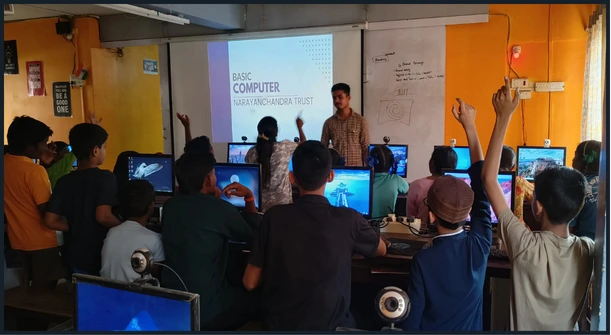
Choice Does Not Mean Letting Students Do Whatever They Want
Student-centred learning is sometimes misunderstood as giving students complete freedom.
That is not the idea.
A student still needs a teacher who sets boundaries, explains difficult concepts and knows when to step in.
The difference is that the student gets a voice inside that structure.
For example, instead of giving everyone exactly the same project, a teacher might give students a common goal and allow them to choose how they demonstrate what they learned.
One student could create a presentation.
Another could build a simple website.
Someone else might make a video.
The learning objective remains the same.
The route becomes more personal.
This is the thinking behind Apni Pathshala’s approach to a Student-Centred Curriculum, where interests, pace, goals and strengths are considered alongside the learning objectives.
Students Become More Invested When the Learning Feels Like Theirs
Think about the difference between being told to complete a project and choosing a project you genuinely want to finish.
The first can feel like homework.
The second can feel like a challenge.
That small difference can affect how much effort a student is willing to put in.
A student interested in photography may put more effort into a visual presentation.
Someone curious about computers may spend hours trying to build a website.
A student who enjoys explaining things may choose to teach the concept to someone else.
The subject has not necessarily changed.
The student’s relationship with it has.
Research Is Starting to Look More Closely at Student Agency
This is not simply an educational philosophy.
A 2026 meta-synthesis of research on student agency in science education found that approaches involving open-ended inquiry, dialogue, community-based learning and real-world engagement can create conditions in which students participate more actively and exercise greater ownership of learning. Springer
That matters because students do not develop independence by being told to become independent.
They develop it by being given opportunities to practise independence.
They need to make decisions.
They need to explain those decisions.
They need to experience what happens when something works; and when it does not.
The Best Learning May Include a Little Struggle
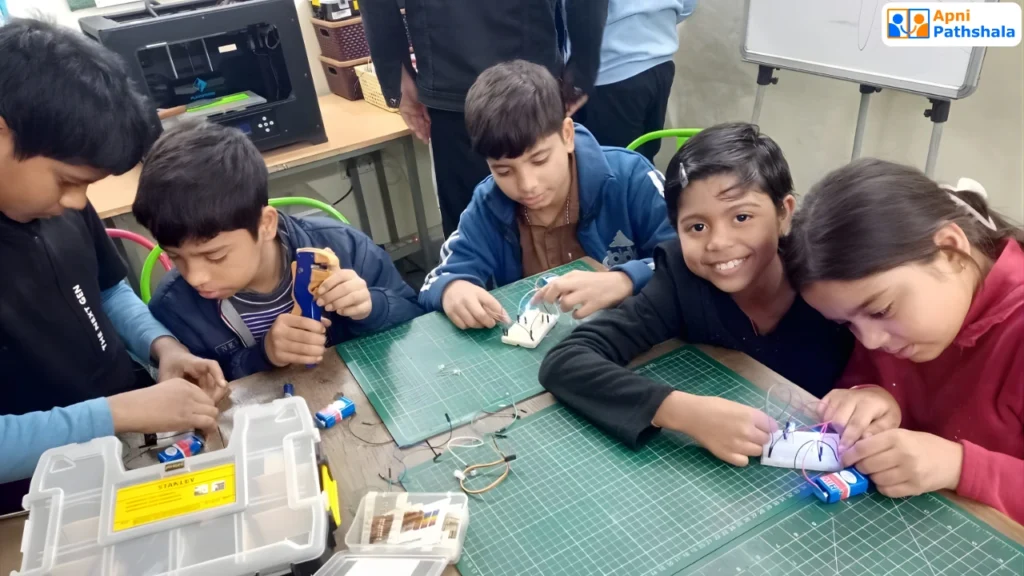
When students have some control over their learning, they also have to deal with uncertainty.
What should I try next?
Why did this fail?
Should I ask for help?
Can I solve this another way?
These are valuable questions.
The Education Endowment Foundation’s work on metacognition and self-regulated learning highlights the importance of helping students plan, monitor and evaluate their own learning. Its updated guidance draws on a substantial evidence base around these approaches.
The goal is not to make students struggle unnecessarily.
It is to help them gradually become comfortable with thinking about how they learn.
A Classroom Can Give Students More Than One Way to Participate
Not every student wants to raise their hand.
Some students are confident speakers.
Others understand a concept but hesitate to answer publicly.
Some learn by explaining.
Others need to observe first.
A student-centred environment can create more ways to participate.
Students can work in pairs.
They can discuss an idea.
They can build something.
They can teach a peer.
They can present their work later, once they are comfortable.
That is one reason peer learning can be powerful.
At Apni Pathshala’s Learn From Peers, students are encouraged to explain concepts, solve problems collaboratively and support one another. The model turns students from passive participants into active contributors.
Sometimes the Student Who Needs Help Today Helps Someone Tomorrow
This is one of the most interesting things about giving students ownership.
A student who struggles with something today may understand it tomorrow.
And once they understand it, they may be able to explain it to someone else.
That creates a different kind of confidence.
They are no longer thinking:
“I am the student who doesn’t understand.”
They begin thinking:
“I know this well enough to help someone.”
That shift can influence communication, confidence and leadership far beyond the original lesson.
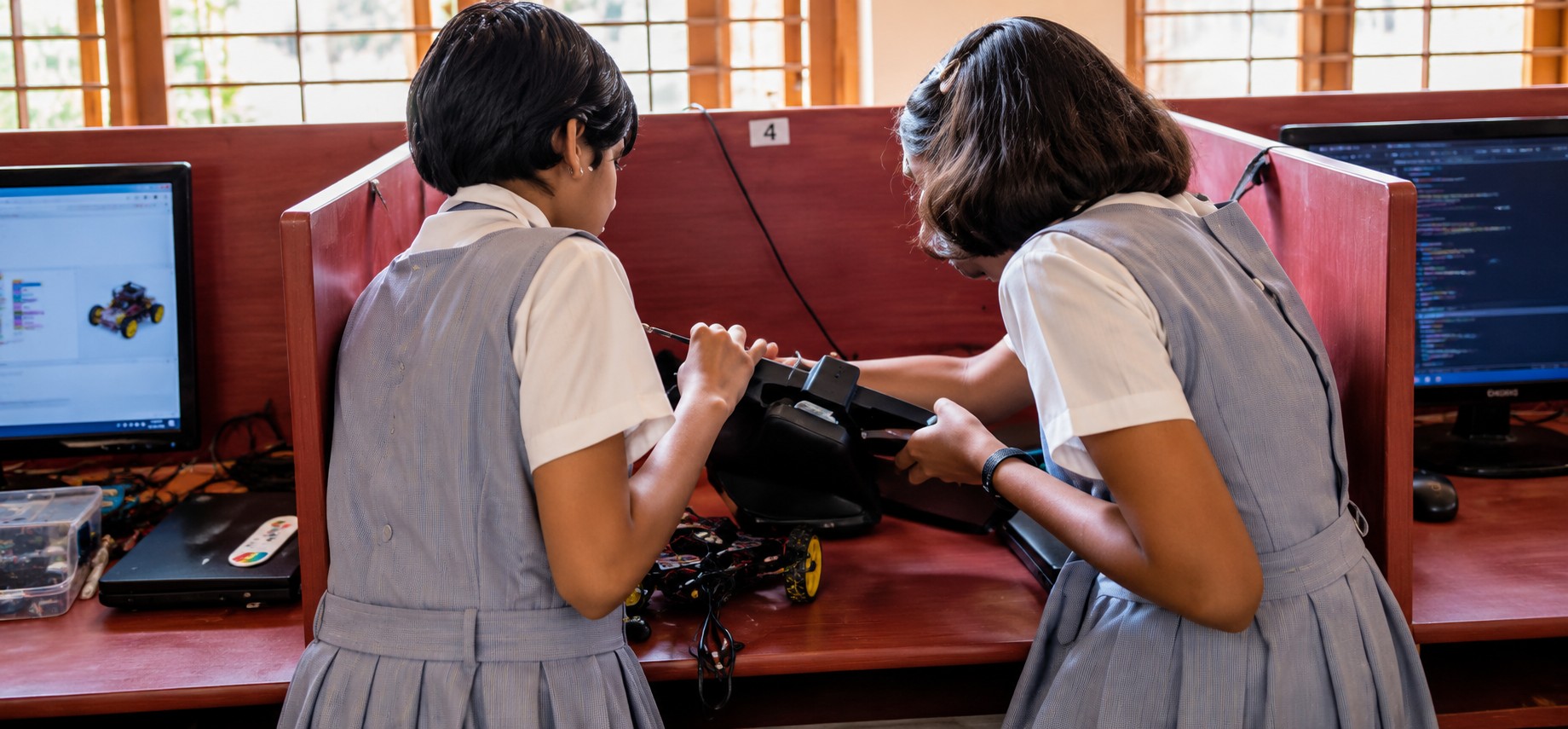
The Teacher’s Role Changes; It Does Not Disappear
Giving students more ownership does not make teachers less important.
In fact, it can make their role more thoughtful.
Instead of controlling every step, teachers can guide.
They can ask better questions.
They can notice where a student is stuck.
They can suggest another direction.
They can challenge a student who is ready to go further.
The teacher becomes less of a person who simply delivers information and more of a person who helps students learn how to navigate information.
The OECD also notes that meaningful curriculum flexibility depends on teachers and schools having enough autonomy and support to respond to different learner needs.
This Is What Learning Can Look Like at Apni Pathshala
At Apni Pathshala, the larger idea is simple: students should gradually become capable of figuring things out for themselves.
That does not mean leaving them alone.
Students can learn from peers, use digital resources, ask mentors for guidance, and explore skills at their own pace.
Our approach is explained simply in What Do We Teach at Apni Pathshala?: the goal goes beyond completing a syllabus; it is about building confidence, curiosity and the ability to figure things out.
What Happens When Students Start Owning Their Learning?
The answer will not look the same for everyone.
One student may become more confident.
Another may discover a new interest.
Someone may develop stronger problem-solving skills.
Another may find that they enjoy teaching others.
And someone who once waited for instructions may eventually start asking:
“What can I try next?”
That may be one of the clearest signs that learning is becoming meaningful.
Because the goal of education is not to create students who always know what to do.
It is to create students who can figure out what to do next.
Let Students Have a Say in Their Learning
Education becomes more meaningful when students are not only told what to learn, but are also given opportunities to decide how they want to explore it.
That could mean choosing a project, learning from a peer, trying a different approach, or simply having enough time to figure something out without being afraid of getting it wrong.
At Apni Pathshala, this idea is part of a larger learning environment where students can learn, practise, experiment and gradually become more independent. Through community-based learning spaces, peer learning and practical activities, students get opportunities to take greater ownership of what they learn.
But student ownership does not mean learning alone.
It means having the right people, resources and environment around you while still being encouraged to take the next step yourself.
If you want to see what this looks like through real student journeys, explore Apni Pathshala’s Student Stories.
Because sometimes the biggest change in a student’s learning does not begin with a new textbook or a new lesson.
Frequently Asked Questions
1. What does student-centred learning mean?
Ans. Student-centred learning puts students’ interests, needs, pace, goals and strengths at the centre of education. Apni Pathshala’s Student-Centred Curriculum guide explains how students can participate in learning goals, activities and projects.
2. Why is student agency important in education?
Ans. Student agency helps learners take responsibility for goals, decisions and actions in their learning. The OECD Learning Compass 2030 places student agency at the centre of its vision for future-oriented education.
3. Can students learn better through peer learning?
Ans. Yes. Peer learning gives students opportunities to explain ideas, collaborate, solve problems and build confidence.Apni Pathshala’s Learn From Peers model shows how students can become active participants and contributors in their learning community.
4. How can students become more independent learners?
Ans. Students can develop independence by setting goals, monitoring their progress, reflecting on mistakes and making learning decisions with appropriate guidance.