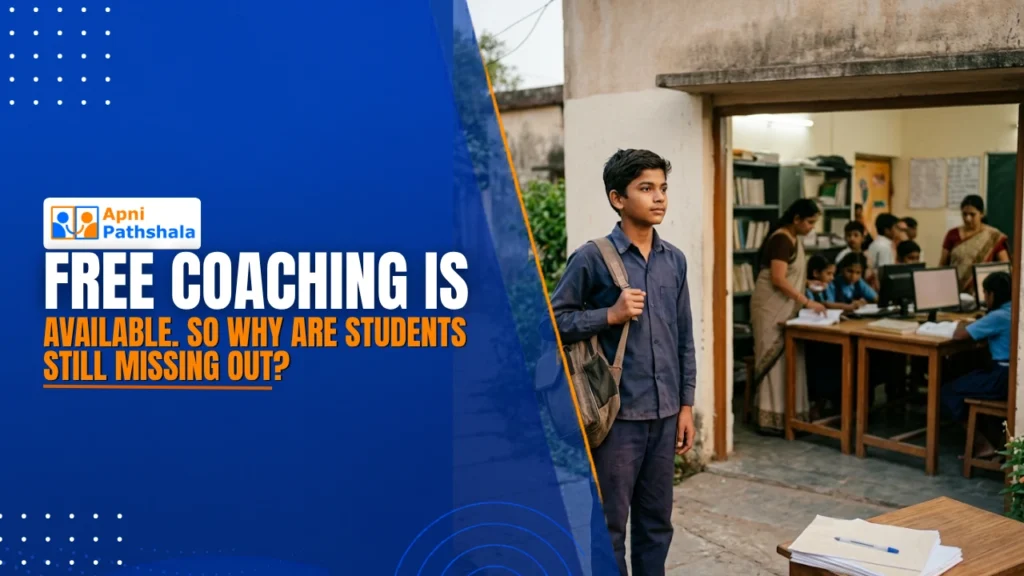
A free coaching programme sounds like a straightforward opportunity. But what happens when the opportunity exists, and many of the students it was designed for still don’t reach it?
A recent Parliamentary panel finding brings this question into focus and pushes us to look beyond the word “free” to understand what real access to education requires.
When Free Does Not Always Mean Accessible
The Government of India’s Free Coaching Scheme for SCs and OBCs aims to provide quality coaching to eligible students from disadvantaged backgrounds preparing for competitive examinations and admission to professional and technical courses. The scheme covers examinations such as UPSC, SSC, banking, JEE, NEET, CAT and CLAT. (socialjustice.gov.in)
The idea is simple: financial limitations should not prevent a student from getting coaching support.
But reaching that opportunity involves more than removing the fee.
A student needs to know the programme exists. They need to understand eligibility, find the right institution, complete the process, attend regularly and continue receiving support when learning becomes difficult.
That is where access becomes a bigger question.
The 2,790-Student Question
A recent The Hindu report highlighted that 2,790 students enrolled against a target of 10,500 during the three-year period a Parliamentary panel reviewed.
The panel also pointed to issues including limited participation from Central Universities and delays in receiving proposals.
The number doesn’t mean students don’t want educational opportunities.
It tells us something simpler:
A gap can exist between an opportunity being available and a student actually reaching it.
Understanding that gap matters for anyone working in education.
What Stands Between a Student and an Opportunity?
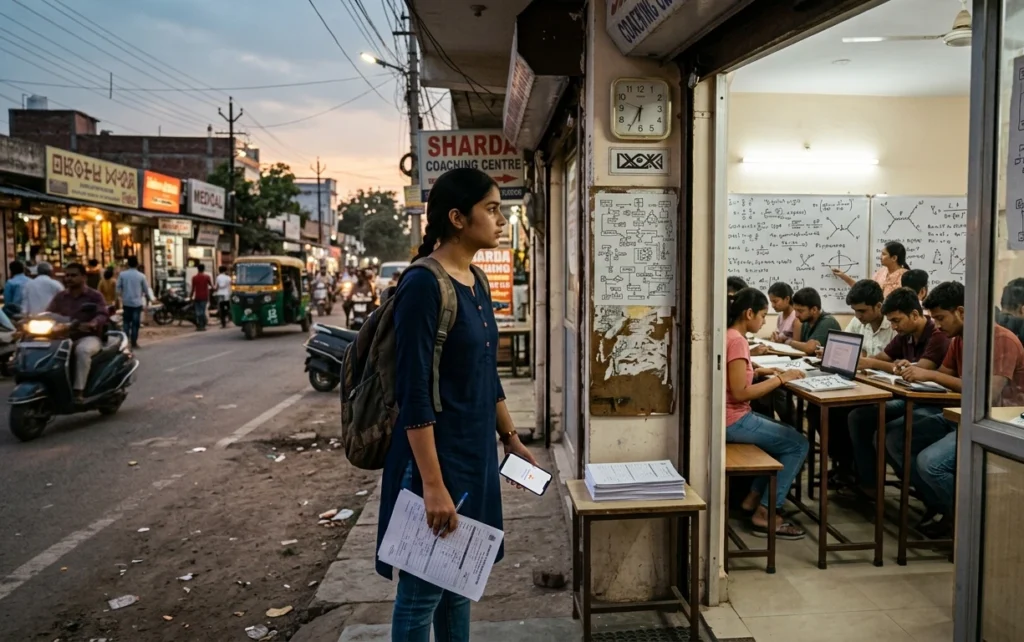
Imagine a student who is eligible for free coaching.
The programme exists.
The coaching is free.
But the student may never hear about it.
Or perhaps the nearest available institution is difficult to reach.
Maybe the application process is unfamiliar.
Maybe the student lacks reliable internet access.
Or perhaps they join but need additional support to keep learning consistently.
None of these problems is solved simply by making coaching free.
This is why educational access has several layers.
Awareness. Access. Participation. Continuity.
All four matter.
Competitive Exam Preparation Is Becoming More Flexible
The way students prepare for competitive examinations is changing.
Students no longer have to depend entirely on one physical coaching classroom.
They can watch lectures online, practise questions digitally, download study material, learn from peers and revisit concepts whenever they need to.
The government is also expanding digital approaches to coaching. In February 2026, the Ministry of Social Justice and Empowerment announced a partnership with Physics Wallah Foundation to provide free online coaching to eligible students preparing for competitive examinations. (PIB)
This creates another possibility: learning can travel to the student instead of the student always having to travel to learning.
But online learning brings its own requirements.
Students need devices, connectivity, a suitable place to study, guidance and the motivation to continue.
That is where the learning environment becomes important.
A Learning Space Can Make Digital Access Useful
Suppose a student has access to an online course but nowhere suitable to study.
Or they have learning resources but limited access to a computer.
Or they understand most of a lesson but need more time to practise.
A local learning space can help bridge some of these gaps.
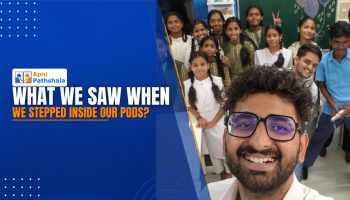
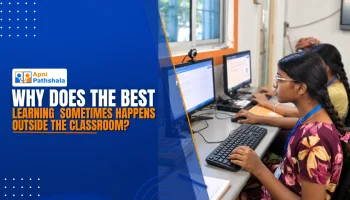
This is one reason Apni Pathshala’s Learning PODs are designed as community-based learning spaces.
Students can access technology, practise digital skills, explore learning resources and gradually develop independent learning habits.
A POD is not another coaching centre.
It can become a place where learning continues around the student’s needs.
Self-Learning Gives Students Another Path
Coaching can provide structure.
Teachers can provide guidance.
But students also need the ability to continue learning independently.
They may need to revisit a difficult concept.
Practise the same type of question again.
Find another explanation.
Ask a peer.
Or explore a topic beyond what was covered in class.
Digital learning makes many of these activities easier.
Apni Pathshala’s approach to learning spaces is built around creating opportunities for students to learn, practise and explore, rather than making them dependent on one fixed learning format.
This matters particularly for students who may not have access to expensive coaching or additional academic support at home.
AI Can Add Another Layer of Support
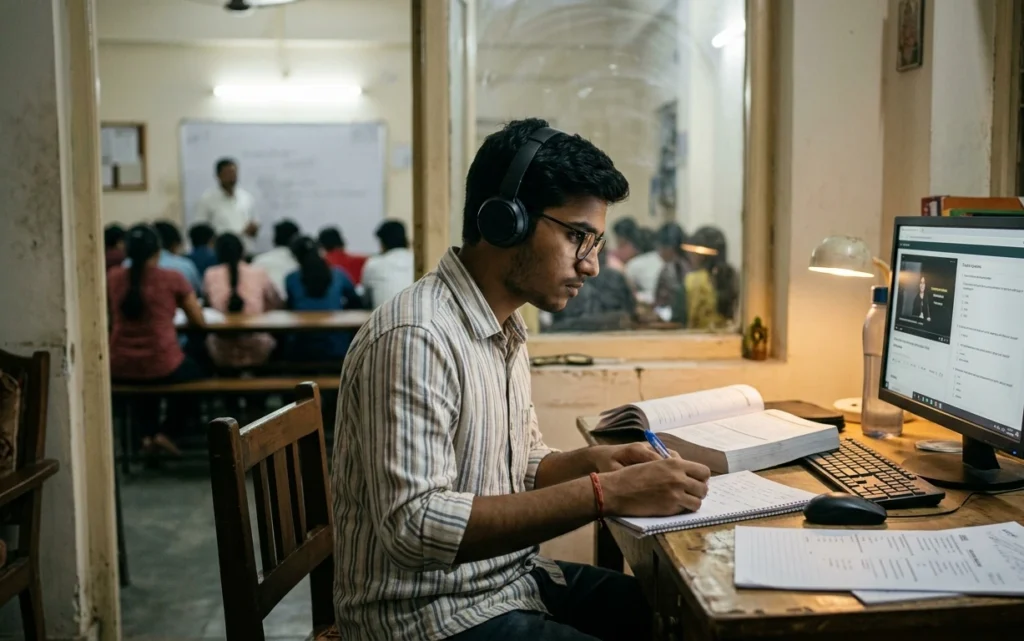
Artificial Intelligence is creating another possibility for independent learning.
Instead of waiting for the next class to ask a question, a student can interact with an AI learning tool and explore an explanation immediately.
This is where Eklavya AI fits into Apni Pathshala’s wider learning ecosystem.
Eklavya is an AI tutor designed to provide students with additional learning support. Students can ask questions, explore concepts and receive explanations while continuing their regular learning.
It is not a replacement for teachers or structured coaching.
It is another tool a student can use when they need additional support.
The Question Is Not Only “Is It Free?”
The recent discussion around free coaching prompts a better question.
Instead of only asking:
“Is the coaching free?”
We should also ask:
“Can the student find it?”
“Can they reach it?”
“Can they use it regularly?”
“Can they practise when they need more time?”
“What happens when they get stuck?”
These questions apply to government programmes, schools, NGOs and digital learning initiatives alike.
Because an opportunity has value only when students can actually use it.
Bringing Learning Closer to Students
This is where different approaches can work together.
Government schemes can reduce financial barriers.
Schools can provide academic foundations.
Online platforms can expand access to learning resources.
Community spaces can bring technology closer.
Teachers and mentors can provide guidance.
AI can provide additional support.
Students can gradually develop the confidence to learn independently.
None of these has to replace the others.
Together, they can create a more accessible learning ecosystem.
And that is perhaps the bigger lesson from the current free-coaching conversation.
We should not only create opportunities. We should create pathways that help students reach them.
The Real Measure of Access
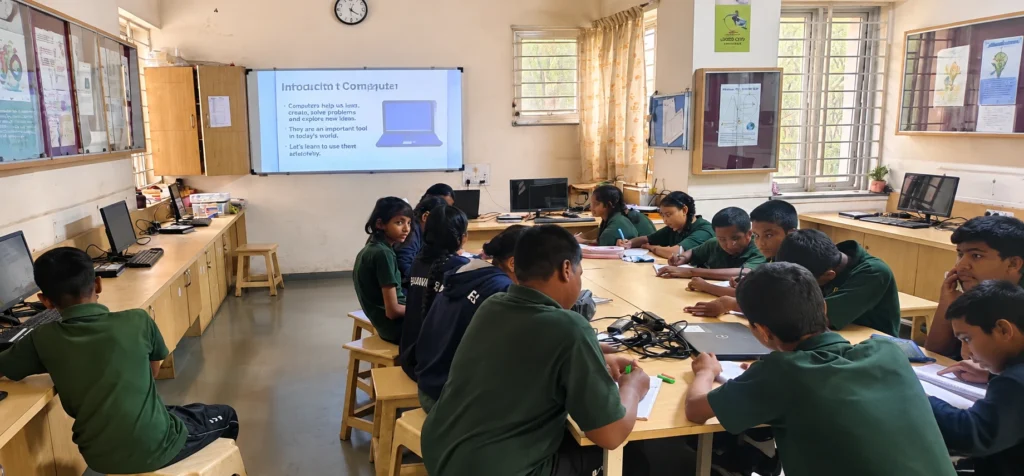
A programme can have a strong target.
A school can have a good classroom.
A platform can have excellent content.
But the most important question remains:
What happens to the student?
Does the student get to participate?
Do they continue learning?
Do they become more confident?
Do they develop useful skills?
Do they move closer to the opportunity they were looking for?
Those outcomes turn access into impact.
Making the Last Mile of Learning Matter
Education opportunities are becoming more diverse.
Free coaching.
Online learning.
Community learning.
Digital resources.
AI-powered support.
The challenge now is connecting these opportunities with the students who need them.
At Apni Pathshala, we continue to explore this question through community-based learning and digital education: how can learning become easier to reach, easier to continue, and more useful for the student?
If you are a school, NGO, educator, or community leader working to improve access to learning, explore Apni Pathshala and see how community-based learning can become part of that journey.
You can also read Why Another Coaching Centre Is Not the Future? to explore a different way of thinking about coaching, self-learning and what students may need beyond a traditional classroom.
Because making education free is important. Making sure the student can actually reach it is where the real work begins.
Frequently Asked Questions
1: What is the Government Free Coaching Scheme for SC and OBC students?
Ans.It is a Government of India scheme that provides free coaching support to eligible SC and OBC students for competitive examinations and admission to professional and technical courses.
2: Why is another coaching centre not always the answer for students?
Ans. Because students need more than another place to attend classes. They need access to learning resources, personalised support, opportunities to practise, and the ability to learn independently.
3: What are Apni Pathshala PODs?
Ans. Apni Pathshala PODs are community-based learning spaces where students get access to computers, digital learning resources, and opportunities to develop practical skills, learn independently, and explore their interests.
4: Why did only 2,790 students enrol in the Government Free Coaching Scheme against a target of 10,500?
Ans. A Parliamentary panel flagged implementation gaps, including limited participation from Central Universities and delays in receiving proposals, which kept enrolment below the target.