

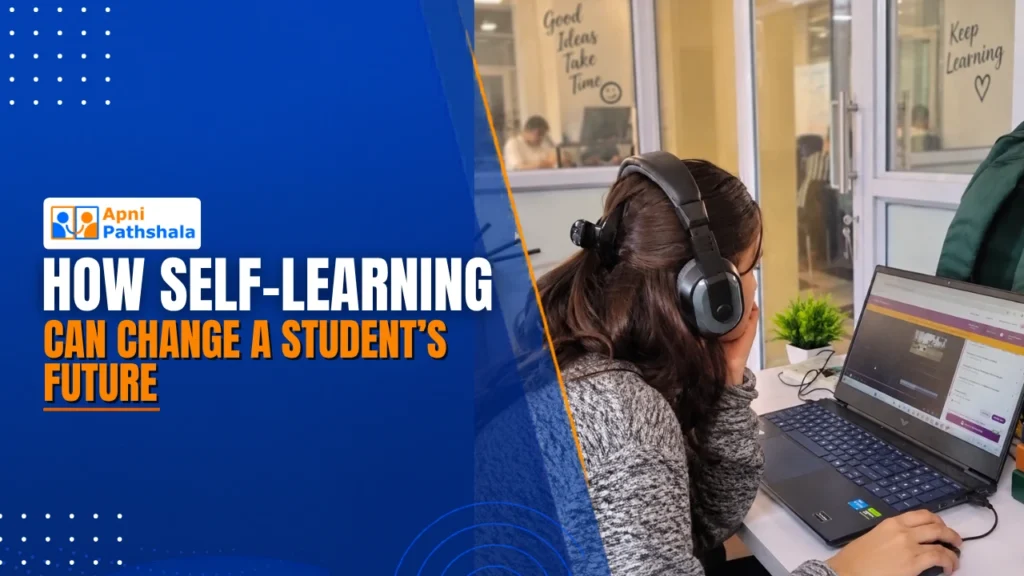
What happens when a student gets more than a computer? When they get a place to practise, the freedom to explore, and the opportunity to keep learning even after a course ends?
Sometimes, the result is not just a certificate. It can become a job, a project, a new skill, or even the beginning of a career dream.
That is what makes the journeys of Seema Rajput, Rohit Kumar Verma, and M.D. Hameed Hasan worth telling. They come from different backgrounds and are at different stages of life, but their journeys share one important idea: they kept learning on their own.
It Started With a Place to Learn
For many students, the first challenge is not a lack of ambition.
It is access.
Access to a computer.
Access to guidance.
Access to a place where they can practise without being afraid of making mistakes.
This is where Apni Pathshala’s PODs (Personalised Online Development) become important. A POD is a community learning space where students can access computers, build digital skills, and explore learning opportunities based on their interests and goals.
But providing the space is only the beginning.
What happens next depends on the student.
That’s where these three stories become interesting.
One Student Learns a Skill. Then Keeps Going.
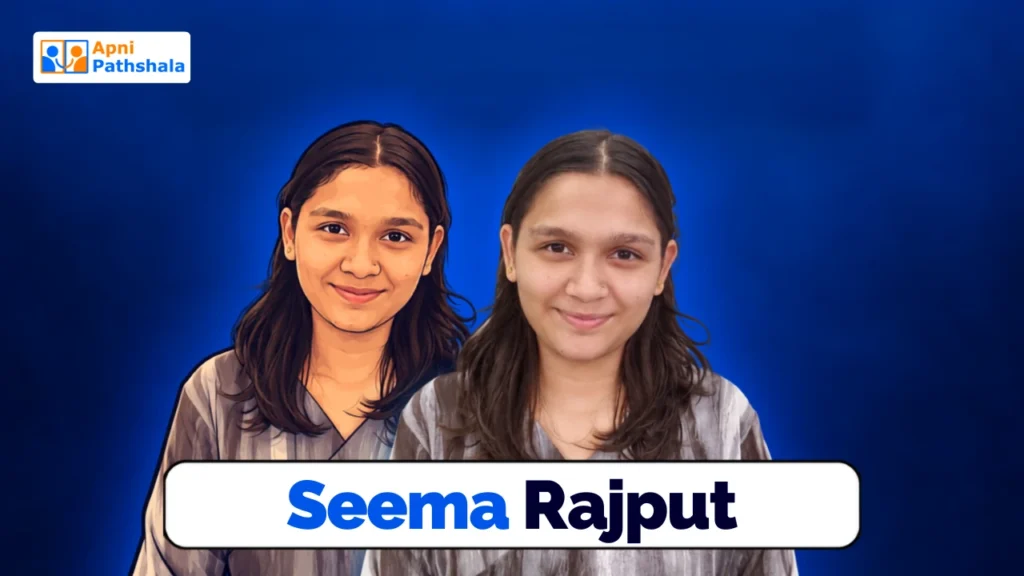
When Seema Rajput first started learning computers at Learn From Peers (LFP) – NarayanChandra Trust, she had very little knowledge and was not confident using them.
She could have stopped there.
Instead, she kept practising.
Gradually, computers became less unfamiliar. She completed her Basic Computer course and earned her certificate, her first major achievement.
But the certificate did not become the end of her learning.
It became the beginning.
She moved on to Python, which deepened her interest in technology and helped her develop her thinking skills. Then she had the opportunity to apply what she was learning through real work.
During her internship at Apni Pathshala, Seema learned video editing through practical projects.
Later, she joined Advanced WordPress (L-3), where she created two websites and explored automation.
Today, she is learning Adobe Premiere Pro.
Her journey is not a straight line from one course to one career.
It is a series of questions:
What can I learn next?
What can I create with this skill?
What else can I try?
That is self-learning in its simplest form.
Another Student Learned Because He Needed a Way Forward
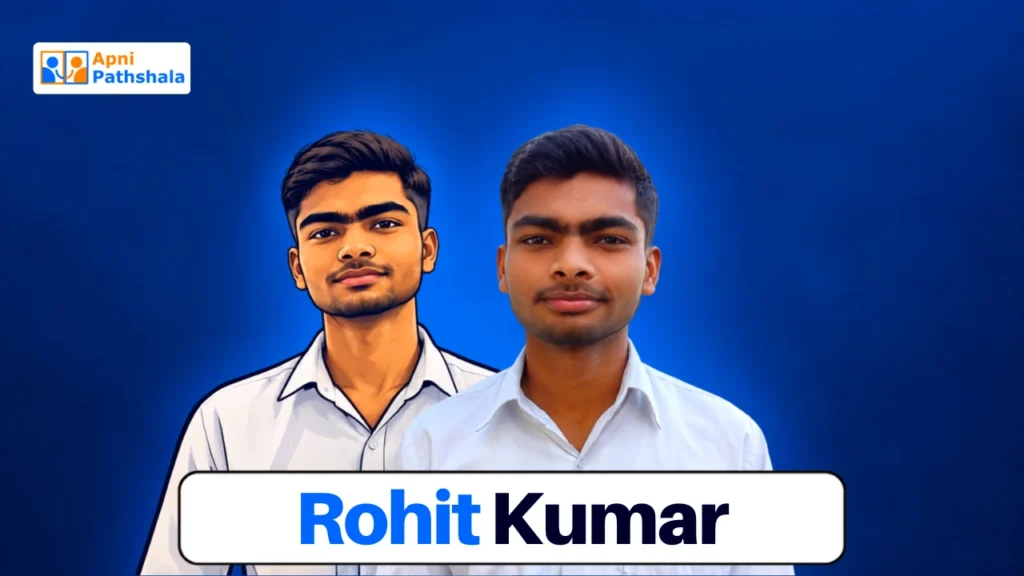
Rohit Kumar Verma’s story began from a very different place.
When he was only five years old, he lost his father. As his brothers eventually began living separately, Rohit and his mother became each other’s support.
As he grew older, finding work became important.
Rohit started looking for jobs, but repeatedly faced disappointment.
He eventually understood one barrier holding him back: he lacked the computer skills many jobs required.
So he decided to learn.
At Chachua Education Point, he completed DCA, Tally, and CCC courses.
The difference was not just that he now had certificates.
He had skills he could use.
He started applying for jobs again.
And this time, his efforts led to an opportunity.
Rohit secured a position at Bank of India.
His story shows that self-learning does not always begin with curiosity. Sometimes, it begins with a problem.
But the result can be the same: a student recognises what they need to learn and takes responsibility for the next step.
His journey is also available as an Apni Pathshala student comic, turning his real experience into a story that other learners can see themselves in.
Then There Is a Student Who Is Already Creating
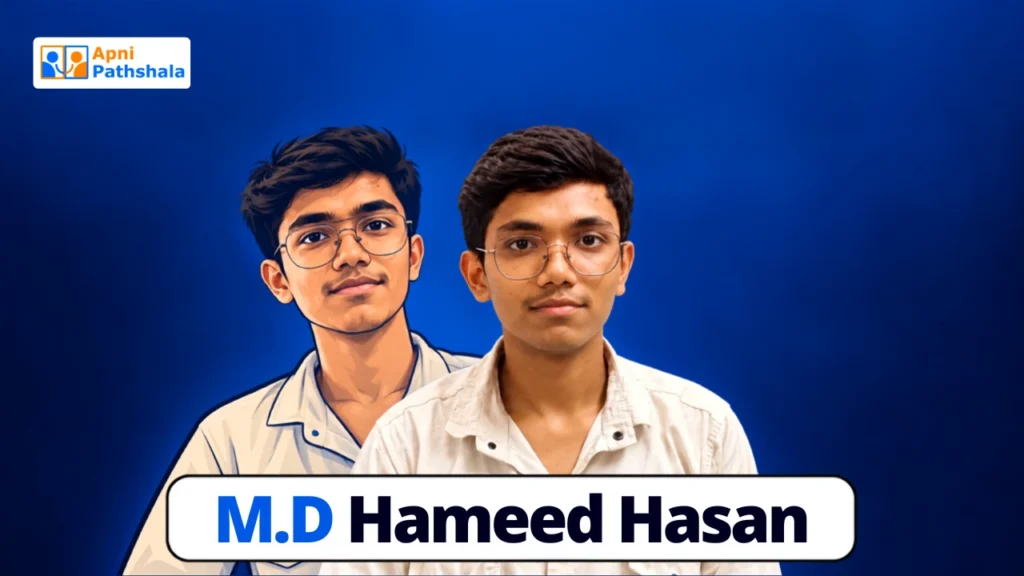
While Seema is developing professional skills and Rohit has moved into employment, M.D. Hameed Hasan, a Class 10 student from Vriksh Be The Change, is still exploring where his curiosity can take him.
Hameed comes from a financially disadvantaged family. His father works as a labourer in a cloth manufacturing factory and is the family’s primary earner. Despite limited financial resources, his family still supports his education.
Hameed is sincere about his studies.
But computers have piqued his curiosity.
He enjoys coding, likes learning programming concepts, and wants to understand how technology works.
His dream is to become an ethical hacker.
The interesting part is that he is not waiting until college to explore that dream.
Despite having limited coding knowledge, Hameed used ChatGPT to create a racing game.
It may be a small project.
But it represents an important shift.
He was not simply learning about technology.
He was creating with it.
That is often the moment when learning becomes more exciting. A student stops asking only, “What is this?” and starts asking, “What can I make with this?”
Hameed’s story is still being written, and his Apni Pathshala student comic captures part of that journey.
Different Reasons to Learn. The Same Habit.
Seema, Rohit and Hameed did not start from the same place.
Seema started with uncertainty.
Rohit started with a need.
Hameed started with curiosity.
But all three eventually developed the same habit:
They kept learning after the first lesson.
Seema moved from basic computers to Python, video editing, WordPress, automation and Premiere Pro.
Rohit identified a gap in his skills, learned what he needed and used those skills to pursue employment.
Hameed took his interest in coding and turned it into his own experiment.
This is why self-learning matters.
A course can introduce a student to a skill.
A certificate can mark progress.
But self-learning is what keeps the journey moving.
A POD Can Be More Than a Computer Centre

This is also where Apni Pathshala’s POD model becomes meaningful.
A POD is not simply a room filled with computers.
It can become a place where a student discovers what they can do.
One student may use it to learn basic computer skills.
Another may work on a website.
Someone else may practise coding.
Another student may discover video editing.
The same computer can become a different learning opportunity for each student.
That is the idea behind personalised development: give students access, and give them the space to decide where their learning can take them.
Through its broader digital-learning initiatives, Apni Pathshala creates opportunities for students to learn, practise, and apply digital skills rather than simply consume technology.
Learning Becomes Powerful When Students Start Creating
Look at these three stories one more time.
Seema created websites.
Rohit built skills that helped him enter a professional role.
Hameed created a racing game.
None of these achievements happened simply because a student had access to a computer.
They happened because the student did something with that access.
That is the difference between having technology and having a learning opportunity.
The goal of digital education should therefore not be measured only by how many devices reach students.
It should also be measured by what students begin doing once those devices are in their hands.
The Next Story Could Begin With One Skill
Seema’s journey began with basic computer learning.
Rohit’s began with the need to find a way forward.
Hameed’s began with curiosity.
Their destinations are different, but none of them needed to know the final destination before they started.
They only needed the opportunity to take the next step.
At Apni Pathshala, learning spaces are meant to create that opportunity: to start, practise, explore, and keep going.
To discover more journeys like these, explore Apni Pathshala’s Student Stories and meet students turning learning opportunities into real skills and possibilities.
You can also read Rohit’s and Hameed’s comic stories to experience their journeys in another way.
And if you are curious about how students can become mentors themselves, read Students Who Became Mentors!.
Because sometimes, all it takes to change the direction of a student’s future is one skill, one opportunity, and the freedom to keep learning.
Frequently Asked Questions
1: Where can you explore Apni Pathshala’s student success stories?
Ans. You can explore them through Apni Pathshala’s Success Story 3D Flip Book, which features real student journeys and learning experiences.
2: What is Chachua Education Point?
Ans. Chachua Education Point provides computer education and skill-based courses such as DCA, Tally, and CCC to help students develop practical digital skills.
3: What is special about M.D. Hameed Hasan’s learning journey?
Ans. Hameed, a Class 10 student from Vriksh Be The Change, is passionate about coding and dreams of becoming an ethical hacker. Despite limited coding knowledge, he created a racing game using ChatGPT.
4: How can students grow beyond learning for themselves?
Ans. By sharing what they learn with others and becoming mentors, helping fellow students learn and grow together.


2 Responses
A powerful reminder that self-learning helps students become more confident, independent, and ready for the future.
Agree! Glad this resonated with you. Self-learning can truly help students grow with confidence and curiosity.