

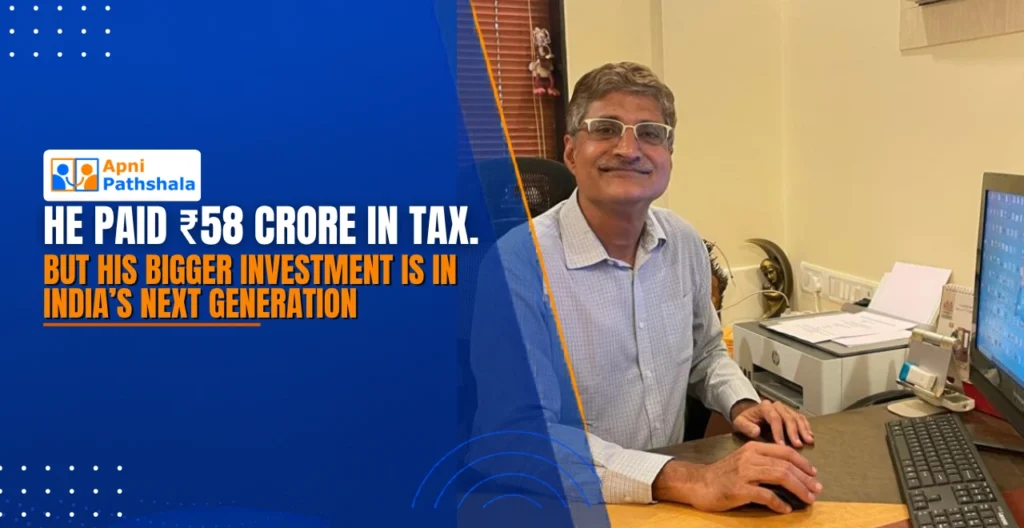
₹58 crore.
That number was enough to make Dr Aniruddha Malpani part of a national conversation around taxes, public infrastructure and accountability.
After revealing that he had paid approximately ₹58.09 crore in taxes for FY 2025–26, Dr Malpani questioned whether taxpayers were receiving enough value in return through roads, sanitation, drainage and other public services.
According to NDTV, the discussion became more visible after he reshared a photo of poor civic infrastructure in Gurugram and wrote:
“This is what our taxes fund!”
But the ₹58 crore number tells only one part of his story.
For the last three years, Dr Malpani has also been investing in another area that directly shapes India’s future: education.
Through Apni Pathshala, digital learning opportunities have reached communities across 22 states through more than 110 PODs (Points of Digital Learning).
The Story Is Bigger Than the Tax Figure
The viral discussion was not about avoiding taxes.
Moneycontrol reported that Dr Malpani was comfortable paying taxes on money earned in India. His concern was whether that contribution was translating into strong public infrastructure and better services.
When some social-media users suggested that he could simply move abroad, he rejected that idea.
India, he said, is his “Janma Bhoomi and Karma Bhoomi.”
Hindustan Times and Business Today also covered the larger debate around taxation and civic accountability.
But one statement from Dr Malpani connects this story with something much larger:
“What I want to do is make India a better place for the next generation of students.”
That is where Apni Pathshala becomes relevant.
From Questioning the System to Building Within It
India’s education challenge is no longer only about school enrolment.
Students also need access to computers, digital tools, independent learning and practical technology skills.
Government data published through PIB shows that digital infrastructure in Indian schools has improved significantly over the years.
But access is still uneven.
A student in a major city may grow up using laptops, high-speed internet and online learning platforms.
Another student may be using a desktop computer properly for the first time.
Eventually, both may compete in the same digital economy.
This is the gap Apni Pathshala has been trying to reduce.
For the last three years, the initiative has worked with schools, NGOs and community organisations to build local digital-learning spaces.
These spaces are called PODs (Points of Digital Learning).
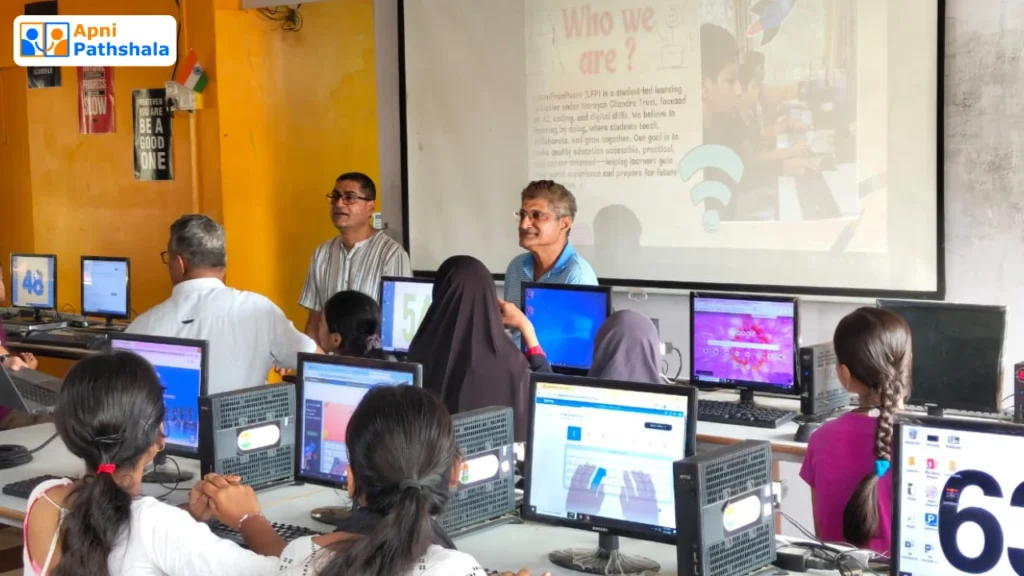
110+ PODs Across 22 States
The idea behind a POD is simple: bring digital learning closer to where students already live and learn.
Instead of depending only on large centralised institutions, Apni Pathshala works with local partners to create spaces where students can use computers, develop digital skills and learn independently.
Today, the initiative has expanded to 110+ PODs across 22 states.
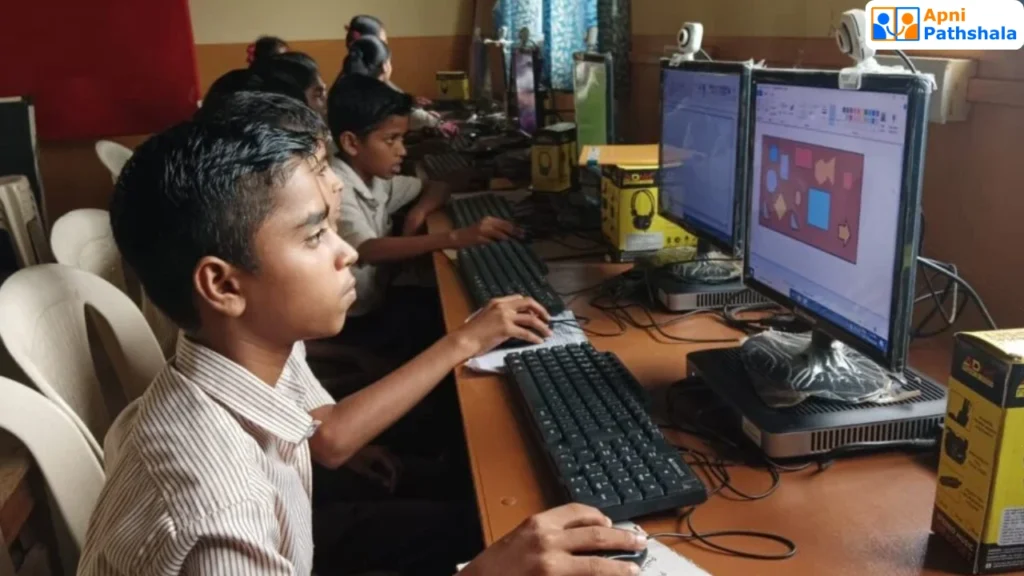
Students at these centres may learn how to research online, create presentations, work with digital tools, explore coding, graphic design, AI tools or other practical skills.
You can explore the Apni Pathshala POD network to understand how this learning model works.
The purpose is not simply to provide access to a device.
Digital literacy means knowing how to use technology productively.
A student who can scroll through a smartphone is not automatically digitally literate.
Can they research properly?
Can they create something?
Can they use AI meaningfully?
Can they learn independently?
These are the skills that matter.
Apni Pathshala has discussed this challenge further in The Hidden Digital Literacy Crisis Among Indian Students.
Why Digital Learning Access Matters
India is moving rapidly towards a technology-driven economy.
But digital opportunity cannot remain limited to students who already have strong home infrastructure.
The UNICEF Digital Education Strategy 2025–2030 also emphasises equitable access to digital learning, especially for students who may otherwise remain underserved.
Closing the digital divide requires more than simply uploading courses online.
Students need devices.
They need learning spaces.
They need guidance.
They need opportunities to practise.
And they need communities that can support them.
That is why local learning centres can play an important role.
Digital access becomes valuable only when a student can turn access into ability.
Investment Is More Than Money
The ₹58 crore story raises a wider question about contribution.
Taxes are one form of contribution.
Building institutions is another.
Creating opportunities for students is another.
Supporting communities is another.
Dr Malpani’s viral post asks for better accountability from public systems.
His work through Apni Pathshala shows another side of the same idea: when a system needs improvement, people can also help build solutions.
Private initiatives cannot replace government education systems, and they should not.
But governments, schools, NGOs, CSR partners, educators and communities can strengthen the same ecosystem together.
That is the larger connection between the tax conversation and Apni Pathshala.
It is not simply about criticising what is missing.
It is also about creating what is needed.
The Bigger Story Behind ₹58 Crore
It is easy to remember only the headline:
₹58 crore paid in tax.
But there are other numbers worth remembering too:
3 years.
22 states.
110+ Points of Digital Learning.
These numbers represent an effort to make digital learning more accessible to students who may otherwise have limited exposure to technology.
The real story is not that Dr Malpani paid a large tax bill and questioned public infrastructure.
The bigger story is that while asking for a better India, he has also been spending years trying to build one part of that better future himself.
You can question a broken system and still help improve it.
You can ask for accountability and still invest in solutions.
And you can recognise India’s challenges without giving up on India’s next generation.
“Building a better India also means building better opportunities for its students.”
Build the Next POD
India’s digital learning gap cannot be closed by one person or one organisation.
It will take schools, NGOs, educators, CSR partners and community leaders working together.
If students in your community need better access to digital learning, partner with Apni Pathshala and help build the next POD.
One POD. One Community. Hundreds of Possibilities.
Frequently Asked Questions
1. What was Dr Malpani’s message behind the discussion?
Ans. He said his goal is to contribute towards making India better for the next generation of students, rather than leaving the country.
2. Why is digital literacy important for students?
Ans. Digital literacy helps students use technology confidently, learn independently and prepare for a technology-driven future.
3. Why did Dr Aniruddha Malpani’s ₹58 crore tax post go viral?
Ans. Dr Aniruddha Malpani shared a picture showing the poor condition of Gurugram Sector 23 after rain and wrote, “This is what our taxes fund!” His post sparked a discussion about taxpayers’ expectations from public infrastructure and civic services.
4. How can I create a personalised curriculum for a student?
Ans. Use Apni Pathshala Curriculum AI to quickly create a personalised learning plan based on the student’s goals, level, and learning needs.




18 Responses
Everyone is talking about Dr. Aniruddha Malpani’s ₹58 crore tax post. But for the last 3 years, he’s also been working to improve India’s education system through Apni Pathshala.
Thank you for your kind words. The journey is about creating meaningful change in education and helping more students access better opportunities through Apni Pathshala.
It’s Really nice to see what malpani sir is doing for education system and for students
Thank you for your kind words! We truly believe that creating better learning opportunities for students can bring meaningful change. Dr. Malpani’s vision continues to inspire us to work towards a better future for every learner.
The story is not just about ₹58 crore in taxes. It is about how Dr. Aniruddha Malpani is using his resources, time, and vision to create opportunities for India’s next generation. Through initiatives like Apni Pathshala, he is helping students gain access to digital learning and build skills for the future. Real change happens when we don’t just talk about problems, but also work towards solutions.
Thank you for highlighting the larger vision behind this work. Through Apni Pathshala, we continue to focus on making digital learning and future-ready skills accessible to more students across India.
malpani sir doing great and felt proud to working in his mission
Thank you so much, Simran! We’re glad to have you as a part of this mission. Together, we continue working towards creating better learning opportunities for students.
Being part of the same mission and working towards creating meaningful impact through education is truly a proud moment for me. Grateful to be part of a team that is committed to empowering communities and creating opportunities for a better future. 🌱✨
Thank you, Srushti! We’re grateful to have passionate people like you be a part of this journey.
A thought-provoking piece that goes beyond the ₹58 crore headline and highlights the importance of building a better India.
What stood out to me most is the idea that **digital access becomes valuable only when it turns into ability**. Through Apni Pathshala, the journey across 22 states and 110+ PODs is helping make meaningful digital learning opportunities more accessible to students.
A powerful reminder that we can question what needs to improve while also contributing to the solutions. Proud to be part of this journey. 🙌
Thank you! Grateful for Swapnil and everyone contributing to this mission of making meaningful digital learning accessible for students across India.
Malpani Sir is one of the very few people who don’t just criticise; they actually get things done on the ground, and as a result, Eklavya.io is one of their platforms where students don’t need to pay those hefty fees to coaching classes which do nothing more than regular teaching.
Thank you! We believe real change happens through consistent efforts on the ground, and we’re grateful to everyone who contributes to this mission of making quality education accessible for every learner.
A huge respect for Malpani Sir; the level of understanding he has is commendable.
Thank you! Sir’s vision and commitment towards building a better future for learners continue to inspire us.
What stands out to me is that real change is not just about pointing out what is broken, but actually working on what can be built.
Digital access becomes meaningful only when students can turn it into skills, confidence and the ability to learn independently.
Being part of this journey makes me believe that building the next generation is one of the most meaningful ways to build a better India.
Thank you for your thoughtful words. We believe real change comes from building opportunities that help every student learn, grow, and become future-ready.